“Not a Shred of Pride”… In Memoriam: Akihiro Miwa—The “Anger Born of Love” He Spoke of in an Exclusive Interview


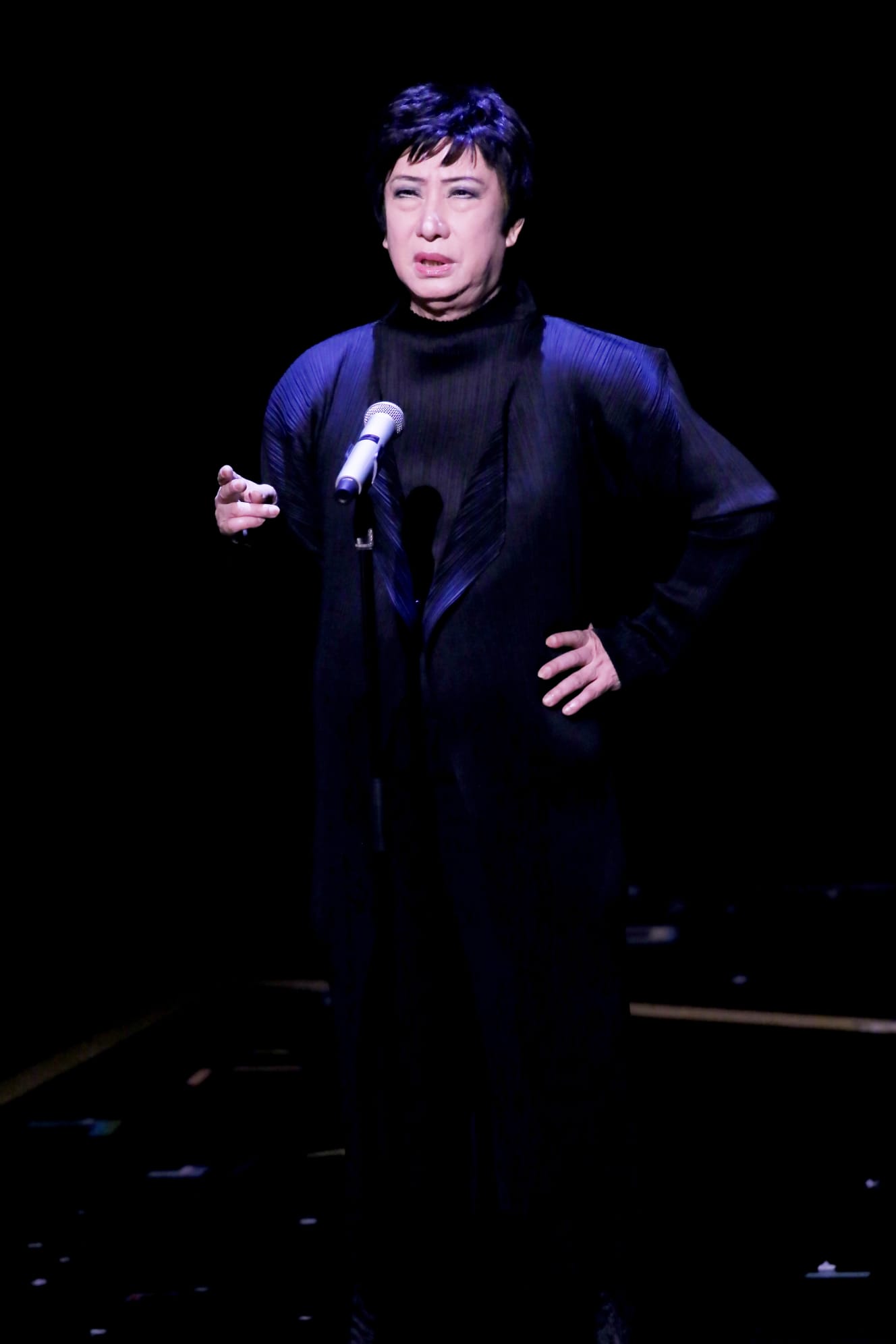
He was exposed to the atomic bomb in Nagasaki at the age of 10
Singer and actor Akihiro Miwa has passed away due to old age. He was 91. His agency announced the news on June 28. At that time, they also released the final handwritten message Mr. Miwa had entrusted to his agency.
“The only weapon we have to survive in a world like this is the language of love. The key to solving all the world’s problems is love. If there were love, wars would never happen. Akihiro Miwa”
His life was one in which he continued to advocate for the importance of “anti-war” ideals and “love” until the very end.
Miwa was born in 1935 into a wealthy family in Nagasaki City, Nagasaki Prefecture. Around a year after the Pacific War began in 1941, he told his older brother,
“We’re going to lose this war. How can we possibly shoot down airplanes with bamboo spears?” (From an article published in the *Asahi Shimbun* in August 2009)
he reportedly asked his older brother.
On August 9, 1945, he was exposed to the atomic bomb at his home in Kairai-machi, Nagasaki Prefecture, 3.9 kilometers from the hypocenter. Miwa was 10 years old at the time. Although he himself was unharmed, he reported seeing numerous charred bodies while walking alone to search for his grandparents, who ran a public bathhouse near the hypocenter.In the end, she was unable to find her grandparents’ house or even see them. Those experiences had a profound impact on her subsequent life as an artist.
“Miwa moved to Tokyo after the war and made his debut as a professional singer at the age of 16. In 1957, his song ‘Meke Meke’ became a massive hit, and he was beloved by many cultural figures as the ‘handsome young man who sparked a fashion revolution.’He was also a pioneer as a singer-songwriter, consistently generating a huge response with anti-war songs such as ‘The March of the Ghosts’ and ‘Under the Sky of My Hometown.’ Of course, he also wrote and composed many songs on the theme of ‘love.’ The most representative of these is probably ‘The Song of Yoitomake’” (Music magazine writer)
“The Song of Yoitomake” tells the story of a mother who works alongside men doing manual labor on a factory floor, and her son, who is mocked for his family’s poverty, bullied, and returns home in tears. The song captures the drama of their lives.At the end of 2012, Miwa made his debut appearance on the “63rd NHK Kōhaku Uta Gassen” at the age of 77—the oldest performer in the show’s history—and from his vast repertoire, he chose “The Song of Yoitomake.”
A few days prior, *FRIDAY* conducted an exclusive interview with Miwa (*FRIDAY*, January 18, 2013 issue: “Akihiro Miwa: ‘The Song of Yoitomake’ and the Japanese Spirit”).Regarding the circumstances that led him to sing “Yoitomake no Uta” during his debut appearance on the Red and White Song Festival, he explained as follows:
“Commercial broadcasters accepted the strange, petty arguments of intellectuals—such as claims that it was ‘a song that discriminates against the poor’—and treated it as if it were ‘banned from broadcast.’ The more conservative NHK, on the other hand, showed understanding—which is the opposite of what usually happens (laughs).I appeared on NHK’s program *SONGS* several times, and I made a casual promise to one of the staff members I was close with: ‘If you get promoted to producer of the *Kohaku* Song Festival, I’ll perform as a congratulatory gesture.’ Before I knew it, it became a reality. That’s the inside story.”
“Ikiji” means
There is a real mother and child who served as the inspiration for “The Song of Yoitomake.” It was an incident that took place during a parent-teacher open house when Miwa was in elementary school.The mother of a child from a poor family walked in wearing dirty clothes. She wiped her child’s face, straightened his clothes, and then pressed her lips directly to his runny nose to suck it clean. Miwa, who had lost her own mother at an early age, was deeply moved by this sight.
〈And I also heard that mother say, “It’s not because you’re good at studying, rich, or good at fighting that you’re great. The greatest people are those who are completely honest, hardworking, and strive with their heads held high before the heavens. That’s why you’re great.” This is a philosophy of life.
When you’re in a difficult situation, it’s natural to worry, feel resentful, or get depressed. But I sensed an unwavering, spirited pride in her. Her mother’s selfless love, her devotion to her family, and the dignity of hard work—these are emotions and sentiments that transcend all eras.“I want to share songs that never go out of style—that’s the sentiment behind my choice of ‘Yoitomake.’”
And she also had this pointed criticism for the government of the day…
〈Isn’t it true that today’s Japanese politicians and business leaders lack even a shred of the pride this mother displayed?〉
The “Great East Japan Earthquake” had struck on March 11 of the previous year, 2011. Just before this interview, the Liberal Democratic Party and Komeito had defeated the Democratic Party of Japan in a landslide victory, regaining power for the first time in three years.
〈Think about the nuclear accident. Since they hadn’t even considered a way to neutralize the radiation when it leaked, it was something that should never have been put into production. Knowing this, the Liberal Democratic Party—led by Yasuhiro Nakasone (former Prime Minister, deceased in ’19) and others—installed these flawed products all over Japan.The distortions the LDP has built up over the long span of 50 years are now creaking under the strain. Isn’t that what Japan is like today?〉
While delivering this indictment, he goes on to discuss the “spirit required of the Japanese people” in precisely such an era, stating the following:
〈I believe it is not a matter of “stubbornness” to restore a wealthy, money-drenched society, but rather “spine” (ikiji). It means “the dignity that comes from living an upright life.” There is a saying, “A samurai may go hungry, but he will hold his head high”—that is the kind of pride I am referring to.〉
He then entrusted the future to the young people and declared:
〈I feel that the era of “hardware” is over, and it is “software” that will make Japan shine. And the ones who will lead this charge are not the generation bound by old customs, but the young people. The reason I can remain optimistic and believe in a bright future is because the achievements of today’s young generation are so dazzling.〉
Mr. Miwa, who always championed anti-war ideals and watched over postwar Japan as a “preacher of love.” We offer our heartfelt prayers for his eternal rest—.

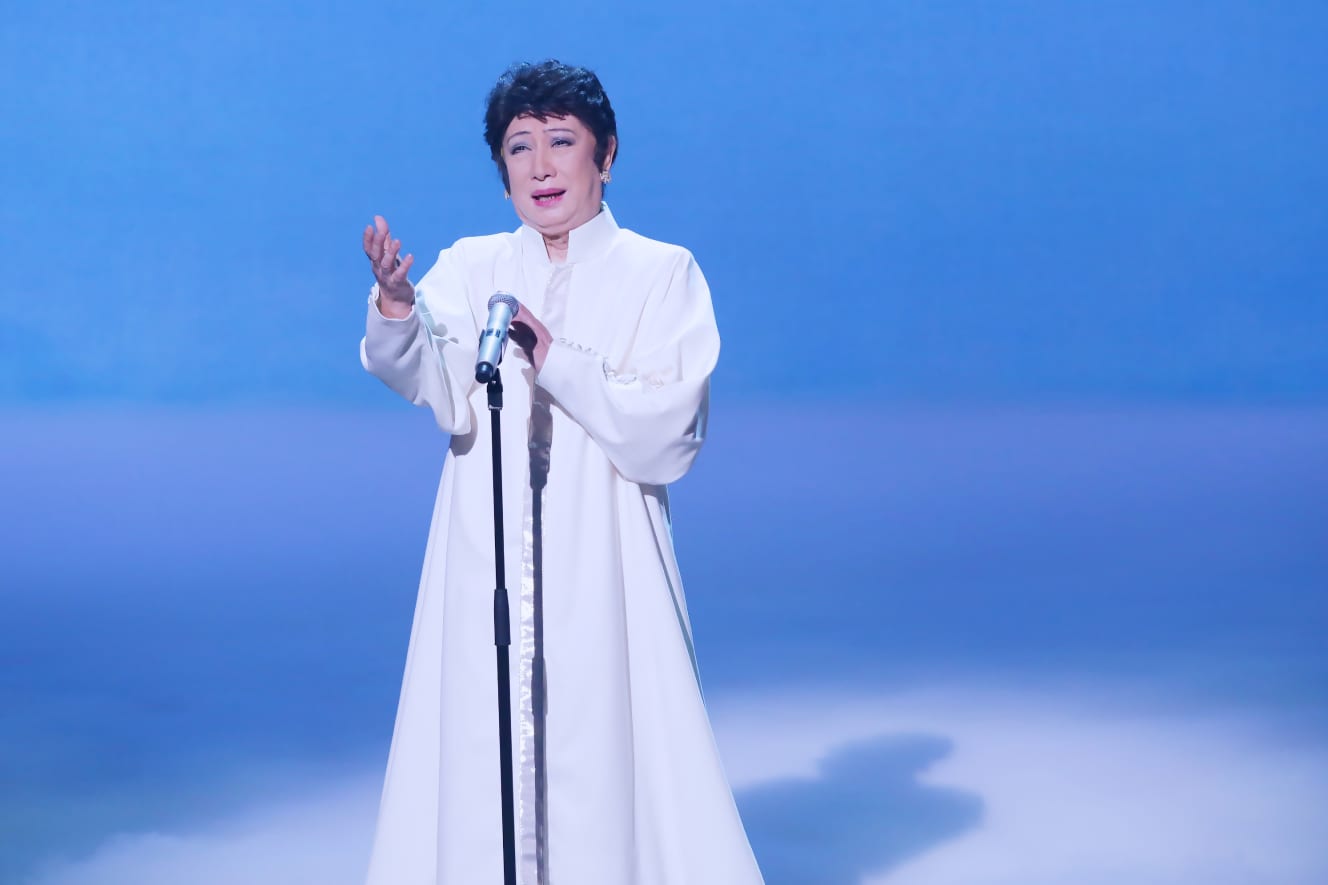

PHOTO: Kazuhiko Nakamura