Court Hears Chilling Testimony From the Intermediary in the Nasu Double-Murder Case


Hirayama claims he was merely an accessory to murder
On June 25, the Tokyo District Court held the lay judge trial of defendants Hikaru Sasaki (30) and Ayaken Hirayama (27), who are charged with murder, abandoning a corpse, and damaging a corpse in connection with the case in which the burned bodies of a married couple who operated restaurants in Tokyo’s Ueno district were discovered in Nasu, Tochigi Prefecture, in April 2024. On that day, Hirayama was questioned by the court, and his testimony contradicted statements made by Sasaki the previous day.
According to the indictment and other records, Ryutaro Takarajima (55 at the time of his death) and his wife, Sachiko (56), who operated restaurants in the Ameyoko district of Ueno, were allegedly targeted by their eldest daughter, Manami Takarajima (33), and her common-law husband, Seiha Sekine (34), who had grown increasingly dissatisfied with the management of the family business.
Ryo Maeda (38), an executive at a real estate company, allegedly lured the couple to the garage of a vacant house in Tokyo’s Gotanda district under the pretense of showing them a property. Akito Wakayama (22) and Koki Kang (22), who allegedly acted under the instructions of Sasaki and Hirayama, are accused of strangling the couple with electrical cords and killing them. The bodies were then transported by car to Nasu, where they were set on fire and burned. Seven people have been indicted in connection with the case.
Sasaki is believed to have directed the operation, while Hirayama is thought to have acted as an intermediary. The trial has focused on the relationship between the two men and the extent of their involvement in the crime.
At the first hearing on June 22, Sasaki admitted the charges, while Hirayama partially denied them, stating:
“It is true that I was involved in the incident, but everything I did was carried out under Sasaki’s instructions.”
He argued that his role amounted only to aiding and abetting the crime.
During questioning the previous day, Sasaki testified that he had been threatened by the alleged mastermind, Sekine, and had therefore been unable to refuse his request. Referring to his relationship with Hirayama, Sasaki also stated, “I considered him my superior.”
Both Sasaki and Hirayama appeared in court again that day. Hirayama entered the courtroom after bowing deeply. Dressed in a black suit and a dark blue tie, he gave the impression of being polite and well mannered, but a tattoo could be seen on his right hand as he placed it on the witness stand before taking his seat.
During the previous day’s questioning, Sasaki testified that he had met Hirayama at a nightclub in Shibuya in February 2024, shortly after moving to Tokyo from his hometown of Fukuoka, and that an acquaintance had introduced Hirayama as a member of an organization affiliated with the Sumiyoshi-kai.
However, when Hirayama was asked about the encounter by his lawyer, his account immediately differed:
“As I recall, it was at the end of 2023.”
Although he agreed that they had met at a club in Shibuya, he said that the acquaintance had introduced Sasaki as someone who “worked as a driver for the organization” and was “a hardcore member of the group.” Hirayama said that he, too, had assumed Sasaki was a gang member.
At the same time, he denied having any connection to organized crime himself:
“It’s true that the acquaintance jokingly introduced me to Mr. Sasaki as someone affiliated with the Sumiyoshi-kai, but I told him that I wasn’t a gang member.”
When questioned again by his lawyer about any ties to organized crime, Hirayama replied:
“I have never had any involvement whatsoever.”
As Hirayama gave his testimony, Sasaki fixed him with a sharp stare.
Hirayama then continued his testimony. Asked about his first impression of Sasaki, he recalled:
“People don’t wear suits to clubs, so I thought he looked intimidating. He was thinner than he is now, muscular, and had very short hair shaved at the sides.”
Despite that impression, Hirayama said that he spoke casually to Sasaki from the beginning, while Sasaki addressed him using polite language.
The following is a summary of Hirayama’s account of the events leading up to the crime, as presented during his testimony.
He continued to insist that he had merely been following Sasaki’s instructions
Although the two men had not met in person after their initial encounter, Hirayama said that he received a phone call from Sasaki around April 8, 2024. According to Hirayama, Sasaki offered him between ¥5 million and ¥6 million (about $35,000 to $42,000) to dispose of the bodies of a Chinese couple.
When Hirayama asked for details, Sasaki allegedly replied:
“They’re an elderly couple, so it won’t be difficult. They’re Chinese, so no one will know if they die.”
According to Hirayama, he apologized during the call to the older Sasaki, saying, “I’m sorry for speaking casually to you because I thought we were the same age,” before agreeing to take on the job.
When asked by his lawyer why he had not refused, Hirayama replied:
“He looked frightening. I didn’t know what he might do if I refused, especially because I had spoken casually to him.”
Hirayama said that he chose Koki Kang and Akito Wakayama to carry out the task because they often boasted about their exploits at clubs and never seemed afraid of anything.
When Kang was approached, he immediately agreed. Even after being told that the job involved disposing of bodies, he reportedly responded without hesitation:
“I’ll do it.”
Wakayama also agreed after learning that Kang had accepted the job.
When Hirayama informed Sasaki that he had found the men, Sasaki allegedly replied:
“I’ll pay more money, so I want them to take care of the couple from the very beginning.”
The payment was increased to ¥15 million (about $105,000), and when Hirayama relayed the offer to Kang, he again agreed.
Hirayama recalled asking:
“Are you serious? If you’re going to back out, now’s the time.”
Kang allegedly replied:
“I’m totally fine with it.”
Wakayama initially appeared hesitant, but eventually agreed, saying that if Kang was going through with it, he would as well.
When Hirayama’s lawyer asked, “Even abandoning or damaging a corpse is a serious crime. Murder is even more serious. Didn’t you think about walking away at that point?” Hirayama answered:
“I thought the two of them would be carrying it out because I had only been asked to find the people who would do it. At the time, I didn’t think very deeply about it.”
The murder was scheduled to take place on April 13. However, by then Sasaki had still not secured a vehicle or transportation route for moving the bodies. Because rental cars could potentially be traced, Sasaki allegedly instructed Hirayama to use a stolen vehicle, but Hirayama said that he had no connections that would allow him to obtain one. As a result, they ended up using Hirayama’s black Toyota Prius.
On that day, Sasaki allegedly instructed the group to attack the couple with baseball bats beneath an overpass in a quiet area of Ueno. Before meeting Kang and Wakayama, Hirayama obtained extension cords, cable ties, adhesive tape, plastic bags, gasoline, and fire starters, but he emphasized that these purchases had also been made “under Sasaki’s instructions.”
However, despite the area’s relative isolation, the location was ultimately deemed unsuitable for carrying out the murders, and the plan was abandoned.
On April 14, Sasaki allegedly instructed them to strike the Takarajimas with a car on a street in Ueno and then load them into the vehicle. However, Kang and Wakayama complained that such a thing could not possibly be done in a public place, and the plan was abandoned once again.
Hirayama then suggested to Sasaki that they find an enclosed location. When his lawyer asked whose idea that had been, Hirayama replied:
“It was Mr. Kang’s and Mr. Wakayama’s idea.”
He again maintained that he himself had not been directly involved in planning the crime.
Sasaki then allegedly instructed the group to obtain rope, but Hirayama instead prepared extension cords.
Explaining the reason for the change, Hirayama said:
“Mr. Kang said the rope was too thick, so we decided to use extension cords instead.”
Eventually, the plan was changed so that the Takarajimas would be lured to the garage of a vacant house in Gotanda, put to sleep with sleeping pills, and then strangled to death.
Once again, Hirayama insisted that the plan had originated with Sasaki.
“My understanding was that it was Mr. Sasaki’s idea.”
Throughout his testimony, Hirayama maintained that he had not played an active role in carrying out the crime.
He bought a ¥1.2 million necklace after the killings
The plan was finally carried out on the night of April 15, 2024.
After Kang and Wakayama carried out the murders inside the garage and the vehicle carrying the bodies departed for Nasu in Tochigi Prefecture, Hirayama met Sasaki at an izakaya near Gotanda Station. There, he was handed a shoulder bag containing bundles of cash that had not even been banded together and had simply been stuffed inside haphazardly.
Hirayama then placed the bag in a coin locker and headed to the garage to clean the scene.
During the killings, Wakayama reportedly told him:
“The man (Ryutaro Takarajima) went down quickly, but the woman (Sachiko Takarajima) took longer, so Kang became irritated and struck her with a hammer.”
Hirayama also stated that he had received photographs of the blood-spattered garage on his phone.
After returning home and counting the money, Hirayama discovered that the payment amounted to only ¥13.2 million, even though the promised reward had been ¥15 million.
During the previous day’s hearing, Sasaki testified that he had not received any payment himself. Hirayama disputed that claim, saying:
“On the day the attack in Ueno was called off, Mr. Sasaki told me, ‘I haven’t received a single yen.’ Since it was shortly before his birthday, I told him, ‘It’s fine if you take ¥1 million.'”
(Editorial note: Hirayama appears to have meant that he had told Sasaki that he could keep ¥1 million as compensation. Hirayama received ¥13.2 million from Sasaki, leaving ¥1.8 million unaccounted for. Hirayama presumably believed that Sasaki had kept the missing amount and was speaking with that understanding in mind.)
Later, Hirayama paid Kang ¥5 million as compensation after he returned the vehicle.
When Hirayama’s lawyer asked, “Who decided how the money would be divided? Wouldn’t the people who actually carried out the murders and took the greater risk have received a larger share?” Hirayama replied:
“At the time, I didn’t think about it very deeply.”
True to his words, after giving Kang the money, Hirayama went to Ueno and purchased a necklace worth ¥1.2 million.
Wakayama had reportedly told him:
“We disposed of them in a place where they’ll never be found. Nobody will discover them there.”
However, news of the discovery of the bodies emerged the very next day.
Hirayama testified that Sasaki instructed him to persuade the two perpetrators to surrender to the authorities, and he relayed the message to Kang.
Kang reportedly replied that he wanted to turn himself in together with Wakayama, but the two men ultimately fled instead.
When Hirayama informed Sasaki of this, Sasaki instructed Hirayama to surrender himself.
According to Hirayama:
“I thought the person who had ordered the crime might have ties to organized crime, and I regretted becoming involved in the incident, so I decided to surrender.”
Early the following morning, Hirayama met Sasaki near the police box in front of Gotanda Station and handed over his mobile phone and car keys. At around six o’clock, he walked directly to the police box and turned himself in.
At that time, Hirayama falsely told investigators that the two perpetrators had approached the couple in the streets of Ueno because they appeared to have money, that an argument had broken out, and that the couple had been killed as a result. He claimed that he had merely lent them his car afterward. Based on this account, a written statement of voluntary surrender was prepared.
When asked why he had lied, Hirayama answered:
“Because Mr. Sasaki told me to make a false statement so that he and the person who ordered the crime wouldn’t be arrested.”
“The victims’ family even thanked me.”
During subsequent questioning, another detective reportedly became suspicious of Hirayama’s statement of surrender and asked him, “You have family, don’t you? You have a girlfriend, don’t you?” According to Hirayama, he burst into tears and immediately began telling the truth.
Asked why he had decided to speak honestly, Hirayama sniffled and replied:
“My feelings of remorse and regret became stronger than my fear.”
When his lawyer again asked why he had not refused Sasaki’s request, Hirayama emphasized that he had been afraid of him:
“I thought he would beat me up. I can’t say exactly what I thought he would do, but that’s what I believed.”
Trials involving the other defendants connected to the case are expected to continue. Hirayama said he intends to cooperate, stating:
“The police told me that my testimony had enabled them to arrest the other people involved. The victims’ family even thanked me for speaking honestly. If my testimony can be of any help, I am willing to provide it.”
Although there were moments when Hirayama appeared intent on defending himself, the overall impression was that he had completely broken down and was testifying candidly.
However, on June 24, the alleged mastermind, Seiha Sekine, appeared before the Tokyo District Court for proceedings concerning the reasons for his detention and insisted:
“I did not conspire with anyone, and I am absolutely innocent.”
Sasaki, Hirayama, and Sekine have all offered sharply differing accounts of the case.
For the foreseeable future, the courtroom is likely to remain the scene of a bitter struggle over who should bear responsibility.
Readers interested in a more detailed account of Hikaru Sasaki’s testimony can find additional coverage in the June 25, 2026, edition of “Friday Digital.”



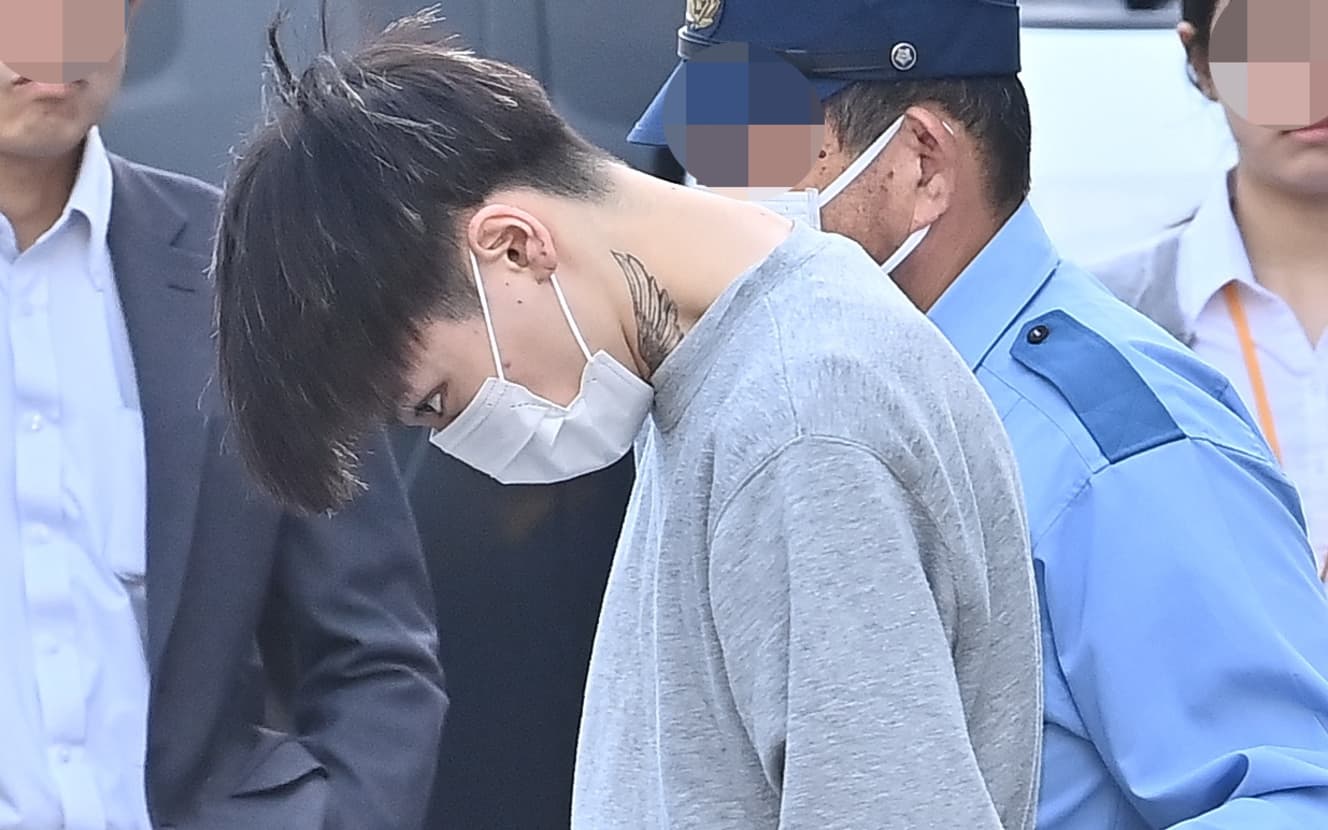
PHOTO: Shinji Hasuo