“7-Inning Format for High School Baseball” Eyed for Spring ’28… Osaka Toin’s Coach Koichi Nishitani Strongly Rejects the Japan High School Baseball Federation’s Reform Proposal


Although 70% of respondents in a survey answered “against” the proposal… implementation is set to begin as early as spring 2028
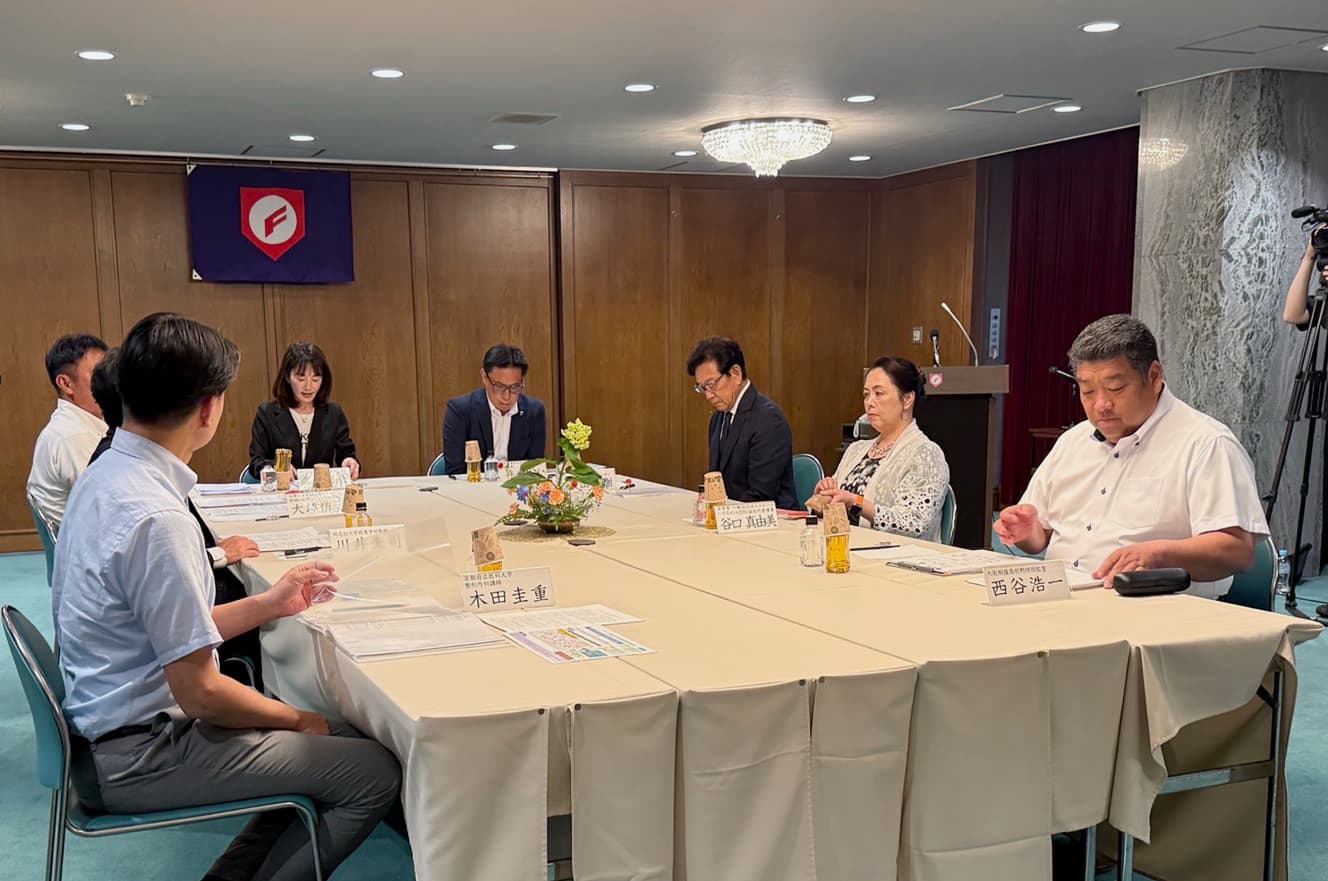
It was a one-man show and a personal showcase for the manager with the most wins in Koshien history—75 in total. The seven-inning format, which the Japan High School Baseball Federation (hereinafter referred to as the Japan High School Baseball Federation) is considering introducing in the spring of ’28 as a measure against the midsummer heat—At the first “opinion exchange meeting” held on May 30, Osaka Toin High School manager Koichi Nishitani (56) maintained his stance of “firm opposition.”
“I believe baseball is a sport played over nine innings. If it’s reduced to seven innings, the value of high school baseball will decline, we’ll lose many fans, and there will be no more children playing baseball. This may sound rude, but I don’t think [the Japan High School Baseball Federation] has thought this through even a little bit.”
The 13 people who gathered for the two opinion exchange meetings—including moderator Mina Nagashima (58)—seemed to be somewhat cautious, gauging the JHSA’s reaction as they spoke. However, Coach Nishitani viewed the introduction of the seven-inning format as a “crisis for high school baseball” and strongly rejected the JHSA’s reform proposal.
“Even when I talk with teachers from other clubs at Osaka Toin, I hear that high school baseball has more than enough heat countermeasures in place compared to other sports.Isn’t it the ‘spectators’ and ‘supporters’—rather than the players themselves—who need heat countermeasures? For example, there are plenty of things that can be done, such as setting up tents in the stands to create shade. We would be more than happy to cooperate with reforms like that.”
After the meeting, one participant even grumbled to the press, “Please don’t write that we were refuted,” such was the clarity and persuasiveness of Coach Nishitani’s arguments, which not only overwhelmed the opposition but also spoke for those on the front lines of high school baseball.
At this point, it’s worth reviewing the background behind the introduction of the seven-inning system, which the Japan High School Baseball Federation has been carefully considering. The Federation, which views high school baseball as an integral part of education, held the “Committee on Various Issues in High School Baseball, Including the Seven-Inning System” ten times last year.
In its final report released in December, the federation concluded that “the introduction of a seven-inning system is desirable” to mitigate the risk of heatstroke and to support work-style reforms for faculty and staff—all while maintaining the premise that the National Championship will continue to be held in August at the open-air Koshien Stadium.
In other words, this is no longer a matter of considering whether to adopt the seven-inning system—its implementation is already a foregone conclusion. However, due to the sheer volume of opposition, the Japan High School Baseball Federation is currently using these exchange meetings to demonstrate that it is actively engaging in ongoing discussions.

What Coach Nishitani is advocating to defend the nine-inning format
On January 5, while visiting Nozaki Kannon near the Osaka Toin baseball field, Manager Nishitani also voiced his strong opposition to the seven-inning format.
“It’s completely unthinkable. I want them to realize as soon as possible that this is wrong. I don’t think there’s any room for debate.”
Furthermore, true to his role as a social studies teacher, he drew a parallel with the Japanese Constitution to make his case against the change.
“The Constitution cannot be amended without the approval of at least two-thirds of the members of the Diet, plus a national referendum. I tell my students that the nine-inning format in baseball is something that cannot be changed that easily. I intend to oppose this until the very end.”
His remarks that day drew significant attention, and from then on, Coach Nishitani was bombarded with questions about the seven-inning format at every opportunity.In January, when his team secured a spot in the Senbatsu tournament, he deflected the topic by saying, “The kids are the stars today.” Ahead of their first Koshien appearance in three seasons, he laughed and said, “Teachers from various schools have approached me, saying, ‘We can’t say anything, so please speak out against the seven-inning format on our behalf.’”
Then, after winning his 10th national championship (combined spring and summer) at the Spring Koshien in March, he let slip the following during the Spring Osaka Tournament:
“Even on the streets, people call out to me, ‘Good luck!’ I thought they were cheering me on for the game (official matches), but instead they’d say, ‘Please defend the nine-inning format to the bitter end.’”
Manager Nishitani has grown older and become one of Japan’s most renowned managers. It is precisely because he is aware of his position that he, as a representative of those on the field, submitted a formal request opposing the seven-inning format.
From the June 26 & July 3, 2026, combined issue of *FRIDAY*
Reporting, Text, and Photos: Yuji Yanagawa (Nonfiction Writer)