[Full Interview] The Words Moriyasu’s Mentor Ikuo Matsumoto Gave to a Player Who Makes No Mistakes
Japan National Team Support Special


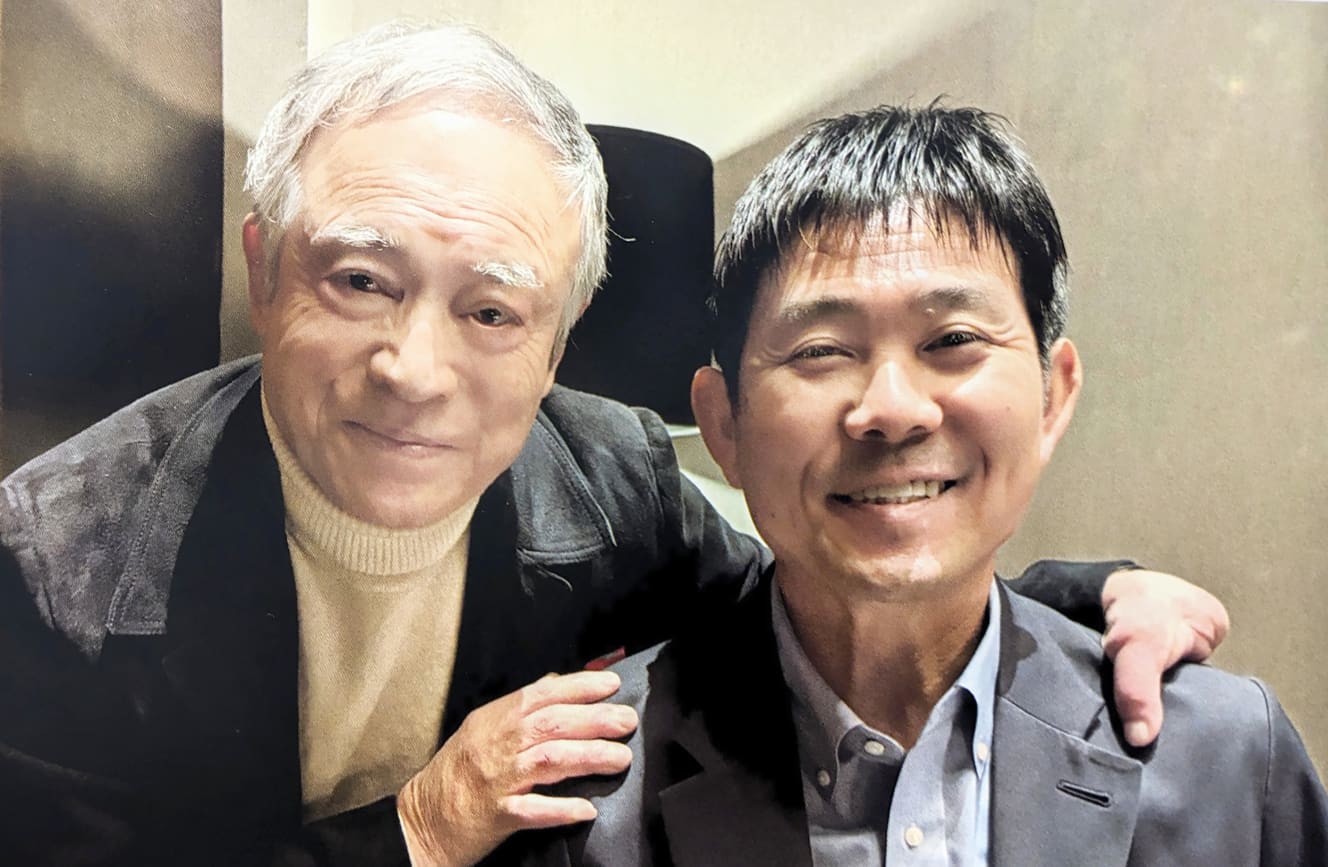
The roots of Sanfrecce, back in their Mazda days, when they were senior and junior colleagues.
After becoming Japan’s national team manager, they continued meeting over meals and exchanging emails, discussing how to build the strongest possible team—
――Why has the Japan national team become stronger?
An Olympic Games was held in Mexico 58 years ago, in one of the host countries for the North and Central America World Cup. The Japan national soccer team achieved the remarkable feat of winning the bronze medal. When Ikio Matsumoto (84), one of the three forwards on that team, posed the question mentioned at the beginning, Japan manager Hajime Moriyasu (57) reportedly gave a one-line answer:
“We are no longer Japanese.”
Matsumoto interpreted those words as encapsulating the current state of Japanese soccer.
“Japanese people have a tendency to devote themselves to an organization, even if it means suppressing themselves. That is one of the strengths of Japanese culture, but it can also be said to be an unsuitable mindset for soccer. In baseball, managers and coaches can constantly give instructions, such as calling for bunts or stolen bases, but soccer does not work that way. Once a match begins, players have to make their own decisions in each situation. Individual ability is necessary. They have to express themselves. For a long time, Japanese players lacked that ability to express themselves.”
The origin of the strength of Moriyasu Japan
The only exception was the Japan national team at the Mexico Olympics. In an era when dedication to the team was highly valued, there was a striker named Kunishige Kamamoto who possessed the individuality to focus solely on scoring goals. What Matsumoto still vividly remembers is an exchange during a match between Kamamoto and Shigeo Yaegashi, a senior player more than 10 years older than him.
“At the time, Yaegashi was the only player in Japanese soccer history to have appeared in the Olympics three times. As captain and a midfielder, Yaegashi was a believer in total soccer and warned Kamamoto, saying, ‘Gama! Get back and defend!’ (Gama being Kamamoto’s nickname.) Kamamoto then said this to such a senior player: ‘Senpai, all I have to do is score goals, right?’ At that time, Kamamoto was the only one on the national team who was not Japanese.
But things are different now. Nearly 200 players are playing in Europe. They have been tested in a world where they cannot increase their salaries unless they create and express their own style of soccer and win a starting position. Through that experience, their individuality has been sharpened. Those players return to the national team, and when their individuality is combined with the Japanese sense of teamwork and cooperation, Moriyasu Japan is born. Finally, Japan’s national team players have become what soccer players are supposed to be.”
Matsumoto and Moriyasu are senior and junior colleagues from Toyo Industries (now Mazda), the organization that became the foundation of Sanfrecce Hiroshima. In 1998, when Matsumoto was serving as general manager of Kyoto Purple Sanga (now Kyoto Sanga), he was involved in negotiations to acquire Moriyasu, who was still an active player at the time. Since Moriyasu became manager of the Japan national team, the two have reportedly met over meals about twice a year to discuss things. The question at the beginning was raised during one of those meetings. How does Matsumoto view Hajime Moriyasu?
“He does not make mistakes in judgment. He takes his time, remains calm, and makes decisions. He does not rush and make errors. Being the manager of the Japan national team naturally comes with a great deal of pressure, but he does not lose himself. During his playing days, Moriyasu was a defensive midfielder, so he has the ability to anticipate dangerous situations and read the game. I think that shows in his behavior as a manager.”
Moriyasu has led the Japan national team for eight years. Matsumoto evaluates his journey as a manager by saying, “His management ability really stands out.”
“The coaching staff is excellent. It is not only Toshihide Saito and Ryoichi Maeda, who work well with Moriyasu, but also Hiroshi Nanami, who is the type of person who speaks his mind. In 2024, former national team captain Makoto Hasebe joined the staff, and Shunsuke Nakamura was brought in ahead of this World Cup. This is a group that clearly shows Moriyasu’s intention to make the coaches do their jobs. He has carefully considered how to handle the high-level players on the national team. Moriyasu doesn’t make careless remarks, does he? He has had very few conflicts with players. That is actually not easy. He always respects others and brings out the best in them. You can catch a glimpse of his character through that.”

Daichi Kamada’s position becomes a key issue
There was only one occasion when Matsumoto offered criticism of Moriyasu’s decisions as manager. It concerned Kaoru Mitoma’s (29) usage during the Tokyo Olympics.
“I would never tell a national team manager what to do or give him advice. However, only during the Tokyo Olympics, after we lost to Spain in the semifinals, I sent Moriyasu an email. I wrote, ‘Why aren’t you using Mitoma?’ In the following third-place playoff against Mexico, Mitoma came on as a substitute. Japan lost the match 1–3, but Japan’s only goal was scored by Mitoma.”
Mitoma later came on as a substitute and scored two goals in the match against Australia that secured Japan’s place at the Qatar World Cup. Matsumoto had viewed him as the player on the Japan national team who could express the most individual ability.
“Mitoma can get involved in goals and he can create chances. He always delivers one or the other during matches. He is an extremely important presence for the team. That is exactly why his absence hurts.”
Without Mitoma, who will hold the key to helping Moriyasu Japan advance through the group stage? The first player Matsumoto mentioned was midfielder Kaishu Sano (25).
“Sano has really improved, hasn’t he? He not only moves over a wide area in midfield and wins the ball, but he can also carry it forward from there. Ayase Ueda (27), who became the top scorer in the Dutch league, has learned how to stop floating balls with his chest while jumping. Just that alone allows him to hold up the ball more effectively in the attacking third. He also has his heading ability.
For Japan to advance, they need to press from the front and play compactly by keeping the distance between the forwards and the defensive line short, just like when they defeated Germany and Spain at the Qatar tournament. Winning the ball in the attacking area and converting decisive chances will be the key. That will be the lifeline.
The player who will determine the team’s direction in the current national squad is Daichi Kamada (29). The question is where to use him. Will he play as a double pivot alongside Kaishu Sano, or will Wataru Endo (33) or Ao Tanaka (27) take the defensive midfield role, allowing Kamada to move further forward? That will be one of the major points of focus.”
Keito Nakamura (25) and Daizen Maeda (28), among other speedy players, will also be important pieces.
“Nakamura has a pattern where he dribbles in from the left side and cuts inside to shoot, but opponents may already be aware of that. If that happens, bringing on Junya Ito (33) in the second half, using his speed to get past defenders and deliver crosses, could become an important option. Maeda’s speed should also be a weapon. That is a card they should use at some point.”
In the knockout stage of the Qatar World Cup, Japan lost to Croatia on penalties and missed out on reaching the quarterfinals for the first time in history. Matsumoto says he later met Moriyasu and told him directly about something.
“I asked him, ‘Who decided the order?’ From the stands, it looked like players were coming forward saying, ‘I’ll take it,’ and deciding among themselves. If they decide by themselves and lose, then it becomes the players’ defeat. I questioned whether that was the right way to build a team. I told him, ‘If the manager decides the order and they lose, then the manager can take responsibility.’ That is something you have to do. Moriyasu told me, ‘I will do that.’ If Japan had won that penalty shootout, they would have reached the quarterfinals. They already have that level of ability.”
Matsumoto will watch the World Cup in person this time. He plans to visit Mexico City, the capital of Mexico, for the first time in 58 years and also visit the Azteca Stadium, where Japan won the bronze medal in the Olympic third-place playoff.
“My motto in life is ‘No regrets when you give your all.’ Some people say that if you give everything and lose, you have no choice but to accept it, but I do not think that way. If you give everything you have, you will always win. That is my belief.”
The man who once changed the history of Japanese soccer under the skies of Mexico will now watch over the battles of Moriyasu Japan.
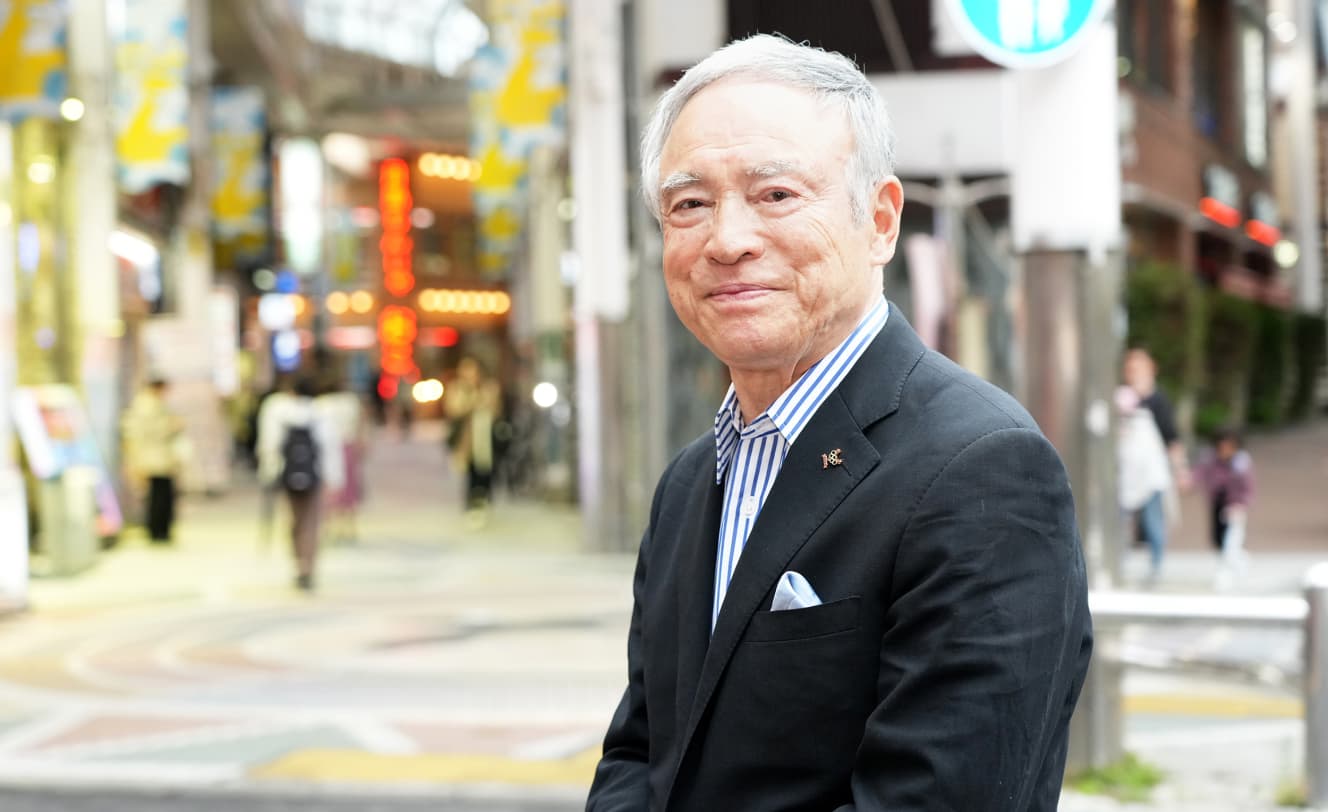
From the June 26 & July 3, 2026, combined issue of “FRIDAY”
Reporting and Text: Masao Kurihara Photography: Kojiro Watanabe