[Full Text] Keito Nakamura Is Ready to Lead the Attack After Battling Through Adversity
This Is His First World Cup! “I Watched the Roster Announcement Live Stream with My Heart Pounding”


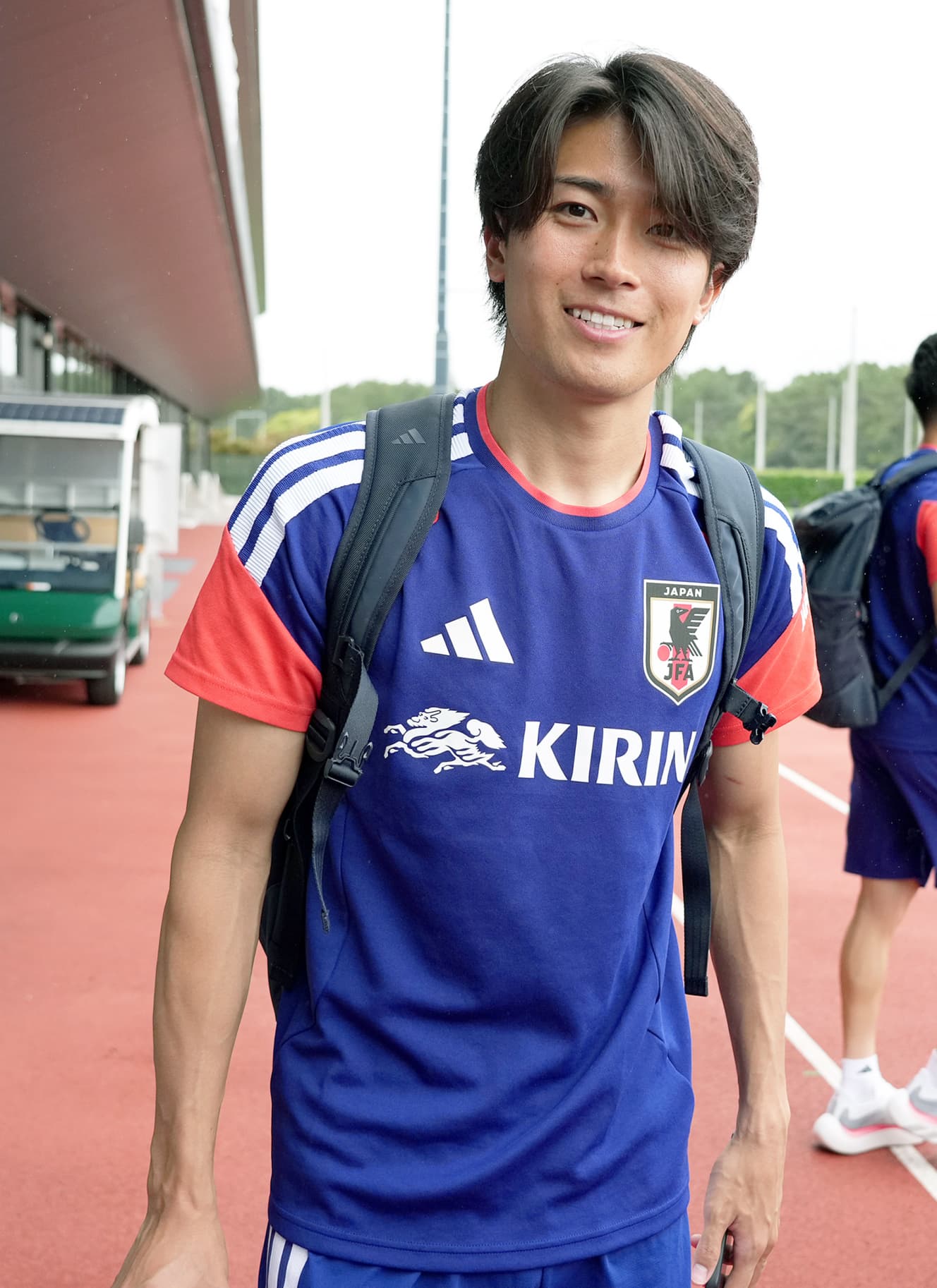
At long last, a World Cup appearance
“We created some good attacking moves and had our chances. Personally, there was one opportunity I really wanted to finish, but I hesitated between shooting and passing, and ended up with a half-hearted shot. I still have plenty to improve when it comes to that final bit of quality. But rather than being in peak form right now, I’d rather reach my peak when the tournament starts.”
After Japan’s 1-0 victory over Iceland—their final match before the World Cup—Keito Nakamura (25), who started at left wing-back, spoke about both the areas he still needed to improve and the confidence he had gained.
The North American tournament will be Nakamura’s first World Cup. He found out he had made the squad while watching the live-streamed squad announcement press conference on May 15. Although he had been called up regularly since making his senior Japan debut after the 2022 Qatar World Cup, he admitted he was still watching the stream with butterflies in my stomach.
“I was confident about everything I’d done to get here, but you never know what can happen until your name is actually called. The reaction on social media after I made the squad was on a completely different level compared to any of my previous national team call-ups.”
The World Cup had always been a special stage for him. Watching the 2006 World Cup in Germany while in his final year of kindergarten set him on the path that would shape his life.
“I loved Ronaldinho. Brazil’s team back then was packed with stars like Kaká, Robinho, Ronaldo, and ‘RobeKaru’ (Roberto Carlos). They were just so much fun to watch. I completely fell in love with football, and from the third grade I started attending Kashiwa Reysol’s soccer school.”
At 22, Nakamura watched the previous World Cup in Qatar from home.
“Just like any other viewer. Japan beat Germany and Spain in such dramatic fashion, and I thought, ‘Wow, that’s incredible.’ (laughs)”
Now, Nakamura heads to the North American World Cup as one of the key figures in Japan’s national team.
Reunion on the left flank
Another reason expectations are rising for Keito Nakamura is Japan’s situation on the left side of the pitch. Takumi Minamino (31), who suffered a torn ACL in his left knee last December, has been ruled out. Kaoru Mitoma (29), who injured his left hamstring in a league match in early May, was also forced to give up hope of playing at the World Cup.
In March’s match against England at the iconic Wembley Stadium, Nakamura started at left wing-back while Mitoma played as the left-sided attacking midfielder. The two frequently switched positions and combined brilliantly, with Mitoma scoring the winning goal from Nakamura’s final pass. Their chemistry looked set to be a major weapon at the World Cup, making Mitoma’s absence an especially painful blow.
“He’s probably the one who’s most disappointed, but there’s no point talking about players who aren’t here. Even I don’t know whether I’ll be used as a wing-back or in the attacking midfield role. Whatever position I end up playing, I hope I can build good combinations with whoever is alongside me.”
In the first half against Iceland, Nakamura partnered Junya Ito (33) down the left side, with Ito playing as the left-sided attacking midfielder. The pair had previously been teammates at Stade de Reims.
“Junya and I played together at Reims, so I thought our understanding was really good. We created several dangerous moves together, and I think we can reproduce that in the tournament proper. The more we train together, the better it’ll get.”
Nakamura has consistently delivered against football’s elite. His goal against Brazil and his match-winning assist at Wembley were no flukes—but behind those performances lay struggles that few people knew about.
“Stade de Reims played in France’s Ligue 2 during the 2025-26 season. I don’t really like saying this, but I wasn’t satisfied playing in the second division. I was determined to prove that. To make the World Cup squad, I knew I had to show what I could do against top teams like Brazil and England.”
Last summer, when Stade de Reims were relegated, Nakamura wanted to leave the club. However, a transfer never materialized, forcing him to spend the crucial season before the World Cup in the second division.
“Things didn’t go well for the team, and I heard all sorts of criticism from the supporters and fans. There were plenty of frustrating moments. That year felt incredibly long.”
Even so, he finished the season strongly, scoring regularly to end with 14 goals. Although Reims failed to win promotion back to Ligue 1, Nakamura still recorded double-digit goals for the second consecutive season.
“To be honest, it wasn’t easy to stay motivated. What kept me going was knowing that the World Cup was waiting after the season.”
Playing under such difficult circumstances also helped him develop.
“The intensity of one-on-one defending wasn’t that different from the first division. Our team also had a lot of young players who liked to take defenders on by themselves, so it wasn’t always easy to break teams down through combinations. I found myself taking on defenders one-on-one five or six times a match, and because I didn’t always have much support, I made a conscious effort to finish moves with a shot whenever I got the chance. That attacking mindset has definitely carried over into the national team.”

Emotions affect your game
Japan will face the Netherlands, Tunisia, and Sweden, in that order, in Group F.
“It looks like Sweden, who struggled in qualifying, have found their form after coming through the playoffs. A group with two European teams definitely won’t be easy. But every country that reaches the World Cup is strong. In that sense, it doesn’t really matter who we face.”
Japan’s opening opponent is the Netherlands. On the right flank is the attack-minded Denzel Dumfries (30), and if Nakamura starts at left wing-back, he will have a major defensive responsibility as well.
“I won’t be defending him on my own. The left-sided player in our back three will be there to support me. The important thing is to get tight to whoever comes at me, use my body, and not lose the battle. I just have to stay focused.”
One of the most handsome players in the Japan squad, Nakamura enjoys immense popularity among fans of all ages, but he insists he never gets carried away. In fact, he revealed, “You’d expect me to listen to upbeat music before a match, but I actually listen to slow-tempo ballads.”
“Your emotions affect the way you play. In football, there’s no point getting yourself overly fired up on your own. What’s important is staying calm and doing what you’re capable of.”
So what is he capable of?
“Making plays that lead to goals and assists.”
“First, I have to do the hard work and defensive duties that are the foundation of the team. Then, if I can express my own style on top of that, that’ll be ideal. If I can become the starting point of our attacks and help the team that way, I’ll be happy.”
Drawing strength from both the frustration he experienced in France’s second division and the confidence he gained at Wembley, Keito Nakamura is preparing to make Japan’s left flank his own at his first World Cup.
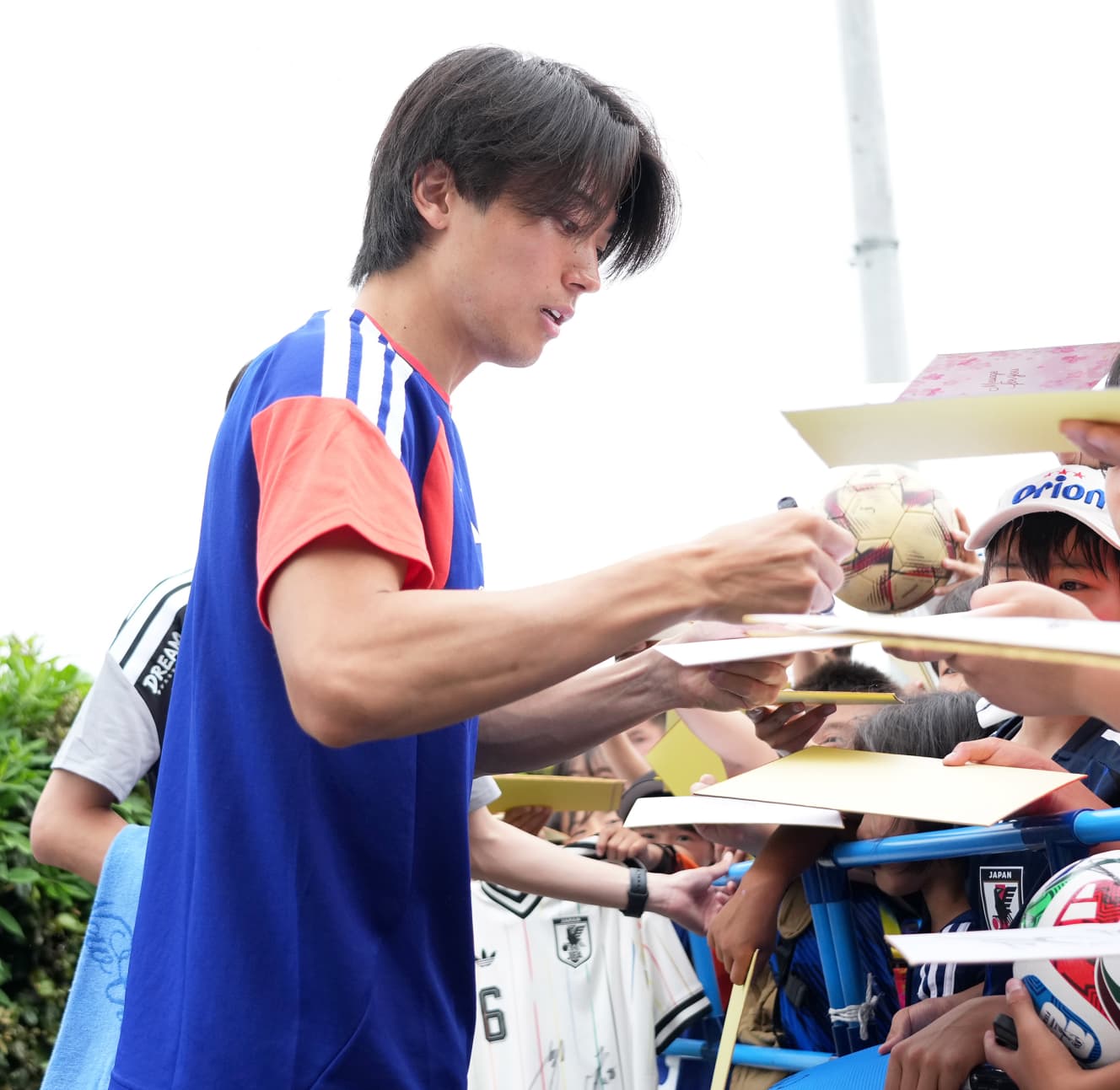
From the June 26–July 3, 2026, combined issue of “FRIDAY”
Reporting and Text: Masao Kurihara PHOTO: Kōji Watanabe