The Hidden Loneliness of People Who Can’t Clean Up, According to a Buddhist Monk Who Leads Kansai’s Top Cleanup Firm
How did people living ordinary lives end up as residents of hoarder homes?—


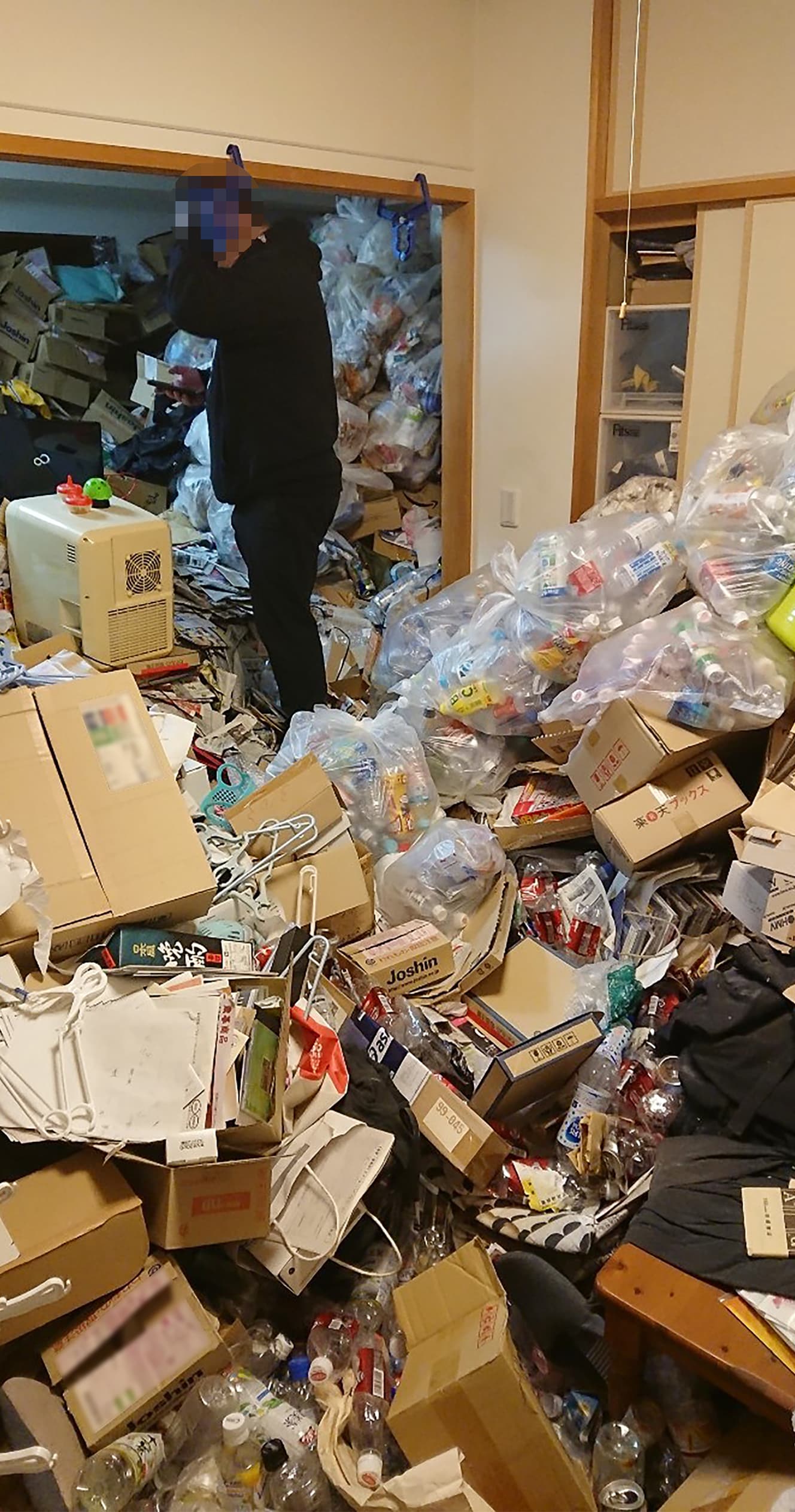
The people who live in hoarder homes
“About seven years ago, I visited a 45-story high-rise condominium in Osaka Prefecture. The client was a man in his mid-40s. He had previously worked as a real estate salesperson and was an elite performer who was earning an annual income of ¥30 million by the age of 26. His unit was a three-bedroom apartment on the 28th floor—more than spacious enough for someone living alone. But when I stepped inside, every room was packed with garbage bags stacked all the way to the ceiling. Rotten food had been left on the floor, causing cockroaches to breed, and even pigeons had begun entering the apartment after recognizing the garbage as a food source.”
The man recounting this story is Noriyuki Kamezawa (45), president of Kansai Clean Service, a specialized cleaning company based in Osaka City.
“Hoarder homes” have now become a social issue in Japan, often leading to disputes with neighbors because of foul odors and insect infestations. Over the past five years (2020–2024), more than 6,000 cases have been officially identified. Confronting such homes on a daily basis is the work of Kamezawa’s company. While specialized cleaning companies typically handle scenes involving people who died alone, his firm also takes on the cleanup of hoarder homes that residents are no longer capable of dealing with themselves.
Kamezawa founded Kansai Clean Service in 2007. After years of cleaning countless hoarder homes and properties where deaths had occurred, he decided in 2021 to become an ordained Shingon Buddhist monk, saying he also wanted to care for the emotional well-being of bereaved families. Today, as part of his specialized cleaning work, he also performs Buddhist rites such as chanting sutras, making him a distinctive figure within the industry.
According to Kamezawa, poverty and social isolation often lie behind the existence of hoarder homes. We spoke with him about the reality of these homes across Japan and the loneliness of people who are unable to clean up after themselves.
The refrigerator was filled with beef tongue and Mounjaro
“It may come as a surprise, but many people living in hoarder homes are actually high earners. A typical example was the resident of the high-rise condominium I mentioned earlier. He had worked as a real estate salesperson and developed depression after experiencing problems with workplace relationships. After leaving his job, he never worked again and lived by drawing down his savings. Gradually, he reached the point where he didn’t want to see anyone, so he stopped even taking out the garbage. He relied on online shopping and food delivery for his daily needs. After living that way for about three years, his apartment had become a hoarder home.”
According to Kamezawa, many of his clients are women who work in the nightlife industry. One of them worked as a hostess at a cabaret club in Kitashinchi, Osaka’s entertainment district.
“Her one-bedroom apartment in Osaka City was littered with luxury-brand handbags, designer clothing, and expired food that had gone rotten. Her refrigerator was packed with gyūtan (beef tongue), which she had received through Japan’s ‘furusato nōzei’ hometown tax donation program, and Mounjaro (a diabetes medication often used off-label for weight loss).”
The woman reportedly worked as an acupuncturist from the age of 20 while also taking a second job in the nightlife industry.
“People working in hostess clubs often receive snacks and sweets from customers as gifts. When I visited her apartment, many of those gifts were still unopened and piled up. Around the age of 22, she became pregnant through what is commonly known as ‘papakatsu’—a compensated dating arrangement with older men. She didn’t know who the father was and ultimately had an abortion.”

Living with a Corpse
Kamezawa’s work has not been limited to hoarder homes. He has also handled the cleanup of many properties after residents have died. One such case was the cleanup of a body disposal scene in Higashiosaka City in June 2023.
“The property was a unit in an apartment building that was more than 50 years old. At the time, a father in his 80s and his son in his 50s lived there together. They apparently made a living collecting recyclable paper. Then one day, neighbors stopped seeing the father, and a foul odor began coming from the apartment. When the landlord questioned the son, it emerged that the father had died.
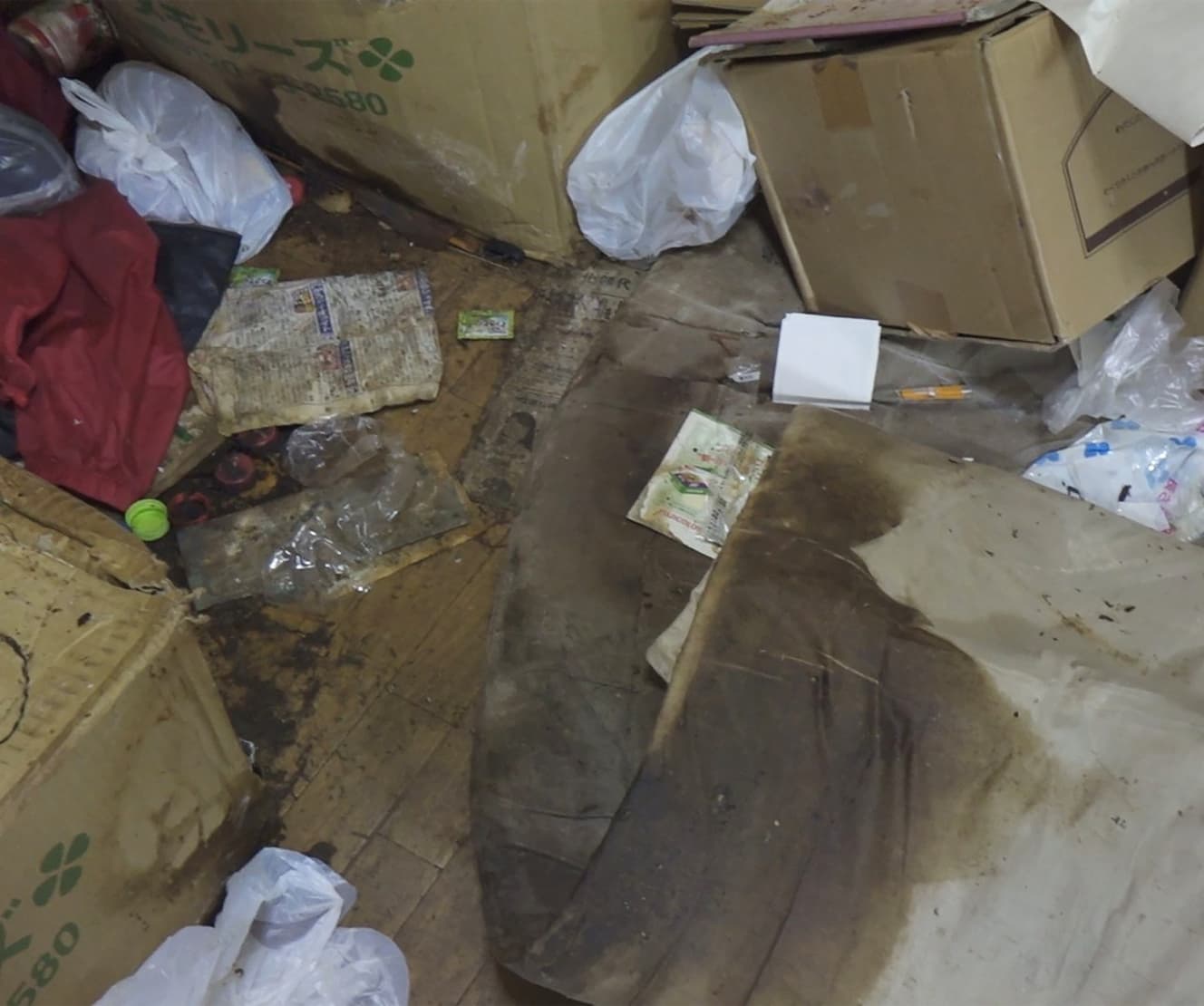
When we entered the apartment, we noticed not only the garbage but also a large number of bottles of Febreze. It appeared the son had been spraying the father’s body with Febreze to mask the smell of decomposition. Rags and tissues had also been stuffed into the deceased’s ears and mouth—presumably in an attempt to stop bodily fluids and maggots from leaking out.”
Why did the son continue living with his father’s body instead of reporting his death?
“Their paper collection work was essentially day labor, and the household was supported mainly by the father’s pension. Once the father’s death was reported, those pension payments would stop, making it impossible for the son to survive. As a result, he continued hiding his father’s body.
The son apparently spent the pension money on his hobby of raising insects. There were more than 100 insect cages in the apartment. Some contained expensive beetles, such as Japanese giant stag beetles, worth tens of thousands of yen each. By the time we carried out the cleanup, however, every one of the insects had died. The son was later arrested on suspicion of abandoning a corpse.”
Kamezawa ended with this warning:
“Anyone can end up living in a hoarder home after something triggers it—a breakdown in human relationships, the death of a family member, or some other life event. Some people are so ashamed of others finding out that their home has become a hoarder house that they never seek help from the authorities or professional cleaners, and they end up dying alone.
These cases rarely make the news, but there are far more hoarder homes and lonely deaths than most people realize.”
From the June 26–July 3, 2026, combined issue of “FRIDAY”