Even with the Export Ban Lifted, the Reality Is That “Japanese Weapons Are Second-Rate”… The Dark Side of Naive Top Salespeople and the Ministry of Defense’s “Sloppy Procurement”


Expensive and underperforming… a desperate arms development effort
“Why is it necessary to abolish the five categories? I want a proper explanation.” “I don’t want to see Japanese weapons used on the battlefield.” “A realistic decision to protect Japan’s domestic defense industry.”…
On April 21, when the government approved the revision of the “Three Principles on the Transfer of Defense Equipment” in a cabinet meeting, lifting the ban on the export of lethal weapons and military equipment, related keywords trended on social media, and heated debate raged between supporters and opponents.
Until now, Japan had limited the export of domestically produced finished defense equipment to the “five categories” for non-combat purposes, such as rescue and transport; however, the government has abolished these restrictions. This move now allows for the export of finished products with lethal and destructive capabilities, such as fighter jets, escort vessels, and missiles.
Some point out that because Japanese defense equipment must first and foremost conform to the Self-Defense Forces’ specialized specifications, the international competitiveness of the companies responsible for development fails to grow.It is therefore understandable that more than 100 domestic companies have withdrawn from the defense industry since 2003. Does Japan even possess any weapons with international competitiveness? What is the actual standard of this country’s tanks and fighter jets?
“I think many people believe that Japanese weapons and military equipment are top-class, but that is a major mistake. They are expensive. Their performance is poor. They are costly to maintain. From a global perspective, Japanese weapons are mostly second- or third-rate.”
Shinichi Kiyotani, a defense journalist who has continued to report on the reality of the Self-Defense Forces’ equipment procurement, offers a harsh assessment.
“Since the Self-Defense Forces’ equipment is custom-designed from scratch to suit Japan’s unique terrain and legal system, the pace of development is extremely slow. It’s common for armored vehicles, tanks, and rifles to take 30 years to procure, which in turn delays modernization.
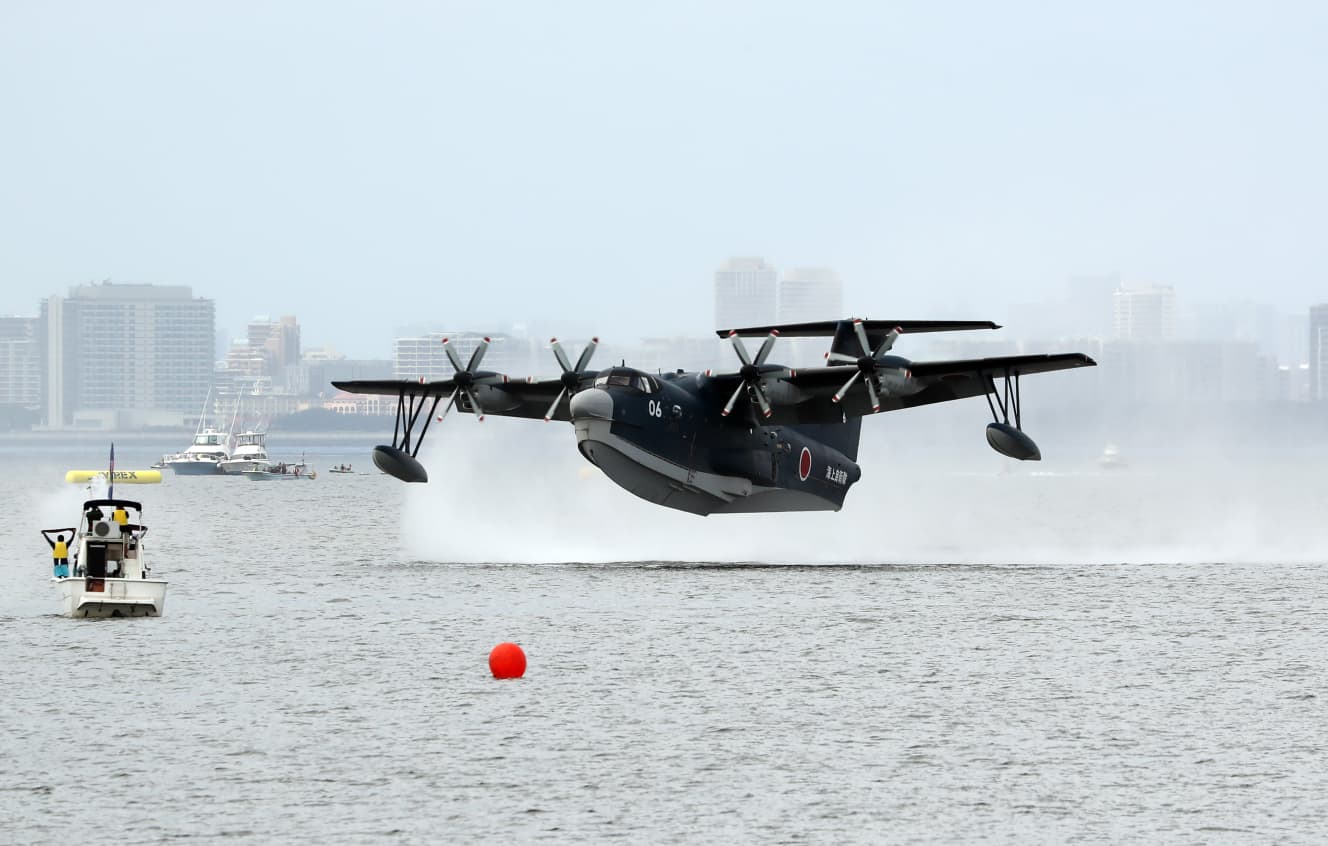
The Maritime Self-Defense Force operates a seaplane called the ‘US-2’ (an aircraft capable of landing and taking off on both land and water), and the Ministry of Defense proudly boasts that it is ‘a world-class, amazing seaplane.’ However, the navies of the United States and the United Kingdom have not used seaplanes since World War II.The Self-Defense Forces are pretty much the only ones still using such an outdated relic, which is both costly and inefficient to operate.
Even when it comes to drones, their introduction into the Self-Defense Forces has been significantly delayed. Japan has not made much progress in their development either.In short, neither the Self-Defense Forces nor the Ministry of Defense possesses the leadership required to develop weapons in the first place, ” (Mr. Kiyotani, as quoted below)
No Competition… A Defense Industry Relying on Amakudari
Were the “prime contractors” involved in Japan’s defense industry—companies that receive orders directly from the Ministry of Defense—merely subcontractors whose role was simply to carry out the actual work according to the instructions and specifications provided by the Ministry of Defense and the Self-Defense Forces?
“Manufacturers take the stance of ‘We’ll build it because we were told to.’ As long as they accept retired officials from the Self-Defense Forces, work will keep coming in indefinitely. Moreover, since companies have carved out distinct niches for themselves in specific fields, there is no competition based on market principles.
For example, in the case of sonar (sound detection equipment) used on submarines and escort vessels, the market is divided between active and passive sonar, with NEC and OKI splitting the small domestic market between them. Naturally, the Ministry of Defense’s research and development budget is allocated to these two companies.Since manufacturers cannot secure sufficient development funds, it is difficult for them to pursue technological innovation. Neither company can afford to hire employees with PhDs in acoustics, so their development teams are also thin on the ground.
There are three helicopter manufacturers in Japan, but their customers are almost exclusively the Self-Defense Forces. The Japanese police, fire departments, and Coast Guard all use foreign-made helicopters. The Self-Defense Forces are the only ones using helicopters that are uncompetitive in terms of both performance and price.”
“High-Cost Weapons” That Won’t Sell Globally
Neither the Ministry of Defense nor the Self-Defense Forces—nor even the defense industry itself—has yet recognized that the defense industry is a “business.” Mr. Kiyotani asserts this unequivocally.
“ It goes without saying that the research, development, production, and repair of weapons are also ‘business.’ When procuring fighter jets or tanks, the procurement period, quantity, and total budget must be determined in advance.In other countries, these details are determined in advance, and contracts with suppliers are signed after parliamentary approval. In Japan, however, it is unclear what will be procured, in what quantities, by when, or what the total cost will be. This is because the Self-Defense Forces do not specify these details.
Under these circumstances, manufacturers cannot draw up business plans for maintaining production lines or making capital investments in machine tools. Neither the Ministry of Defense nor the Self-Defense Forces seems to understand this. And yet, the defense industry itself doesn’t even question it.”
Do the Ministry of Defense and the Self-Defense Forces lack business acumen entirely, or are they simply out of touch with reality? Such organizations are leading the development of weapons and military equipment. Can they really do business with foreign governments or break into overseas markets under these circumstances?
“The global defense and military industry is a red ocean. There are far too many suppliers relative to the market size. You can’t break into it unless performance, quality, cost, and after-sales service are all at a high level.
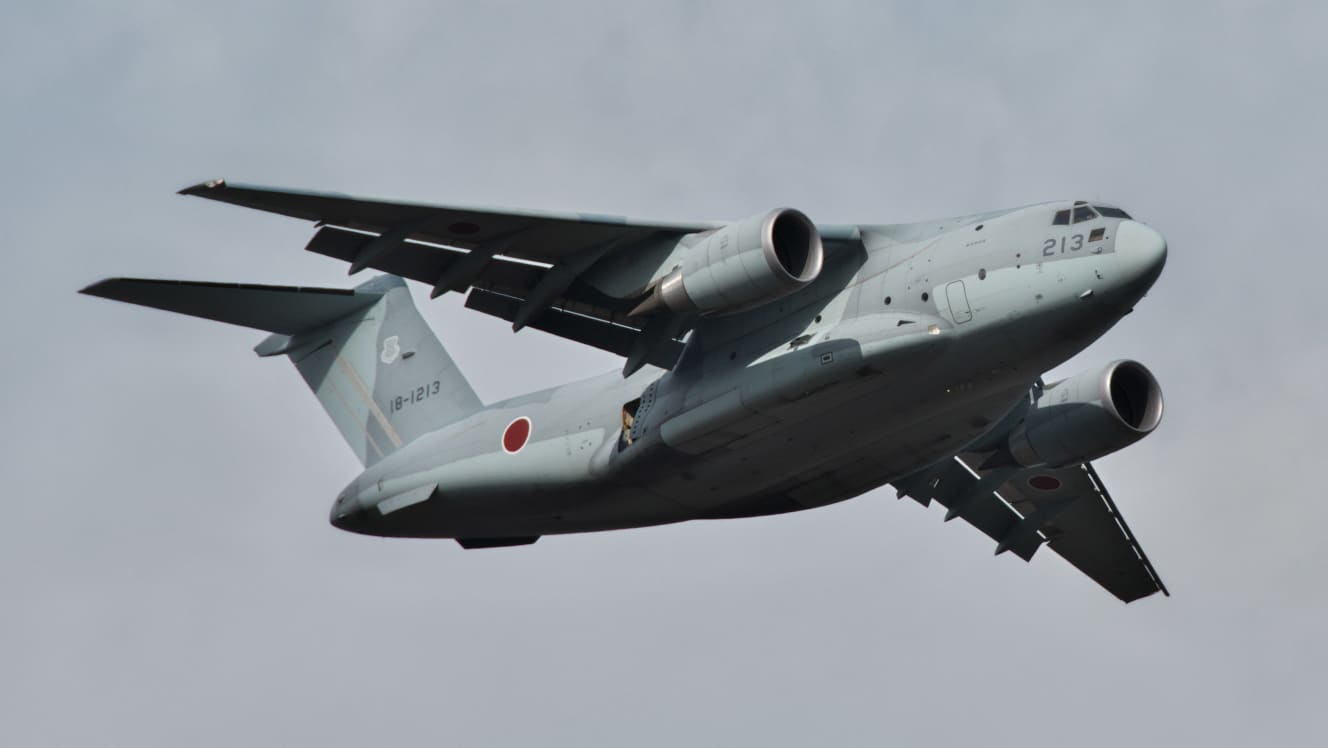
For example, the Japan Air Self-Defense Force’s ‘C-2 transport aircraft’ has incredibly high development and operational costs. The U.S. has the ‘C-17,’ a transport aircraft with a capacity of nearly 80 metric tons, but it costs almost the same as the 30-metric-ton ‘C-2.’ Maintenance costs are five to seven times higher.”
The “P-1 patrol aircraft” had problems with its development process and program, and it was pointed out as a “failure” even during the development phase. However, the Ministry of Defense pushed ahead with the procurement, prioritizing organizational conventions such as “once a plan is decided, it cannot be revised” and “purely domestic development from scratch.”Then, last year, an investigation by the Board of Audit of Japan revealed its low operational rate. From what I’ve gathered during my reporting, the operational rate was only about 30 percent.
The United States has a patrol aircraft called the “P-8 Poseidon,” which was developed based on the commercial “Boeing 737” to keep development costs down and concentrate the budget on the systems. In contrast, Japan insists on developing everything—from the airframe to the engines—from scratch. It’s only natural that costs would skyrocket.
“ Are there really any buyers overseas who would want such a thing? ”
Can Weapons with Zero Combat Experience Be Sold?
Even if there were a country willing to buy them, would Japanese weapons actually be useful in combat?
“While weapons from the U.S. and Israel are ‘combat-proven’—having demonstrated their performance in actual combat—Japanese weapons have never been used in combat, so of course they aren’t combat-proven. They haven’t even been properly tested. So will they really be useful? I suspect very few countries would adopt them.
Over the past 25 years or so, Turkey and South Korea have significantly expanded their exports. They’ve learned from their painful experiences in overseas markets and have been improving their capabilities. Japan should also enter overseas markets and face some setbacks. If they’re confronted with reality, they’ll likely be motivated to learn.”
Covering Up Failures… The Ministry of Defense’s Problematic Culture
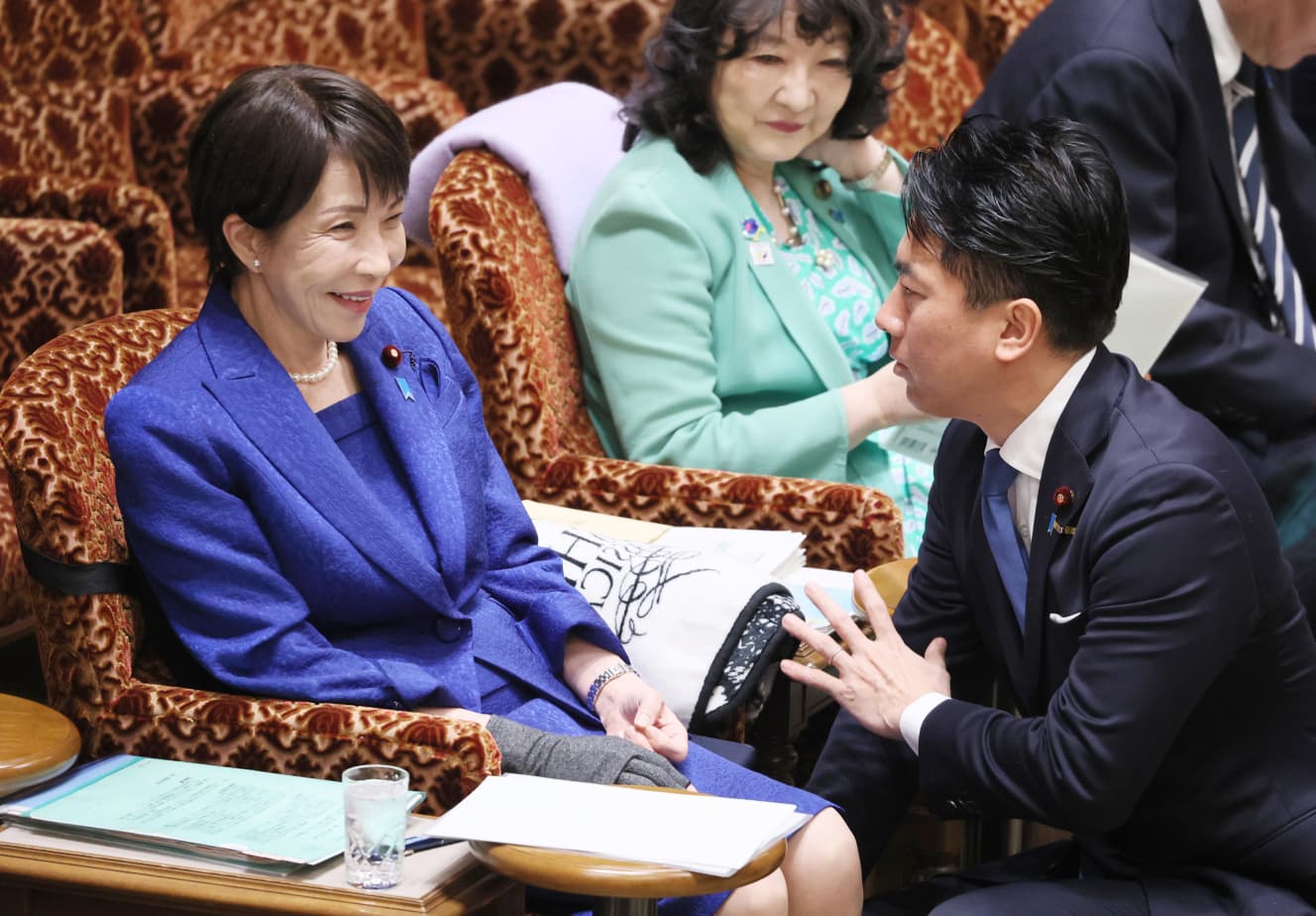
Prime Minister Sanae Takaichi and Defense Minister Shinjirō Koizumi each visited Australia and Southeast Asian countries during the Golden Week holiday period to lead a major sales push for defense equipment. They must genuinely believe that Japanese weapons and military equipment are fully capable of holding their own as “products” on the global market.
“Many politicians are poisoned by ‘technonationalism’—a pride in their own country’s science and technology. They only listen to the Ministry of Defense, the Self-Defense Forces, and the defense industry, and because they don’t look at the global military industry or markets, their knowledge becomes biased. In short, politicians don’t grasp reality.
In fact, there are quite a few countries overseas that consider Japanese weapons to be excellent. This is likely because Toyota and Sony products are highly regarded worldwide, and that image carries over.”
To begin with, very little information about Japanese weapons actually makes it to the public.”
In many cases, only members of the press club are allowed to attend the Ministry of Defense’s regular press conferences and other media events; freelance journalists and reporters from specialized publications are generally barred from entering. Because substantive questions are rarely asked, problems and scandals involving the Self-Defense Forces tend not to come to light.
“A few years ago, the Ground Self-Defense Force purchased six ATVs (four-wheel buggies) from Kawasaki Heavy Industries with the intention of loading them onto Osprey aircraft, but they were repurposed as general-purpose light vehicles instead.However, although calculations showed they would fit inside the Osprey, they were actually too large, and they could not be loaded during evaluation tests. As a result, mass production was shelved.
They could have determined whether they would fit by borrowing the original ATVs from Kawasaki Heavy Industries and testing them. There was no need to buy six units just for prototyping.”
Neither the Ministry of Defense nor the Ground Self-Defense Force disclosed this fact. They did not explain the failure, and no one took responsibility. On the contrary, they are using those general-purpose light vehicles in the Comprehensive Firepower Exercise (the Ground Self-Defense Force’s largest live-fire exercise) and disaster relief operations, creating the impression that the development was a success.
“This is just one example. They engage in this kind of sloppy procurement all the time, ”
Why are such inefficiencies and failures being allowed to continue? Mr. Kiyotani points out that the primary cause lies in the Ministry of Defense’s “systematic withholding of information.”
“The Ministry of Defense classifies even information that doesn’t need to be hidden. Based on their repeated experience of covering up procurement failures, they’ve developed a reflexive mindset that if they keep things hidden, they won’t face criticism. After all, if they don’t disclose it, the public won’t find out.
Even with the Diet, they push ahead with equipment development without providing any explanation, then suddenly pressure lawmakers to approve the first-year budget once the procurement fiscal year begins. That makes it impossible for the Diet to debate or scrutinize the matter.”
In the United States, Congress and the Government Accountability Office thoroughly investigate the operational rates and mission success rates of fighter jets and other equipment, publish detailed figures, and hold the military strictly accountable. That’s why problems come to light and improvements are made. Japan currently lacks that system.”
Can we expect the Japanese Diet to function in a manner similar to the U.S. Congress?
“ In 2023, the Type 18 body armor was adopted by the Ground Self-Defense Force, and I reported that it was ‘an order of magnitude more expensive than foreign-made models.’ That was taken up in the Diet, and the procurement of that body armor was canceled and redesigned.
Even if it’s just one person’s small contribution, I believe that if information comes to light, it can spark a proper debate in the Diet, and there’s a possibility that problematic defense procurement practices will be corrected.”
We cannot expect self-cleansing from an organization that operates solely based on internal logic and common sense. Without external oversight and critical scrutiny, it will likely be impossible to ever reform defense procurement or correct wasteful spending on defense.
Under the banner of enhancing the defense capabilities of allied nations and strengthening the domestic defense industry, the Takashi administration began promoting the sale of weapons and military equipment overseas. However, there are things this country must do before formulating an export strategy.
“ We must reform the culture of cover-ups within the Ministry of Defense and the Self-Defense Forces, ensure thorough disclosure of information, and fulfill our accountability to the public and the Diet. Everything starts from there.”

▼ Shinichi Kiyotani, defense journalist. Served as Japan correspondent for the British defense magazine *Jane’s Defence Weekly* from 2003 to 2008. Currently serves as Japan correspondent for the German defense magazine *European Security and Defence* and is a member of the Japanese PEN Club.His books include *Blind Spots in National Defense* (PHP Institute), *Exclusive Defense* (Shodensha Shinsho), and *Defense Collapse: The “Galápagos-ization” of Self-Defense Forces Equipment* (Chuko Shinsho Rakure).His co-authored works include *Don’t Talk About Peace Without Understanding the Military* (co-authored with Shigeru Ishiba, Bestsellers) and *An Easy Guide to National Defense Studies* (co-authored with Shingo Hayashi, Kadokawa Gakugei Publishing).
Reporting and Text: Sayuri Saito PHOTO: Afro