[Playback ’16] Toshifumi Suzuki Goes on a Shopping Spree at 7-Eleven!! Our Magazine Witnesses His “Love for 7-Eleven” Following His Sudden Resignation


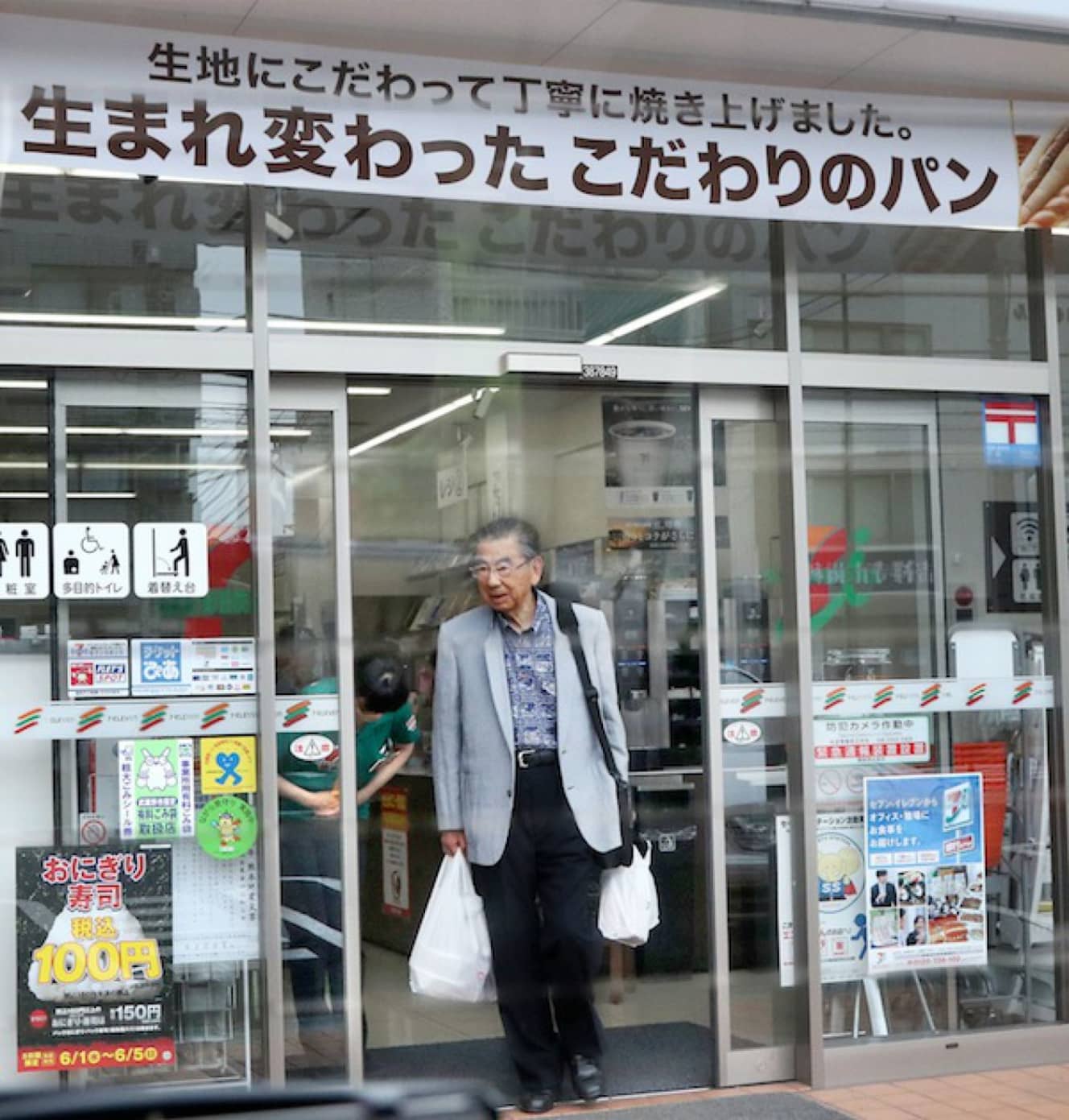
We caught up with him right after his “shopping spree”
What was *FRIDAY* reporting 10, 20, and 30 years ago? We take a look back at the topics that were the talk of the town back then in [Playback Friday].This time, we feature the June 24, 2006, issue from 10 years ago: “Visiting the Company-Operated Store Just a 3-Minute Walk from Home Every Week: Honorary Advisor Toshifumi Suzuki—His ‘Love for 7-Eleven’ That Led to Massive Shopping Sprees.”
Toshifumi Suzuki, Honorary Advisor to Seven & i Holdings and known as the “Father of Convenience Stores,” passed away on May 18 from heart failure (aged 93).As the founder of 7-Eleven Japan, he had long been at the helm of the company, but in April 2016, he announced his “sudden resignation” amid turmoil over the selection of a new president.
After that, he remained with the company under the title of “Honorary Advisor.” Just how much of his influence would remain at Seven & i Holdings? Amid public attention, our magazine captured an unexpected glimpse of Mr. Suzuki two months later (text in 《》 is quoted from past articles; titles are as of that time).
A 7-Eleven located in a certain upscale residential neighborhood. Things began to get hectic at the store at 10:30 a.m. on a weekend in early June. A female clerk appeared and began meticulously picking up small pieces of trash in front of the store. Then…
《 Twenty minutes later, Mr. Suzuki appeared, carrying a black shoulder bag.
After staying inside for about five minutes, he left the store carrying a large shopping bag filled with rice bowls and other items in both hands. We spoke with Mr. Suzuki as he began walking away, seen off by the store manager.
“Do you come here every week?”
“I sometimes go to the gym on Sundays, so I stop by on my way home—yes.”
—Do you still keep an eye on how the shop is doing?
“Of course. I’m still involved with it. I talk with Mr. Isaka (Ryūichi, president at the time) all the time at the company.I’m always looking ahead, thinking about how things will change five or ten years from now. To achieve that, what steps do we need to take right now? That’s why I focus on developing people who can do that. Seven-Eleven succeeded because it thought from the customer’s perspective.”
After finishing his remarks, Mr. Suzuki said, “Thank you very much,” and returned home.》
Products Improved by a “Single Word from the Top”
It is said that during his time as chairman, Mr. Suzuki would routinely visit a nearby store on his days off to buy and eat bento boxes and other items. If he felt the “quality had declined,” he would immediately call the company, and there were even instances where that product was removed from stores across Japan within 20 minutes. It is reported that products such as pork cutlet rice bowls, fried rice, and chilled Chinese noodles have been “improved” as a result of Mr. Suzuki’s scrutiny.
The 7-Eleven Mr. Suzuki visited is a company-owned store located about a three-minute walk from his home, managed by a 7-Eleven employee.At the time, out of the 18,768 7-Eleven stores nationwide, only 470 were company-owned. Among them, the employees entrusted with managing the company-owned stores that Mr. Suzuki was likely to visit seemed to have a particularly stressful job. A 7-Eleven official from that era commented in an article as follows:
“It’s a tough job to be the manager of a company-owned store within Mr. Suzuki’s usual haunts. He’d drop by unannounced and ask, ‘How’s it going?’ about product sales and the like.If you couldn’t answer a question about the inventory of items—like simmered dishes—that you don’t usually pay much attention to, he’d immediately check a nearby owner-operated franchise store. If the numbers didn’t match what Mr. Suzuki had in mind, senior executives would be in for a world of trouble come Monday.”》
The “love for 7-Eleven” of this charismatic leader—who had built the chain from its very first store, opened in Toyosu (Koto Ward, Tokyo) in 1974—was as strong as ever.
The Founding of Seven-Eleven, Which Everyone Opposed
In the 1970s, while working as an employee at Ito-Yokado, Mr. Suzuki observed the vitality of small independent stores fading away and came to feel that “society cannot function on large supermarkets alone.” When he proposed launching a new business model—the convenience store, which he had seen in the United States—he faced fierce opposition, both within the company and from those around him. Executives in the same industry and marketing experts also opposed the idea, saying, “There’s no way this will work in Japan.” Since no one within the company volunteered to take charge of the project, the initial team members were reportedly recruited from outside the company.
As mentioned earlier, 7-Eleven, which made its debut in Japan in 1974, successfully got innovative initiatives—such as the sale of rice balls and boxed lunches, as well as joint deliveries of products from different manufacturers—off the ground, reaching 100 stores by 1976. It subsequently evolved into the convenience store we know today—an indispensable part of our daily lives, offering services like utility bill payments and ATMs.
It is said that all of these strategies were initially met with opposition from those around him, who claimed, “There’s no way that will work.” In particular, when he established IY Bank (now Seven Bank) in 2001 to install ATMs, even his main bank opposed the move, stating, “There’s no way a retailer can do that.” Although partnering with a major bank was an option, Mr. Suzuki decided to go ahead with establishing the bank, and as a result, it turned a profit within three years.
His motto was “Adapting to Change.” In his book *The Creation of Business* (2003, Kodansha), he stated , “Since business exists because of customers, we must never forget their existence.” Recognizing that what “customers” seek is constantly changing with the times , he argued, “We must adapt to changes in our customers by changing ourselves.”
Perhaps the reason he continued to visit 7-Eleven even after stepping down from the company’s management was that this conviction never wavered.
PHOTO: Yasuko Sakaguchi