“I Didn’t Kill the Chicken,” “Exploitation by Shimakura”: Atsushi Mizoguchi Reveals “The True Face of Kazuko Hosoki” in *You’ll Fall into Hell*


〈The momentum of the Netflix drama *I’m Going to Hell* shows no signs of slowing down. More than a month has passed since its release, yet it has ranked No. 1 in Japan for six consecutive weeks in the weekly rankings (Series category). It has become a massive hit, making it into the top 10 in seven countries, including Singapore and South Korea.However, the series is strictly “fiction,” and there are many points that differ from the real Kazuko Hosoki. Atsushi Mizoguchi, author of *Kazuko Hosoki: The Witch’s Resume*, draws on his interviews from that time to reveal the true face of Hosoki—one that the series was unable to fully capture.〉
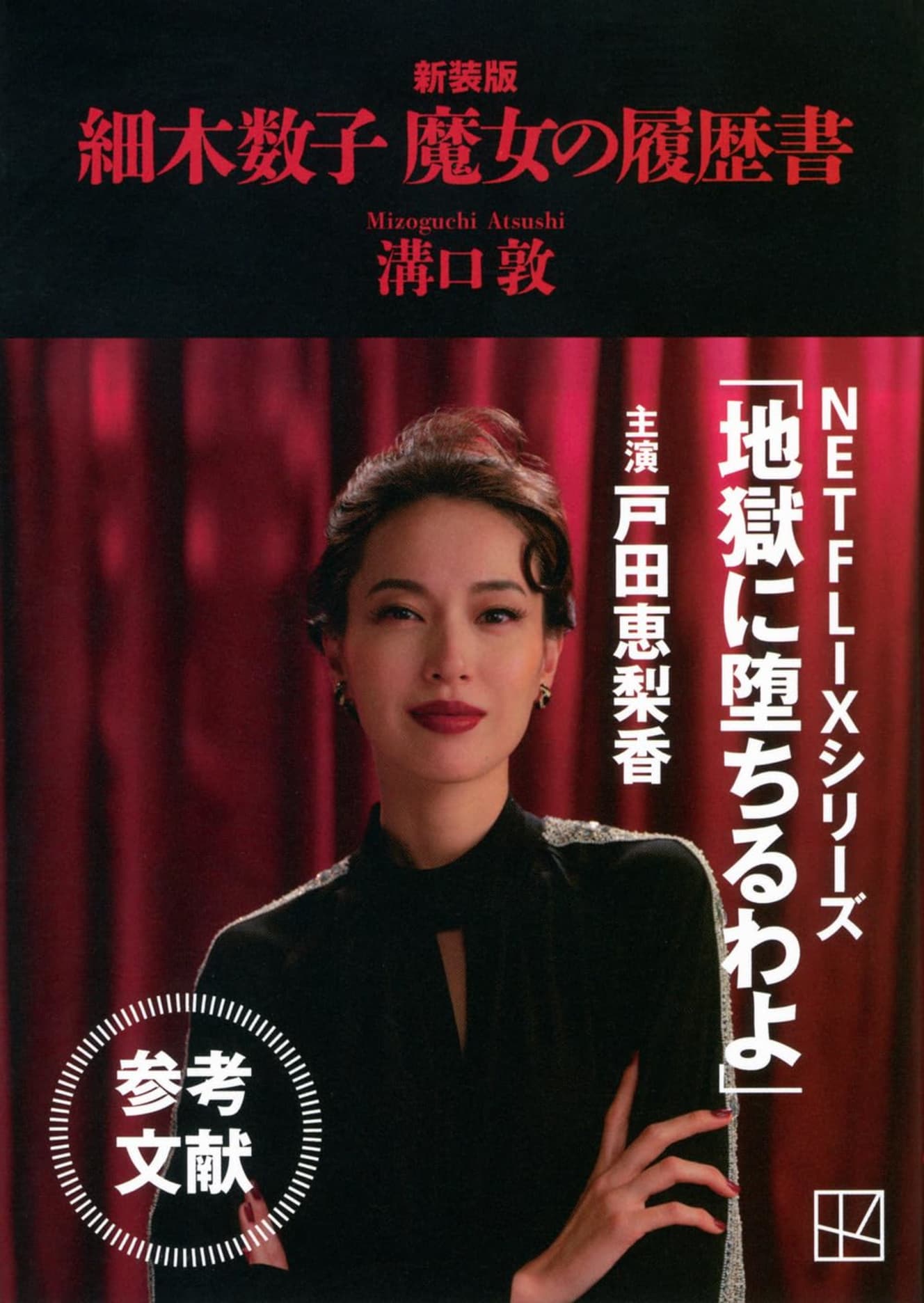
As noted in the title of the drama *You’ll Fall into Hell*, it draws on my previously published book *Kazuko Hosoki: The Witch’s Resume* and Hosoki’s autobiography, *A Woman’s Resume*, as reference materials.
My book was originally based on a serialized column in *Weekly Gendai*, but when Hosoki learned of the series, she claimed it contained false statements that significantly damaged her reputation. In June 2006, she filed a lawsuit against the publisher, Kodansha, seeking over 600 million yen in damages.For some reason, I, the author, was not sued, but I joined the proceedings as an intervenor to present counterevidence against Hosoki; she finally gave up on winning the case and withdrew the lawsuit in July 2008.
In other words, by withdrawing the lawsuit, Hosoki could no longer claim that the numerous facts I had pointed out about her were false.The latter half of *You’ll Fall into Hell* is written based on the facts I uncovered, but the drama is built on the assurance that “even depicting it to this extent will not damage the late Hosoki’s reputation.”Consequently, Ms. Kaori Hosoki—the fortune-teller and successor to Kazuko Hosoki—cannot claim that the “misdeeds” Hosoki committed in the past were false.
The Truth Behind the Drama’s Depiction of a “Childhood of Extreme Poverty”
The first half of the drama *You’re Going to Hell* depicts Kazuko Hosoki’s childhood through her time as a club and disco “mama” in Ginza and Akasaka. Perhaps in an effort to avoid controversy, the portrayal is generally abstract, with many scenes that feel strikingly familiar.
For example, there are scenes where Kazuko eats raw earthworms out of starvation or sells barley tea to vendors by passing it off as beer distributed by the occupying forces. While thoroughly dried earthworms are used in traditional Chinese medicine, even amid the postwar chaos, it is unlikely that any Japanese person—no matter how starved—would have eaten raw earthworms.Perhaps the screenwriter and director were too young, or perhaps they simply knew far too little about the postwar ruins of Shibuya and the era of the black markets.
Kazuko’s home was a bar in Shibuya’s Hyakken-ten district that also operated as a “zabuton” brothel. Kazuko had been helping out there as a pimp since her junior high school days. Prostitution cost 1,400 yen per session, and since she split the earnings 50-50 with the part-time employees, she made 700 yen per session.Since she lured customers into the bar about twice a night, she earned 1,400 yen a day. At the time, the government’s unemployment relief program—known as “Niko-yon”—paid a daily wage of 240 yen, so it’s obvious just how good a living 1,400 yen was compared to that.
Kazuko Hosoki and her family never experienced extreme poverty—the kind where they struggled to put food on the table—at any point after the war. Even amid the postwar chaos, demand for sex was abundant, and just like the black-market dealers and brokers who made a fortune back then, they were relatively well-off compared to those around them.
Although her older sister, Hiroe, was the de facto manager of the shop, Hiroe was married to Hideya Shiga, a high-ranking member of the notorious Ando-gumi.From childhood, Kazuko had grown accustomed to young women selling their bodies for money, and she had also become accustomed to the profits that came from it. She was not financially poor, but she was morally impoverished and tainted, and this state of affairs continued throughout her life.
In 1962, at the age of 24, Hosoki opened the club “Kazusa” in Ginza.
The following year, Hosoki fell in love at first sight with the heir to a long-established eyewear store in Shizuoka, and they married. She was thrilled by this marriage, which she saw as a shot at a life of luxury, and as part of her bridal training, she attended the Tomi Egami Cooking School and studied Sogetsu-ryū flower arrangement and Urasenke-ryū tea ceremony.She entrusted the management of “Kazusa” to her younger brother, Hisayoshi Hosoki, and collected a lease fee from him, while opening a baby goods store called “Bambino” in Seijo, Setagaya Ward. She did this because she assumed that, with her mother-in-law and sisters-in-law living in her husband’s family home, she, as a daughter-in-law, would have no money of her own to spend freely.
Although this marriage had an air of innocence befitting their age, being the wife of a moderately wealthy man from the provinces was ultimately too much for Hosoki. She found her life as a wife utterly boring; her mind kept wandering back to “Bambino,” the shop she managed, and she longed to return to Tokyo.Their honeymoon was supposed to be a week-long trip to Hakone, but after just one night at Kowakien, she abandoned her husband and returned to Tokyo.Although the heir to the family fortune had likely married her at first sight, Hosoki probably felt she was simply not a good enough match for his family’s standing. Three months into the marriage, the couple mutually decided to divorce without objection, and their marriage was officially dissolved three and a half years later.
In *You’ll Go to Hell*, there’s a scene where Hosoki catches and kills a chicken at her in-laws’ home in Shizuoka, but no matter how hysterical she might have been, it’s unthinkable that Hosoki would have wrung a chicken’s neck. The divorce was settled amicably through mutual discussion, and the two parted ways with surprising calm.Besides, even if Hosoki had been raised on a farm, that would be one thing—but she was born and raised in the city, working in the nightlife industry. The very idea of wringing a chicken’s neck herself would never have occurred to her, and she likely had no experience with it. I hate to say it, but this scene is likely nothing more than a misguided whim on the part of the drama’s director or screenwriter.
The True Identity of “Hosoki’s Lover,” Played by Toma Ikuta
The essence of the relationship between Hosoki and Chiyoko Shimakura lies in the fact that Hosoki exploited Shimakura to save money, which he later used as seed capital for his business.
The person who brought the two together was Masaaki Abe, who lived in Akasaka, Tokyo. For some time after the war, Abe worked as a producer at the Nikkatsu Theater, but during the same period, he organized the “Special Entertainment Troupe” and engaged in volunteer performances at prisons on a non-profit basis.
Abe was a figure who could be described as a “mini-fixer with connections to the political world, the entertainment industry, and organized crime,” and prominent figures from all walks of life were regulars at the Abe household. Among the politicians were Takeo Fukuda, Shintaro Abe, and Kazuyuki Kasuga.From the entertainment world: Hibari Misora, Harumi Miyako, Kazuko Matsuo, and Hiroko Ogi.From the yakuza world: Seijo Inagawa, Hirohiro Inagawa, Susumu Ishii, Masakichi Hamamoto, and Kusufu Kobayashi. Among this group were Kazuko Hosoki, her older sister Hiroe, and Hosoki’s common-law husband, Masashi Horio, the head of the Koganei family.
Chiyoko Shimakura made her debut in 1955 with “The Flower of This World,” but she had been a regular visitor to the Abe household ever since the writer Chiyo Uno had approached her and said, “Please support me.”She was the type to fall in love very easily, and at the time, she was dating Yoshito Moriya, an ophthalmologist at Moriya Eye Clinic in Gotanda, Tokyo.
She trusted Moriya deeply and even endorsed a promissory note at his request, but when Moriya went bankrupt and vanished, Shimakura was left to shoulder his debts, which amounted to as much as 240 million yen.In 1977, Chiyoko Shimakura was performing at the Shinjuku Koma Theater when a large number of Moriya’s creditors stormed the venue, attempting to collect the money they had lent to him from Shimakura. She called Abe, telling him she couldn’t leave her dressing room. Abe replied, “All right, hold on. I’ll come and get you,” and took Chiyoko back to the Abe residence to hide her.
“I’ll at least give you a ride back and forth.”
However, Shimakura’s run couldn’t be cut short before the final performance. So, day after day, Abe drove Chiyoko to and from the Koma Theater.Around that time, the Hosoki couple came to visit the Abe household. When they learned of Chiyoko’s situation, they volunteered to take over the task, saying, “We’ve got nothing to do during the day anyway—we’re just hanging around—so we’ll handle driving Chiyoko back and forth.”
At that time, the Hosoki couple were living hand-to-mouth. They had opened a disco called “Manhattan” in Akasaka, but it wasn’t as profitable as Hosoki liked to boast. Masaaki Abe’s wife, Shizuko Wani, recounts:
“About a year before we started taking care of Chiyoko, Hosoki brought over a ring covered in scratches and said he absolutely had to come up with some money. He came to ask us to lend him 1 million yen. My husband and I don’t lend or borrow money. But since Hosoki and Horio seemed to be in such dire straits, I borrowed 1 million yen from a company president I knew and gave it to him.I made it very clear to Hosoki: ‘I’m not the one lending this. You absolutely must pay it back.’”
For Hosoki, who was in such dire straits, Chiyoko Shimakura must have seemed like a once-in-a-lifetime cash cow.While driving Chiyoko back and forth, Hosoki ingratiated himself with her and managed to move her from the Abe residence to the apartment where Hosoki and Horio lived. He succeeded in keeping Chiyoko—his cash cow—close at hand and controlling her every move.
For the next three years, Hosoki forced Chiyoko to live with him and, using the repayment of her debts as leverage, turned her into a caged cormorant. Hosoki claimed he had helped Chiyoko Shimakura, but in reality, the opposite was true: during that time, he milked her like a cash cow and made a fortune.
How much did Hosoki extort from Shimakura, roughly speaking? An executive at an entertainment agency who has known Chiyoko Shimakura for a long time estimates Hosoki’s take.
“She probably had some TV appearances over those three years, but with TV, even if you break even on costume costs, you usually end up paying out of pocket, so you can disregard that. Her main earnings came from regional tours, but she was probably only able to work about 10 to 12 days a month.Since Shimakura didn’t travel as part of a package deal that included a band, her travel was easier, so there might have been days when she could earn a little more. Assuming 13 days a month, that works out to 156 days of work per year.
The daily fee (per performance) at the time was around 3 to 4 million yen. Taking the middle figure of 3.5 million yen per day, that comes to 546 million yen per year.During this time, Hosoki was only giving Shimakura 500,000 yen a month, so even accounting for taxes, she was probably pocketing 300 million yen a year.”
He also demanded 200 million yen from the record company
Over three years, that amounts to 900 million yen. On the other hand, regarding the money used to repay Shimakura’s debts—which amounted to several hundred million yen—Hosoki’s claims varied from time to time, but it can be estimated that at most, 150 million yen was actually used for that purpose. A Columbia Records official testified as follows:
“Masashi Horio was the one who ran the creditors’ meeting, and the person who turned him into a bankruptcy liquidator was Takenobu Yajima, the first-generation boss of the Koganei-ikka Shinjuku Higashi group, who took over the Shinjuku territory from Horio. They probably settled the entire matter by repaying at best 30 percent of the debt—about 150 million yen.“In bankruptcy cases, the repayment rate averages less than 10 percent, so even a 30 percent return is considered a good outcome.”
This amounts to roughly 750 million yen that Hosoki siphoned off during the three years he had Shimakura under his control. “No, that’s not all,” the aforementioned Columbia insider adds.
“Shimakura fled from Hosoki and handed over control of her performance rights to Columbia. At that time, Hosoki said, ‘We’re giving Shimakura back her performance rights, after all,’ and wrested an additional 200 million yen from Columbia.”
In other words, Hosoki earned a total of over 950 million yen through her dealings with Shimakura. Furthermore, Hosoki also seized a unit in the Akasaka Park House, a luxury condominium in Akasaka 7-chome that had belonged to Chiyoko Shimakura.She acquired this high-end 5-bedroom, living-dining-kitchen unit—which had been valued at 1.8 billion yen during the bubble economy—at auction for a mere 156 million yen. Chiyoko Shimakura suffered such a terrible fate all because of Kazuko Hosoki. Why didn’t Chiyoko speak out against Hosoki even after their relationship ended?
Behind the scenes was a man named Masashi Horio. While living together, Shimakura had an affair with Horio; it is said that late at night, she would sneak into Horio’s bedroom while he was asleep and whisper in his ear, “O-nee (referring to Hosoki) won’t give me any money at all.”
Perhaps Hosoki was somewhat worried as well, for she went out of her way to boast that, at the time, she would tie Shimakura’s arms and legs to her own to prevent Chiyoko and Horio from doing anything wrong.However, looking back on the incident involving Shimakura and Horio, there is no doubt that Hosoki played a supporting role in squeezing money out of Shimakura and served as a stabilizing force to keep her in line. From Hosoki’s perspective, there was absolutely no reason to be angry with Horio.
Although the relationship between Hosoki and Horio seemed to have cooled for a time, in Horio’s later years, he visited Hosoki’s lavish mansion in Kyoto, where he remained under Hosoki’s care until the end of his life. In the end, he was even buried next to the Hosoki family grave—a testament to their close bond, so strong it could be said to extend all the way to heaven.