[Why Now?] 24 Years After the Series Ended, *Heaven on the Banks of the Red River* Is Being Adapted into an Anime: “The Compelling Reason”


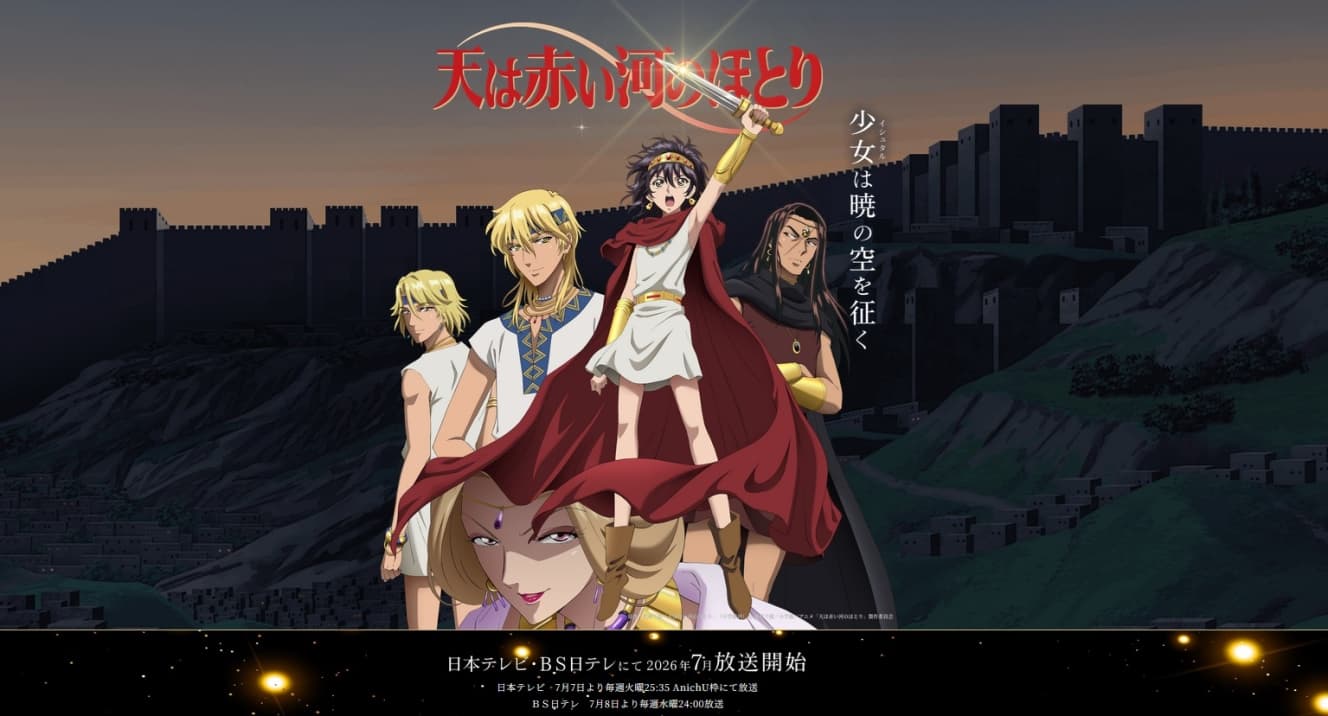
In July ’26, *Heaven on the Banks of the Red River* (original work by Chie Shinohara; same applies below)—a shōjo manga that has sold a cumulative total of 20 million copies 24 years after its serialization ended—and *The Tent of Jadoogal* (Tomato Soup), which took first place in the women’s category of “This Manga is Amazing!”Women’s Edition, will be adapted into anime.
When it comes to historical manga adaptations, the buzz surrounding Yasuhisa Hara’s blockbuster *Kingdom* and *Chi: On the Motion of the Earth* (by Uotoyo) is still fresh in our minds, and the historical genre’s presence in anime has clearly been growing in recent years.
However, Ken Kikuchi, Representative Director of the General Incorporated Association MANGA Research Institute—which specializes in market research on manga and anime IP (intellectual property) and organizes “IMART,” one of the industry’s largest conferences—offers a slightly different perspective.
So why have anime adaptations of historical manga been so prominent in recent years? There are factors unique to the current anime industry and the global market at play here.
The Streaming Landscape Behind the Anime Boom
In recent years, hit series such as *Demon Slayer: Kimetsu no Yaiba*, *Jujutsu Kaisen*, and *My Favorite Child* have been emerging almost every season.
Behind this trend lies the rapid growth of video streaming services. Viewing anime not only on TV but also on smartphones and PCs at any time has become the norm, leading to the expansion of the anime market itself. In fact, according to a survey by the Japan Animation Association, the number of new TV anime titles in 2024 was 254—nearly double the 136 titles recorded in 2005.
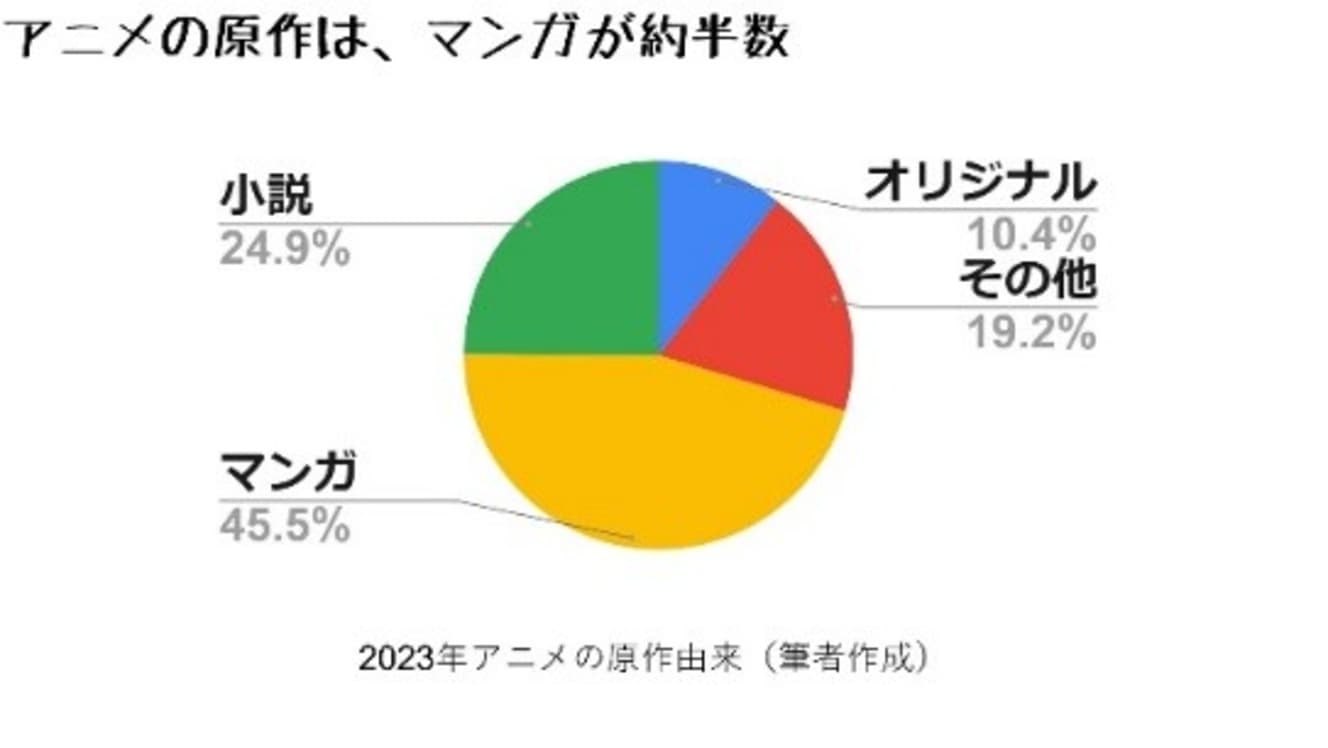
“In a survey we conducted in ’23, manga adaptations accounted for about 45% of all anime in recent years, followed by novel adaptations at about 25%. However, since many novel adaptations are first adapted into manga, they can also be considered manga adaptations. Combined, they account for about 70%.As the anime market expands, the industry is constantly on the lookout for source material, so it’s only natural that the number of anime based on manga continues to rise.”
As the number of anime titles has increased, so has the demand for manga-based source material. So, why are so many anime being produced now?
“In the past, the ‘production committee system’ was the norm, where many companies would jointly invest and make decisions together to produce a series. However, nowadays, there are increasing cases where streaming platforms like Netflix fund and acquire series on their own.”
Furthermore, while it used to be common to recoup production costs over several years through physical sales like DVDs, there are now more cases where streaming platforms purchase works before they even air. In other words, the structure has shifted so that a return on investment is projected even before production begins.
“For example, there are reports that *That Time I Got Reincarnated as a Slime* (original work by Fuse, manga by Yasuki Kawakami) was expected to recoup its costs even before it aired. Because the environment has become more conducive to production than before, the sheer number of anime series is increasing.”
The Strength of Historical Works That Resonate Globally
So, among the many genres out there, why do historical manga have such a strong presence? Mr. Kikuchi cites “the strength to be enjoyable even when you know the ending” as one reason.
“For example, Oda Nobunaga has appeared in Taiga dramas countless times. Everyone knows what he’ll do and that he’ll die in the Incident at Honnō-ji. Even so, people look forward to seeing ‘What kind of interpretation will this year’s Nobunaga have?’ and end up watching it anyway.”
Because readers already know the main historical storyline and its conclusion, they can wholeheartedly enjoy the creative liberties taken with the gaps in the historical record. Mr. Kikuchi says this holds true even across national borders.
“For example, I hear that people in China enjoy *Kingdom* as a fantasy work. Since the original *Records of the Grand Historian* contains many gaps, they can enjoy the parts that differ from historical fact by thinking, ‘So that’s the interpretation this work takes.’”
Furthermore, the historical genre is currently being propelled by a global trend. Romance fantasy series originating in South Korea have become hits worldwide, and demand is rapidly growing for stories set in harems and royal palaces where women take center stage.
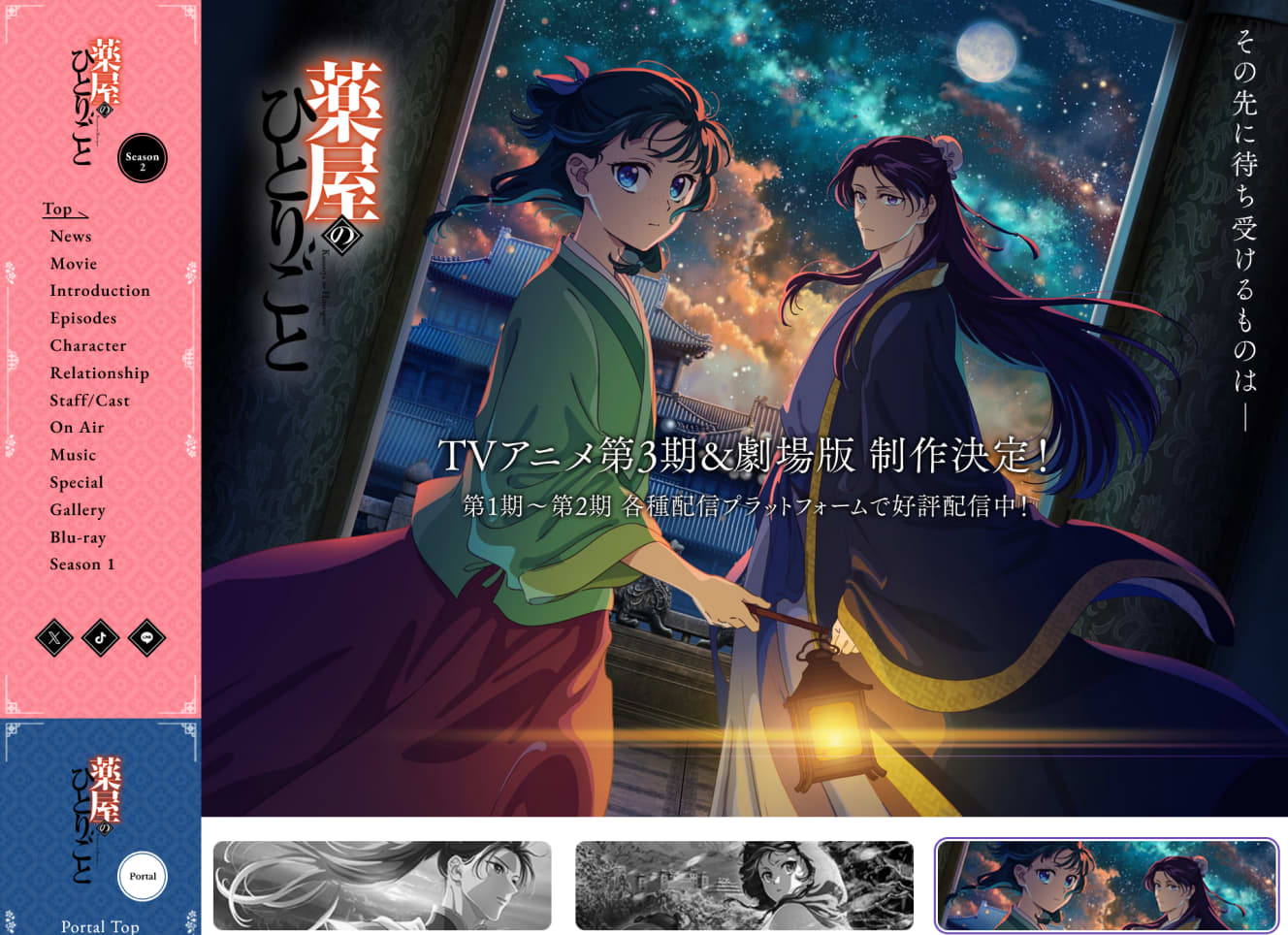
“In recent years, works featuring female protagonists have been extremely popular, and with many being adapted into manga and on-screen productions, it has become a globally popular genre. A prime example is *The Apothecary’s Soliloquy* (by Natsu Hyuga). This work, which blends mystery and romance set in a harem, is popular not only in Japan but also overseas.”
*Heaven on the Banks of the Red River* and *Jardugal of the Tent*, both of which are being adapted into anime this summer, also align perfectly with this current global trend.”
Why a 24-Year-Old Masterpiece Is Popular Today
*Heaven on the Banks of the Red River* tells the story of Yuri Ishtar, a modern-day middle school student, who is summoned to the Hittite Empire of the 14th century BCE and finds herself caught up in court intrigues while fighting alongside the Third Prince, Kyle.Time travel, harem romance, cross-cultural fantasy—it features numerous elements that resonate with today’s popular genres.
However, it has already been 24 years since the series ended.
“Adapting older works into anime isn’t uncommon in the industry. For example, *Ushio and Tora* (Kazuhiro Fujita) ended its serialization in 1996 and was adapted into an anime 19 years later, in 2015. Works with a completed original story are easier to structure and handle for the production team.”
However, not just any older work will do.
“The key is whether it aligns with current market trends. In that regard, *Heaven on the Other Side of the Red River* is very contemporary.”
Mr. Kikuchi points out its similarity to “isekai reincarnation stories.”
“Over the past few years, isekai reincarnation stories have been a hugely popular genre. While *Heaven on the Banks of the Red River* isn’t an isekai reincarnation story, its structure—in which a modern girl is transported to a foreign land in a different era—is quite similar. Even though it’s a work from the ’90s, it doesn’t feel dated.”
Furthermore, he notes that the setting in the ancient Hittite Empire is a significant factor.
“Just as *Kingdom* sparked interest in the Chinese-speaking world, *The Sky on the Banks of the Red River* also has the potential to be well-received in regions where the Hittite Empire once existed. While this is a region not very familiar to Japanese audiences, in today’s era of global streaming, such regional specificity can actually be an asset.”
Furthermore, the fact that the hypothesis about its appeal overseas holds true is also significant.
“In fact, the webtoon *Lore of Olympus* (by Rachel Smythe), based on Greek mythology, has won an American comic book award two years in a row. There’s a very real possibility it could be a hit not only in the domestic market but also on the global market.”
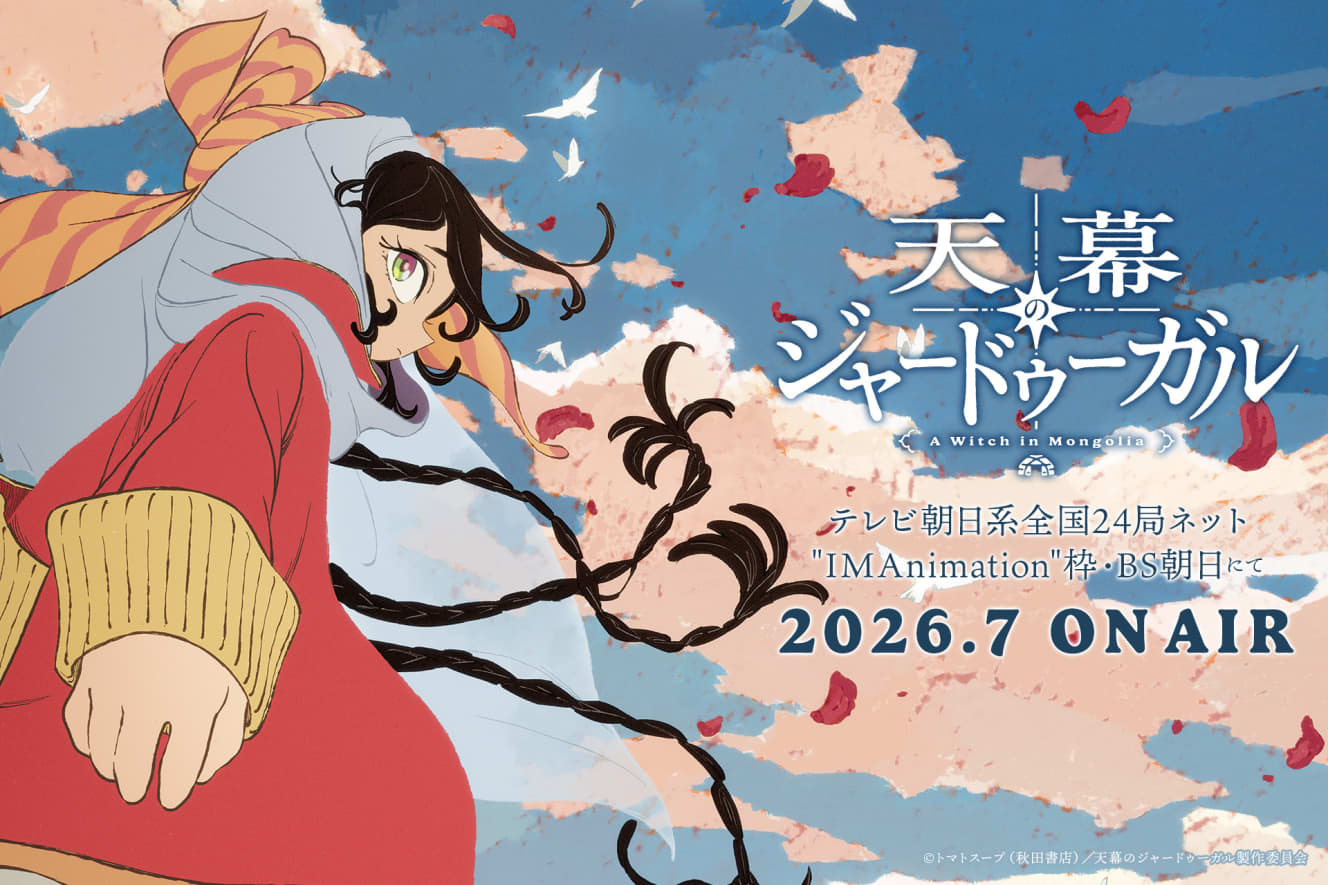
On the other hand, *Jadugal of the Tent* is set in the 13th-century Mongol Empire.It tells the story of Shitara (later Fatima), a girl from Iran, who uses her knowledge and wisdom to survive in the harem. It was the first historical manga to take first place in the women’s category of the “This Manga is Amazing!” awards.
“This title also firmly rides the current trend of ‘female protagonists in harem settings,’ and the setting of the Mongol Empire and Central Asia is fresh for international audiences. In the West, there’s a strong tendency to enjoy works from Japan and China as part of the broader ‘Asian works’ category, so there’s a very good chance it will attract attention within that context.”
Furthermore, expectations for the production team are high.
“Naoko Yamada, who serves as chief director, has worked on *K-On!*(by Kakifurai) and *A Silent Voice* (by Yoshitoki Oima), while the animation studio Science SARU has produced hit series such as *Dandadan* (by Yukinobu Ryu) and *The Tale of the Heike* (screenplay by Reiko Yoshida). I think this is a strong lineup that’s perfectly suited for historical works.”
What’s the Next “Historical Manga” to Watch For?
Mr. Kikuchi believes that the current rush to adapt these historical manga into anime indicates that stable demand will continue into the future.
“It’s hard to say that the historical genre is particularly popular, but since it’s a long-standing staple, I think a certain number of works will continue to be produced. Currently, this is being combined with globally popular elements such as harem romances and female protagonists. In that sense, the trend toward anime adaptations is likely to continue for a while.”
So, which historical manga are likely to be adapted next? I asked Mr. Kikuchi for his personal opinion.
The first title Mr. Kikuchi mentioned was *Sengoku* (by Hideki Miyashita). Set during the Warring States period, the work depicts the life of the warlord Hidehisa Sengoku and is known for its meticulous historical research.
“It concluded in ’22, and there’s a substantial body of work across the entire series. Having a sufficient supply of source material and a structure that’s easy to adapt are major strengths for an anime adaptation.”
Furthermore, he says he’s keeping an eye on *When the Surface of Lake Omi Ripples* (original story by Israfil, manga by Eri Motomura) as a “reincarnation × historical” work—a popular trend in recent years.
“It’s a story where a protagonist with modern knowledge is reincarnated as Kikuchi Mototsuna, a warlord of a small country during the Warring States period, and rises to power. With a wide range of adaptations—including novels, manga, drama CDs, and stage plays—it has considerable momentum as an IP.”
From the perspective of its appeal to overseas markets, *Sengoku Komachi: Tales of Hardship* (Original Story: Katsuragi, Manga: Ichi Sawada) was also mentioned. It’s the story of a high school girl attending an agricultural high school who time-travels to the Sengoku period and serves Oda Nobunaga by applying her modern agricultural knowledge.
“With a female protagonist, the Sengoku period, and time travel, it really hits all the right notes for today’s popular trends. I’ve been reading it a lot lately, and it’s interesting to see her thrive through her uniquely feminine perspective.”
Personally, the title I’d like to see adapted into an anime is *The Story of a Bride* (by Kaoru Mori). It’s a popular manga by Kaoru Mori set in 19th-century Central Asia that depicts the lives of nomadic peoples and their marriage customs.
“I think there’s a high likelihood that people in Central Asia will embrace this work as something closely tied to their own history and culture. Precisely because we’re in the era of global streaming, I believe works with this kind of regional flavor have real strength.”
It seems there’s still plenty of untapped potential in historical manga. I’m eager to see how *Heaven on the Banks of the Red River* and *Jadugal of the Tent*, both premiering this summer, will be received around the world.


▼Ken Kikuchi: Representative Director of the General Incorporated Association Manga Comprehensive Research Institute. He specializes in market research on manga and anime IP and organizes the industry conference “IMART.” On note, he publishes “Manga Industry News Roundup.” His books include *Manga Business* (Cross Media Publishing).
Reporting & Text: Motiko Abe
Works as a freelance writer primarily for web media. She is also involved in the production of books and corporate PR magazines. Without specializing in any particular field, she covers a wide range of topics that pique her interest, including history, comedy, health, beauty, travel, food, and elder care.