Farewell to Tamao Nakamura: Her Passionate and Tumultuous Life with Shintaro Katsu


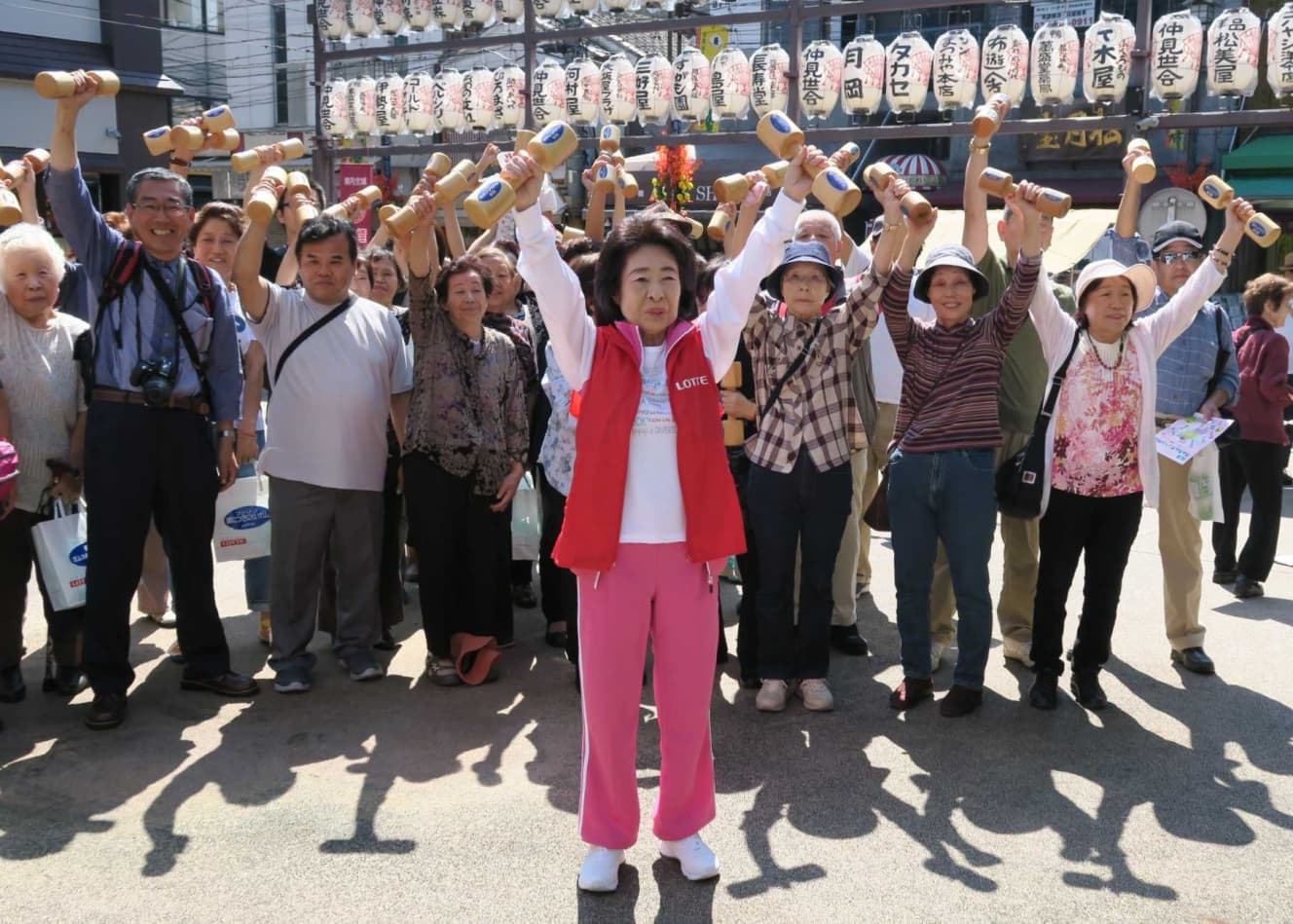
At the wake, Akashiya Sanma and Matsudaira Ken were among the attendees
Actress and entertainer Nakamura Tamao, known for her many film and TV roles, passed away from pneumonia on June 9 at the age of 86.
The wake was held on the 16th, attended by many entertainers who had been close to her, including comedian Akashiya Sanma (70), singer Wada Akiko (76), announcer Kazuo Tokumi (85), actress Miyoko Asada (70), and actor Matsudaira Ken (72).
She became popular for her natural personality on variety programs such as “Sanma no SUPER Karakuri” TV (TBS), and was also widely known as the devoted wife who supported the turbulent and often scandal-plagued life of legendary actor Katsu Shintaro (died 1997 at 65), making them one of the entertainment world’s famous loving couples.
Tamao was born on July 12, 1939, in Kyoto City. She came from a prestigious kabuki family—her father was the kabuki actor Nakamura Ganjiro II, and her brother was the fourth Sakata Tojuro. While still in her second year of Kyoto Girls’ Junior High School, she made her film debut in Shochiku’s “Keiko to Yukie” (1953). The following year she signed an exclusive contract with Daiei Studios, and gained recognition through performances in Kon Ichikawa’s “Bonchi” (1960) and “Dai-bosatsu Toge: Ryu-jin no Maki” (1960), starring Raizo Ichikawa, earning the Blue Ribbon Award for Best Supporting Actress.
In “Echizen Take Ningyo” (1963), she played a supporting role as a courtesan friend of the heroine portrayed by Ayako Wakao, winning the Mainichi Film Award for Best Supporting Actress, further establishing her status as an accomplished performer. She went on to appear in numerous films and dramas as a distinguished supporting actress.
She also gained nationwide popularity for her natural persona on “Karakuri TV,” where her lighthearted exchanges with host Akashiya Sanma became a hit, and she became a familiar face in households through commercials such as the “Malony” ads, building a wide-ranging career.
Her turbulent marriage with Katsu Shintaro also frequently made headlines.
They first co-starred in the 1955 film “Kankan Mushi wa Utau.” After continuing to appear together in works such as “Akumyō” (1961), Katsu became deeply fond of her, and they became engaged in 1961 and married in 1962 at the Imperial Hotel, with Daiei president Nagata Masaichi serving as the official matchmaker.
At the time, Katsu was one of Daiei’s two biggest stars alongside Raizo Ichikawa, and their marriage—between a top silver-screen star and the daughter of a Kansai kabuki family who was a rising actress—attracted enormous public attention.
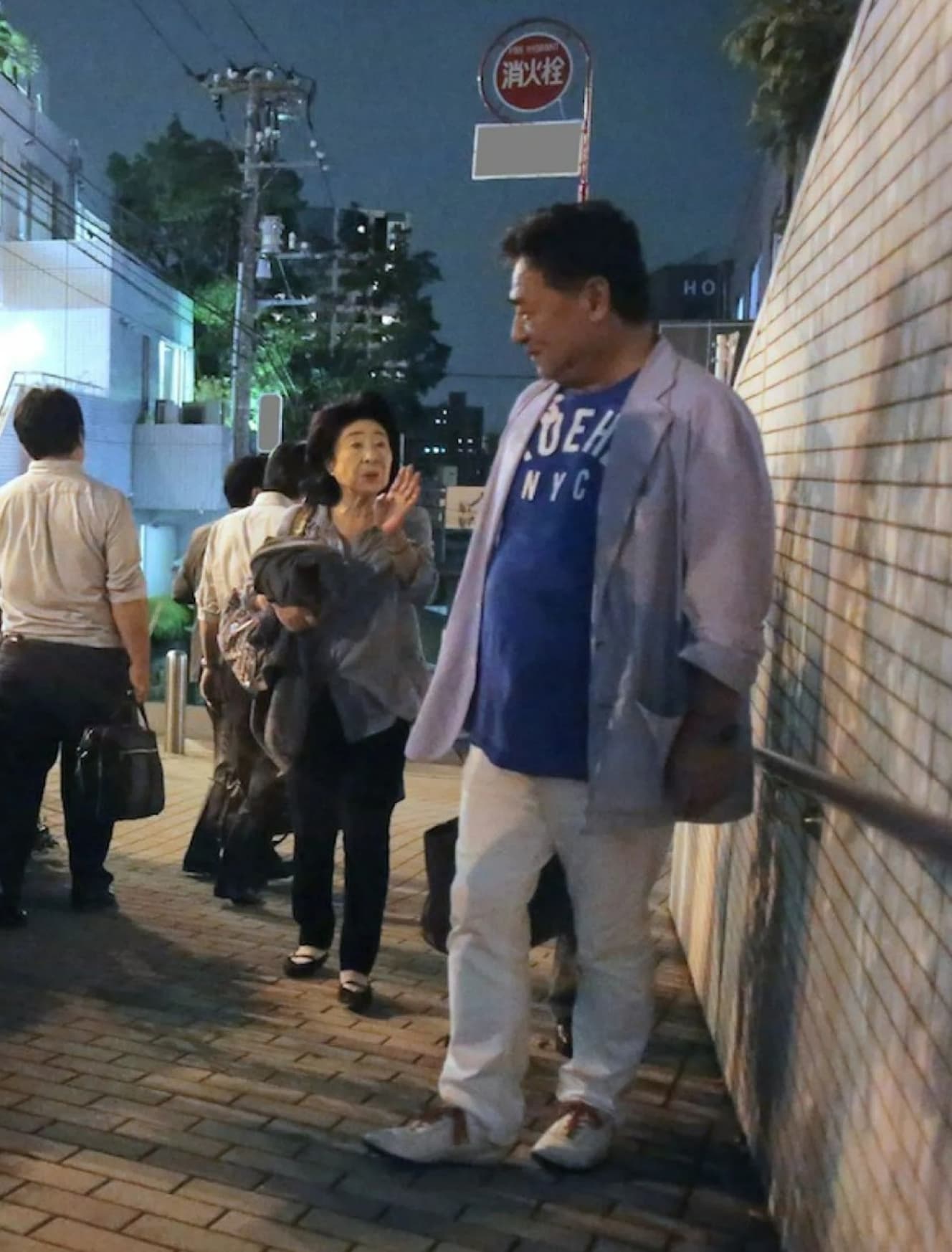
The strength and resilience of a Kyoto-born woman
Speaking of Katsu-san, he rose to fame through series such as “Akumyō” and “Zatoichi.” During that time, I covered press conferences including the 1978 incident in which his manager was arrested for opium possession, and Katsu himself was briefly sent for indictment (with prosecution suspended) on suspicion of temporarily holding opium. I also reported on the 1981 press conference when Katsu Productions collapsed under 1.2 billion yen in debt.
In 1990, he was arrested at Honolulu Airport in Hawaii after cannabis and cocaine were allegedly found hidden in his underwear, and during the press conference he caused controversy with remarks such as:
“I’ll never wear underwear again.”
Katsu was a highly unconventional figure, and his scandals and incidents repeatedly triggered rumors of a divorce crisis. However, Tamao never divorced him. At times she responded firmly even to the media, continuing to support him until his death in 1997 at the age of 65.
In fact, there was once a decisive divorce crisis in 1971.
According to accounts, it was triggered when Tamao reportedly spoke up about matters related to Katsu Productions’ work. A marital argument escalated, and after Tamao reportedly said she wanted to separate, Katsu unilaterally declared divorce late at night, causing a major uproar. However, Tamao did not accept the divorce, and a month later Katsu relented and withdrew his declaration. It was also reported that Daiei president Masaichi Nagata mediated the situation. (Film industry source)
Film critic Hajime Takizawa commented on this incident:
“In 1971, despite Katsu Shintaro’s unilateral divorce declaration, she was not shaken in the slightest, and calmly brought her unruly husband back into the fold, demonstrating the strong spirit of a Kyoto woman.” (Complete Dictionary of Japanese Film Actors – Actresses, Kinema Junpo, 1980)
By overcoming this crisis, the couple—who had co-starred in many works during the golden age of Daiei and later fell in love and married—may have developed a bond akin to being brought together by the spirit of cinema.
In September 1976, while starring in Toho’s “Kangan no Haha,” Tamao once spoke about her married life with Katsu. She recalled that when he said, “Wake me up at a certain time tomorrow,” she would go to wake him, only to be told:
“Why are you waking me when I was sleeping so comfortably?”
It was the kind of exchange that could easily turn into an argument, but she added:
“Because every day is a serious battle, he must have been that exhausted.”
These words reflected Tamao’s life of standing beside Katsu, who devoted himself entirely to cinema, continuing her own serious battle both as an actress and as a wife.
On June 21, 2022, she posted a family photo on Instagram featuring Katsu, her daughter Masami (who died in 2019 at age 55), and her son, actor Gankyū, along with a family moment, writing:
“Today, June 21, is the anniversary of my husband Shintaro Katsu’s death. It has been 25 years since he passed away. If he were alive this year, he would be 90. I talk to him every day by offering prayers in front of his portrait. This year I want to post various photos of him on Instagram and create opportunities for younger people to learn about him. I would be happy if today you could remember him even a little.”
She also added with humor:
“And today’s word is ‘te’ (hand). It feels like something Papa would have said.”
This was a playful reference to one of Katsu’s famous memorable quotes from the 1981 bankruptcy press conference of Katsu Productions.
He had said:
“I will fight this 1.2 billion yen debt and pay it back.”
and also:
“Creditors said they wanted a promissory note, so I put ink on my hand, stamped it on a piece of paper, and gave it to them—then they told me that wasn’t the kind of note they meant.”
This unexpected wordplay involving hand became a humorous moment in what was otherwise a bankruptcy press conference.
Tamao’s choice of the word “te” likely referenced this.
Nakamura Tamao, who deeply respected Katsu as an actor, stood with him through various hardships, and left a significant mark on the film and entertainment world herself—her life was truly a magnificent, turbulent story of love and acting. Rest in peace.
Reporting and Text: Ryo Sakamoto (Former Head of the Culture and Society Department, Tokyo Sports Newspaper) PHOTOS: Sports Hochi/Aflo (1st photo), Kojiro Yamada (2nd photo)