Why ANA’s New Shareholder Benefit Is Drawing Heavy Criticism From Investors


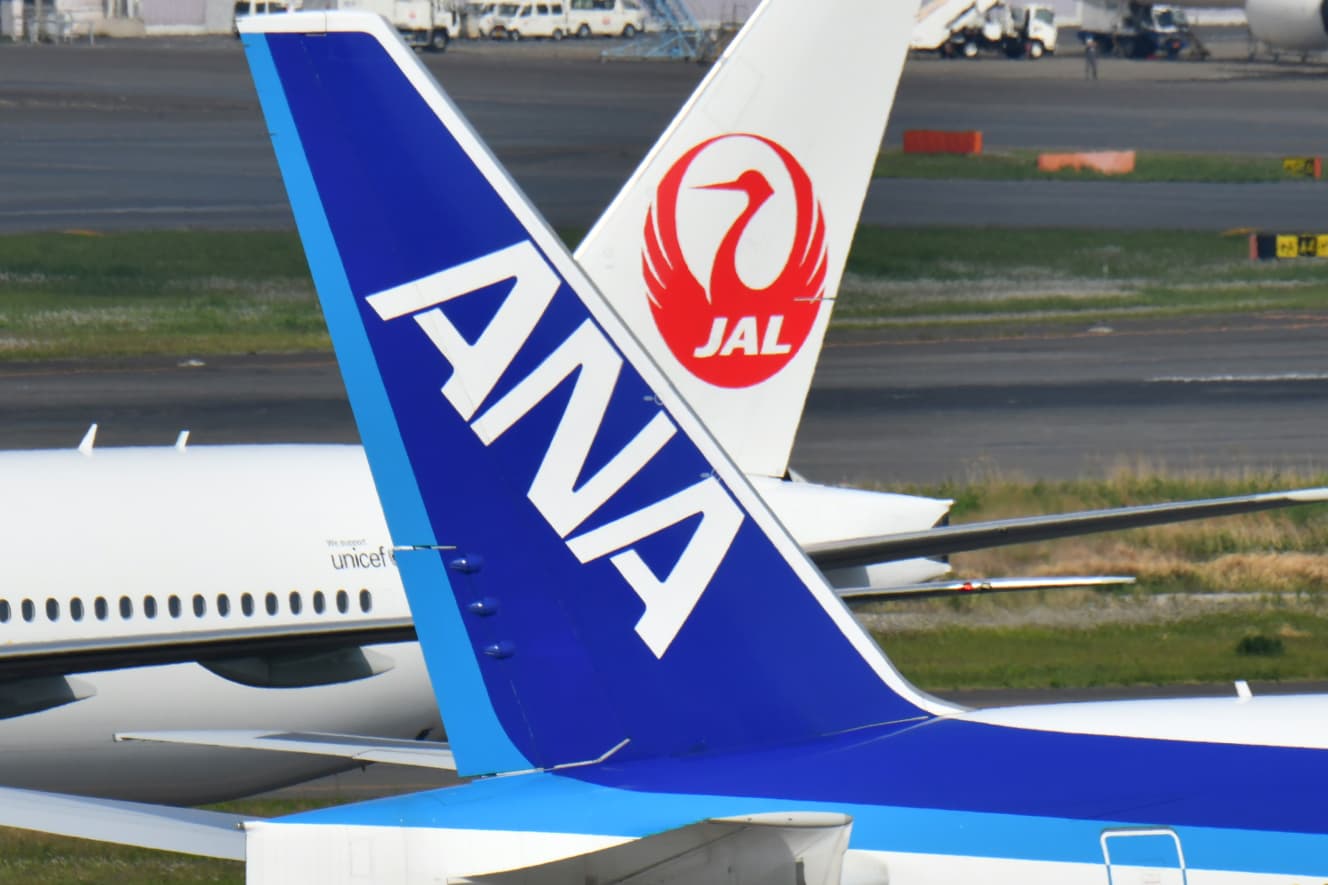
The story behind ANA’s controversial new shareholder perks
Major Japanese airline ANA has recently faced simmering dissatisfaction among customers over changes to its Super Flyers Card (SFC) program and its newly introduced fare structure. Now, a new shareholder benefits program launched in June has also drawn criticism, with comments such as, “It just feels kind of shabby,” and “Are they now neglecting shareholders too?”
Why is ANA—a legacy carrier that represents Japan and enjoys a strong international reputation—tightening shareholder rewards and elite status perks one after another? Using the latest changes to its shareholder program, following the earlier SFC controversy, as a starting point, we examine the realities surrounding airline stocks and the increasingly selective approach airlines are taking toward different customer segments, with insights from experts familiar with shareholder affairs.
Loyal customers excluded? Mysterious discounts limited to budget fares and LCCs
JAL maintains a conservative approach to shareholder returns
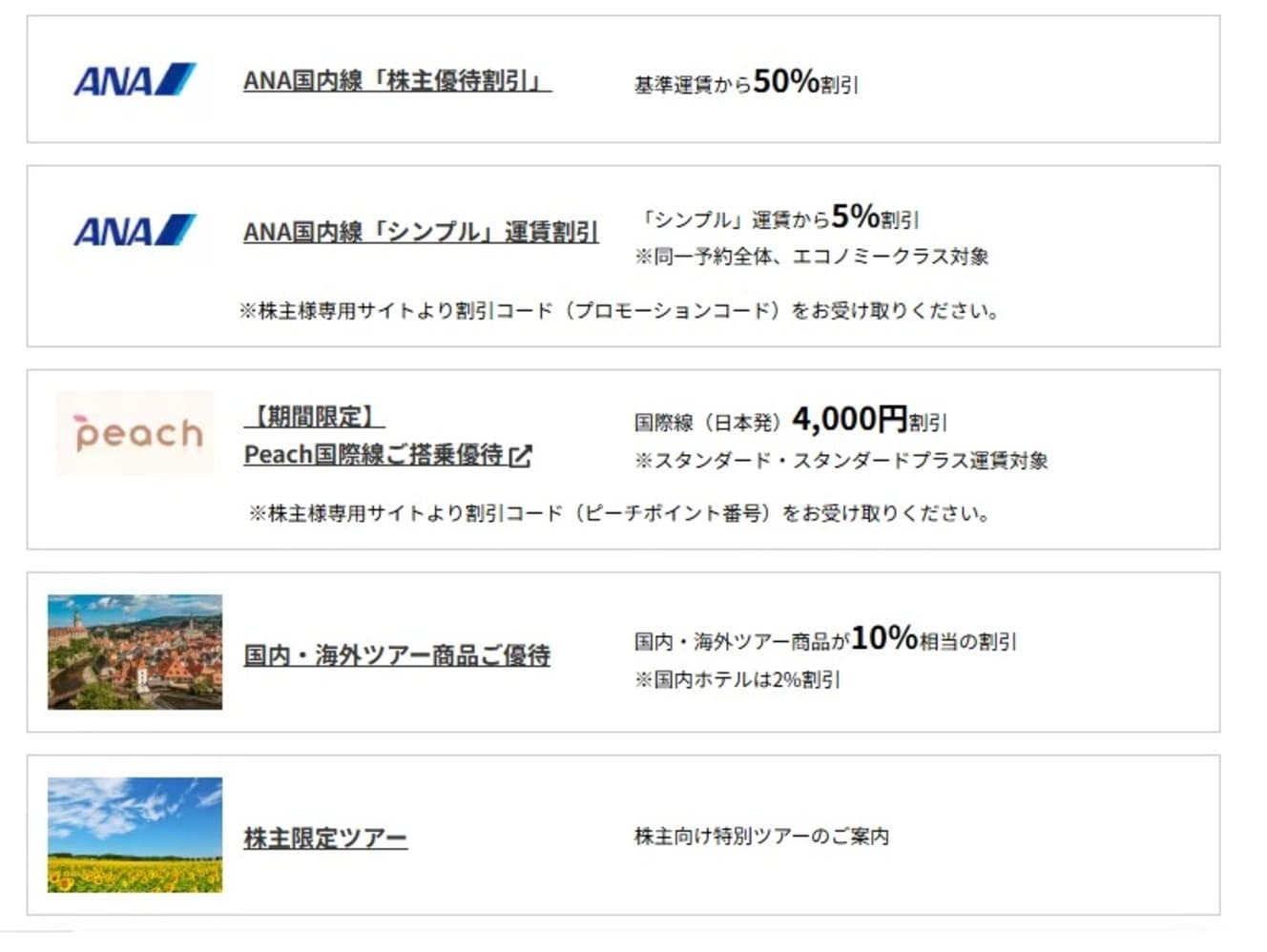
Meanwhile, JAL’s main shareholder benefits for the first half of fiscal 2026 (June 1 to November 30, 2026) are as follows:
・Domestic Shareholder Discount fare: 50% off the standard fare. One shareholder discount code is valid for one one-way domestic flight segment.
・Travel package discounts: 3% or 8% off overseas travel packages, and 3% off domestic travel packages.
In addition, shareholders may apply to attend exclusive shareholder events and receive benefits at Hotel Nikko & JAL City properties (15% off accommodations), among other perks. JAL’s shareholder benefit program remains largely unchanged from previous years, effectively maintaining the status quo. Given the challenging business environment, including high fuel prices, avoiding unnecessary changes appears to have spared JAL the kind of online backlash that ANA experienced.
Furthermore, JAL has introduced new shareholder return initiatives in recent years. In addition to its existing base allocation of points according to the number of shares held, the airline has expanded its Life Status Point (LSP) program for shareholders who own at least 500 shares and exercise their voting rights (i.e., cast votes on company proposals at the annual shareholders’ meeting—a process companies encourage to strengthen shareholder support and management stability). Under the enhanced system, shareholders receive additional bonus points based on the number of times they exercise their voting rights.
In addition, starting with shareholders of record at the end of September, those holding at least 100 shares and meeting certain conditions will receive a new annual benefit of up to 3,000 eJAL Points, which can be used toward airline ticket purchases and other eligible expenses.
It is worth noting that the hallmark benefit offered by Japanese airlines to shareholders—the ability to purchase domestic tickets at half price—remains available at both ANA and JAL. However, in practice, the value of these discounted fares has diminished compared with the past. Shareholders frequently point out that the number of seats allocated to the shareholder fare is limited on each flight, and that promotional sale fares are often cheaper. While some shareholders choose to sell their discount vouchers to ticket resale shops, buyback prices can fluctuate dramatically, sometimes falling to only a few dozen or a few hundred yen per voucher—making them, for all practical purposes, little more than scraps of paper.

An expert weighs the investment value of both airlines
Given the new shareholder benefits announced by ANA and JAL, how attractive are the two companies as investments? We asked Kenji Matsuoka, a manager analyst with a background in the securities industry.
“One of the easiest ways to gauge a company’s value is by looking at its market capitalization. As of June 5, ANA’s market capitalization stood at approximately ¥1.38 trillion, while JAL’s was about ¥1.17 trillion. ANA is roughly 20% higher, but the difference isn’t particularly significant. I would say the corporate value of the two companies is essentially the same.” (Matsuoka; all subsequent quotes are also his.)
Looking more closely at their financial results, ANA outperforms JAL in absolute figures such as revenue, operating profit, and net profit. On the other hand, JAL posts higher profitability metrics, including operating profit margin. According to Matsuoka, this pattern has remained largely consistent for more than a decade.
“You could characterize the two as ANA for scale and JAL for efficiency, but that’s only if you’re looking for a distinction. From the standpoint of stock investing, it’s difficult to identify any meaningful difference. In fact, their PER (price-to-earnings ratio) and PBR (price-to-book ratio)—two of the market’s most widely used valuation metrics—are at almost identical levels. In other words, the stock market sees little to separate them as investment opportunities.”
The biggest risk for airline stocks: Weak outbound travel
At present, both companies are performing well. Each reported record profits for the fiscal year ending March 2026.
Looking ahead to the fiscal year ending March 2027, however, the outlooks diverge. Citing higher crude oil prices, ANA has forecast lower earnings, while JAL has left its previous earnings forecast unchanged. Despite this difference in guidance, there was little noticeable impact on either company’s share price.
“In recent years, growth has been supported by increasing inbound tourism to Japan, and that trend is likely to remain solid for the time being. Beyond that, however, there isn’t much reason to expect strong growth. The concern is that demand for outbound travel by Japanese travelers may not recover.”
According to Matsuoka, “In the end, Japanese airlines depend on Japanese outbound travel.”
International flights generate substantially higher revenue and profit per seat than domestic routes, making them airlines’ primary source of earnings. In Japan, while domestic routes carry more passengers, intense competition from the Shinkansen and other transportation options keeps fares low and squeezes profit margins.
“Outbound travel by Japanese residents is still well below pre-pandemic levels. Over the medium to long term, overseas travel is likely to remain sluggish as long as the weak yen persists, and Japan’s relatively affluent older population will also continue to decline. I don’t see any clear catalyst for stronger outbound demand. The fact that both companies trade at around 1x PBR suggests the market has already priced in these limited growth prospects.”
A PBR of around 1 means that a company’s market value is roughly equal to the value of its net assets. In other words, the market is assigning little or no premium for future earnings power or growth potential. For asset-heavy businesses such as airlines, Matsuoka notes, this valuation is exceptionally low—even compared with major U.S. airlines.
“If valuations become more attractive, investors will probably step in and buy. But overall, I expect these stocks to continue rising at roughly the same pace as the broader market.”

Why some investors still hold airline stocks
Those who already own airline stocks may be wondering whether to continue holding them or sell. ANA has decided to begin paying interim dividends starting in the fiscal year ending March 2027, but even that announcement had virtually no impact on its share price.
“At the end of the day, splitting the annual dividend into two payments doesn’t mean much unless the total annual dividend actually increases. Nor have we heard any announcement about raising the dividend payout ratio—the percentage of net profit returned to shareholders as dividends. On top of that, ANA has already forecast lower earnings for next year. Under those circumstances, not only does its shareholder return policy appear weak, but the company also fails to send a clear message to shareholders. As a result, the only thing that stands out is the perceived deterioration in shareholder benefits.”
JAL, on the other hand, has a lower share price than ANA but offers a higher dividend yield, making it, in Matsuoka’s view, still the better of the two.
“People who buy ANA or JAL shares individually probably do so because they see practical benefits—perhaps it helps when traveling home to visit family, or they simply enjoy traveling, airplanes, or airports. Others are shareholders who make full use of benefits such as the shareholder discount fare every year.”
Even loyal customers are being asked to give more
Historically, Japanese airlines have relied heavily on their most dedicated customers—those who flew frequently to accumulate miles or who made numerous flights each year to qualify for elite status, a practice commonly known as mileage running.
However, this year’s Medium-Term Management Strategy and Medium-Term Management Plan released by ANA and JAL paint a different picture. Matsuoka notes that ANA Holdings’ plan is dominated by broad corporate slogans such as:
“By expanding connections between people and goods and broadening our fan base, we will create both economic and social value while realizing our Group Management Vision of ‘A World Filled with Excitement.'”
“Even when you look at the growth investments outlined in the medium-term plan, the proposals amount to statements like, ‘We will maximize value creation through digital technologies and human capabilities.’ Using AI to leverage accumulated customer data may sound appealing, but companies in other industries—such as Rakuten or Docomo—possess far more data than airlines do, and these kinds of initiatives are no longer particularly innovative. The plan lacks concrete numerical targets and specific details, so there wasn’t anything that made me want to buy the stock.”
Recent changes to ANA’s Super Flyers Card (SFC) program, together with the latest revisions to shareholder benefits, illustrate how difficult the operating environment has become. According to the article, airlines are now in a position where they are being forced to scale back even the incentives aimed at their highest-spending and most loyal customers.
Ultimately, the reason many shareholders perceive the changes to airline shareholder benefits as a downgrade is not simply because the perks themselves have become less generous. Rather, compared with companies in other industries, airlines offer little in the way of compelling future growth prospects, making it harder for investors to overlook reductions in shareholder benefits.
At the end of June, ANA is scheduled to hold its annual shareholders’ meeting. With dissatisfaction over the company’s successive benefit cutbacks continuing to spread, many will be watching closely to see how shareholders respond to management’s direction.
Kenji Matsuoka is a financial writer and certified financial planner. After working as a market analyst at a securities firm, he became independent in 1996. He has written extensively on finance and asset management for business and economic publications. His books include “Robo-Advisor Investing: A First-Year Guide and The Definitive Illustrated Guide to Saving Money with Cashless Payments.”
Reporting, Text, and Photos: Aki Shikama PHOTO: Afro (First Photo)