Their Greatest Enemy Isn’t the Competition—It’s the Organization Itself
Special Entertainment Research Feature [Part 1]


From mega-hits that drew over 40% ratings to hidden masterpieces
Building voting blocs, setting traps, recruiting influential allies—using every means possible to eliminate rivals and rise to the top.
It is a reality that plays out in every kind of organization, from private companies to the political world. Because it makes for compelling storytelling and resonates with many viewers, countless dramas centered on power struggles have been produced. Some even became cultural phenomena, recording peak television ratings of over 40 percent.
So which power struggle dramas are truly the best? “FRIDAY” interviewed six drama experts—including former television producers and television columnists—to compile its Top 10.
The Vulture (Hagetaka) (NHK, 2007) Starring: Naoto Ōmori

Among all the experts interviewed, the drama most frequently cited as the finest power struggle series was NHK’s 2007 drama “The Vulture,” which claimed the No. 1 spot. The story follows an investment fund manager, played by Naoto Ōmori (54), who systematically acquires Japanese companies. The role propelled Ōmori to nationwide stardom.
Sachinobu Okada, former Nippon TV producer and professor at Yamato University’s Faculty of Sociology, praised the drama for portraying corporate takeovers as compelling human drama rather than simply an economic story.
“What makes this drama exceptional is that every company targeted for acquisition is burdened with deep-rooted problems. The executives refuse to take responsibility for declining performance and even misuse company funds for personal expenses. Meanwhile, the banks financing these companies choose to ignore the problems instead of addressing them. As viewers watch this unfold, they begin to question whether the protagonist is truly just a vulture. Through its various takeover battles, the drama ultimately asks fundamental questions about who companies belong to and what capitalism really means.”
Columnist Takashi Kimura also ranks “The Vulture” among the very best.
“In addition to its outstanding production staff, the cast—including Ryūhei Matsuda (43) and Kyōhei Shibata (74)—is first-rate. After ‘The Vulture,’ NHK began producing more serious, substantial dramas. While it wasn’t an overwhelming ratings success, it shattered the perception that ‘NHK only makes morning dramas and historical epics.’ That alone makes it worthy of recognition.”
The chart below the article presents “FRIDAY’s” editorial ranking of the Top 10 Power Struggle Dramas, compiled from interviews with the experts. The following sections explain what makes each title so compelling.
Ranked second, just behind “The Vulture,” was the 2003 Fuji TV drama “The Great White Tower” (Shiroi Kyotō). Set in a university hospital in Osaka, it follows Associate Professor Gorō Zaizen, played by Toshiaki Karasawa (62), as he wages a ruthless battle for the position of professor.
“Karasawa’s character is a brilliant surgeon. Determined to reach the pinnacle of the medical world, Zaizen enters into a political marriage and works tirelessly behind the scenes to secure support from other professors during the faculty election, all in pursuit of his ambition.
One of the most unforgettable performances came from Toshiyuki Nishida (who passed away at age 76), who played Zaizen’s father-in-law, Mataichi Zaizen. During a meal at a traditional restaurant, Mataichi tells the protagonist, ‘A man’s ultimate desire is honor,’ and ‘Money is just money, no matter how much you have.’Those lines carried extraordinary intensity. Considering that the series achieved television ratings exceeding 30 percent despite being set in the unfamiliar world of academic medicine, it unquestionably deserves a place near the top of the rankings,” said Takahiko Kageyama, professor at Doshisha Women’s College of Liberal Arts.
The Great White Tower (Shiroi Kyotō) (Fuji TV, 2003)
Starring: Toshiaki Karasawa and Yōsuke Eguchi

Hanzawa Naoki (TBS, 2013)
Starring: Masato Sakai
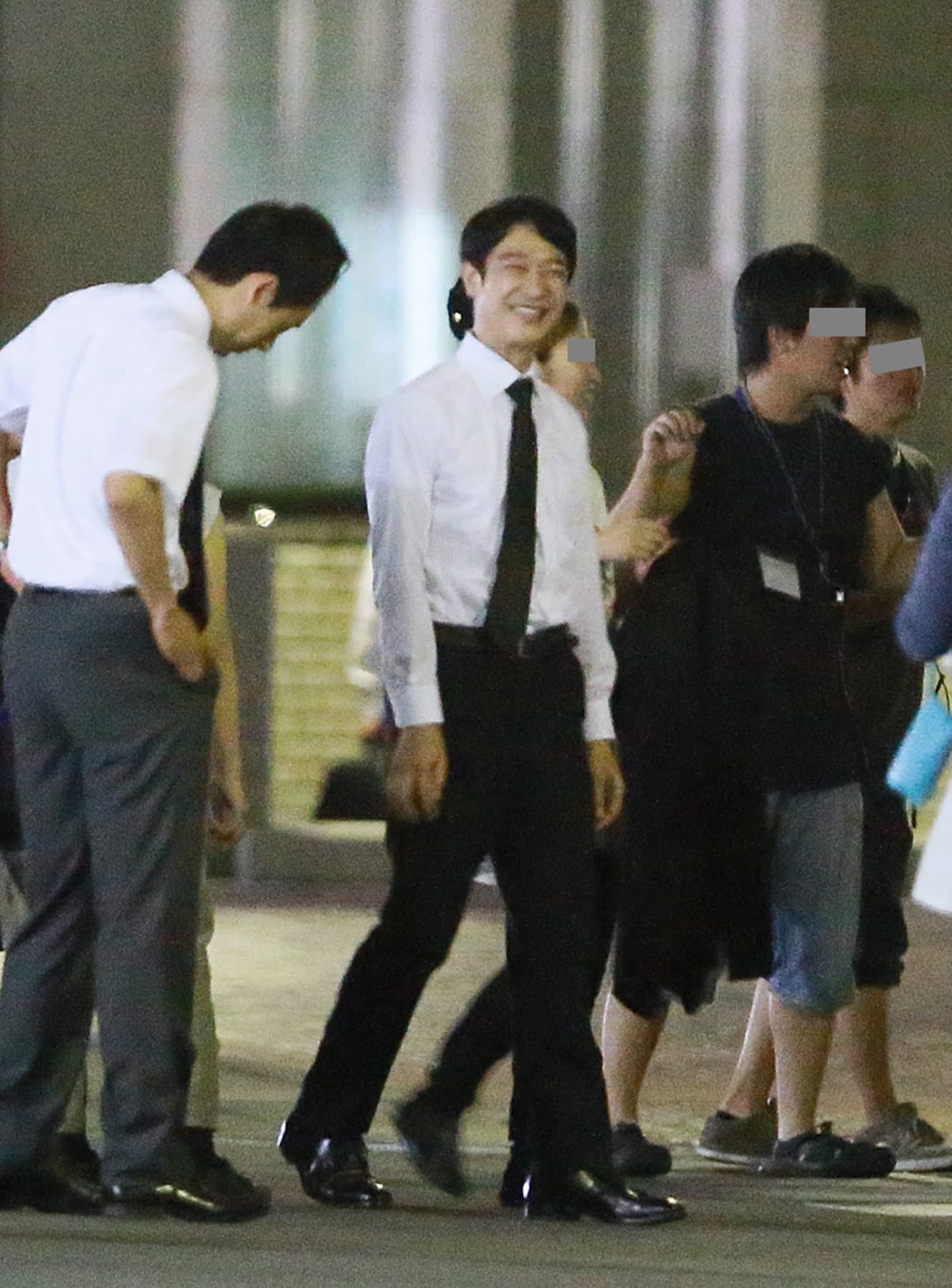
No discussion of power struggle dramas would be complete without “Hanzawa Naoki” (TBS), which ranked third on the list. Broadcast in 2013 as part of TBS’s “Sunday Theatre” slot, the series follows a banker played by Masato Sakai (52) as he becomes entangled in promotion battles and factional politics within his bank while exposing corruption and bringing down wrongdoers in a classic triumph-of-good-over-evil story.
“Whether it’s recovering bad loans or turning around a struggling hotel financed by the bank, the protagonist is constantly burdened with impossible tasks, yet somehow manages to pull through at the last moment. It’s immensely satisfying to watch. Amid the relentless tension, the scenes with his wife, played by Aya Ueto (40), provide the perfect emotional relief. The rival characters, particularly Managing Director Owada, played by Teruyuki Kagawa (60), are also fascinating—they’ll do absolutely anything to climb the corporate ladder. Considering that it achieved an astonishing peak television rating of 42.2 percent, it unquestionably deserves a place in the top three,” says television columnist Tamami Hiyama.
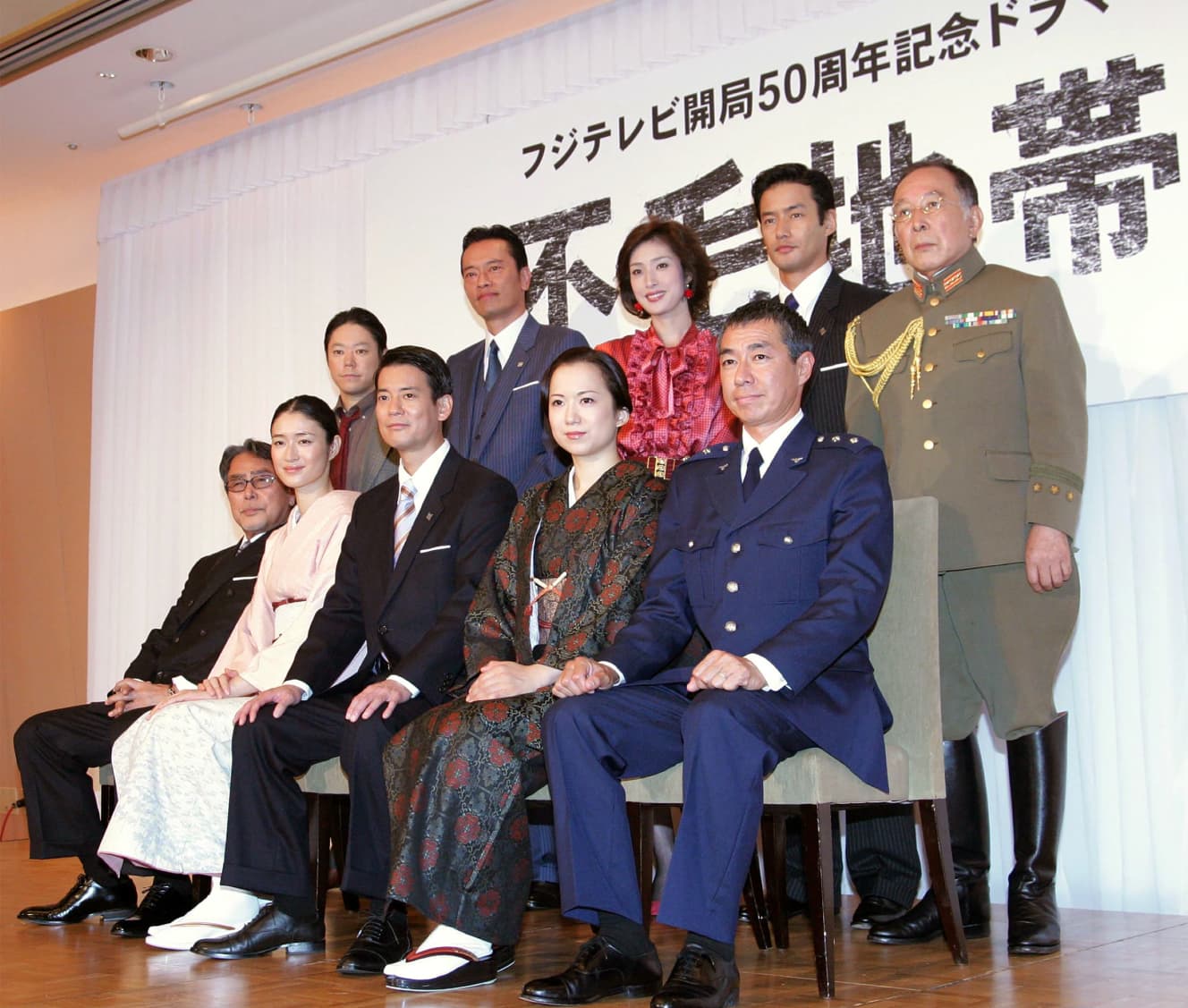
Among dramas centered on salarymen, one of the undisputed classics is “The Waste Land (Fumō Chitai),” broadcast by Fuji TV in 2009. The protagonist, once a staff officer in the Imperial Japanese Army, reinvents himself as a trading company executive after the war and becomes a formidable businessman. Columnist Takashi Kimura believes its greatest strength is its extraordinary scale.
“Unlike ‘The Great White Tower,’ another adaptation of a novel by Toyoko Yamazaki, which was confined to the relatively small world of a university hospital, ‘The Waste Land’ unfolds across the postwar world. The protagonist becomes involved in massive business ventures, including the competition to supply fighter aircraft to the Japan Air Self-Defense Force, partnerships between Japanese and American automobile manufacturers, and oil development projects in the Middle East. Along the way, he faces rival companies that bribe politicians and internal corporate factions determined to sabotage his career. He overcomes every obstacle, eventually even toppling the company president. The sheer weight and ambition of the story are unlike anything seen in recent television dramas.”
The Waste Land (Fumō Chitai) (Fuji TV, 2009)
Starring: Toshiaki Karasawa

From the June 19, 2026 issue of “FRIDAY”
PHOTO: Jiji Press (2nd photo) Sota Shima (3rd photo)