A Tokyo Metropolitan Police Department Narcotics Unit Undercover Agent Speaks Out: Revealing His Name and Face… The Investigation Techniques of the “Legendary Detective” Who Solved a Difficult Case That Was Bound to Remain Unsolved


Following in the footsteps of a legendary detective to break the case
Fumitaka Kobikimaki (52), a former assistant superintendent with the Metropolitan Police Department, joined the force in 1993. Until his retirement in 2023, he spent most of his 30-year career as an international investigator combating drug trafficking and organized crime.
Up until now, we had been discussing the battle of wits with criminal organizations that attempt to smuggle drugs using every trick in the book. However, the conversation shifted to a legendary detective after Mr. Kobikimaki suddenly noticed something during the interview.
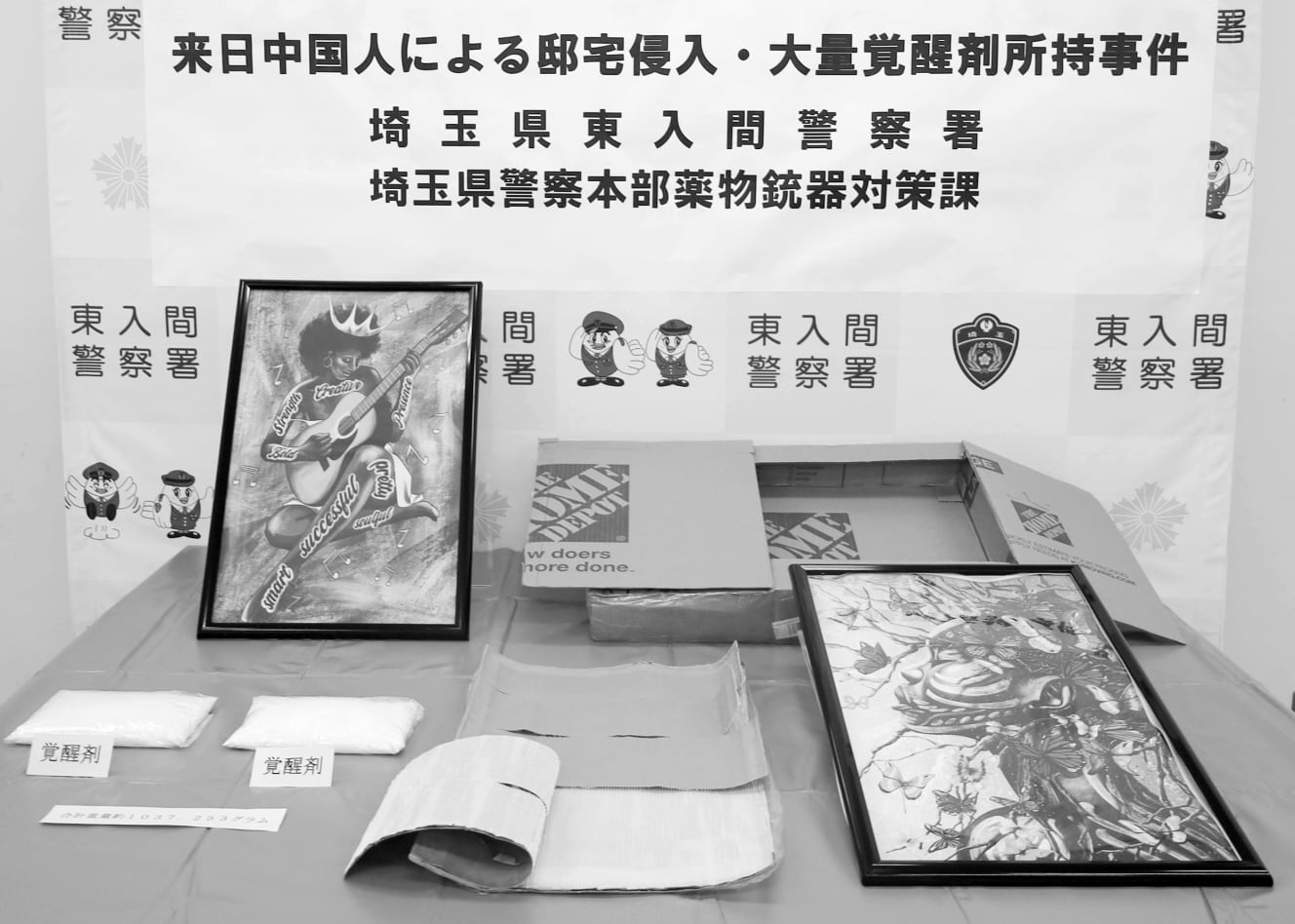
During the interview, Mr. Kobikimaki suddenly pointed to a painting hanging in the interview room. “There was also a method where they would attach a thin layer of methamphetamine to the back of the frame to smuggle it.”
This case was also a so-called “cold case.” Customs discovered stimulants hidden inside a painting shipped from China, but neither the recipient nor the delivery address was known. As someone called in to assist with this difficult case that was bound to become a dead end, what I did was re-examine the investigation files and evidence.
There was once a legendary detective at the Metropolitan Police Department named Hachibei Hiratsuka. His approach was to “examine all the evidence with his own eyes.”Detective Hiratsuka, who like me joined the investigation into the 300 Million Yen Case later on, re-examined a confiscated motorcycle and discovered a scrap of newspaper that had adhered to it during repainting. This allowed him to narrow down the area where the suspect was likely to be found.
I took apart a confiscated picture frame. I discovered that when stashing stimulants inside the frame, they had used adhesive tape and rubber sheets, and had sandwiched the stimulants between sheets of carbon paper to prevent them from showing up on X-rays.
After carefully disassembling it and sending it back to the Metropolitan Police Department’s forensic lab, a single fingerprint was found. It belonged to a yakuza member currently in custody at the Kanagawa Prefectural Police for a separate case. I immediately went to the Kanagawa Prefectural Police, explained the situation, and obtained copies of their investigative files.Among the documents was a receipt seized during a search of the suspect’s car, which revealed that he had purchased adhesive tape and rubber sheets from a major stationery manufacturer at a home improvement store in Kawasaki. The stationery items used in the frame in question matched those listed on the receipt.
Next was solidifying the evidence. To determine whether the adhesive tape used in the picture frame was the same as the one the yakuza had bought at the home improvement store, I had the components analyzed at the Forensic Science Laboratory, then rushed to the headquarters of the major stationery manufacturer to meet with the developer.Adhesive tape has those little dots in a grid pattern, but actually, each company holds a patent for that design, so it differs from manufacturer to manufacturer.
The rubber sheet was manufactured by one of Japan’s three major rubber manufacturers, headquartered in the Kanto region. After meeting with developers from both companies, we obtained testimony confirming, “This is definitely our product.”
Still not fully convinced, I examined the evidence again and found white hair stuck to the glass. When I consulted the Forensic Science Laboratory, they told me, “The president of a pest control company in Tokyo is a leading expert on animal hair in Japan.”
Impressed that such a person existed, I requested an analysis, which revealed it to be “processed rabbit fur.” The assessment was that it was likely the kind used in clothing items like scarves. And then—there it was: rabbit fur. It had been used on the collar of the yakuza’s girlfriend’s jacket.
There were two picture frames that had been smuggled with stimulants hidden inside. I remember they were ink wash paintings that looked very Chinese, but as expected, the quality was poor. This was a case where I was helped by others: the veteran forensic expert at the Senju Police Station who connected me with the Forensic Science Laboratory, the developer at the stationery manufacturer, and the leading expert on animal hair.
Speaking of being helped by others—I told you the story about when I was a rookie and found a warehouse where 160 kg of amphetamines were hidden, right?
After mastering Chinese and becoming an international investigator, I went undercover at a coffee shop to assist a senior detective. Overhearing a conversation between Shanghai mafia members at the next table led to the bust, and the mafia boss we arrested back then was actually quite a man of honor.
The 5 million yen the boss left by her pillow
With his home surrounded by unmarked police cars, the boss, having resigned himself to his fate, took a shower, changed into a suit, placed 5 million yen by the pillow of the woman he lived with, and walked out the front door with confidence.I served as the interpreter during the interrogation. When he said, “My tooth hurts,” I made an appointment with a dentist at the Metropolitan Police Department headquarters, and when he developed a sebaceous cyst in his ear, I took him to a dermatologist.
Amid all this, the woman he lived with was scheduled to be deported. The investigation had revealed she was an illegal resident. When I told the boss, he seemed concerned about the 5 million yen he’d left by her pillow. He’d assumed it had been seized during the raid.
“We did seize it, but since we couldn’t prove it was criminal proceeds, we returned it to her,”
When I told him that, the boss was greatly relieved, and he started opening up to me about all sorts of things.Stories about MDMA—which hadn’t made it to Japan yet at the time—and “black shabu,” which was dyed black and disguised as toner; the existence of a scheme where the contents of a cooling pillow were swapped out for concentrated stimulant solution boiled down to a gel-like consistency—eight years later, this information would save my life.
We detected a criminal organization attempting to transport methamphetamine smuggled from China within the country. After monitoring their movements for 24 hours, we raided their home and seized the shipment. Inside the box, we found it packed to the brim with cooling pillows printed with a character resembling “Hello Kitty.”
The investigators who raided the scene were disappointed, saying, “It was a bust,” but having heard about the cooling pad trick from the boss, I immediately realized, “The liquid inside is meth.” Without the boss’s information, we would have missed it.
Finally, let me share a case discovered by uniformed officers—the so-called community patrol cops—during a routine stop. Apparently, a British man was once seen strolling through the streets of Shibuya, clutching a large can of potato chips.
Whether it was a sixth sense or just the result of experience and having seen it all, it looked suspicious to the officer’s eyes. So he approached him.
“Open the lid and let me see inside the can,”
After some back-and-forth, he opened the lid to find what are known as “silk balls”—spherical objects about the size of silkworm cocoons—rattling around inside.
Here’s how the scheme works. First, they divide several dozen grams of drugs into small plastic bags and wrap them tightly with medical adhesive tape, making them rock-hard and watertight.The courier would coat these with olive oil or medical gel, swallow them, and board a plane. After entering the country, they would rush to the airport restroom and expel them along with their bowel movements.
Since I had just received them from the courier, the cocoons were cleanly washed. There were probably about 40 of them in total. The contents were cocaine.
He was arrested in the act and taken to the Shibuya Police Station, where I took over the case. But to my surprise, the man had hidden marijuana between the wall and the desk in the interrogation room.
He must have been hiding it in his shoes or pockets when he was arrested and thought, “I’m screwed.” He played dumb, claiming, “It’s not mine,” but when we examined the marijuana, we found human hair mixed in—about the length of an eyelash.
“If you say it’s not yours, I’ll prove it—cooperate with the DNA test,” I told him. “It’s not mine, but I refuse,” he replied. I was so furious that I contacted the court and obtained a warrant for a forced blood draw at a hospital—and bingo. When I presented the results, the man simply said, “I’m sorry.” I was so dumbfounded I couldn’t even speak.
What Mr. Kobikimaki has described here is just a small part of the tactics used in “disguised smuggling.” Even at this very moment, a battle is raging between criminal organizations and the authorities over drugs that have been delivered right to your doorstep.
From the June 19, 2026 issue of *FRIDAY*

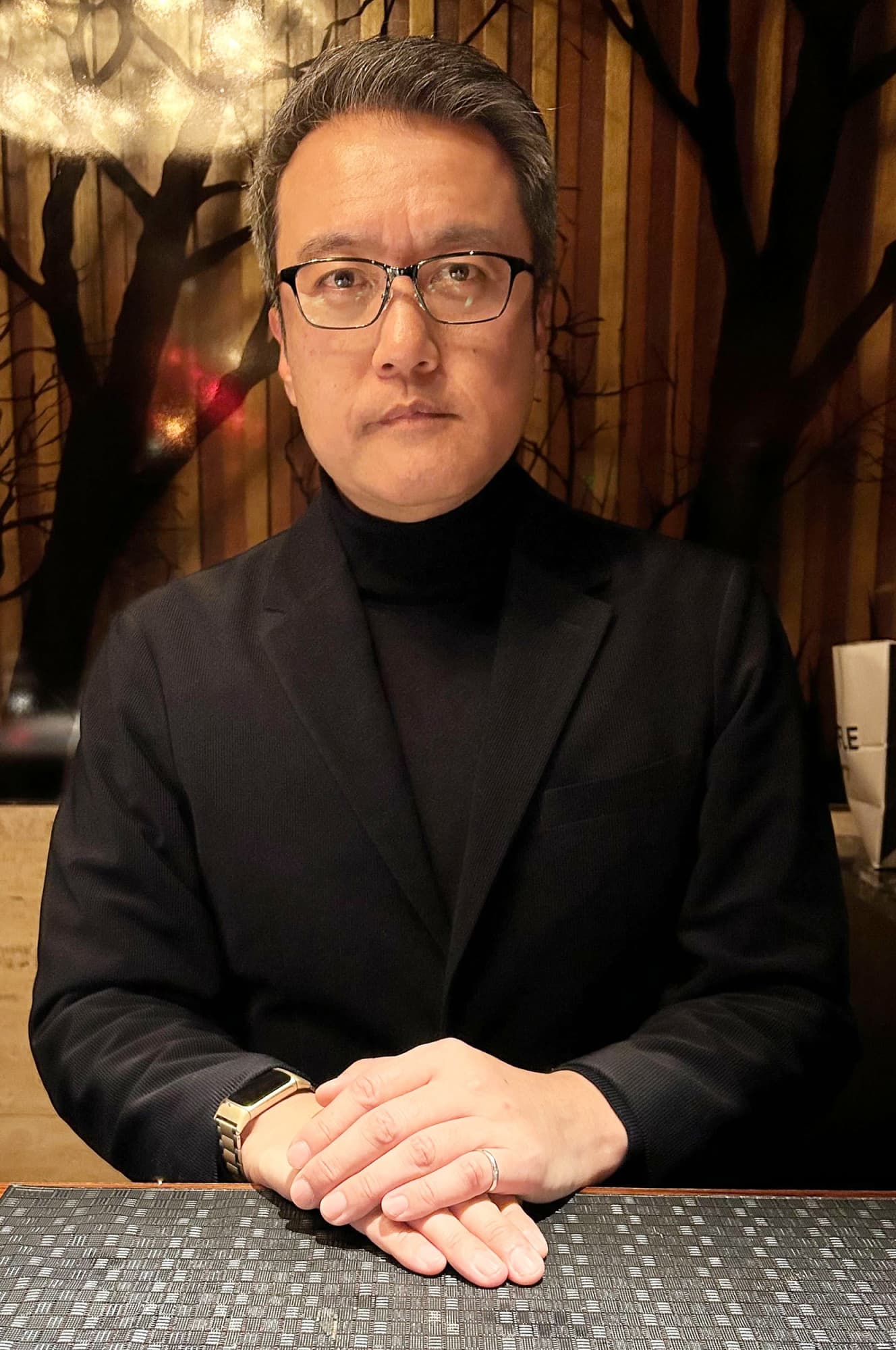
PHOTO: Courtesy of the Metropolitan Police Department / Kyodo News (1st photo)