“You Don’t Damage Another Team’s Property”—The Fallout From Tigers Manager Kyuji Fujikawa’s Furious Ejection


“Honestly, it looked safe to me (laughs).”
It was a turbulent night in Fukuoka.
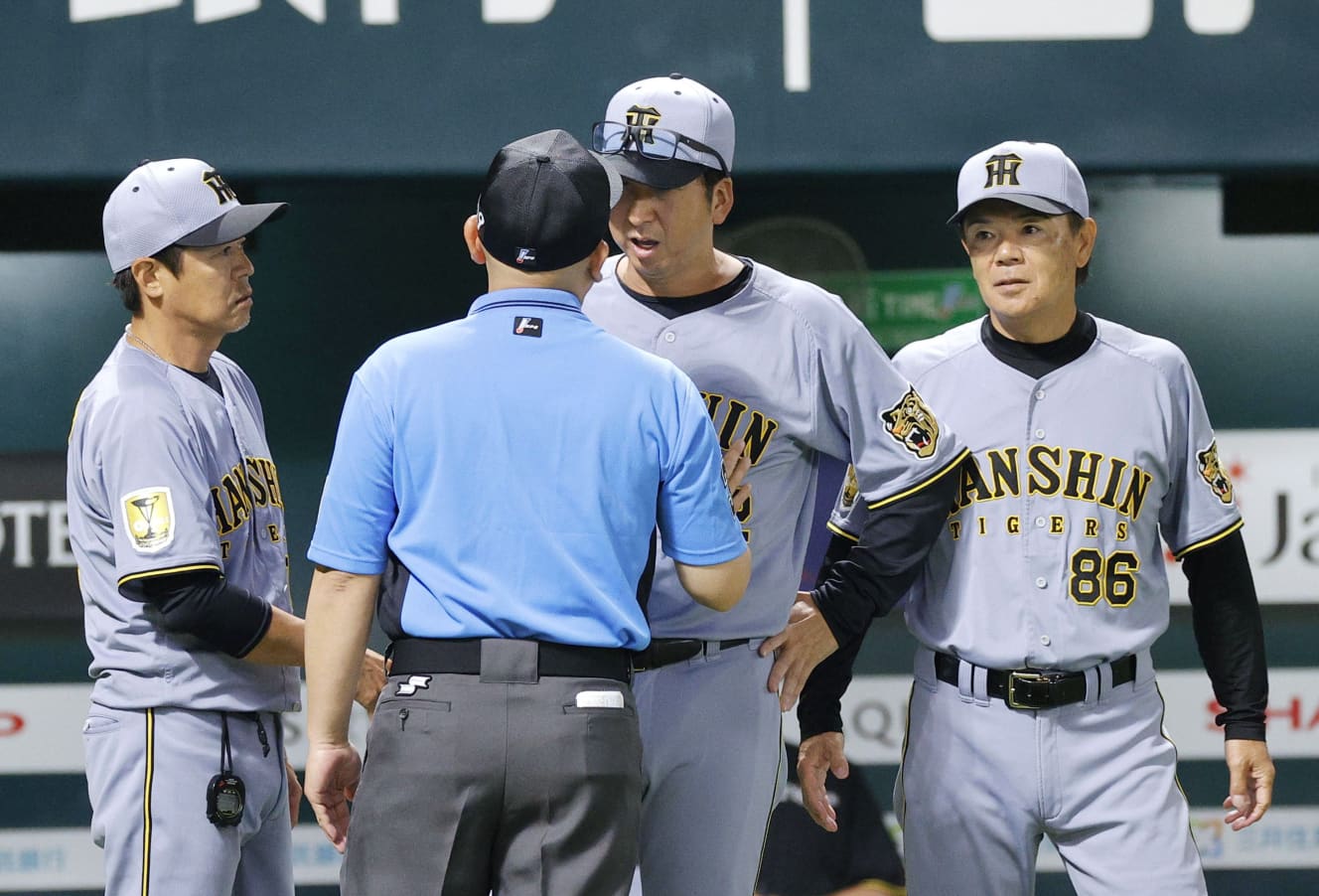
On June 10, during an interleague game against the SoftBank Hawks at Mizuho PayPay Dome, Hanshin Tigers manager Kyuji Fujikawa (45) was ejected for the first time in his career, including his playing days.
Afterward, unable to contain his frustration, Fujikawa punched a whiteboard in the dugout before disappearing into the clubhouse.
The incident occurred in the top of the seventh inning. With one out, first-base runner Takahiro Kumagai (30) attempted to steal second.
“Honestly, it looked safe to me (laughs), but the call was out. Fujikawa immediately requested a replay review, but the ruling stood. Shaking his head in disbelief, he came out of the dugout to confront the umpires. However, under the Central-Pacific League replay agreement, objections to replay review decisions are strictly prohibited. Fujikawa violated that rule. After issuing two warnings, the umpiring crew ejected him,” said a reporter covering the game on site.
A former NPB umpire explained:
“Under NPB rules, a call is only overturned if there is clear and convincing evidence that it was incorrect. No matter how questionable the play appears, the original ruling stands unless that standard is met.
Watching the television replay, it looked safe to me as well. However, when Kumagai slid, a cloud of dirt perfectly obscured the metal spikes on his cleats, making it impossible to determine with certainty whether his foot reached the bag before the tag.
Even if I had been in the replay center, I wouldn’t have strongly argued for overturning the call. My conclusion would have been: ‘It appears safe, but we cannot say with certainty that he reached the base before the tag. Therefore, the original out call stands.’ Under the rules, I believe that was the correct decision.
Some people have claimed the umpires favored SoftBank, but that’s simply not realistic. Umpires don’t have the luxury of favoring one team over another—their careers depend on getting calls right. There’s a significant difference between a play looking safe and having enough evidence to overturn a call.”
The disputed ruling sparked a chorus of boos from Hanshin fans, and Fujikawa returned to the third-base dugout still visibly upset.
“At that moment, he threw a punch at the whiteboard. After the game, it was clear the board had been badly dented. Since it happened during the game, the stadium is unlikely to pursue legal action, but technically it could qualify as property damage.
While some players appreciated their manager’s willingness to stand up for them, veteran players and staff reportedly took a more measured view. They were saying things like, ‘I’m not comparing the situations, but after what happened with Abe (Shinnosuke, 47), throwing a punch while the cameras are rolling isn’t exactly ideal,'” the reporter added.
After the game, Fujikawa spoke calmly with reporters.
“I’m calm now, but there are times when things like that naturally make you frustrated. I had absolutely no intention of insulting the umpires.”
However, one former professional baseball executive said he wished Fujikawa had thought more about the team.
“There’s little benefit to getting yourself ejected as a manager, and there’s no point arguing with the on-field umpiring crew over a replay review. The replay is evaluated by replay officials away from the field.
Some players may have been inspired, thinking, ‘Our manager stood up for us.’ But in reality, teams rarely rally because of something like that. The team benefits much more from having its manager in the dugout for the entire game.
Some people argue he deliberately punched the board to demonstrate his displeasure. Even if that’s true, damaging equipment that belongs to another team’s home stadium crosses the line. Years ago, manager Senichi Hoshino smashing electric fans or kicking chairs was treated as entertaining footage on sports news and blooper shows. Times have changed.”
On June 11, NPB announced that Fujikawa had received a formal reprimand and a ¥100,000 fine.
Hanshin, which had stumbled to a 4-8 record in interleague play (as of June 10), now faces another challenge in its pursuit of back-to-back league championships
PHOTO: Kyodo News