“She Should Feel Our Pain”—Victim’s Family Speaks Out as Shocking Abuse Allegations Emerge


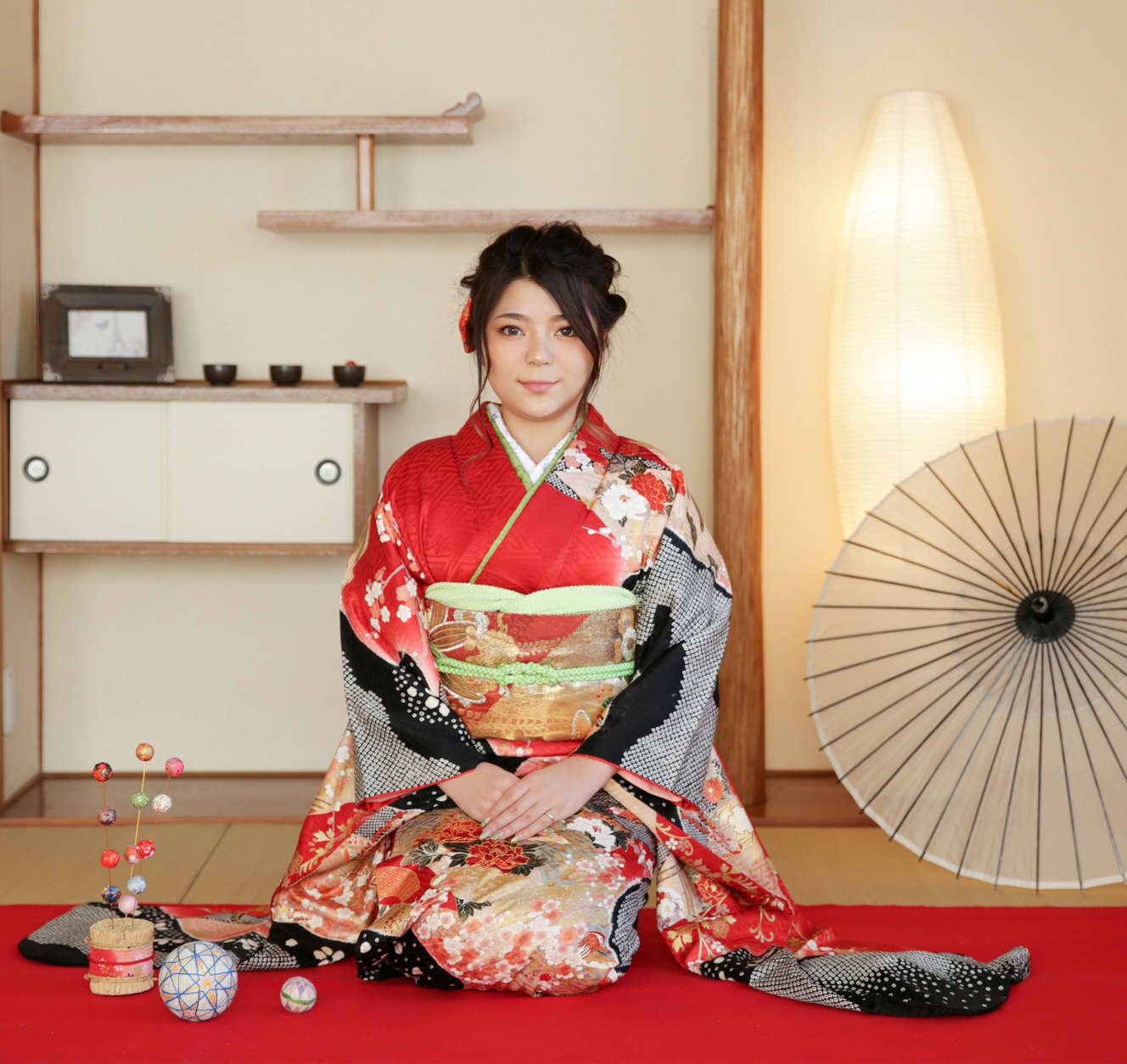
The murder of Misato Yoshimatsu (21 at the time) by Juvenile A (15 at the time) at the MARK IS Fukuoka Momochishopping complex in Fukuoka. Following on from Part 1, we would like to discuss Juvenile A’s family background and the thoughts of Misato’s mother.
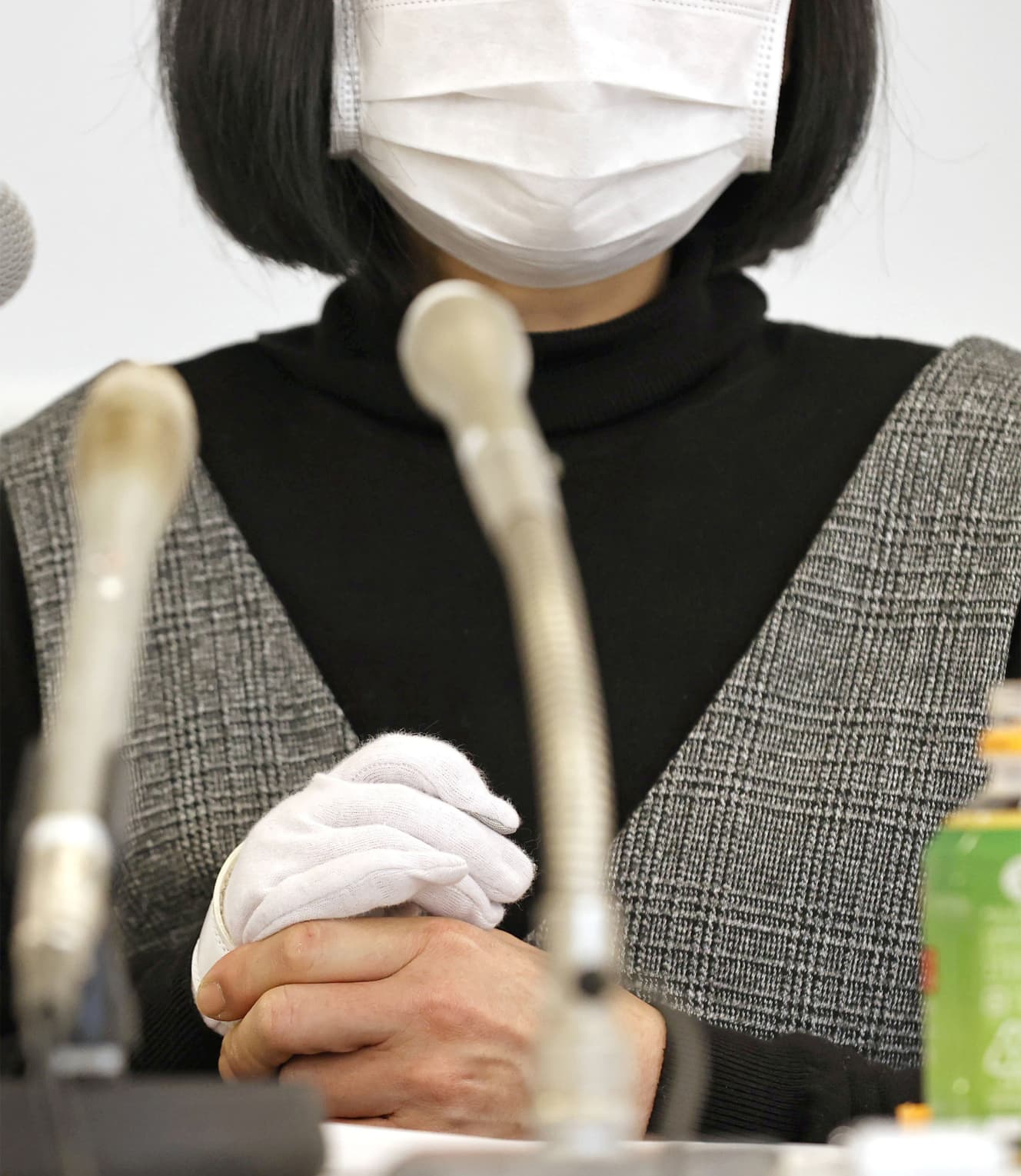
Ever since the incident, Ms. C, the bereaved mother, has been haunted by one question: Why did her daughter have to be stabbed to death with a kitchen knife by a complete stranger?
Juvenile A had never met Misato; he brutally murdered her—a girl he had never even seen before by chance. The full details of the case only came to light after the criminal trial began.
Juvenile A grew up in a small town facing the azure waters of Kagoshima. In contrast to the idyllic atmosphere of the town, his upbringing at home was extremely complicated.
From birth, he exhibited noticeable speech delays and hyperactivity; by the age of two or three, he had been diagnosed with a developmental disorder and was attending a special needs facility. Normally, with guidance from specialists there, and with his family respecting his unique traits while warmly watching over and supporting him, he should have been able to adapt to his surroundings to some extent. However, in his case, the opposite occurred: as the years passed, his violent tendencies intensified, and his speech and behavior became increasingly incoherent. The cause lay in his terrible home environment.
Both parents were born in 1977; they married as teenagers and went on to have three children: an eldest daughter, an eldest son, and the second son, Boy A.
The father was rarely home, spending most of his time working or partying, and when he did return occasionally, he repeatedly committed domestic violence. He also had a reputation for womanizing and had mistresses on the side.
Meanwhile, the mother, B-ko, also lacked any sense of responsibility as a parent. She did almost no housework and spent her days indulging her whims and going out to have fun. The house was a dump, and the children were left in a state of neglect.
Like getting shot in the face with an air gun or something
Due to these family problems, the eldest son became stressed and took it out on Boy A, who was four years younger. After the incident, when I visited Boy A at the Fukuoka Detention Center, he told me the following:
“To me, my older brother feels like an enemy. I feel nothing but resentment and anger. He would constantly subject me to all kinds of violence for no reason at all. He’d suddenly punch me, choke me, or shoot me in the face with an air gun. He’d also hit me with objects all the time. It pissed me off, but since he was four years older, I couldn’t fight back—I just had to take it.”
The eldest son’s violence even extended to sexual acts. He forced Boy A to lick his penis and anus, among other things, to assist him in masturbating.
Boy A’s mother, B-ko, also sexually abused him. Night after night, she engaged in lewd acts such as flaunting her sexual intercourse with her husband in front of the children, making Boy A lick her breasts, assisting him with masturbation, and kissing him deeply.
Who exactly was B-ko? When I interviewed my paternal grandfather, who lives at my family home in Kagoshima, he offered the following explanation.
“B-ko had a disability too. When she took her grandson (Boy A) to the hospital and he was diagnosed with a developmental disorder, she was apparently told she had one as well. From what I could see, B-ko’s symptoms were more severe. The house was so cluttered you couldn’t even step inside, and no matter what you said to her, she couldn’t give a proper response. She couldn’t even cook a decent meal. The yard was overrun with weeds. She tried, but she just couldn’t do it.”
Because B-ko barely even prepared meals at home, Boy A reportedly spent his days licking pancake mix to stave off his hunger.
It’s not hard to imagine that Boy A, who was already struggling to cope with life, ended up shouldering even more complex problems due to this home environment.
By the time he entered elementary school, Boy A had begun taking out his frustrations on those around him. He would lash out at people and smash things indiscriminately. Because he had been sexually abused, he experienced an early sexual awakening, and by the time he was in second grade, he had begun masturbating almost every day.
Boy A’s aggressive tendencies became even more pronounced when he was in third grade. During an interview at the detention center, he told me the following:
“One day, my dad suddenly took me to a recreational facility called ‘R.’ When we got there, my dad’s Filipino mistress was there. Without really understanding what was going on, I was made to play with her. That’s when something snapped inside me. Until then, I’d still had a sense that I should at least try to be a good kid. But I started thinking, ‘That’s pointless now—I’m just going to do whatever I want.’”
Later, his father divorced his mother and began living with his mistress. He had abandoned his family.
Boy A’s erratic behavior became increasingly out of control. If his older brother told him, “Don’t skip school,” he would fly into a rage and pull out a kitchen knife. He would snap at store clerks who reprimanded him. He would brag to female teachers about reading pornographic magazines. He would expose his genitals to members of the opposite sex…
He explained to me that, back then, the bad side of me came out. Even when he committed the crime, he said it was the bad side of me that did it—perhaps that was his way of describing a state where he had lost all self-control.
Two triggers behind the crime
Rather than showing concern for Juvenile A, B treated him as though she simply wanted to be rid of him and placed him in a medical institution.
But even there, he repeatedly caused problems and was transferred from one facility to another.
Over the course of roughly seven years beginning in the third grade of elementary school, Juvenile A was shuffled through a succession of institutions, including a child psychological treatment center, a psychiatric hospital, a juvenile self-reliance support facility, a medical juvenile training school, and eventually a juvenile detention center.
After entering juvenile detention, he was heavily medicated with psychotropic drugs, leaving him in what could be described as a drug-dependent state, but this did little to address the underlying causes of his behavior.
Juvenile A committed the murder when he was of third-year junior high school age. Just two days after being provisionally released from juvenile detention, he carried out the fatal attack at MARK IS Fukuoka Momochi.
There were two major immediate triggers behind the crime.
The first involved the psychotropic medication he had been prescribed while institutionalized.
Doctors had relied heavily on psychiatric drugs to suppress his violent behavior. Once released, however, he was expected to manage his medication himself—something Juvenile A was clearly incapable of doing.
Ordinarily, physicians should gradually reduce such medication before release to prevent withdrawal symptoms.
Instead, according to the account presented here, his medication was stopped abruptly, and he was released on provisional parole.
As a result, when he left juvenile detention, his mental state was reportedly severely unstable.
The second trigger concerned where he would live after his provisional release.
Initially, his mother, B, had agreed to take him in.
However, because she was living with another man, she suddenly refused to do so shortly before his release.
The rejection dealt Juvenile A a devastating emotional blow.
Under normal circumstances, officials would convene a treatment and rehabilitation conference to determine the most appropriate placement for him and coordinate with the relevant agencies to establish a structured rehabilitation plan.
Instead, no such conference was held, and he was simply placed in a rehabilitation facility.

The rehabilitation facility in Tagawa City, Fukuoka Prefecture, where Juvenile A was placed, primarily specialized in reforming what might be described as traditional juvenile delinquents. Juvenile A, however, was a completely different type of case. Still suffering from withdrawal symptoms after his medication was abruptly discontinued, it was almost inevitable that he would reject the environment and want to leave.
As a result, Juvenile A escaped from the rehabilitation facility after just one day. The following day, after wandering around Fukuoka City, he shoplifted a kitchen knife and used it to brutally murder Misato.
Misato’s mother, Ms. C, learned the full details of the case through the trial and media reports. After hearing what had happened, she became more determined than ever to uncover the factors that led to the crime and hold those responsible accountable, believing that doing so was the only way to ensure her daughter’s death would not be in vain.
After numerous discussions with her attorneys and conducting her own independent investigation, Ms. C concluded that there were four major problems:
1. The shopping complex’s security response, which prioritized evacuating customers over rescuing the victim.
2. The inadequate store security that allowed Juvenile A to easily shoplift a kitchen knife.
3. The government’s inadequate handling of the case, including the abrupt discontinuation of his medication and its failure to convene a treatment conference.
4. The responsibility of Juvenile A and his mother, B.
Regarding the first two issues, the shopping complex took corrective action. Security training sessions were introduced throughout its chain of shopping centers, stores selling knives were instructed to display them in locked cases, and an angel monument was installed on the premises in memory of Misato.
As for the third issue, Ms. C has filed a lawsuit against the national government seeking damages.
The fourth issue was the subject of the recent ruling by the Fukuoka High Court. Ms. C sought damages not only from Juvenile A but also from B, arguing that she had failed in her responsibilities as a parent and had actively contributed to the circumstances that led her son to commit the crime.
“I made up my mind”
Whether the court would order B to pay damages alongside Juvenile A had been one of the most difficult questions in the case.
While it was undisputed that B had subjected her son to inappropriate parenting, Juvenile A had spent much of his later childhood under the supervision of various institutions. Taking this into account, the trial court ruled that B bore no legal obligation to pay damages.
That decision was overturned on appeal.
The High Court found that B had failed to recognize her responsibilities as a custodial parent. It ruled that even though Juvenile A had been placed in institutional care, B remained legally responsible as his parent and ordered her to pay approximately ¥54 million in damages jointly with her son.
Ms. C said:
“I believe B bears at least part of the responsibility for what Juvenile A became. It wasn’t simply that she failed to act—she actively had a harmful influence on him. It’s obvious that she was one of the causes of this crime.
Yet when we first met, the very first thing she said was, ‘We don’t have any money.’ Whatever the circumstances, that’s simply not something you say.
At that moment, I made up my mind. If she truly has no money, then I want her to understand our suffering in whatever way she can. If she refuses to pay, I intend to pursue her—even if it costs me my own money.”
One troubling aspect of the lawsuit is that Juvenile A’s father was not named as a defendant.
The plaintiffs wanted to hold him accountable alongside B. However, because custody had been awarded to B after the divorce, the father was no longer the legal custodial parent and therefore could not be sued on that basis.
This represents a serious contradiction.
The father also bears responsibility for the environment that distorted Juvenile A’s character. If that responsibility disappears simply because he relinquished custody through divorce, then abusive parents can effectively escape liability merely by giving up parental rights.
Unfortunately, that is one of the limitations of current law.
The damages awarded total approximately ¥54 million.
How have Juvenile A and B responded?
Juvenile A is currently incarcerated in a juvenile prison. He has no money to pay the judgment, and it is difficult to imagine that, after his eventual release, he will successfully reintegrate into society and earn enough to satisfy such a substantial award. According to someone close to the case, the ruling has had virtually no impact on him emotionally and may instead push him further into despair.
B, meanwhile, appealed the High Court’s ruling. She apparently continues to believe that she bears no responsibility and has no legal obligation to pay damages.
As a result, the final decision will now be left to the Supreme Court of Japan.
Misato’s mother said:
“I don’t believe either Juvenile A or B has truly confronted what they did. Everything they say and do is wrong. They have done nothing but insult and hurt me and Misato ever since she was killed.
Why did this have to happen to us when we were simply living ordinary lives?
The frustration is overwhelming. The reason I’m pursuing this civil lawsuit is because I want them, even a little, to confront what happened. I believe that if they truly face the crime, different words will come from them.
That’s the only thing I can still do for Misato.”
What decision will the Supreme Court ultimately make?
If it upholds the damages award, will Juvenile A and B comply?
And if they do not, what can be done to force them to truly confront the crime—and perhaps finally speak those different words?
The questions raised by a crime committed six years ago remain as significant as ever.
Reporting and Text: Kota Ishii (Nonfiction Writer) PHOTO: Courtesy of the bereaved family, Kyodo News, and others