“I Want Him to Carry This Cross Forever”—Mother of Fukuoka Stabbing Victim Speaks Out



A mother whose 21-year-old daughter was brutally murdered while simply out shopping at a crowded shopping mall during the summer holidays spoke to me six years after the crime:
“I want not only the killer but also his mother to understand the suffering of the victim’s family. I want her to carry this cross for the rest of her life. If she tries to run away, I’ll pursue her myself, even if I have to spend my own money.”
The crime took place on August 28, 2020, during the height of the COVID-19 pandemic.
Inside the women’s restroom of MARK IS Fukuoka Momochi, Misato Yoshimatsu (21) was stabbed repeatedly with a kitchen knife and murdered.
The suspect was Juvenile A, then 15 years old, who had been provisionally released from a juvenile detention center just two days earlier.
According to investigators, he had been wandering around town because he wanted to have sex. After noticing Misato by chance, he followed her into the women’s restroom. Armed with a kitchen knife he had shoplifted along the way, he threatened her. When events did not unfold as he wanted, he attacked her with the knife, ultimately taking her life.
The juvenile was later sentenced to an indeterminate prison term of 10 to 15 years for murder and other offenses.
About four years later, in March 2026, the Fukuoka High Court issued a ruling in the civil lawsuit filed by Misato’s family. The court ordered not only Juvenile A but also his mother, B, who had abused him during his childhood, to pay approximately ¥54 million in damages jointly. It was a landmark decision that recognized the legal responsibility of the perpetrator’s mother despite her not being the direct assailant.
Misato’s mother, identified here as C, said:
“Since the day of the murder, I’ve been living in indescribable pain. During the trial, Juvenile A insulted my daughter over and over again, and his mother mocked me with her attitude. I will never forget that, and I want to make them pay. That’s what I mean when I say I want them to carry this cross.”
After the crime, I personally interviewed the juvenile offender and published a report in “FRIDAY” and “FRIDAY Digital.” This time, I want to recount the events leading up to the court’s ruling from the perspective of the victim’s mother.
“Turn yourself in.”
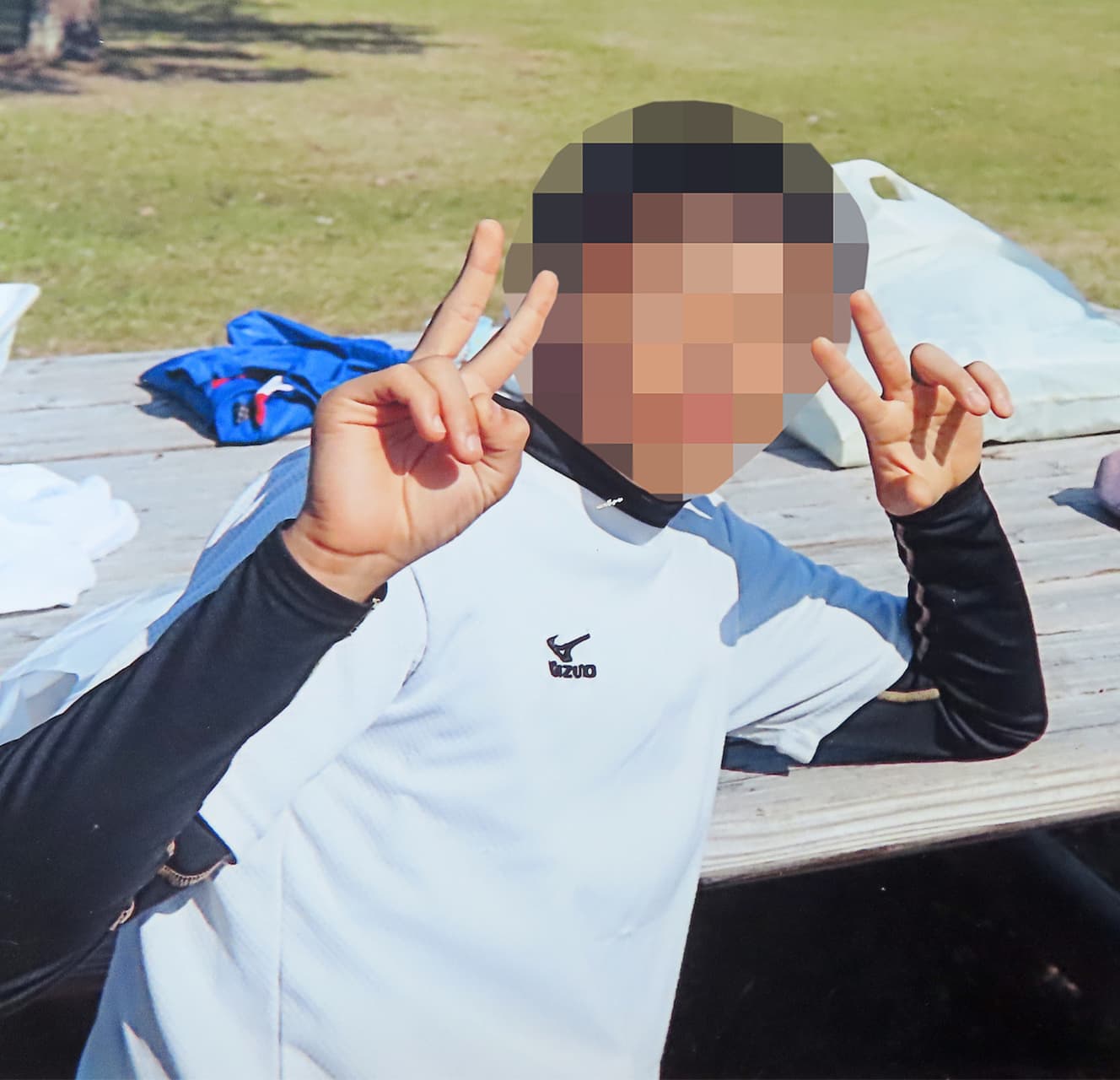 Juvenile A had played baseball when he was in elementary school.
C says she remembers almost nothing about the day of the murder.
Misato had left home that morning telling her mother she was going shopping with a friend. Instead, she was suddenly murdered.
Police summoned C, informed her of the crime, and asked her to identify her daughter’s body. Yet the tragedy had come so suddenly that she was unable to accept it as reality.
As news of the murder spread, reporters descended on the family’s home. Before she even had time to process what had happened, C found herself trying to escape the relentless media attention.
It wasn’t until after the funeral that she was finally able to begin facing the truth.
One by one, Misato’s friends from elementary and junior high school came to pay their respects. Through tears, one of them told C:
“I wish I’d been the one with Misato that day. If I had been there when she was attacked, I would’ve thrown myself at him and saved her.”
When the attack occurred, security guards reportedly prioritized evacuating shoppers rather than rescuing Misato, while her friend ran to seek help.
To C, Misato was the beloved daughter she had essentially raised on her own.
Misato was cheerful, energetic, and the kind of person everyone liked. She also understood how hard her mother had worked to raise her. Ever since kindergarten, she had repeatedly written essays expressing her gratitude to her mother, demonstrating a maturity and thoughtfulness beyond her years.
Although she still lived at home while working part-time, shortly before turning 20 she began saying that she wanted to become a full-time employee and talked enthusiastically about studying. She had started thinking seriously about her future and wanted the stability of a permanent career.
It was just as she was beginning that new chapter of her life that tragedy struck.
When Misato was attacked in the women’s restroom, she first helped her friend escape before trying to reason with Juvenile A.
Even as she was covered in blood from repeated knife wounds, she pleaded with him:
“Doing this won’t solve anything. Turn yourself in.”
Juvenile A ignored her words.
Instead, he brutally slashed her throat and killed her.
In the aftermath of the crime, the information C received about Juvenile A was extremely limited. She learned only fragments—that he had been moved from one child welfare institution to another throughout his childhood and that he had committed the murder just two days after being provisionally released from juvenile detention.
During this period, C suffered almost every night from insomnia and recurring nightmares caused by trauma.
Whenever she closed her eyes, she saw Misato being attacked by the juvenile.
In her dreams, Misato desperately tried to reason with Juvenile A, but he continued bringing the knife down without mercy. In her mind, C repeatedly begged him to stop.
He never listened.
Instead, he slit Misato’s pale throat with the knife.
Then she saw her daughter lying motionless after taking her final breath.
Following the murder, C began seeing a psychiatrist and was prescribed sleeping medication. Yet every time she closed her eyes, the murder replayed in her mind.
She constantly wondered how much pain her daughter had suffered, how terrified she must have been, and how much she had endured. Over and over, she apologized to Misato in her heart for being unable to save her.
More than anything else, C wanted to know why her daughter had been killed.
She hired an attorney and launched her own investigation—not only into Juvenile A’s background, but also into every aspect of the incident, including whether there had been any shortcomings in the emergency response.
“We don’t have any money.”

Not long after the murder, C was contacted by B, Juvenile A’s mother.
Through attorneys, B said she wanted to apologize.
C suspected the timing was no coincidence. By apologizing before the criminal trial, B was likely hoping to place herself in a more favorable position. Although reluctant, C agreed to meet her once and hear what she had to say.
The meeting took place at the office of the victim family’s attorney.
B arrived accompanied by her son’s lawyer.
C had expected B to bow deeply and sincerely apologize on behalf of her son.
Instead, she felt B offered only a superficial apology—and even appeared to be smiling.
What she said was even harder to believe.
She claimed she did not know why her son had killed Misato, that she had not discussed the case with any relatives, and that because he had grown up in institutions, she had never really known him.
Then, when the subject turned to compensation, she stated bluntly:
“We don’t have any money.”
In other words, she had no intention of paying compensation.
C later learned that B was employed and, at the time, had divorced Juvenile A’s father and was living with another man.
Even if she truly had little savings, the ordinary course would have been to gather whatever money she could as a gesture of good faith, offer it to the victim’s family, bow her head, and ask to pay the remainder in installments.
To C, however, B seemed to lack even that basic sense of responsibility.
Unable to contain herself any longer, C said:
“After your son committed a crime like this, how can you still live with yourself?”
B remained silent.
Then C asked:
“Why have you been smiling this whole time?”
To C, B appeared to be wearing an arrogant expression.
At that moment, a chill ran down her spine.
She thought:
“This woman isn’t in her right mind.”
“You’re a hypocrite.”
The first time C saw Juvenile A, the boy who murdered her daughter Misato, was during the juvenile hearing.
What she witnessed there left her deeply shaken.
Because he had been only 15 years old at the time of the crime, the proceedings were held privately in Family Court.
The boy who appeared before the court looked much smaller and thinner than C had imagined.
For a moment, she found herself wondering:
Could this frail-looking boy really have killed my daughter?
But as the hearing progressed and she listened to his testimony, she was stunned.
Not once did he offer an apology.
Instead, without the slightest sign of remorse, he repeatedly made remarks that insulted Misato.
C could not comprehend what he was thinking.
Some time later, determined to understand his true feelings, she used Japan’s Victim Impact Communication System, which allows victims’ families to send questions and statements directly to offenders.
She asked him several questions.
The answers she received were almost impossible for her to accept.
C: What were you thinking when you pointed the knife at my daughter and stabbed her?
Juvenile A: “People die so easily.”
C: What did you think when my daughter resisted you?
Juvenile A: “She’s a hypocrite.”
C: What does an apology mean to you?
Juvenile A: “Just saying sorry.”
C: Do you intend to compensate the victim’s family?
Juvenile A: “I have no obligation to pay.”
Was he merely trying to sound tough?
Or were these truly his beliefs?
If it was the latter, C could not begin to understand how his mind worked.
Combined with the unsettling smile she believed she had seen on his mother B’s face, everything about the case seemed beyond comprehension.
As time passed, however, C gradually began to understand why.
Through the criminal trial—which followed after the case was transferred to adult court—and through extensive media coverage, the darkness that had consumed Juvenile A’s mind slowly came to light.
C’s response to all of this was her determination to make both the offender and his mother carry their cross.
What she meant by those words—and why she came to that conclusion—will be explained in detail in Part Two.
Reporting and Text: Kota Ishii (Nonfiction Writer) PHOTO: Courtesy of the bereaved family, Kyodo News, and others