He Lost Everything to an Investment Scam—Then Built a ¥200 Million Fortune on Note at Just 24


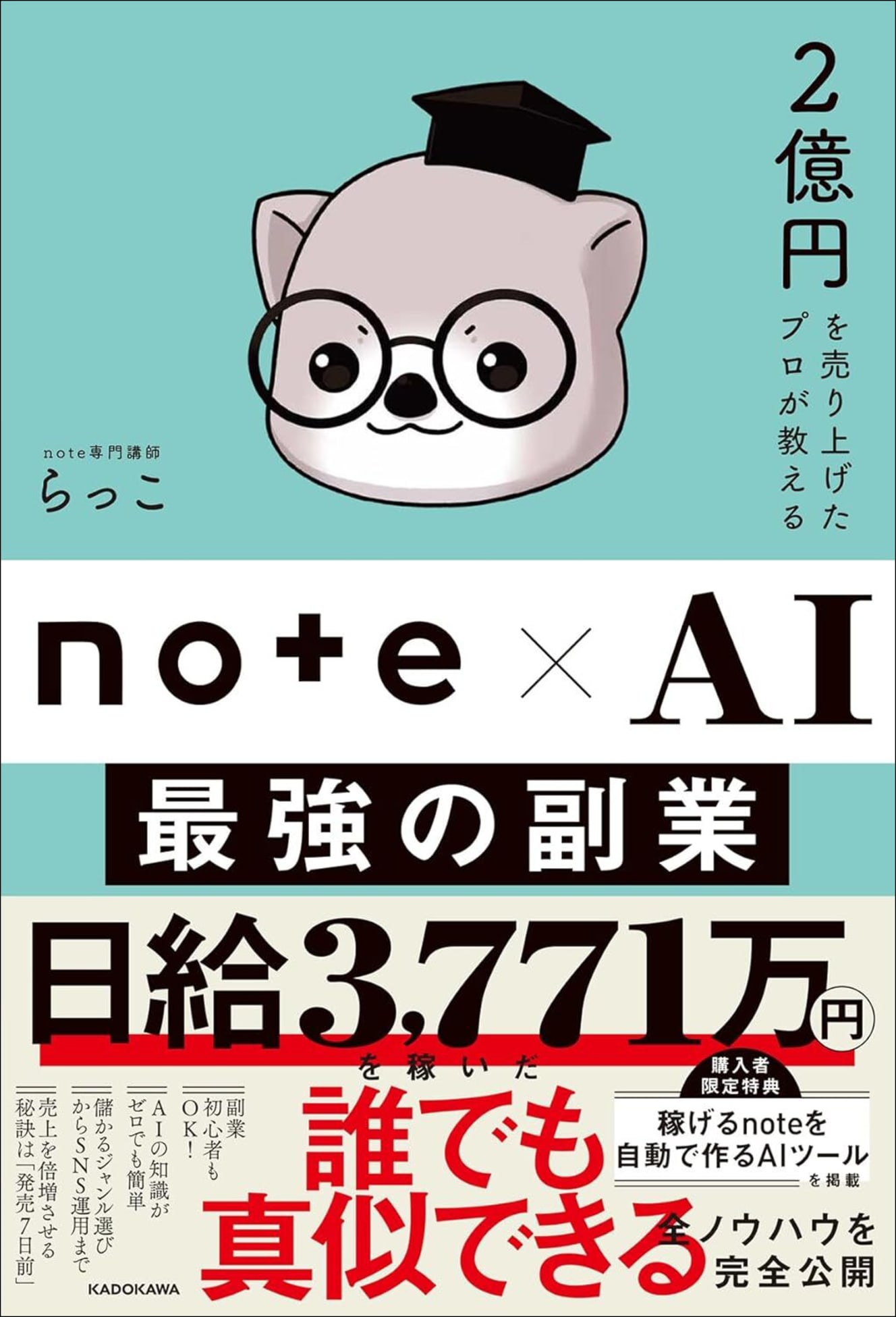
He started a business while still in college but failed to achieve any notable success. Desperate, he fell victim to multiple investment scams and ended up with ¥15 million in debt. The overwhelming stress led to depression, forcing him to repeat two years of university. Hoping for a fresh start, he tried job hunting—but was rejected by every company. Then, staking his future on a paid article published on note, he went viral and generated ¥37.71 million in sales in a single day.
At first glance, it might sound like just another rags-to-riches success story. But the protagonist, Rakko, carefully analyzed the reasons behind his success and revealed his methods in a book. Beyond simply sharing techniques, he also incorporates psychological approaches to overcome obstacles that knowledge alone cannot solve.
Why do so many people fail to earn money through side hustles? More fundamentally, why can’t they even take the first step? Here’s Rakko’s money-making strategy, built around one central idea: reproducibility.
Profile: Rakko
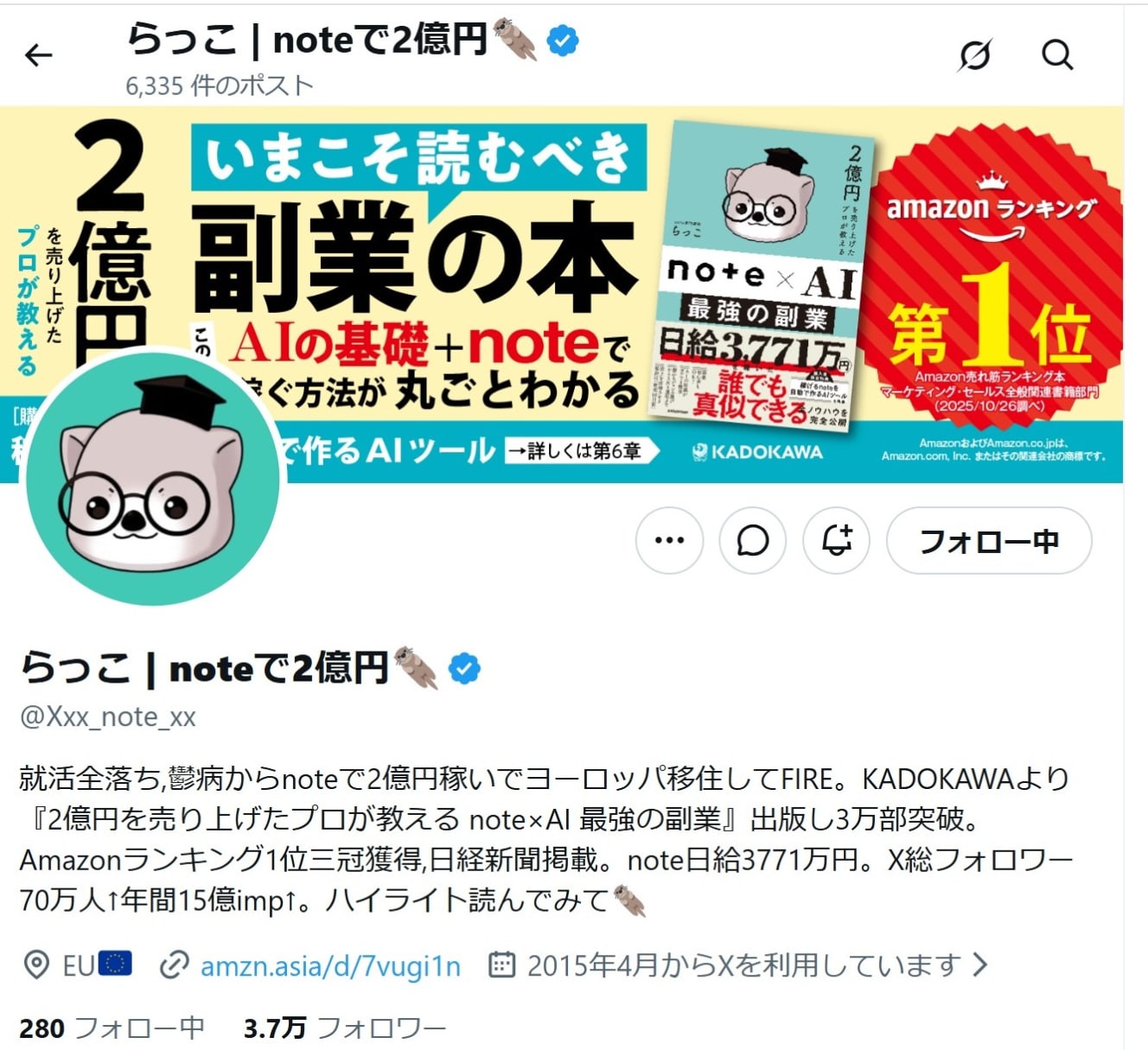
Rakko launched his first business at age 19 but failed, accumulating ¥15 million in debt. The stress caused him to develop depression, and after failing every job interview, he hit rock bottom. He eventually found a lifeline through the digital content platform note, where his original marketing strategy helped his very first paid article generate ¥37.71 million in revenue within 24 hours—a record-breaking achievement.
He continued to earn stable income afterward, with total sales eventually surpassing ¥200 million. At age 24, he achieved side FIRE (financial independence while continuing to work by choice) and now lives in Poland. While continuing his note business, he also operates brick-and-mortar businesses there, including restaurants and beauty salons. His hobbies include walking his dog, weight training, martial arts, studying English, campfires, and traveling around the world.
A failed startup and ¥15 million lost to scams
His first venture was an e-commerce business. He imported products from China and sold them through Japanese flea-market apps and similar platforms. It produced decent results, but he couldn’t see any path toward scaling it into a sustainable business. He then tried various other ventures, including affiliate blogging, but none delivered the results he hoped for.
“At the time, I didn’t understand the fundamentals of business at all. I just kept jumping into whatever looked profitable. Eventually, I thought investing in unlisted stocks and real estate would be the quickest way to make money, and I ended up getting scammed.
For some reason, I was in a huge hurry back then even though there really was no reason to rush. As a result, I lost not only money I’d borrowed from my parents and friends but also funds I’d obtained through loans.” (Rakko)
The investment scams left him with approximately ¥15 million in debt—an almost unimaginable burden for a university student.

A comeback on note: ¥37.7 million in a single day
It was in the midst of this utter darkness that he finally found a ray of hope: “note.”
Launched in 2014, “note” is a digital content publishing platform. Today, users can publish not only written articles but also audio, photos, and videos. They can also place their content behind a paywall and monetize it. While it was originally used mainly by individual creators, an increasing number of companies now operate official accounts and use the platform as their owned media.
“I learned that an acquaintance was making money on note, so I started researching it myself. I discovered that I could get started with zero upfront costs. As long as you have a computer and a smartphone, you can write and sell articles from anywhere. The profit margins are incredibly high. For someone like me, who had massive debt and no capital, note was the only—and the strongest—option.”
Let’s skip ahead to the outcome.
After conducting extensive research and carefully preparing his first paid article, he published it on note. The response was extraordinary. Sales took off immediately after launch, generating ¥37.71 million in revenue on the very first day alone.
The side-hustle trap: Don’t compete based on what you’re good at
How was Rakko able to achieve explosive success on note despite having neither name recognition nor a proven track record?
According to him, the key was that he found the right answer when choosing his niche—deciding exactly what kind of articles to write.
“You can steadily publish useful information, but if nobody notices it, it won’t generate sales. Deciding what kind of articles you’re going to create and distribute is both the first and the biggest battle.”
When choosing a niche, most people naturally think of writing about their own area of expertise. Whether it’s related to their job or a hobby, they’re likely to have more material to write about than in other fields, and they’re more likely to provide readers with genuinely useful information.
Rakko, however, says that choosing your strongest field is the biggest trap for beginners.
“When you prioritize your area of expertise, your content tends to become self-satisfying or self-contained. You may succeed in differentiating your information, but if there aren’t enough readers interested in that topic, it won’t generate income. To monetize successfully, you need to approach content creation from the readers’ perspective. The number of interested readers—and the strength of that interest—should always come first.”
How can an unknown individual with no established specialty become an expert capable of attracting readers? And what were the sophisticated customer acquisition strategies that used “X (formerly Twitter),” along with the psychological techniques that helped him overcome the inability to take action that prevents so many people from getting started?
The paid edition of “FRIDAY Subscription” explains in detail the highly reproducible methods that continue to generate stable income for him today.
Reporting & Text: Kenji Matsuoka
Money writer and financial planner / After working as a market analyst at a securities firm, he became independent in 1996. He writes articles on finance and asset management, primarily for business and economic magazines.His books include *The First-Year Guide to Robo-Advisor Investing* and *Easy to Understand with Plenty of Illustrations! The Definitive Guide to Profiting from Cashless Payments*. ■X (formerly Twitter) → @1847mattsuu