Lustful, Arrogant, and Dangerous? The Truth Behind Yodo-dono’s Villainous Reputation


Women such as Hōjō Masako, Yodo-dono, and Yaoya Oshichi have long been remembered in Japanese history as evil women or poisonous women. But were they really so wicked?
On May 27, “Poisonous Women in Japanese History” (“Dokufu no Nihonshi”), written by history writer Kobayashi Akira and published by Tetsujinsha, examined 25 women—from figures in myths and legends to famous historical personalities—whose names have come down to the present with infamous reputations. The following is an edited excerpt concerning Yodo-dono. What was the true face of the woman later branded a poisonous woman who supposedly led the Toyotomi family to ruin?
Promiscuous, Serpentine, Arrogant
“Yodo no Kimi was not only beautiful but also by nature lustful.”
— Tandai Shōshinroku (1808)
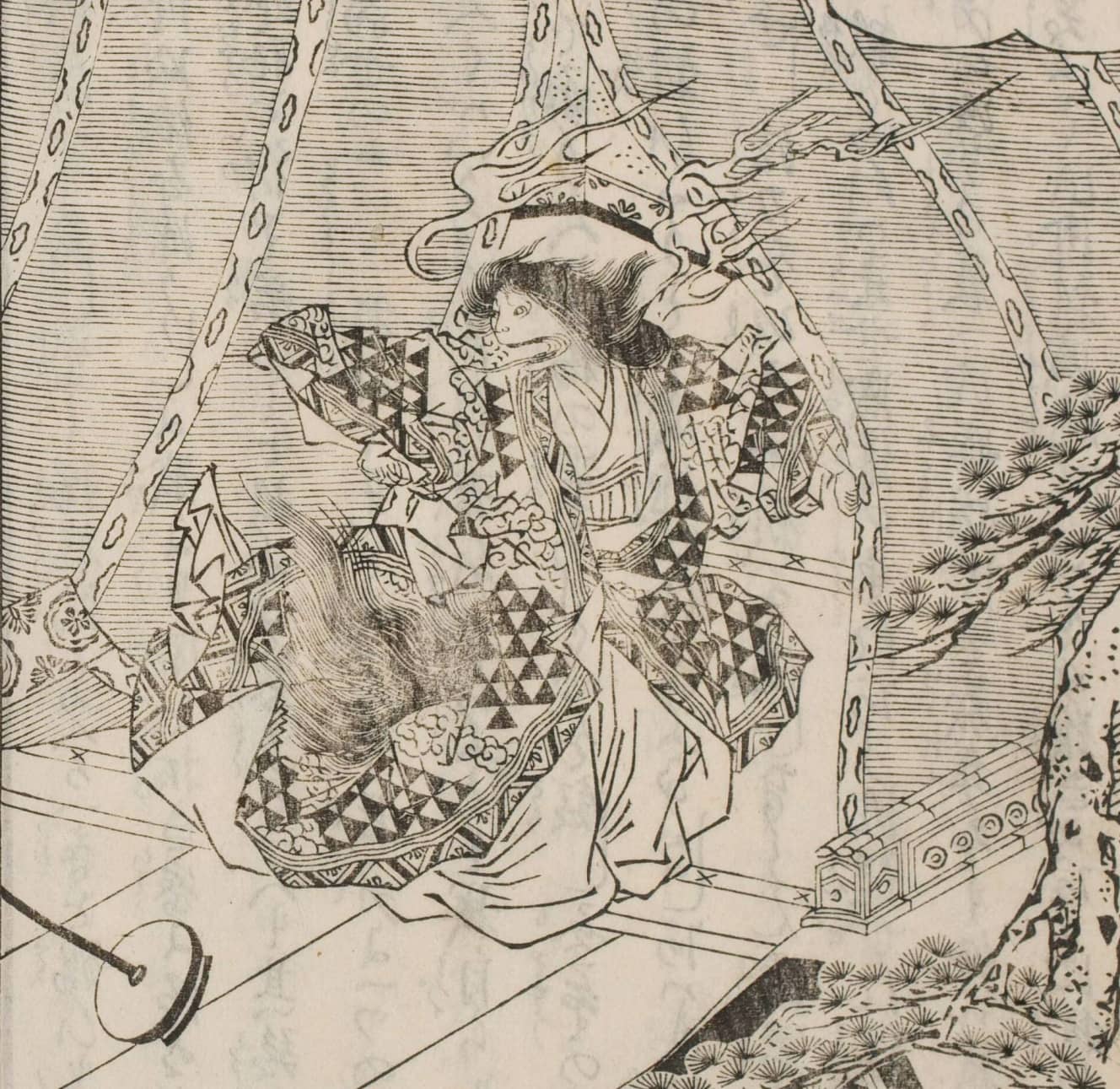
“Yodo no Kimi reveals her serpent form.”
— Ehon Taikōki, Volume 7 (1802)
These are examples of how Yodo no Kimi—the consort of Toyotomi Hideyoshi—was judged in the late Edo period. She was portrayed as both promiscuous and a monster, receiving remarkably harsh treatment. It has long been pointed out that even the name “Yodo no Kimi” itself carried derogatory implications.
“She was called Yodo no Kimi in reference to the lowest-ranking prostitutes of the Edo period, the tsujigimi (also called yotaka), women who sold themselves by the roadside. Such a wicked woman defied Ieyasu and brought about the destruction of the Toyotomi.”
— Shinpen Keikakuden (published in the Meiji era)
In other words, people viewed the Toyotomi clan at the end of the Sengoku period as having been corrupted by a woman likened to a prostitute, causing the family founded by Hideyoshi to perish after only two generations.
Historical documents concerning Yodo-dono are limited. Contemporary sources merely confirm that she was called “Chacha” in her younger years and, after becoming Hideyoshi’s consort, was referred to as “Yodo no Nyōbō” or “Ninomaru-dono” (because she lived in the Ninomaru section of Osaka Castle). Despite being famous enough to be counted among the so-called “Three Great Villainous Women of Japan,” alongside Hōjō Masako and Hino Tomiko, very little is actually known about her true character. Nevertheless, people continued to label her a villainess.
Even in the Meiji period, negative evaluations persisted.
“After Hideyoshi’s death she became an arrogant and self-indulgent woman unable to restrain herself, and took Ōno Harunaga as her own.”
— Nisen Gohyaku Nenshi (1896)
The term “hōshi” means lacking restraint or moderation. “Kyōfu” refers to a proud, overbearing, and ill-tempered woman. The passage essentially claims that after Hideyoshi died, she became arrogant, self-indulgent, undisciplined, and incapable of self-control, ultimately making Harunaga her possession—an exceptionally severe condemnation.
Ōno Harunaga was a military commander who served as a close aide to Yodo-dono and her son, Toyotomi Hideyori. As will be discussed later, he was also rumored to be Hideyori’s biological father. The spread of such allegations of infidelity illustrates how Yodo-dono, whose true character remains elusive, became the subject of gossip and speculation.
Here, we seek to uncover what kind of woman Yodo-dono really was. Since the name “Yodo-dono” has become the standard modern usage, that is the term that will be used from this point onward.
Did Yodo-dono and Ōno Harunaga elope?
Yodo-dono’s life was one continuous upheaval. Looking only at the outline of her life, she appears every bit the tragic heroine. So why was she branded a poisonous woman? Ultimately, it comes down to one question: Was Toyotomi Hideyori really Hideyoshi’s son?
The suspicion was that Hideyori’s real father was not Hideyoshi at all, but that Yodo-dono had committed adultery, given birth to another man’s child, and successfully installed that child as the heir of the ruler of Japan, Toyotomi Hideyoshi.
Indeed, Hideyoshi had long been unable to produce an heir, yet shortly after Yodo-dono became his concubine, she became pregnant. Their first son, named Tsurumatsu, died at the age of three, but two years later Hideyori was born. Hideyoshi had many concubines in addition to his wife Nene (later known as Kita-no-Mandokoro), who had been with him since his youth, so some people found it suspicious that only Yodo-dono bore him two children.
However, there is a tradition that during the period when Hideyoshi was lord of Nagahama Castle (from 1573 onward), a boy named Hidekatsu (childhood name Ishimatsumaru) was born to him, though the mother is unknown. The boy is said to have died in 1576. At Myōhō-ji Temple in Nagahama City, Shiga Prefecture, an old photograph remains of a memorial hanging scroll believed to depict Hashiba Hidekatsu (the original scroll was destroyed by fire).
Whether Hidekatsu actually existed, and whether he was truly Hideyoshi’s biological son, remains disputed among historians. The truth is unknown. However, infant mortality was extremely high during the Sengoku period, so it would not be surprising if Hideyoshi had other illegitimate children who died young and left no historical record.
Returning to Yodo-dono:
An old document preserved by the Mōri family, the “Hagi Han Batsuetsuroku,” reports alleged misconduct by Yodo-dono. The entry is dated December 2, 1599.
“An incident occurred in which Ōno Shuri (Harunaga), a man highly favored by the lady, was said to be having an illicit affair with the mother of Lord Ohiro-sama (Hideyori), namely Yodo-dono. An attempt was made to put Shuri to death, but afterward he was taken in by the Ukita family.”
In other words, it claims that Yodo-dono and Ōno Harunaga were involved in a romantic relationship and that he was punished for it.
It is true that Harunaga was placed in another domain’s custody in October of that same year. However, the issue at the time was his alleged involvement in a plot to assassinate Tokugawa Ieyasu. Furthermore, he was placed under the custody of Yūki Hideyasu, Ieyasu’s son, in the Yūki Domain of Shimōsa Province (present-day northern Chiba and southwestern Ibaraki Prefectures).
This document contains obvious errors, transforming an attempted assassination plot against Ieyasu into an affair and replacing Yūki with Ukita. As such, it is difficult to regard it as reliable.
There is evidence elsewhere that rumors of an affair between Yodo-dono and Harunaga were circulating. One example appears in the “Tamon-in Diary,” preserved at Tamon-in, a sub-temple of Kōfuku-ji in Nara:
“Hideyoshi, in his will, ordered that Ieyasu and Yodo-dono should become husband and wife, but Harunaga took Yodo-dono and eloped with her.”
This entry was likely nothing more than a recording of hearsay and rumor.
What is important is that such accounts later gave rise to the widespread belief that Harunaga was Hideyori’s true father. From there emerged the enduring claims about Yodo-dono’s supposed promiscuity—the same lustful woman narrative mentioned at the beginning of this chapter.
The backlash intensified after her death
The rumors slandering Yodo-dono suggest that even during her lifetime there were people who resented her existence and sought to bring her down. Yodo-dono had many enemies. The most natural explanation is that Hideyoshi’s overwhelming affection for Hideyori caused her influence and confidence to grow.
At this time, Hideyoshi doted on his heir Hideyori to an extraordinary degree. When they were apart for too long, he would write letters saying things such as, “When we meet again, I shall kiss you.” He also required the regional lords to submit written pledges swearing loyalty to Hideyori and promising punishment for anyone who defied him. Given such deep affection, it would not have been surprising if Yodo-dono, as Hideyori’s mother, became somewhat proud of her position.
After Hideyoshi died, Hideyori and Yodo-dono moved from Fushimi Castle, where they had been living, to Osaka Castle. This took place in the first month of 1599. From that point onward, Yodo-dono acted as Hideyori’s guardian. Eight months later, Kita-no-Mandokoro (Nene) left Osaka Castle. Many of the daimyo who had served Hideyoshi greatly respected Kita-no-Mandokoro, particularly figures such as Kato Kiyomasa and Fukushima Masanori. From their perspective, it was likely unwelcome that Yodo-dono had become Hideyori’s protector and was exercising authority as the de facto ruler of Osaka Castle.
As the effective ruler of the castle, she needed to recognize changing political realities and govern accordingly. However, Yodo-dono was inexperienced in politics. Because of her pride, she was unable to accept that power was already shifting from the Toyotomi to the Tokugawa.
The physician Manase Dōsan, who examined Yodo-dono, recorded in Gensaku Dōsan Haizairyoku that she suffered from insomnia as tensions with the Tokugawa deepened. This suggests that her mental state was unstable. It is difficult to imagine that a woman in such a condition was an aggressive warmonger eager for conflict with the Tokugawa.
Yet Tokugawa Ieyasu exploited the fact that Yodo-dono, Hideyori, and their close advisers all lacked political and military experience, and launched the Siege of Osaka. The Toyotomi managed to survive the Winter Campaign of 1614, but the Summer Campaign the following year unfolded exactly as Ieyasu intended. Yodo-dono and Hideyori ultimately took their own lives.
The campaign to disgrace Yodo-dono truly intensified after her death. The Tokugawa faced the risk of being branded as the family that had destroyed the Toyotomi. To avoid this stigma, a narrative emerged that blamed the Toyotomi downfall on Yodo-dono herself. In other words, responsibility was shifted onto her.
Political scientist Hara Takeshi has pointed out that the Edo shogunate came to portray Yodo-dono as a negative example showing that nothing good happens when women hold power (“The History of Female Sovereigns in Japan,” NHK Shinsho).
Hara compares this to the story of the “hen” that became widespread during the reign of the fourth Tokugawa shogun, Tokugawa Ietsuna. The tale originates from the Chinese classic “Shujing (Book of Documents)”, where a hen crowing to announce the morning symbolizes women exercising political authority and is regarded as an omen of a state or household’s decline. According to this logic, the Toyotomi fell because a hen like Yodo-dono held power, and therefore Tokugawa rule was justified.
This is a classic example of history being written by the victors.
Modern evaluations of Yodo-dono are, fortunately, not nearly this harsh. Nevertheless, the tendency for famous women to become targets of unjust criticism and slander has not entirely disappeared.

Poisonous Women in Japanese History by Kobayashi Akira (Tetsujinsha).