Economic Crisis, Falling Prices, Growing Industry? The Untold Story of Japan’s Budget Sex Trade | FRIDAY DIGITAL

Economic Crisis, Falling Prices, Growing Industry? The Untold Story of Japan’s Budget Sex Trade

  • Share on Twitter
  • Share on LINE
The history of budget adult entertainment – still expanding amid inflation?

Multiplying with every economic crisis

The effects of the oil shock triggered by the attacks on Iran by the United States and Israel are beginning to be felt. The global inflation caused by soaring crude oil prices is delivering a further blow of rising costs across various industries in Japan, raising concerns about customers staying away—and the adult entertainment industry is no exception.

Looking back, the adult entertainment industry has skillfully weathered economic crises such as the Lehman Shock and the COVID-19 pandemic. Alongside standard strategies such as differentiating through unique characteristics and forming groups and expanding chains, another commonly adopted measure was high-volume, low-margin business and extreme discounting.

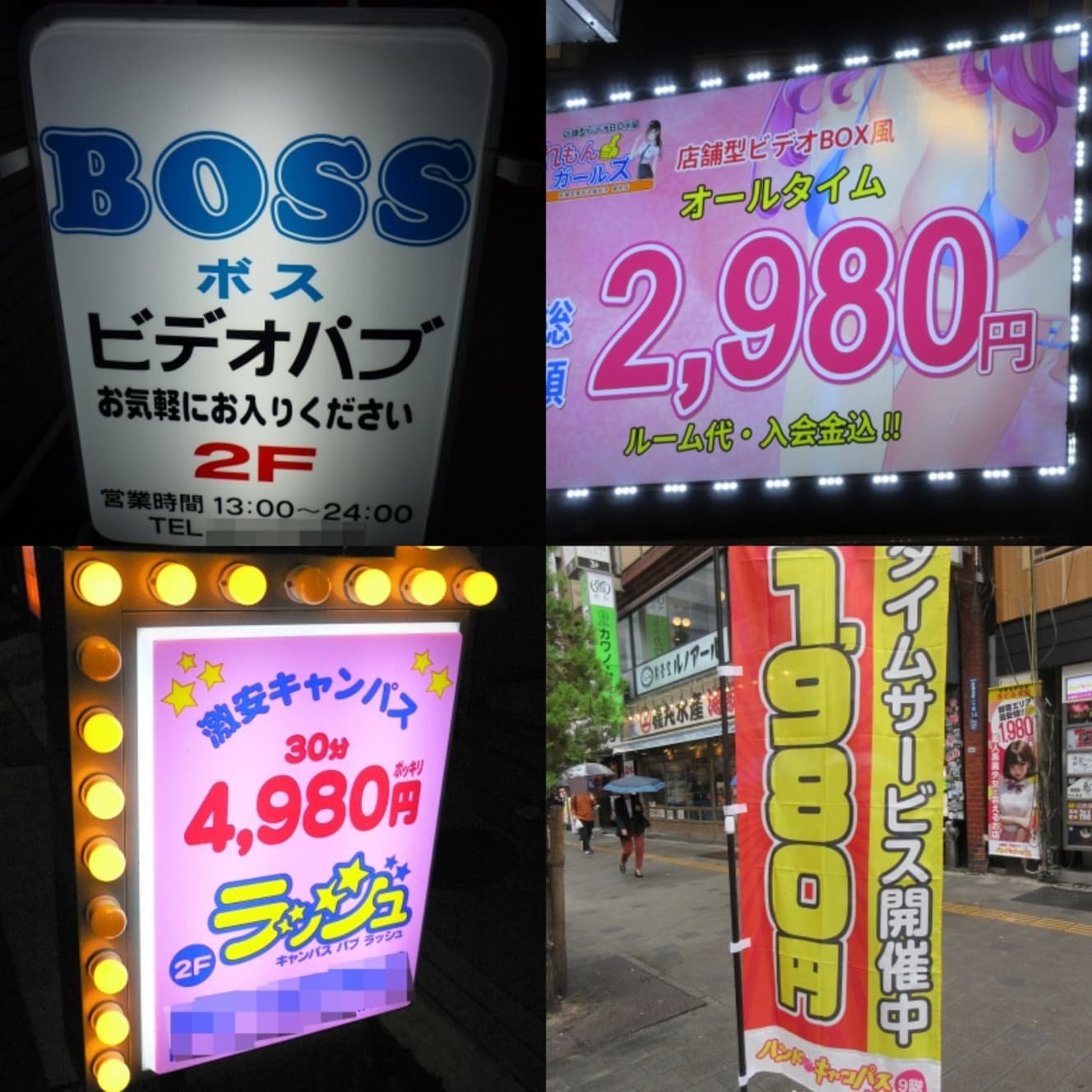
Even today, ultra-cheap adult entertainment establishments continue to appear one after another. For example, a storefront-based hand service shop where customers can play for 2,980 yen opened in Matsuyama on March 3 and another in Kumamoto on April 28. Low prices are a classic feature that is always sought during periods of recession and economic hardship. Now that there are signs that ultra-cheap adult entertainment may become popular again, it is worth looking back at its history.

Ultra-cheap adult entertainment establishments began appearing more frequently in the early 2000s, but they were still regarded as merely one type of specialty shop and were not very numerous. Furthermore, they were concentrated in certain sectors such as pink salons, video box establishments, and some health-service venues.

The tide changed with the recession that followed the Lehman Shock in September 2008. This economic downturn, described at the time as a once-in-a-century recession, hit the adult entertainment industry hard. As a result, ultra-cheap adult entertainment establishments proliferated on an unprecedented scale.

In Tokyo’s Yoshiwara district, ultra-cheap soaplands with total fees under 10,000 yen, as well as semi-budget establishments in the 10,000-yen range, increased in number and became a major force in the market. Many of these operated as affiliated businesses, following a group strategy. The advantages of grouping included the ability to run large-scale recruitment advertisements emphasizing a strong brand image, making it easier to attract high-quality women, and the ability to introduce customers to women from affiliated establishments, increasing the likelihood that photo-based selections would result in bookings.

Moreover, these budget establishments were by no means cases of you get what you pay for. At the time, one woman who had transferred from a high-end establishment said:

“Some people say, ‘You’ve fallen far,’ because I moved to a budget establishment, but I’m proud to work here. I believe providing inexpensive yet high-quality service is a trend across society as a whole. In fact, because the session time is shorter, I make an effort not to lower the quality of the service so that customers can still be fully satisfied.”

The wave of discounting spread nationwide

In the dispatch-style adult entertainment sector, the 3,900-yen delivery health service group “Thank You” (Sankyū)became a symbol of the ultra-cheap era. The group expanded nationwide through a franchise model and became hugely popular in many regions. Nagoya Thank You, in particular, was said to be so inexpensive that people remarked, “Once you play here, you won’t want to go anywhere else,” sparking a budget-price revolution in the local delivery health industry. Although not part of the Thank You group, a married-women hotel health service in Osaka’s Umeda district also appeared, offering rates starting at 3,900 yen for 25 minutes, including membership and hotel fees—a pricing structure more typical of pink salons. In this way, the wave of ultra-cheap adult entertainment spread throughout Japan.

The recession caused by the COVID-19 pandemic struck Japan in the 2020s. During this period, when the entire adult entertainment industry was facing a crisis, some health-service establishments held promotions that lowered prices to a single coin—just 500 yen. In addition, some soaplands reduced unnecessary contact time as an infection-control measure and introduced services priced as low as a total of 9,500 yen for 25 minutes.

Even after the pandemic subsided, the growth of budget establishments did not stop. Among the fastest-growing sectors were storefront-based hand-service businesses. This trend continues today, and demand for cost-effective, light adult entertainment services remains strong.

Now, with this year’s war involving Iran added to the equation, prices are expected to rise even further in the future. Securing sufficient crude oil may become more difficult, causing soaplands to struggle with rising boiler costs and delivery health services to face higher gasoline expenses. However, a crisis is also an opportunity. Viewing this difficult situation as the perfect chance to try something new, the adult entertainment industry will likely continue doing what it has done in the past: creating innovative budget establishments with ideas that surprise the public and finding ways to endure.

On the “FRIDAY Digital” YouTube channel, Mr. Ikoma provides a more detailed explanation of the history of ultra-cheap adult entertainment establishments and some of the famous venues of the past.
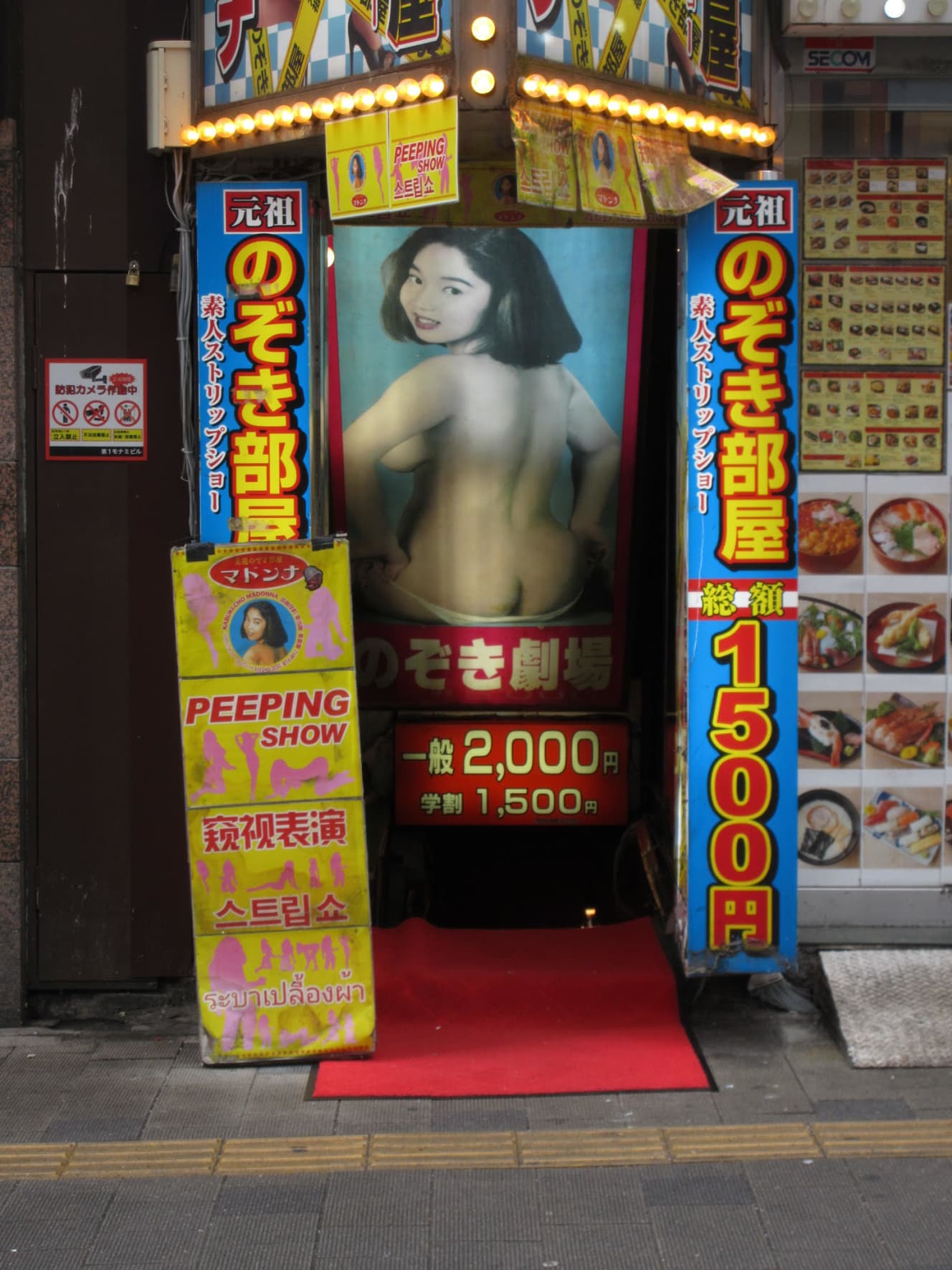
One of the most famous examples of the early ultra-budget adult entertainment scene was Madonna in Shinjuku, a leading establishment in the peep room genre. As inbound tourism increased, the venue even began displaying signs in foreign languages.
  • Interview, text, and photographs Akira Ikoma

Photo Gallery2 total

Related Articles