A 1% Sales Tax Shock? The Political Strategy Behind Takashi’s Local Election Ambitions


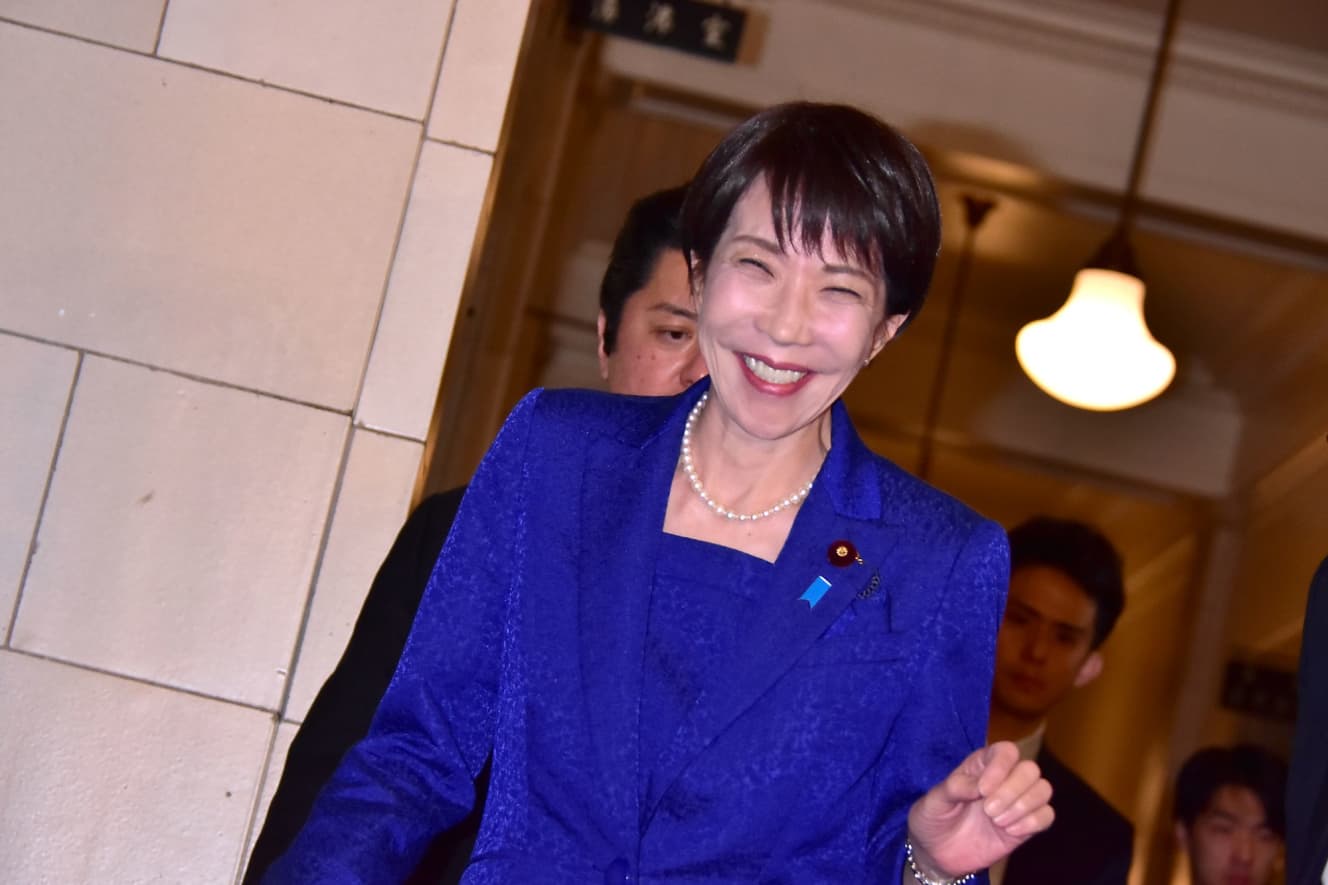
Political maneuvering behind the scenes
“The restaurant industry would take a devastating hit. I hope they reconsider.”
That is what a senior executive at a major restaurant chain told this publication. Prime Minister Sanae Takaichi’s (65) proposal to cut the consumption tax by next spring is creating waves.
Originally opposed to reducing the consumption tax, she abruptly declared during the February general election campaign that she would aim to reduce the consumption tax to zero during fiscal year 2026. With prices continuing to rise due in part to the effects of military conflict between the United States and Iran, the idea of a tax cut has become increasingly realistic.
More recently, taking into account the costs of updating cash register systems, a proposal has emerged to set the tax rate at 1% instead of 0%. The measure would mainly apply to food products and would be limited to two years.
Even members of the coalition partner, Japan Innovation Party, have stated:
“Zero percent is not an absolute requirement.”
As a result, a two-year 1% consumption tax era could begin as early as April next year.
Political calculations can also be seen in the background.
Next spring’s nationwide local elections are widely viewed as a precursor to the House of Councillors election scheduled for the summer of 2028. If the government insists on achieving a full 0% tax rate and delays implementation, it could negatively affect election results.
Political commentator Harumi Arima told reporters:
“Prime Minister Takaichi strongly wants to fulfill her campaign promise of a 0% consumption tax. Many members of the Liberal Democratic Party opposed a tax cut, but after Takaichi’s landslide victory in the general election, the mood became one of wanting to let her have this achievement. If they’re going to do it, they seem eager to make it the centerpiece of next April’s local elections.”
In Nagatachō, electoral strength is everything. One might wonder whether winning the local elections matters more than easing the financial burden on ordinary citizens.
If a 0% consumption tax on food products is actually implemented, the restaurant industry is expected to suffer significantly.
Entrepreneur Takafumi Horie (53), who produces businesses including the luxury wagyu restaurant brand WAGYUMAFIA, said in a YouTube video on May 31:
“Just fix the food consumption tax at 10% already! This is such a hassle. The systems have to be changed, businesses have to adapt. And restaurant owners should really speak up. Fewer people will eat in restaurants. Of course they will. Cooking at home is cheaper.”
The specter of another COVID subsidy debacle
Horie’s criticism showed no sign of slowing down:
“Why would you stimulate demand during inflation? If you make food cheaper, demand for food will increase, right? And if demand increases, inflation rises. It’ll accelerate inflation. That’s obvious!”
He remained visibly angry until the very end.
The restaurant-chain executive quoted at the beginning of the article also pointed out:
“For us, it’s a matter of survival. Ingredient costs may or may not fall, but we might be forced to lower prices accordingly. We’ll lose customers, and I think some restaurants will end up going out of business.”
If the restaurant industry suffers, it could also affect inbound tourism demand, as many visitors come to Japan specifically to enjoy its food culture.
Perhaps because of these concerns, some media outlets reported on June 4 that the government is considering subsidy programs to support restaurants as well as small agricultural and fisheries businesses.
A political reporter for a national newspaper commented:
“What this brings to mind are the subsidies provided to restaurants during the COVID pandemic. While many businesses were genuinely helped, there were also numerous cases of abuse. One person I know was thrilled because, as he put it, ‘I make more money than if I actually opened the restaurant,’ and he ended up buying a luxury foreign car.
If tax cuts and subsidies reduce government revenue, the government may have to raise taxes elsewhere. The question is how far ahead the government has really thought this through.”
There is also the issue of whether a reduced consumption tax can realistically be raised again later.
When the cabinet of Noboru Takeshita introduced Japan’s 3% consumption tax in 1989, public approval ratings plunged.
A source familiar with Nagatachō politics observed:
“It’s obvious that raising the consumption tax hurts approval ratings. The proposed 1% consumption tax is only a temporary measure lasting two years. When the government tries to restore the previous rate, it could face a powerful political backlash. The question is whether the prime minister of the day will be able to withstand that.”
Perhaps the strategy is to win the next House of Councillors election by a landslide before then and secure complete political control in both name and reality.
With fears of an economic slowdown growing, the Takaichi administration faces an increasingly difficult balancing act.
PHOTO: Takeshi Kinugawa