Still Paying 5% Overseas Card Fees? Meet the Next-Generation Card That Could Save You a Fortune


Losing big money overseas? The fear of a 5% fee
A troubling trend is hitting the wallets of overseas travelers: the steady increase in foreign transaction fees charged whenever a credit card is used abroad.
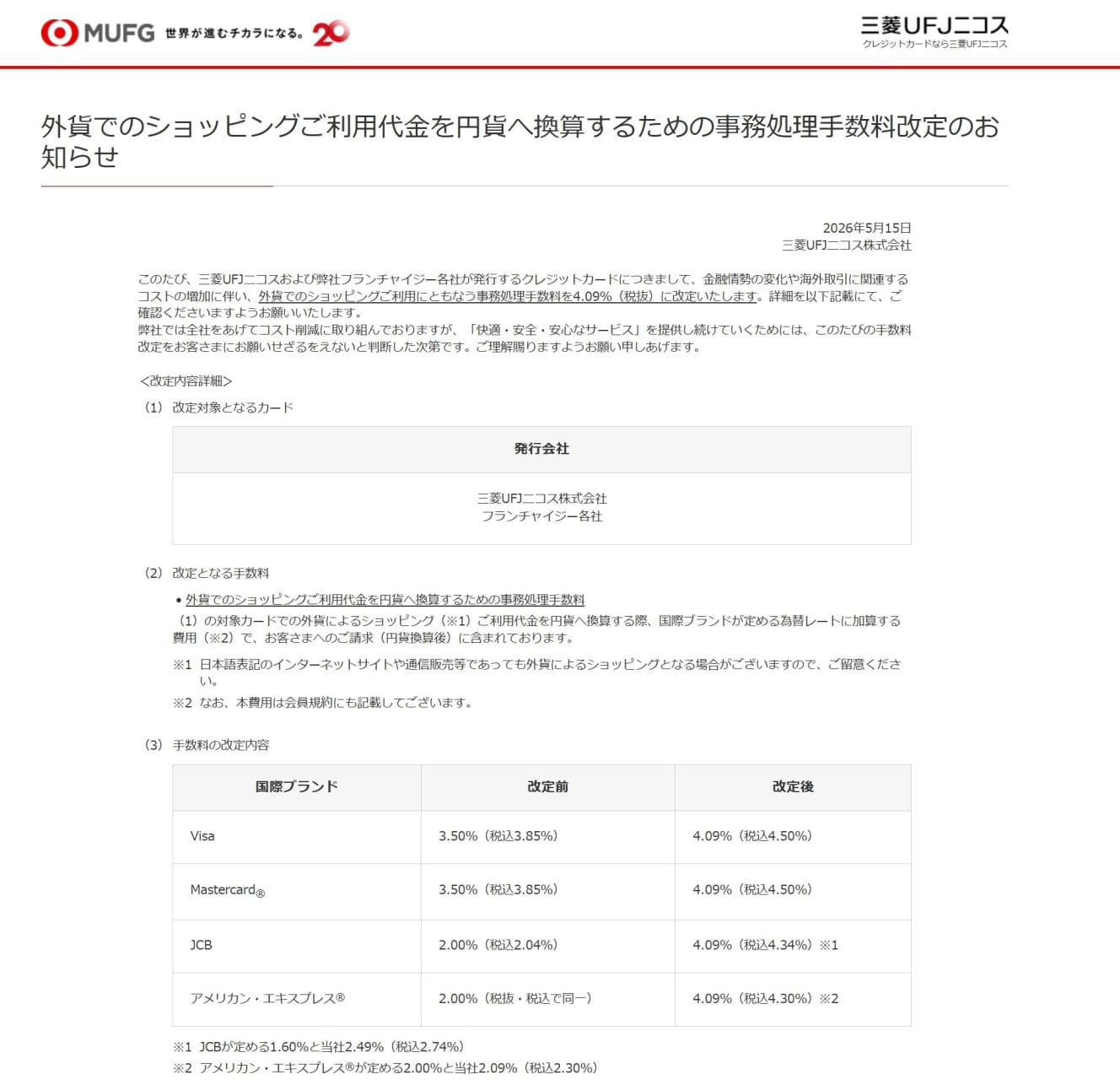
Just a few years ago, most card issuers charged around 1–2%, but now 3.85% has become the norm. In May this year, Mitsubishi UFJ NICOS announced that it would raise its fee for all card brands to 4.09% starting November 16. Including consumption tax, that means roughly 4.5% of the transaction amount disappears in fees.
There is also concern that other card companies may follow suit with similar increases.
If you spend ¥1 million overseas, about ¥45,000 would go toward fees alone. Even a ¥100,000 purchase would incur around ¥4,500 in fees. For most people, that’s far from insignificant.
Whether you’re using your card overseas or making foreign-currency payments from Japan for travel expenses, it is no exaggeration to say that we have entered an era where you can lose a substantial amount of money just on fees if you use a conventional credit card.
Why are these fees continuing to rise?
Why are credit card foreign transaction fees increasing so frequently?
Financial journalist Kenji Matsuoka, who specializes in credit cards and payment systems, explained the reasons.
“The direct cause is the rise in short-term interest rates resulting from the Bank of Japan’s policy rate hikes. For credit card companies, higher short-term interest rates mean higher funding costs, which puts pressure on profits,” Matsuoka says.
Another factor is the persistently high cost of currency hedging.
Currency hedging can be thought of as a kind of insurance that companies use to reduce losses from exchange-rate fluctuations. Although hedging costs have declined from their peak about two years ago, they remain elevated due to rising U.S. interest rates. These costs also weigh on card companies’ profitability.
“As long as the yen remains weak, hedging costs are unlikely to fall significantly. As a result, card companies may have little choice but to raise foreign transaction fees associated with overseas currency exchanges.”
So far, no major card issuers have announced plans to match Mitsubishi UFJ NICOS’s new 4.09% rate. However, Matsuoka believes that while some companies are trying to hold the line, they will probably end up following suit eventually.
June could be the turning point? More price hikes ahead
What everyone is worried about is whether, in addition to other companies following suit, more fees could also be increased. Regarding this, Matsuoka says that “June will be the biggest turning point of the year.”
“The Bank of Japan will hold a Monetary Policy Meeting in June. There is a high possibility of another interest rate hike, and the market expects one more hike later in the year (2026). If that happens, short-term interest rates will rise further, increasing the burden on card companies.”
If a BOJ rate hike leads to a stronger yen, hedging costs could decline. However, according to Matsuoka, the impact of rising funding costs is far greater. As a result, the likelihood of further increases in various fees, including overseas transaction fees, remains high.
The hidden drawbacks of wise
One reason card companies are being forced to raise overseas transaction fees is the continuing weakness of the Japanese yen. For travelers and businesspeople, finding alternative payment methods that are even slightly more cost-effective has become increasingly important.
Recently, next-generation financial services such as Wise, Revolut, and Sony Bank WALLET have been gaining attention. For example, Wise is a UK-based international money transfer and multi-currency service that allows users to send money overseas and manage foreign currencies with relatively low fees and exchange rates close to the market rate. Revolut offers similar services.
Matsuoka notes that Wise is extremely advantageous when it comes to fees. The difference is almost an order of magnitude compared to card companies. However, he also points out several things travelers should keep in mind when using Wise and similar services abroad.
“First of all, they generally do not come with the same protections that credit cards offer. For example, if fraudulent transactions occur overseas or if you are overcharged, you do not have the same level of support that Japanese credit card companies typically provide.”
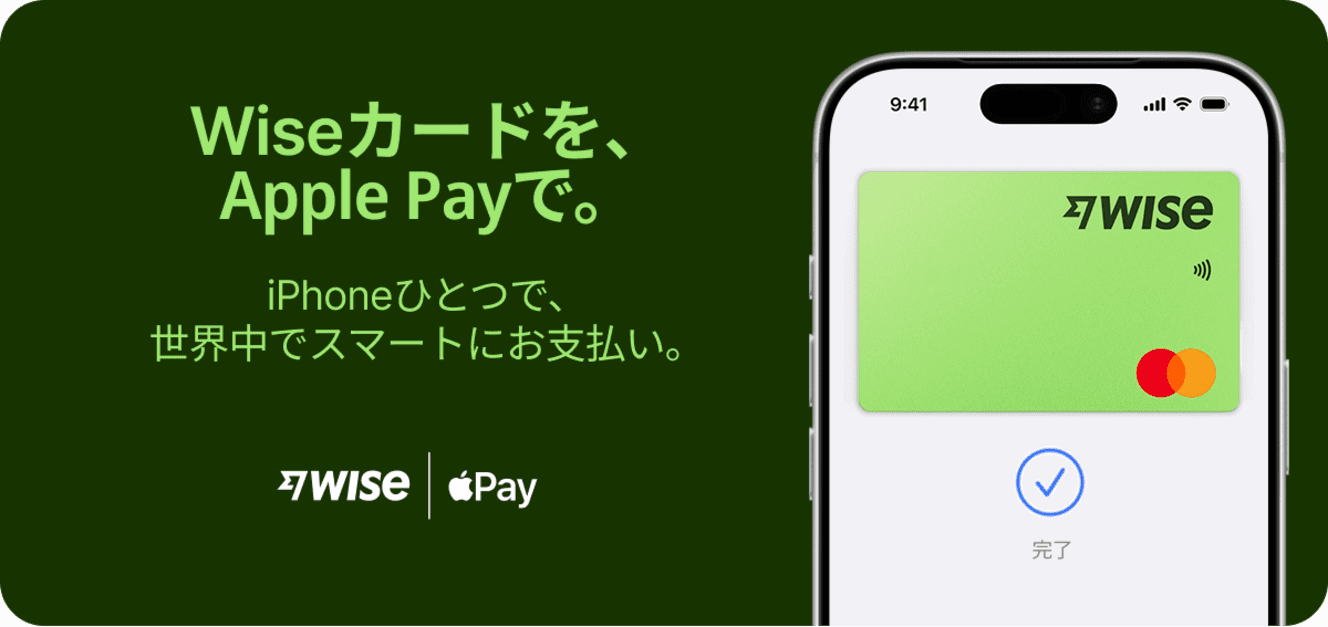
With Wise, if you use a debit card issued by the service for payments at overseas stores, the overseas transaction fee is only around 0.5% to 0.7%. As Matsuoka mentioned, the difference really is an order of magnitude. In addition, once you deposit Japanese yen, the service can convert it into foreign currencies such as U.S. dollars or euros in real time at highly competitive exchange rates.
Because it is a prepaid debit card rather than a credit card, the risk of large-scale fraudulent spending is also reduced. Furthermore, if the card is lost or stolen, users can immediately freeze it through the app.
On the other hand, users do not earn credit card reward points, and there is a card issuance fee (1,200 yen for Wise). It also takes approximately one week to ten days from application to receive the card. Anyone planning an overseas trip should apply well in advance.

A wave of benefit cuts credit card companies under pressure
Beyond overseas transaction fees, so-called benefit reductions by credit card companies have become increasingly common in recent years. For example, the Priority Pass benefit attached to the Rakuten Premium Card was downgraded from unlimited access to just five free uses per year—a change that frequent travelers still remember well. Rakuten Card has also reduced the point accumulation rates on some cards in recent years.
“Other card companies have raised annual membership fees or increased the minimum annual spending requirements needed to qualify for benefits. In addition, more cards are shortening their payment cycles. This is also a result of higher funding costs caused by rising short-term interest rates.
Card companies essentially front the money for users’ purchases, so by shortening payment cycles they can reduce their interest burden.
Sometimes these kinds of benefit cuts are quietly slipped into notices from card companies rather than being prominently announced.”
Card issuers themselves are facing difficult circumstances. Japan has traditionally been very sensitive to price increases, making it hard to pass on higher costs even when international factors are responsible. In recent years, it has become increasingly difficult for card companies to compete on their own. Instead, the trend is toward comprehensive customer ecosystems such as the “Rakuten economic sphere” and the “Docomo economic sphere.” The role of card companies has diminished, and they are now often viewed as merely one component of a larger ecosystem.
New payment strategies for overseas travel
If possible, it is best to pay for hotels and other accommodations before leaving Japan. For example, if you book through a hotel’s official website or online travel agencies (OTAs) such as Trip.com or Agoda and then pay after arriving overseas, an overseas transaction fee may be added. However, if you reserve and pay in Japan using a Japanese-yen price display, the fee is generally not charged.
That said, exchange-rate fluctuations can sometimes make the final cost higher or lower than expected by the time you actually stay, so there are no guarantees. Still, it is useful information to keep in mind.
Using credit cards overseas has long been considered safer than carrying cash and cheaper than exchanging currency, which is why they remain widely used today. However, with the era of 5% transaction fees approaching, credit cards are no longer automatically the best payment option.
To avoid losing money on fees and to reduce travel expenses as much as possible, travelers should consider exploring newer payment tools and services.
Kenji Matsuoka — Money writer and financial planner. After working as a market analyst at a securities company, he became independent in 1996. He writes primarily about finance and asset management for business and economic publications. His books include “The First-Year Guide to Robo-Advisor Investing and The Definitive Guide to Profiting from Cashless Payments with Easy-to-Understand Illustrations.”
Interview and text by: Shikama Aki
Journalist and photographer. Born in Osaka. After graduating from university, joined the Yomiuri Shimbun. After working in the Matsuyama bureau and Osaka head office, he became a freelance photographer. Currently, his main genre of work is travel, especially airplanes and airports. He has extensive experience in both domestic and overseas coverage. She is a lecturer at Nikon College. Co-author of "The Best Travel Guide for Women Traveling Abroad Alone [Latest Edition]" etc. X/ Instagram : @akishikama
PHOTO: Afro