“He Wanted to Spend His 61st Birthday at a Luxury Soapland”—Explosive New Details Revealed Through Court Judgment


〈Former University of Tokyo Graduate School professor Shinichi Sato (62) was accused of demanding entertainment at sex establishments and other venues from a collaborative research partner. In late May, verdicts were handed down for both Sato’s subordinate and the chairman of the partner organization. Nonfiction writer Takehide Mizutani examines the true nature of the case through these two rulings.〉

After the verdict was delivered, Koichi Hikichi (52), chairman of the Japan Cosmetics Association, told reporters that he would not appeal and reflected on the ordeal:
“To me, it still feels like it happened yesterday. Every single day I lived with the fear that our research program would be shut down, so there was no way I could show even the slightest displeasure toward former Professor Shinichi Sato or former specially appointed associate professor Ayumu Yoshizaki (46). It’s like being told by an intimidating senior to bring in money—you smile and put on a brave face whether you want to or not. Of course, I had my own weaknesses, but I never once went because I genuinely enjoyed it.”
However, his emotional plea failed to persuade the court.
On the morning of May 26, in Courtroom 706 of the Tokyo District Court, the verdict was handed down in the bribery case against Hikichi. Prosecutors alleged that he entertained Sato, Yoshizaki, and others at upscale clubs and soaplands in Tokyo, paying a total of approximately ¥3.8 million in connection with joint research conducted at the University of Tokyo Graduate School of Medicine.
Hikichi was sentenced to one year in prison, suspended for three years.
The central issue at trial was whether the entertainment expenses had been incurred under coercion. The court concluded that coercion could not be established because messages exchanged between Hikichi and Yoshizaki did not demonstrate fear or intimidation.
Yet according to Hikichi, the fear had begun eight months before the first entertainment outing.
The trigger was a draft document prepared for the joint research project that mistakenly listed the name of another professor instead of Sato. Upon seeing it, Sato reportedly flew into a rage and replied by email with forceful statements such as, “There is no need for a meeting,” and “I refuse everything,” unilaterally shutting down any discussion.
What should have been nothing more than a simple misunderstanding instead became, in Hikichi’s eyes, a display of Sato’s willingness to cancel the entire research project, leaving him deeply intimidated.

The very first entertainment bill: ¥140,000
The first dinner took place in February 2023 at an upscale French restaurant in Ginza. There, after explaining how difficult it had been to establish the research program, Sato remarked that when he was at Kanazawa University, pharmaceutical companies had treated him to clubs and other entertainment venues—subtly hinting at his own history of receiving such hospitality. As a result, Hikichi said he felt an unspoken pressure to provide entertainment in connection with the joint research project.
Hikichi recalled his thoughts at the time:
“If I had suggested splitting the bill and upset him, he might have said he would scrap the research program again. That fear was constantly on my mind.”
Hikichi paid approximately ¥140,000 for the meal. Thereafter, at Sato and Yoshizaki’s request, the dinners began including visits to luxury clubs, and about a year later escalated to high-end soaplands in Yoshiwara. The entertainment reportedly took place twice a month, costing several hundred thousand yen each time and sometimes exceeding ¥1 million.
During this period, Hikichi received messages like the following from Yoshizaki:
“Regarding the reservation on March 10 at ○○ (name of the upscale restaurant), Professor Sato said he’d like the soft-shelled turtle and shark fin ○○ course. LOL.”
“Professor Sato seems to have really liked Club ○○. I told him that Mr. Hikichi would take him to other places as well, but he said Club ○○ was fine. It looks like he really liked those two ladies. LOL.”
Hikichi responded to these requests in a businesslike manner, and from the wording of his messages alone, no sense of fear is apparent. Behind those replies, however, lay his true feelings—he believed he had no choice but to keep up appearances to avoid offending Sato. The court was unable to read between the lines and could only base its judgment on the evidence formally presented during the trial.
Hikichi’s attorney, Satoshi Takayasu, described the relationship between Sato and his client as follows:
“It was similar to a bullying dynamic. A child who is being bullied may smile on the surface or act as though they’re reluctantly enjoying themselves along with the group. That was the impression I got.”
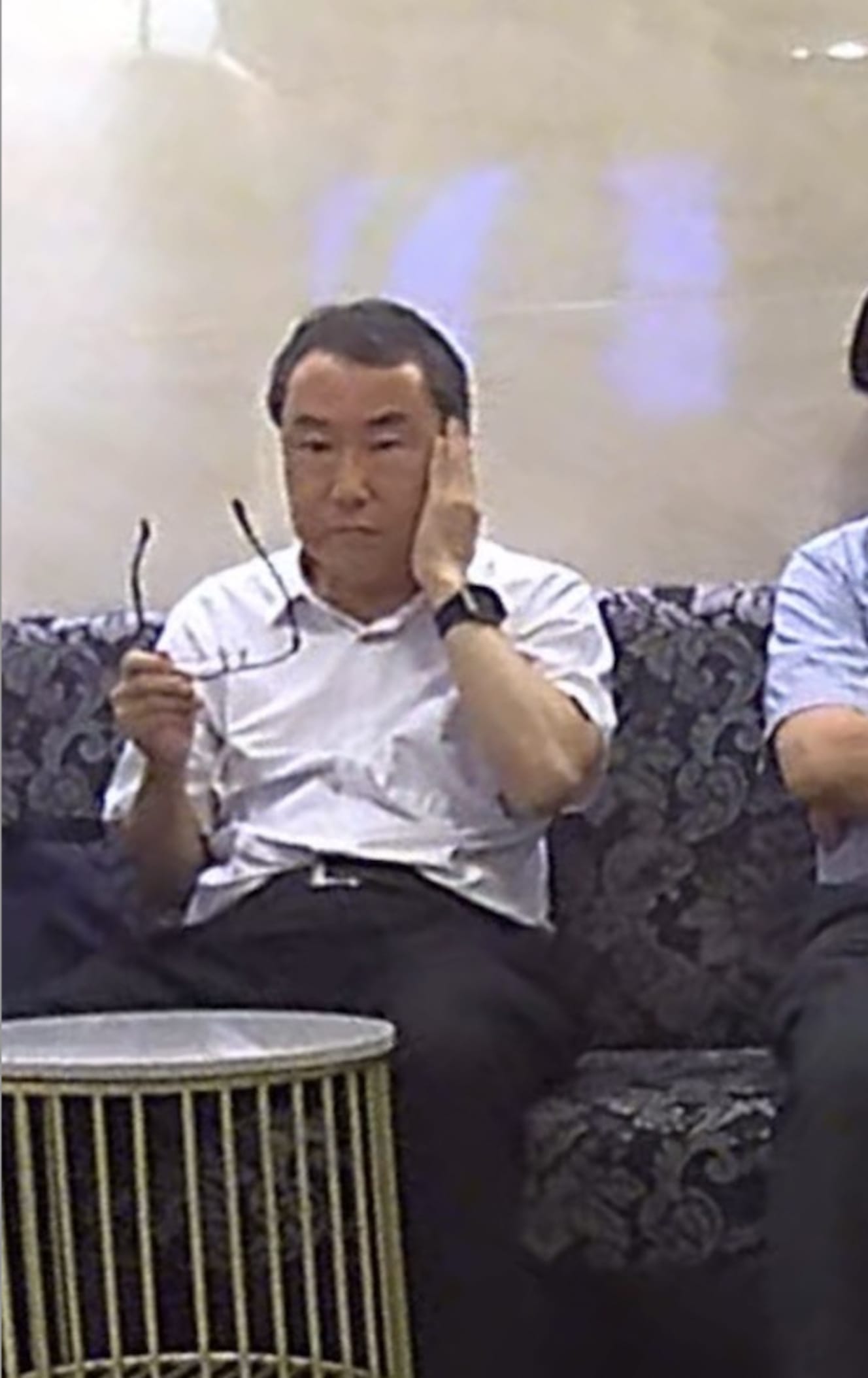
What Professor Sato says is absolute
On May 22, Yoshizaki, Sato’s subordinate, was sentenced to one year in prison, suspended for two years, and ordered to forfeit approximately ¥1.96 million. During an earlier hearing, Yoshizaki explained why he felt he had no choice but to obey Sato:
“There is a particular culture within medical schools. I graduated from Nagasaki University, where Professor Sato was the head of the Department of Dermatology at the time. I followed him all the way to the University of Tokyo. What Professor Sato says carries absolute authority.”
“If I said something that displeased Professor Sato and he came to dislike me, there would no longer be a place for me in the University of Tokyo’s Department of Dermatology.”
Like Hikichi, Yoshizaki was constantly mindful of the reactions of his superior, who held overwhelming authority over him. Their hierarchical relationship was evident even during the entertainment outings. Hikichi recalled one particular incident.
It occurred just before the Obon holidays in August 2024. Yoshizaki had returned to his hometown in Nagasaki Prefecture with his family, but he was suddenly summoned by Sato. Leaving his wife and family behind, he reportedly returned to Tokyo alone. Hikichi recalled:
“Yoshizaki came straight from Nagasaki that morning to the soapland in Yoshiwara. He was sweating and carrying a large amount of his family’s laundry with him. He didn’t even have time to drop it off at his home in Tokyo before heading directly to Yoshiwara. He was wearing knee-high socks, shorts, and an aloha shirt. When Sato saw him, he laughed in the waiting room.”
That day happened to be Sato’s 61st birthday.
“But because we were at a soapland, we couldn’t really celebrate it. After all, you can’t exactly ask them to bring out a birthday cake in the waiting room.” Hikichi said.

The two men began visiting the soapland in the spring, four months earlier. Hikichi also took care in selecting the women for them. He asked both men about their preferences in advance and coordinated with the establishment’s staff to reserve popular attendants. Sato, in particular, reportedly requested a woman who had previously worked as a nurse.
“Sato had a favorite girl named ‘M-chan.’ But originally, Yoshizaki was the one who had selected her. Then Sato said, ‘The girl you picked is cute—let me have her instead,’ and switched over to M-chan. From that point on, she became Sato’s favorite.”
At the time, Hikichi and Yoshizaki exchanged the following LINE messages:
Hikichi: “Please choose either M-chan or A-chan, prioritizing looks, youth, and technique.”
Yoshizaki: “Professor Sato said he would like Ms. M. I’ll take Ms. A (the one Professor Sato selected last time), please!”
In effect, the superior and subordinate had swapped their preferred attendants.
Conversations over dinner became discussions about the soapland
Originally, the entertainment followed the order of dinner first, then the soapland, but due to Sato’s personal preferences, the sequence was reversed to soapland first, dinner afterward. As a result, their conversations over dinner shifted to discussing their experiences at the establishment. Hikichi recalled:
“The two of them would ask each other, ‘How was today’s visit?’ Of course, I couldn’t bring up that sort of topic myself. One time, Yoshizaki casually remarked, ‘Professor Sato, isn’t your favorite M-chan a little overweight?’ Sato immediately snapped back, ‘She’s not overweight!'”
“Yoshizaki would say things like, ‘I climaxed twice,’ while Sato would boast, ‘She spent four straight hours on me.’ I had to sit there listening to that kind of ridiculous conversation the whole time.”
According to Hikichi, he endured all of this in the hope of keeping the two men satisfied so that the joint research project would proceed smoothly. However, no meaningful progress on the research was ever reported. Then, one day, Sato allegedly threatened him by saying, “Bring me money, or I’ll kill you.” That, Hikichi said, finally pushed him past his breaking point and led him to report the matter to the authorities.
Both Hikichi and Yoshizaki later stated that they could not defy him, describing their fear of former University of Tokyo dermatology professor Shinichi Sato, a towering figure in the field. Although a trial date has yet to be set, now that his carefully maintained image has been stripped away, attention turns to what expression he will wear when he finally appears in court.
(Honorifics omitted in part.)