Up to an 8-Hour Wait—and Here to Stay! Expo Kura Sushi Serves Up a Wild 70-Country Mystery Menu


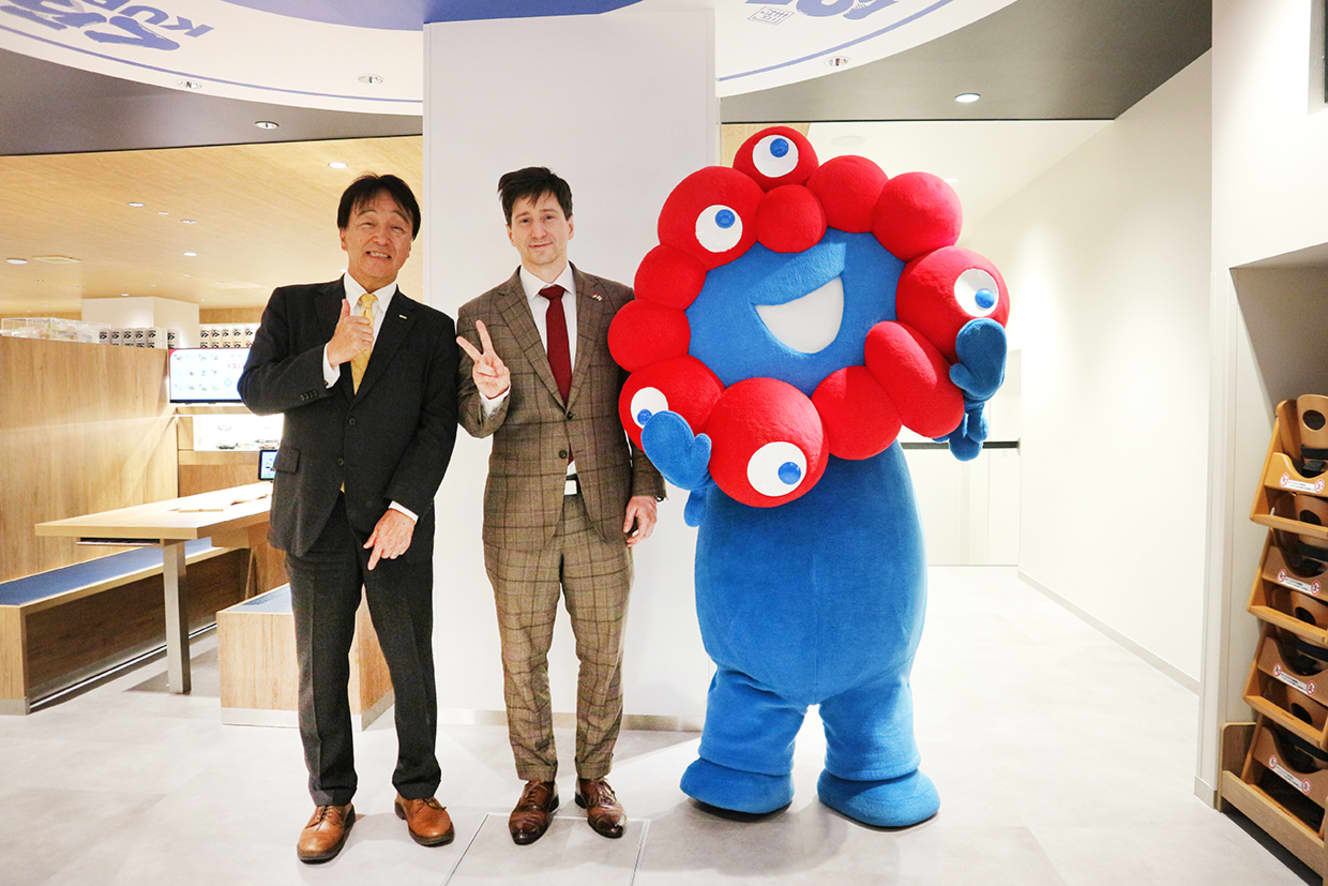
The “Kura Sushi Osaka–Kansai Expo Store,” which attracted 300,000 visitors during the Osaka–Kansai Expo, has been recreated with its original interior and reopened as a memorial location in Namba Sennichimae this May, featuring cuisine from 70 countries around the world on its conveyor belts. Can this permanent version of the legendary restaurant—where waits reportedly stretched to as long as eight hours—still capture the spirit of the Expo? We visited the store ourselves to experience how faithfully it recreates the Expo atmosphere and to give an honest, no-holds-barred review of its international menu.
The Excitement of the Expo! The Shock of 310-Yen Plates


Even though you’ve stepped into a conveyor-belt sushi restaurant, what passes before your eyes are dishes like roast duck with truffle sauce, roast beef, chicken adobo, and mooncakes. There are also menu items such as ropa vieja and Dawood Basha—dishes so unfamiliar that you may have no idea what they are at first glance.
Opened on May 14 in Osaka’s Namba district, Kura Sushi Memorial Store Namba Sennichimae is the permanent successor to the Kura Sushi Osaka–Kansai Expo Store, which became one of the Expo’s biggest attractions. The Expo location featured 338 seats and an approximately 135-meter conveyor belt, making it the largest Kura Sushi ever built, and attracted more than 300,000 visitors during the Expo.
While food throughout the Expo often cost over 2,000 yen, this restaurant gained fame by offering signature dishes from 70 countries for just 320 yen each, creating massive daily lines. Many visitors reported waiting up to eight hours, while others gave up on entering altogether. Plenty of people watched it on television and sighed, “I wish I could go.”
Now, that excitement is back with the opening of this memorial store. As the company’s largest permanent location, it boasts 288 seats and a 128.3-meter conveyor belt right in the heart of Namba. Rather than simply being a new branch, it incorporates elements from the Expo restaurant, including the antibacterial sushi-cover displays, the conveyor belt itself, and wood-grain flat tables. It also features a cashier counter made from recycled plastic waste, making it a next-generation sustainable restaurant.
Interestingly, company president Kunihiko Tanaka initially couldn’t let go of sushi when planning the Expo restaurant and reportedly created around 480 prototype dishes combining sushi with international cuisine. However, he changed course at the final stage.
“Otherwise, we’d end up with dishes that were neither sushi nor authentic international cuisine—just some kind of strange sushi-inspired food.”
Instead, the restaurant focused on serving representative dishes from 70 different countries. By deliberately placing ordinary sushi and international dishes on the same conveyor belt, the restaurant hoped to convey the message that there are no borders at the dining table.
There was also no compromise on taste or ingredients. Ambassadors and others familiar with authentic local flavors repeatedly sampled the dishes to ensure they matched the originals as closely as possible. The goal of making the concept permanent extends beyond preserving memories of the Expo—it is also an effort to expand the appeal and possibilities of Japan’s conveyor-belt sushi culture. That’s why the company chose Namba, one of Japan’s premier destinations for international visitors, as the location for the store. An admirable vision, indeed.
But enough introduction—the real question is: How does the food actually taste?
We sampled several dishes, including some of the Top 5 most popular items at the Expo, and are ready to give our honest impressions.
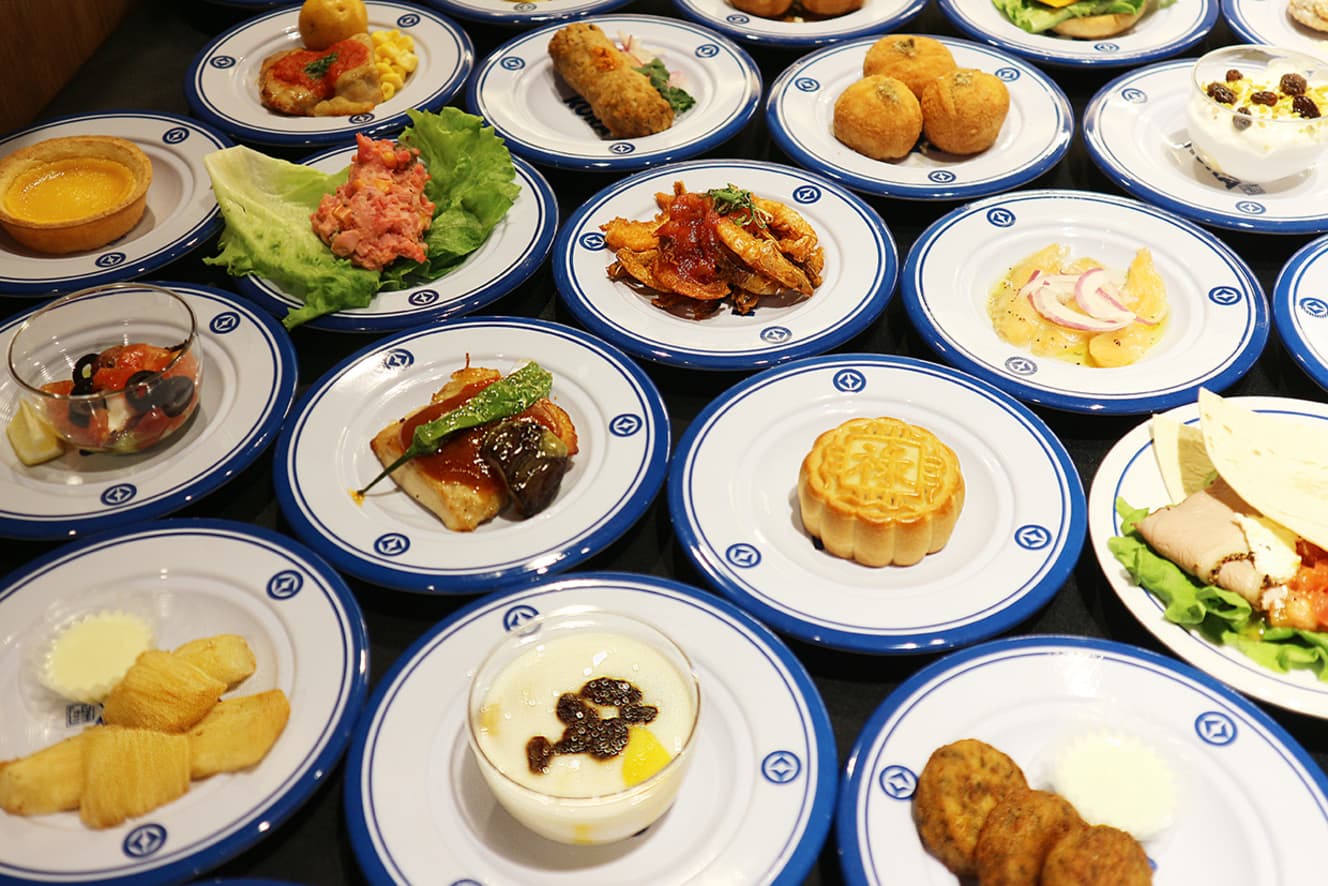
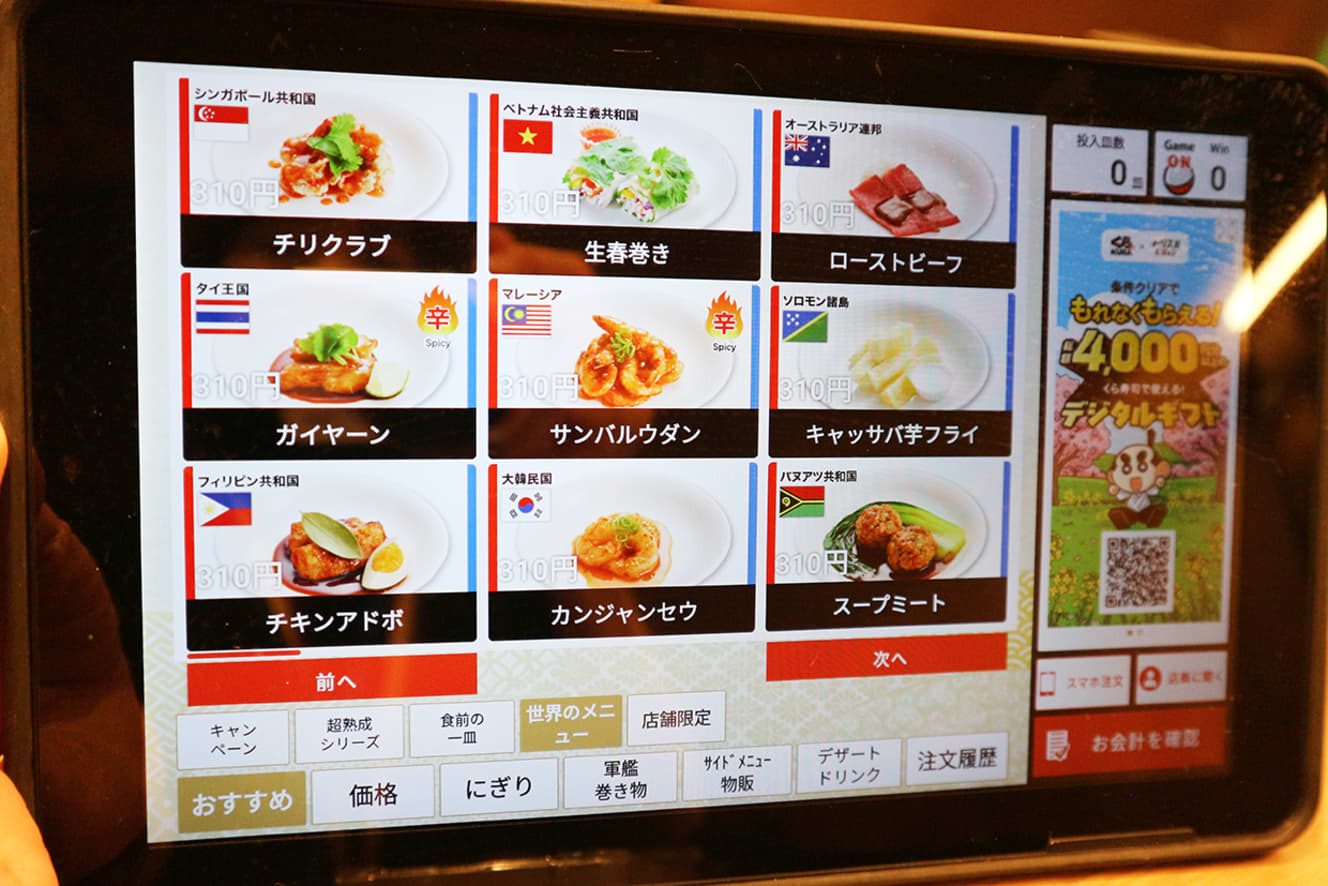
We Tried Them for Real! Tasting the Top 5 Most Popular Dishes
◇ No. 5 – Vietnam: “Fresh Spring Rolls”: Packed to the brim with shrimp and vegetables such as daikon radish, cucumber, and cilantro. It’s hard to believe this costs just 310 yen per plate.

◇ No. 4 – Singapore: “Chili Crab”: Soft-shell crab topped with sweet and spicy chili sauce. It’s spicy enough that it would probably be too much for children.

◇ No. 3 – Italy: “Tagliata”: Essentially roast beef served with balsamic sauce.
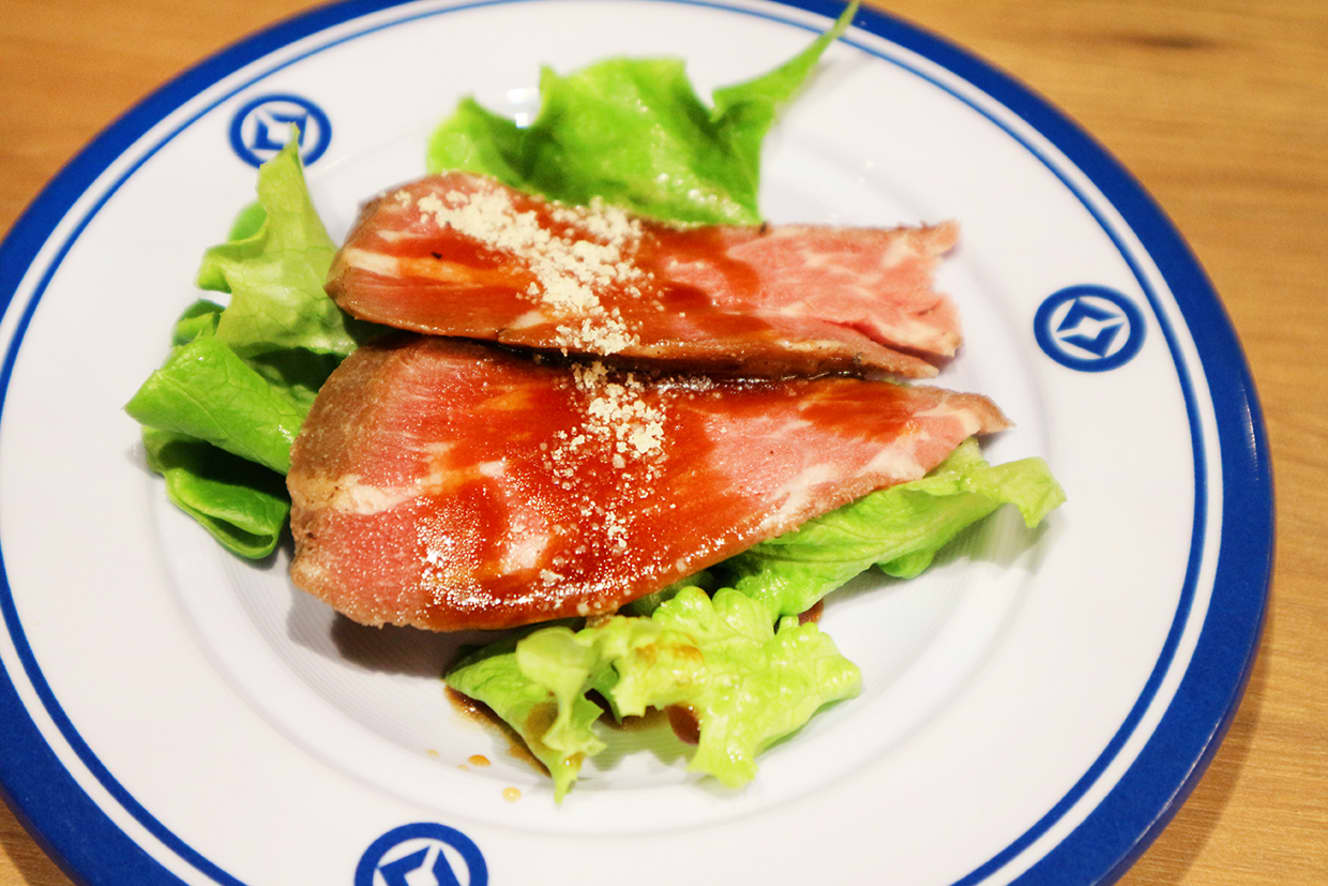
◇ No. 2 – Palau: “Aho”: A coconut zenzai-style dessert with a light, mousse-like texture.

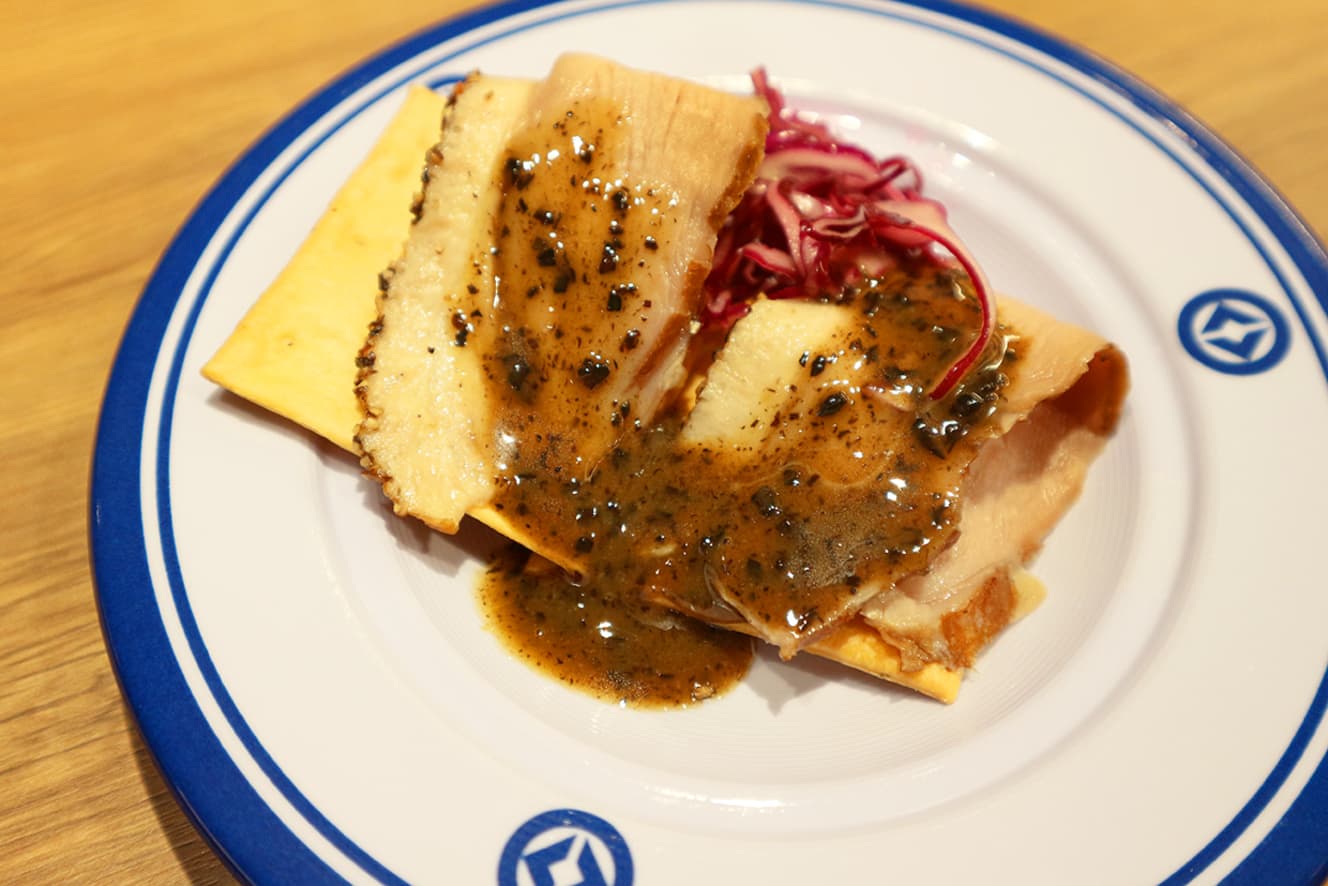
◇ No. 1 – Hungary: “Roast Duck with Truffle Sauce”: The truffle aroma is pronounced, and the richness of the duck pairs wonderfully with the saltiness of the cracker. This one is genuinely delicious.
Unfamiliar flavors! A parade of rare dishes from around the world
Next, let’s move on to the mysterious and unusual dishes that make you think, “Wait, that’s a real dish?!” or even “Wait, that’s a real country?!”—a reminder of just how vast the world really is.
◇ Cuba: “Ropa Vieja”: Tender shredded lean beef that’s been simmered until it falls apart, mixed with garlic, onions, paprika, and tomatoes, and seasoned rather boldly.

◇ Republic of Vanuatu: “Soup Meat”: This island nation east of Australia reportedly has a large Chinese population, so this dish is seasoned in a Chinese style.
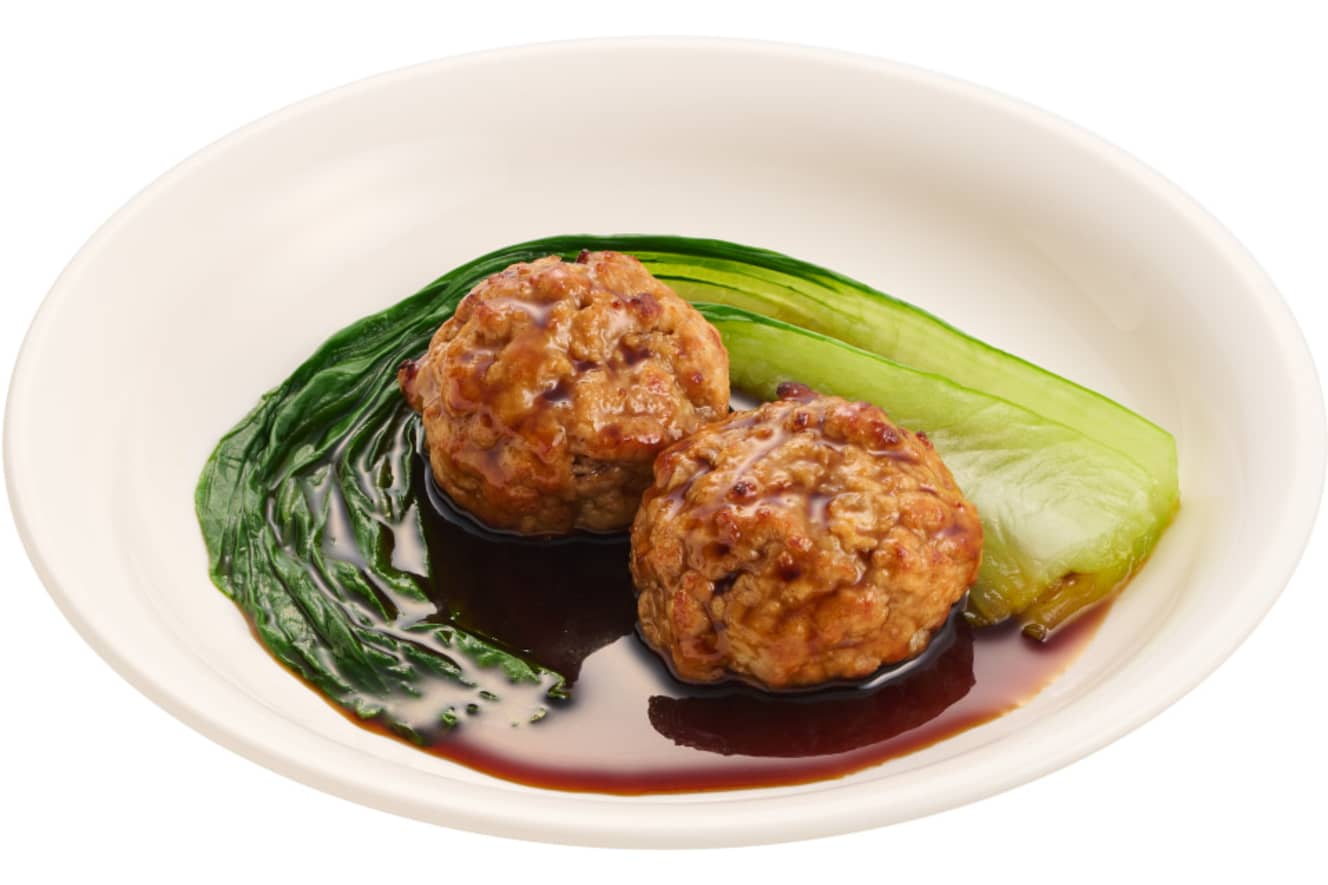
◇ Togolese Republic: “Adjidèji”: Despite the name, it wasn’t horse mackerel (“aji”) at all—it was chicken. I expected a sweet-and-savory sauce, but instead it came with a rich peanut paste sauce!
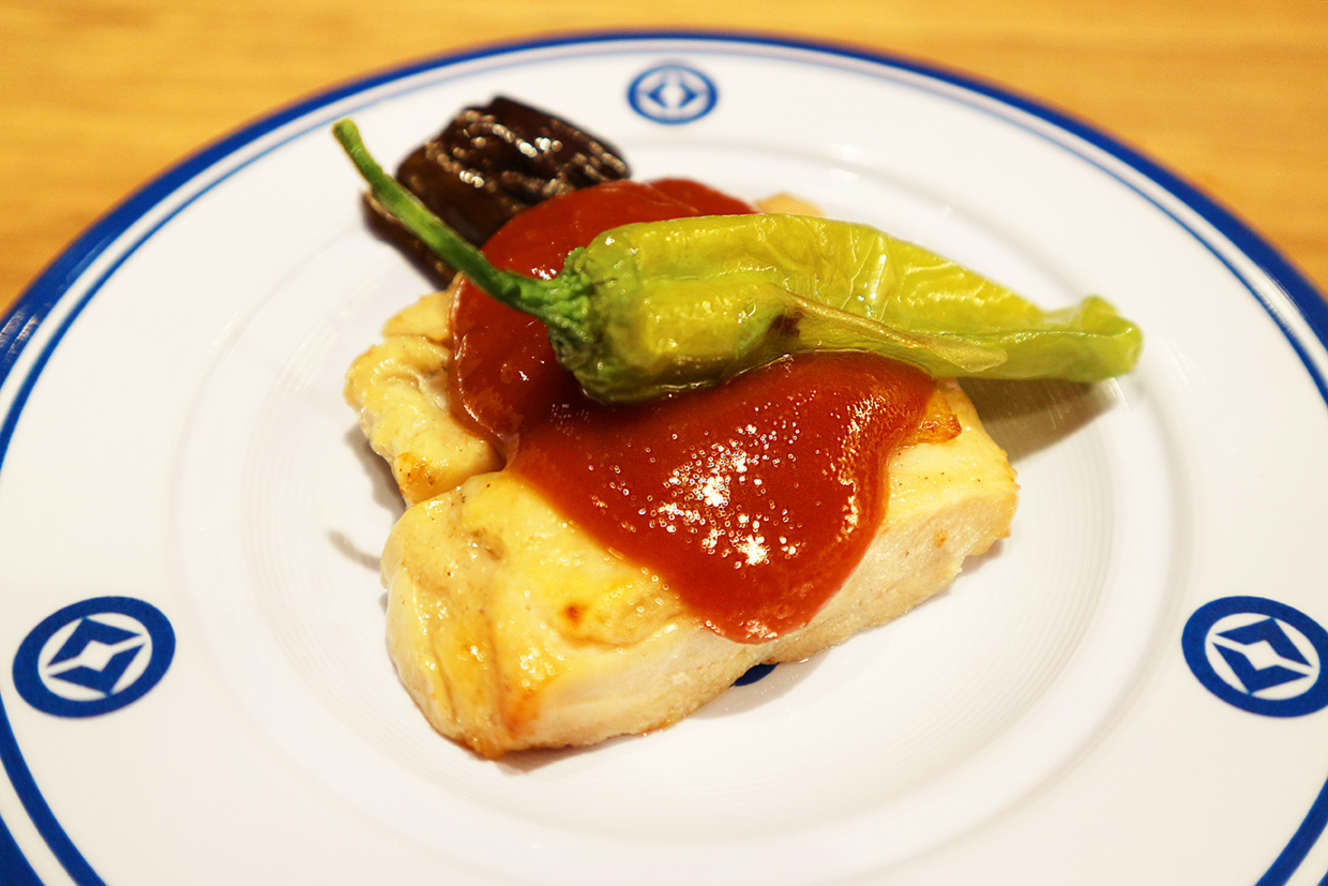
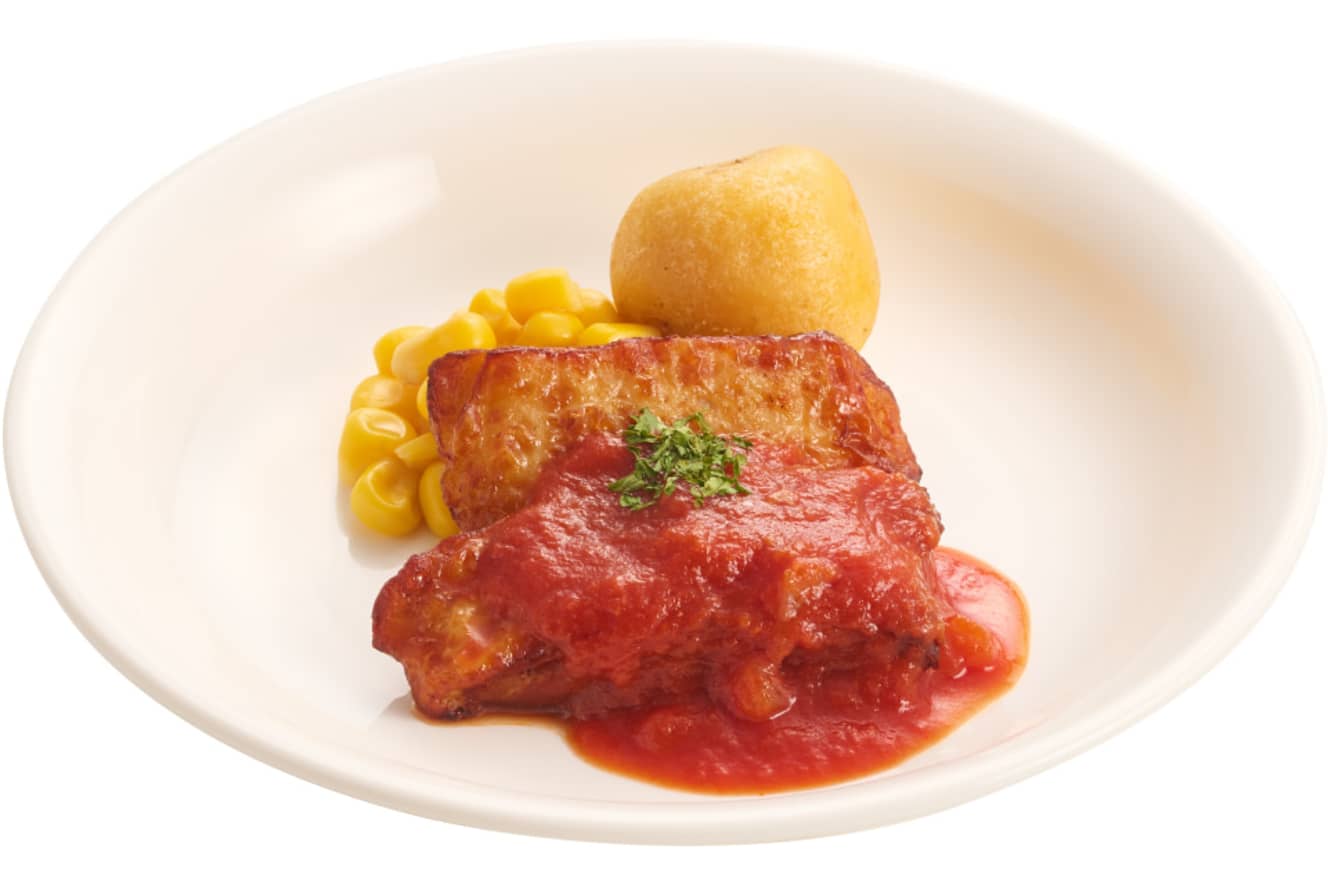
◇ Plurinational State of Bolivia: “Picante de Pollo”: Like Adjidèji, it’s a sautéed chicken dish, but it seems they use the same chicken base while expressing each country’s identity through the sauce and side dishes. This version is topped with tomato chili sauce and served with potatoes.
The best value for money! Three dishes you absolutely have to try
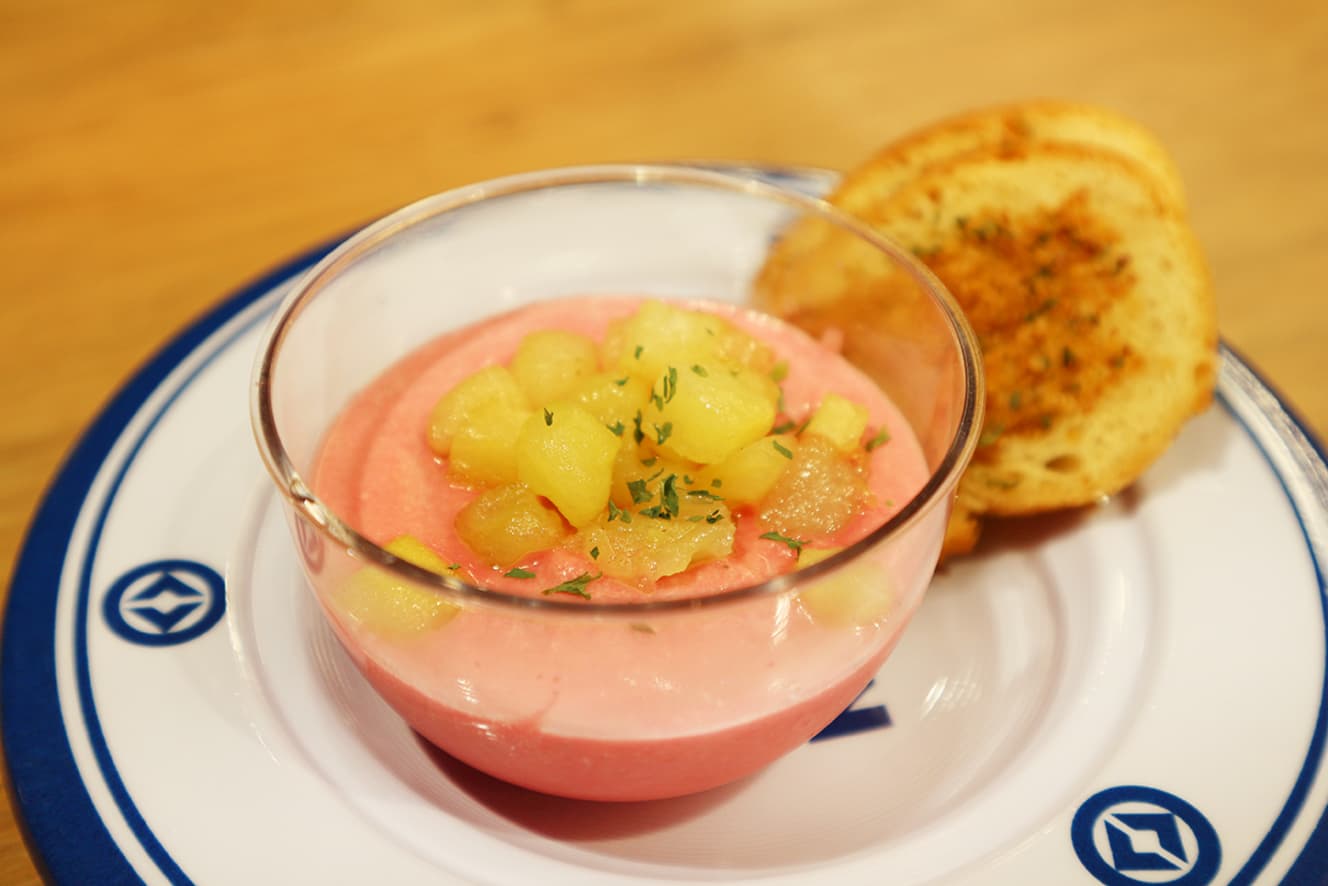
◇ Lithuania – “Šaltibarščiai”: A chilled soup dish that wouldn’t look out of place at a trendy tapas bar. It’s served on top of garlic toast.
◇ Malaysia – “Sambal Udang”: A Malaysian-style spicy shrimp dish. Crispy fried shrimp coated in a chili-forward spicy sauce, served as a snack, but the portion is generous enough for several people to share as an izakaya appetizer.

◇ Cameroon – “Makayabo”: Grilled mackerel topped with a chili-based sauce, cucumber, onion, and lime. The garlic adds depth while the citrus provides a refreshing tang.

But is regular sushi still better?
After being bombarded with international cuisine, you inevitably start craving the sushi passing by in front of you. So naturally, I reached for the eel, salmon roe, and horse mackerel. As expected from Kura Sushi, the consistently excellent value and high-quality toppings once again remind you why it’s a conveyor-belt sushi chain admired around the world.


I wondered how difficult it would be to get a reservation at the permanent version of the Kura Sushi Osaka-Kansai Expo Store, considering so many people never managed to get in during the Expo. But for now, reservations are surprisingly easy, and the spacious interior lets you dine comfortably.
If the menu consisted only of international dishes, it might be a bit overwhelming, but there are also more than 150 regular sushi and side menu items. Being able to enjoy both world cuisine and classic sushi is a huge plus. And yes, “Bikkura Pon!” is here too.
At the moment, this is the only location of its kind, so if you’re visiting Osaka, it’s well worth stopping by for an Expo redo or an Expo encore experience.

Interview, text, and photos: Shigeru Nekota