Kanagawa Governor Under Fire Over Alleged Campaign Finance Violations—His Office’s Response Stuns Critics


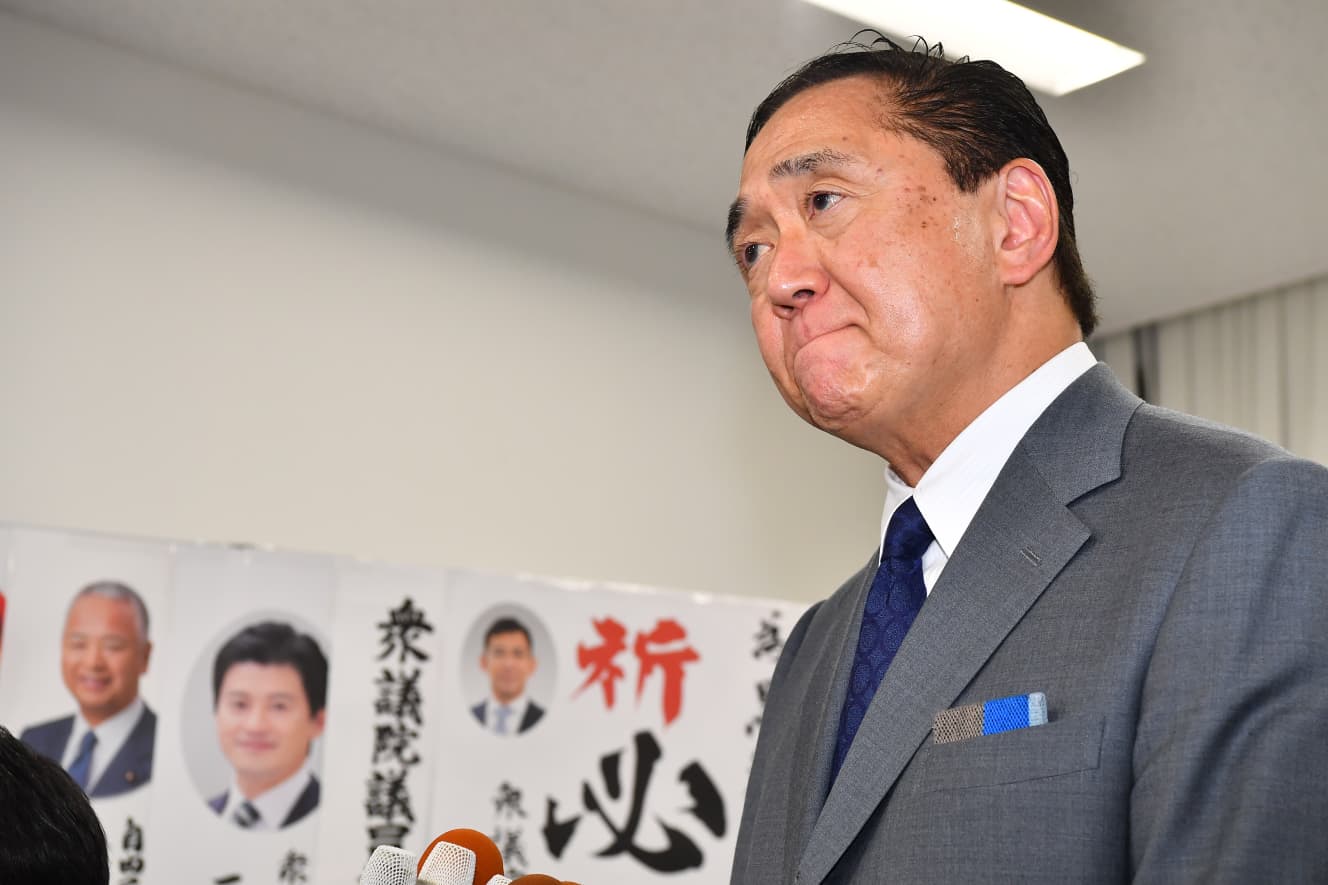
Suspicions of voter bribery at Governor Kuroiwa’s political fundraising party
On April 21, just before Golden Week, Kanagawa Governor Yuji Kuroiwa (71) met with Prime Minister Sanae Takaichi (65) at the Prime Minister’s Office. During the meeting, Kuroiwa demonstrated how to fold the official mascot of the 2027 International Horticultural Expo in Yokohama, “Tunk Tunk,” using origami, prompting Takaichi to laugh and remark, “That’s interesting.”
The meeting also reportedly included Kuroiwa giving Takaichi advice on building rapport with Vietnam’s top leader, To Lam, General Secretary of the Communist Party and President, with whom Kuroiwa has a friendly relationship ahead of Takaichi’s Golden Week visit to Vietnam. The conversation between the prime minister and governor was said to have been lively.
However, the governor—highly regarded even by Takaichi—is now facing questions over his political finances. According to a source within the Kanagawa Prefectural Government, there are discrepancies in the financial reports of Kuroiwa’s political organization, “Yuji Kuroiwa Supporters Association.”
“On December 21, 2023, the organization held a political fundraising event called ‘Meeting with Governor Kuroiwa’ and reported revenue of only ¥164,290. At the same time, it recorded ¥944,000 in food and beverage expenses paid to a vendor. Since the reported expenditures far exceed the income, there is a possibility that the event constituted voter bribery.”
The financial report explicitly classifies the expense as “Political Fundraising Party Operating Costs,” indicating that the event falls under the category of a political fundraising party.
One attendee recalled the gathering:
“The venue was Ginza Aster Fujisawa Hinkan. The participation fee was ¥12,000, and nearly 100 people—mostly local business owners from Fujisawa—attended. After speaking about ride-sharing, Governor Kuroiwa visited each table individually and shared that he had lived in Fujisawa during junior high school. Guests were served a standard all-you-can-drink Chinese course meal, and saxophonist Emi Arakiperformed live. It was a very fulfilling event.”
Under Japan’s Political Funds Control Act, a political fundraising party is defined as an event where admission fees are collected and the surplus remaining after deducting expenses is intended to be used for political activities, including election campaigns.
In other words, providing food, entertainment, or services whose value exceeds the participation fee could potentially amount to voter bribery.
If the attendee’s account is accurate, the event should have generated more than ¥1.2 million in revenue, given that around 100 people each paid ¥12,000. On the other hand, if the financial report is accurate, a simple comparison of reported income and expenditures suggests that attendees received benefits worth roughly five times the reported revenue, raising the possibility that the event violated the law.
New allegations surrounding Governor Kuroiwa’s book and seminars
There are further allegations as well. The prefectural government official mentioned earlier had this to say:
“Since 2024, the governor has been using the election consulting firm Emiul Co., Ltd. The company is an election consulting firm run by Kazuyoshi Fuchinoue, who previously served as a secretary to House of Representatives member Manabu Sakai (60), who represents Kanagawa’s 5th District. Before long, he became a constant presence around the governor. The company holds political training schools featuring Defense Minister Shinjiro Koizumi (45) and former Prime Minister Yoshihide Suga (77) as its public faces, while also conducting a wide variety of businesses, including organizing economic seminars for business leaders.”
Meanwhile, Kanagawa Prefecture appointed Fuchinoue as the coordinator for its official project, “FY2025 Online Dialogue Between Governor Kuroiwa and Stakeholders.” Appointing as coordinator for an event centered on the governor himself a consulting firm that the governor personally retains could give the impression of an excessively close relationship.
There are other issues that call Kuroiwa’s sense of ethics into question.
“At a party held in 2024, copies of his own book, ‘The Governor Who Was Hated’ (Gentosha), were purchased with political funds and distributed to participants. This practice raises ethical concerns because it allows personal income to be generated through both book publishing and political fundraising parties.” (same source)
The book retails for ¥1,760 per copy, and 800 copies were purchased for the party. Assuming the standard royalty rate of 10%, Kuroiwa would receive ¥128,000 in royalties.
How would Kuroiwa respond to these allegations? When the Kanagawa Governor’s Office Public Relations and Media Group was contacted for comment, Kuroiwa’s office replied as follows:
“At the political fundraising party held to commemorate the publication of ‘The Governor Who Was Hated,’ books were purchased from the event budget to provide attendees with one of the forms of consideration stipulated under the Political Funds Control Act.
The financial reporting for this matter was conducted appropriately. Furthermore, regarding the royalties, Mr. Kuroiwa personally filed the appropriate tax returns under the guidance of a certified public accountant.”
Next, regarding the expenses for the “FY2025 Online Dialogue Between Governor Kuroiwa and Stakeholders,” the Kanagawa Prefectural Policy Bureau’s Information Disclosure and Public Hearing Division provided the following figures:
Total project cost: ¥1,176,500
(Breakdown: Guest honoraria ¥291,000; Public relations outsourcing fee ¥412,500; Planning and operations outsourcing fee (paid to Emiul Co.) ¥473,000)
The division responded:
“This work was outsourced so that, in conducting an online dialogue event, the prefecture could utilize the knowledge, technical expertise, and know-how possessed by a private-sector operator for planning and selecting discussion participants (through advisory services).
In selecting the private-sector operator, consideration was given to its past performance and evaluations in similar prefectural projects. Furthermore, the contract was concluded appropriately in accordance with the prefecture’s financial regulations, which permit discretionary contracts for commissioned work valued at less than ¥500,000 (raised to ¥1 million or less from FY2026 onward).”
While the explanation sounds plausible, one could also interpret it as meaning that contracts up to the discretionary limit of ¥500,000 can be awarded freely—effectively allowing payments of up to that amount to the governor’s close associates.
As for the political fundraising party, Kuroiwa’s office gave the following response:
“After confirming the details regarding the ‘Meeting with Governor Kuroiwa’ held on December 21, 2024, which you pointed out, we found that the amount listed in the income section of the financial report was incorrect.
The reported figure of ¥164,290 represented the profit remaining after subtracting expenses from revenue. The actual revenue was ¥1,392,000, calculated as 116 attendees paying ¥12,000 each.
We will promptly correct the financial report and will ensure accurate administrative processing in the future to prevent such mistakes from occurring again.”
The response suggests nothing more than a careless clerical error, but it does not explain why the calculation differs from that used for the other parties listed on the same page.
Furthermore, even if ¥1,392,000 is accepted as the correct revenue, the same financial report lists the party’s expenses as ¥1,172,940.
¥1,392,000 − ¥1,172,940 = ¥219,060, meaning the arithmetic still does not match.
The response appears to dig an even deeper hole, leaving lingering concerns about the leadership of Kanagawa Prefecture.
When Kuroiwa held another political fundraising party on May 19, approximately 600 members of the Kanagawa business community attended. One can only sincerely hope that the financial report for that event will be free from any suspicion.
Interview and text by: Daisuke Iwasaki PHOTO: Shinji Hasuo