“Under the Awning Counts as Legal”? A Look at Street Vending in Ueno’s Ameyoko After Mass Enforcement


Have the tables set up on the street disappeared?
On May 5, the Ueno Police Station of the Tokyo Metropolitan Police Department carried out a large-scale enforcement operation called the “Ameyoko Cleanup Operation” in the restaurant district surrounding Ameyoko Shopping Street. Officers distributed flyers to warn businesses while conducting searches of restaurants that continued operating with seating set up on public roads despite repeated warnings and guidance. Tables and chairs placed on the street were confiscated.
“During 2025, there were 43 emergency calls reporting problems related to street-side operations in Ameyoko, such as people colliding with signboards. By the end of April this year, another 21 complaints had already been received. Setting up seating without obtaining a road use permit is illegal, but during the COVID-19 pandemic, standards were temporarily relaxed to avoid crowding. Even after the pandemic subsided, however, many businesses continued occupying public roads. Police have reportedly issued nearly 1,500 warnings and instructions over the past six months,” said a reporter covering national affairs.
Has anything changed around Ameyoko two weeks after the police crackdown? We visited the area to find out.
Ameyoko is known as a shopping district filled with restaurants, seafood markets, dried goods shops, and clothing stores. Its drinking district, in particular, is crowded with customers throughout the day and night and has long been a popular tourist destination for both domestic visitors and overseas travelers.
So how has Ameyoko changed since the crackdown? Around 9 p.m., when the izakayas were bustling, a passerby said that street-side operations have decreased compared to before.
“After the crackdown, fewer restaurants are putting tables out on the street. Some places used to extend seating from both sides of the road, leaving less than two meters for pedestrians to pass through. Now you don’t really see businesses operating that blatantly anymore. The police are patrolling, so openly occupying the streets is probably seen as too risky.”
However, according to the man, street-side operations have not disappeared in practice.
“That place over there is operating illegally, isn’t it?” he said, pointing to a certain izakaya.
Everyone else is doing it so it’s not a problem
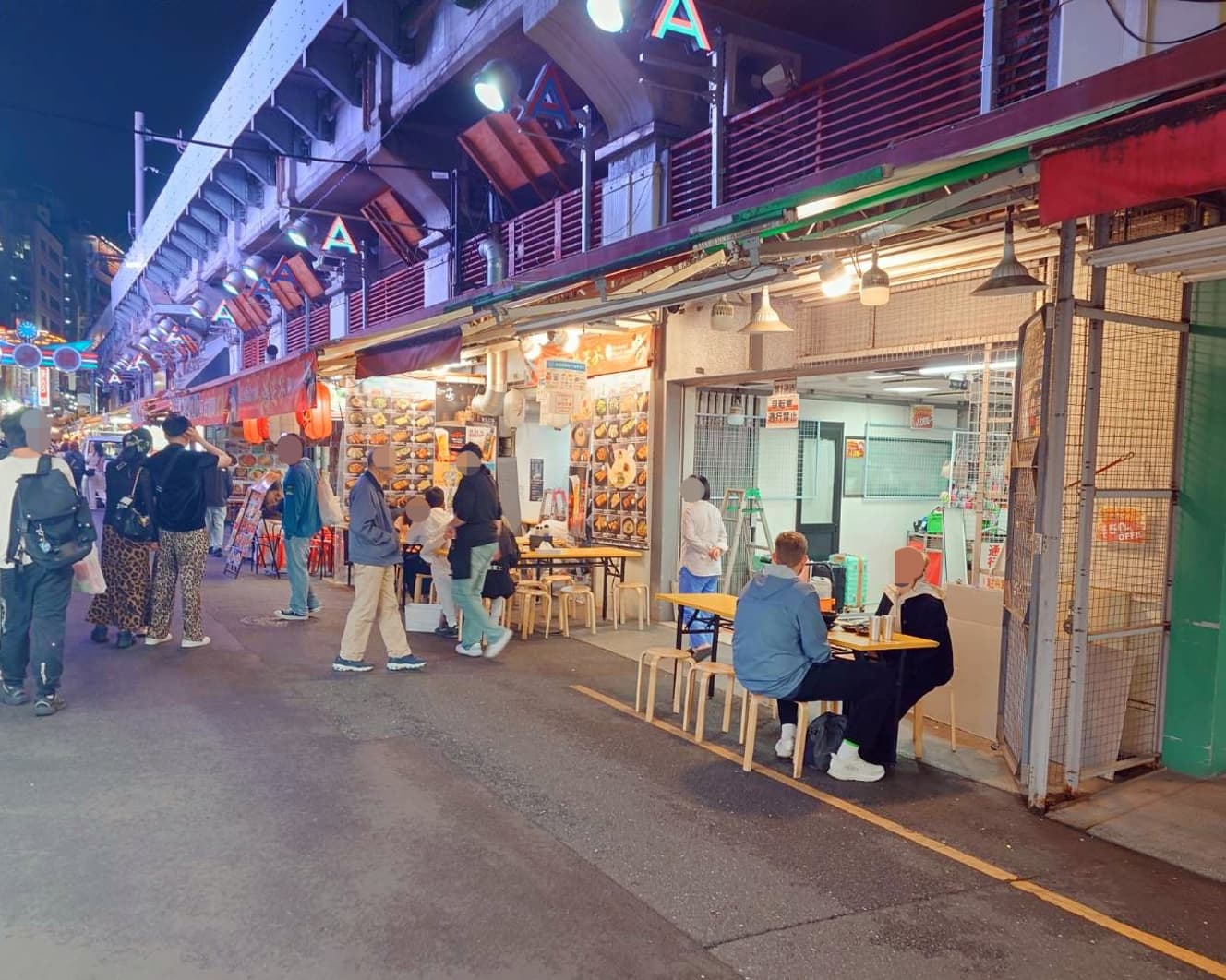
The establishment in question did not have seating extending far out into the roadway, but chairs and tables were packed tightly beneath the awning extending from the entrance. Like this one, many restaurants continue operating with seating set up right to the edge of their awnings. In some cases, the seats even appear to extend onto the public road. It’s not just the seating—signboards used to attract customers are also placed on the street, and staff can be seen calling out to passersby with remarks such as, “How about a drink? Why not stop by?”
When approached, one male employee soliciting customers said that the crackdown on street-side operations was only temporary and insisted that it’s not a problem because other restaurants are doing the same thing.
“The police told us to make sure our business operations don’t obstruct pedestrians, so we removed our tables and chairs. Some restaurants only clear them away when police patrols come by, so just issuing warnings doesn’t seem very effective. As long as other places are operating on the street, I don’t think our restaurant alone will be targeted. At this rate, I think everything will probably go back to the way it was in a few months.”
Could the placement of seating up to the edge of the awning—a practice that appears to have been adopted in response to the recent crackdown—still be illegal? When asked, an employee at another restaurant expressed the view that it was not.
“A lot of restaurants operate with seating extending right up to the edge of their awnings, but since it hasn’t become an issue so far, we consider it acceptable. Pharmacies and souvenir shops also place merchandise outside their stores without being told to remove it, so we figure izakayas can do the same. Some restaurants even use transparent plastic sheets to create a boundary so they don’t interfere with pedestrians.”
The Taito City Office weighs in
The Taito City Office was asked about street-side business operations around Ueno’s Ameyoko area, and responded that business operations on public roads are not permitted.
“Under the Road Traffic Act, setting up tables and chairs on public roads for business operations is not allowed. If the road is private property, it would depend on the wishes of the owner, but the roads around Ameyoko are ward-managed roads. Therefore, operating a business on the street without permission is subject to enforcement. The same applies to operating under awnings or placing signboards if they extend onto ward roads.” (Taito City Office Road Management Division)
According to the ward office, joint patrols by the police and the local shopping district are conducted twice a month around the Ameyoko area, and businesses that continue to operate illegally will remain subject to enforcement.
Last year, strict action was taken against illegal street dining in Shinbashi, where restaurants had been widely setting up tables and chairs on public roads. A restaurant, along with its operating company, was referred to prosecutors on suspicion of violating the Road Traffic Act through unauthorized road use. The Tokyo Metropolitan Public Safety Commission later ordered the establishment to suspend operations for 21 days under the Entertainment Business Act. According to the Metropolitan Police Department, it was the first case in Japan in which a restaurant cited for violating the Road Traffic Act received a business suspension order.
In Shinbashi, police had issued more than 60 warnings and instructions before taking enforcement action, yet the restaurant continued operating. In Ameyoko as well, many establishments reportedly continue illegal street operations even after the recent police crackdown. While the area’s unregulated atmosphere may be seen as part of Ueno’s distinctive character, if the current situation continues, it could ultimately face the same outcome as Shinbashi.



Interview, text, and photos: Blank Green