Ex-Narcotics Investigator Goes on the Record About the Fight Against Illegal Guns in Organized Crime


“My wife doesn’t know” — The Glock and Colt hidden by a company employee
It must have been about ten years ago that we investigators visited a well-maintained, elegant detached house in Tokyo.
On the surface, it was simply the home of a company employee, so the wife was extremely surprised by the detectives’ visit. However, information had been received that the husband was what police terminology refers to as a “teko”—an errand runner who does not formally belong to a criminal organization—and that he was hiding firearms in his home.
“Please don’t tell my family.”
At the husband’s request, we asked his unsuspecting wife to remain in one room of the house while we began our search.
Every room was neatly organized, without a speck of dust. Thinking, “There is no way he could be hiding them inside the house,” we headed out into the yard.
There, what appeared to be the husband’s hobby—road bicycles—were hanging on the fence. Behind them, I noticed a storage shed, and immediately had a hunch.
Sure enough, despite the valuable road bikes being left exposed outdoors, the aluminum shed—of the type sold at home improvement stores—was locked.
When we opened it, we found a duralumin attaché case. Inside were a Glock and a latest-model Colt Governmentpistol.
Fumitaka Kohirumaki (52), a former assistant inspector with the Tokyo Metropolitan Police Department, has devoted most of his 30-year career since joining the force in 1993 to investigations involving organized crime and drug-related offenses. Kohirumaki, who has previously shared the realities of drug investigations with this magazine on two occasions, now provides a detailed account of the front lines of firearms enforcement.
When gathering information on drugs, information about firearms often comes up as well. That’s because, for criminal organizations, drugs and firearms are both highly profitable black-market businesses.
In Japan, several hundred handguns are seized each year. In addition to so-called stray guns that have leaked out from criminal organizations such as yakuza groups, authorities also crack down on imitation firearms possessed by enthusiasts, as well as homemade guns that may appear to be toys but are capable of firing live ammunition.
If even a single shot can propel a bullet forward and possesses lethal capability, Japanese law classifies it as a handgun, etc.
How do police determine the whereabouts of these firearms?
One of the major pillars is information provided by informants.
For valuable information, police may pay 50,000 yen as an initial payment, and in some cases the total amount can reach hundreds of thousands of yen. Funds for this purpose are included in the police budget, and receipts are properly obtained and filed. The confidentiality of informants is strictly protected, and there has never been a case in which an informant’s identity was leaked.
Who provides this information?
People within criminal organizations who are involved in disputes.
Perhaps someone had a debt go unpaid, had a romantic partner stolen away, or had become entangled in some other kind of conflict. Detectives catch wind of such rumors and make contact.
“Sounds like you’ve been having some trouble.”
“Detective, listen to this! That bastard is unbelievable.”
“Then bring me some information. We’ll arrest him. But don’t manufacture a case. Bring me clean information.”
That’s how information is drawn out.
However, the underworld is a place where you never know who might betray you.
Some yakuza members, anticipating the possibility of being informed on, deliberately keep model guns in their homes. When detectives arrive with a search warrant, they hand over the imitation firearm and say with feigned innocence:
“By ‘chaka’ (slang for handgun), you mean this?”
Meanwhile, genuine firearms are entrusted to people like the “teko” mentioned at the beginning of this story, who are paid a little spending money to store them on behalf of the organization.
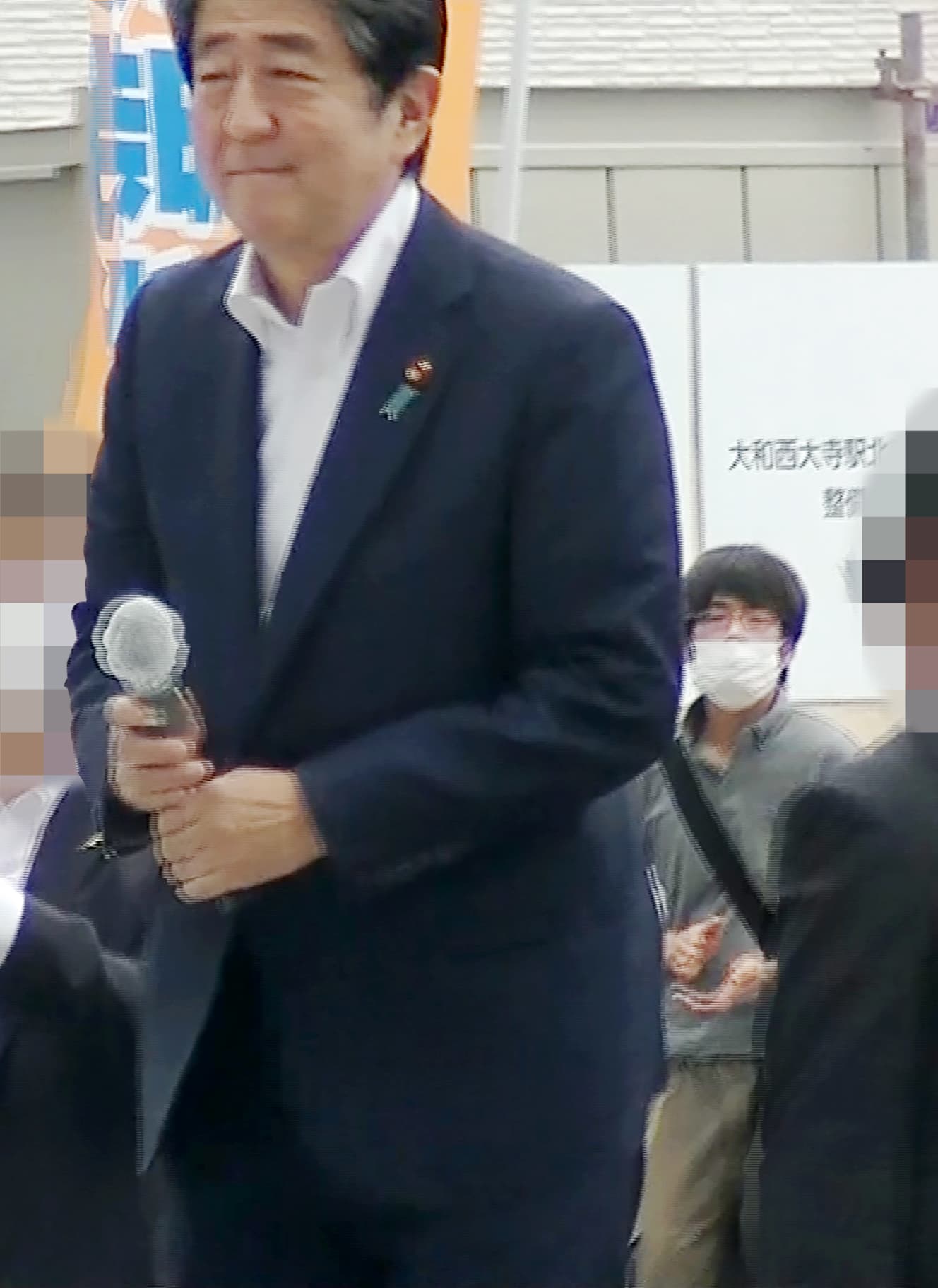
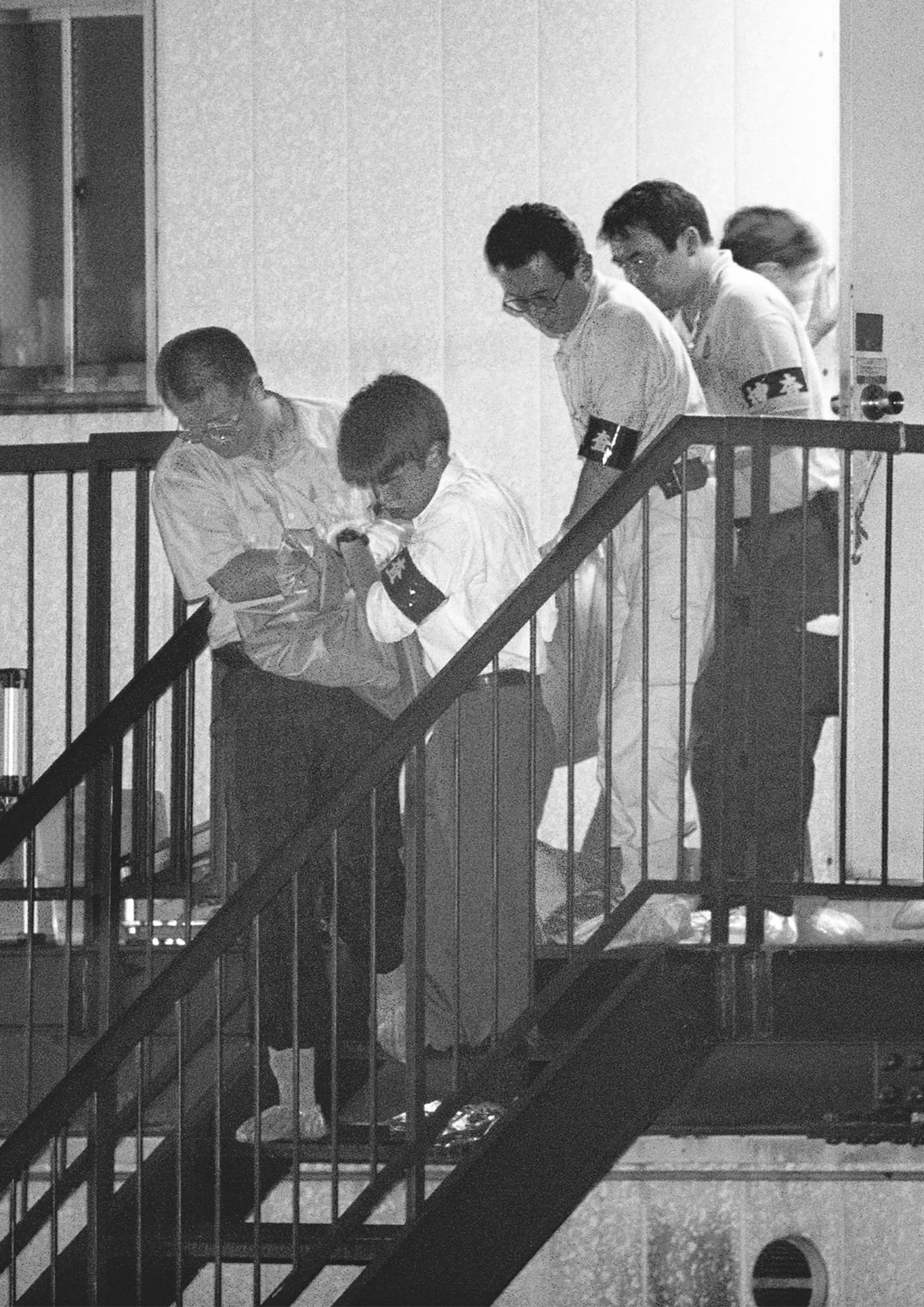
Handguns packed wall to wall
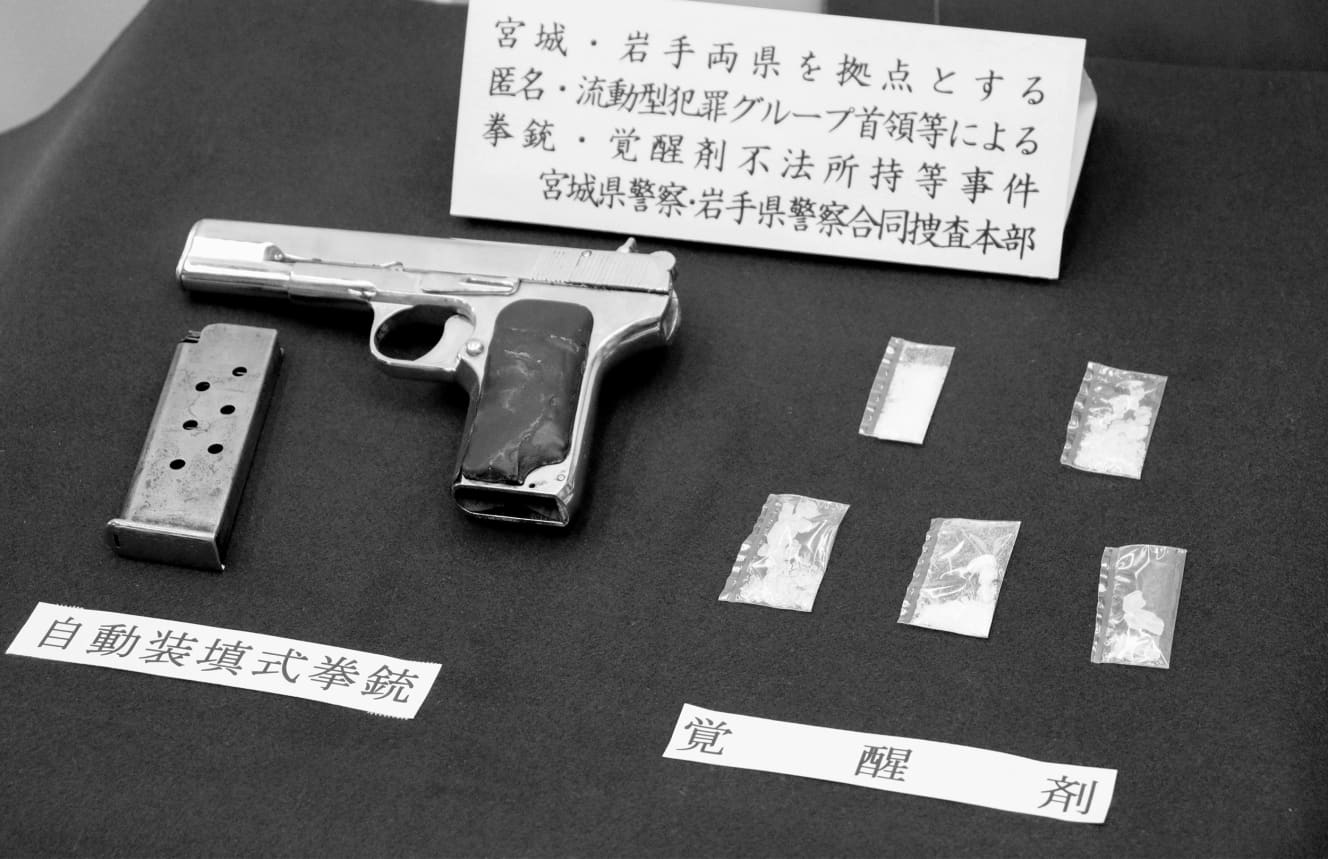
Well-known handguns such as Glocks, Colt Government Models, and Berettas were popular among members of criminal organizations. However, the weapons most commonly used in actual crimes were overwhelmingly Russian-made Tokarevs and Makarovs, as well as Chinese-made Tokarev copies.
The Chinese-made Tokarevs were replicas marked with a black star on the side of the grip, earning them the Chinese nickname “Heixing” (Black Star). Since weapons used in crimes are typically discarded immediately afterward, inexpensive handguns like Tokarevs were often chosen.
As with illegal drugs, handguns are also seized by customs authorities. On rare occasions, firearms or live ammunition are smuggled aboard aircraft in passengers’ luggage and discovered upon entry into Japan. However, according to Kohirumaki, most cases involve weapons concealed within commercial cargo containers or other imported goods.
“There was once a case in which a large number of handguns had been hidden inside shipping containers arriving from overseas. Customs possesses massive X-ray machines capable of scanning entire containers, but inspecting every single one would bring logistics to a standstill.
Therefore, inspections are often conducted when intelligence is received from overseas investigative agencies. On one occasion, a customs officer noticed suspicious welding marks on the outer wall of a container during a visual inspection. When the container was examined using a large-scale X-ray system, the entire wall was found to be packed tightly with rusted handguns—hundreds of them, apparently.
Even in this high-tech era, what ultimately matters is manpower. It’s skill and instinct.”
Throughout my own career, I witnessed veteran detectives demonstrate extraordinary investigative abilities on numerous occasions.
There was one case in which we received intelligence and conducted a raid on an apartment. After presenting a search warrant for violations of the Firearms and Swords Control Law, we informed the suspect:
“We’re about to begin the search. If you have anything illegal, hand it over now.”
Although it happened in less than ten percent of cases, some suspects would occasionally surrender their weapons upon hearing those words.
In this particular instance, however, the suspect feigned ignorance. We announced:
“Search commencing at [time].”
At the time, I was still a rookie detective. I assumed we would start checking behind dressers or inside drawers.
Instead, the senior detective walked straight toward a cage sitting in the corner of the room.
Inside, a tarantula was slowly moving around. It was the suspect’s pet.
While I instinctively looked away in disgust, the senior detective calmly used a stick to nudge the tarantula aside and began digging through the soil at the bottom of the enclosure.
He uncovered a plastic bag containing a revolver-style imitation handgun.
The assumption that firearms are hidden behind furniture or inside drawers is itself a form of prejudice. We were trained to eliminate such noise and conduct searches using all five senses. The senior detective possessed exactly that skill, which was why he was able to arrive at the tarantula’s cage as the hiding place.
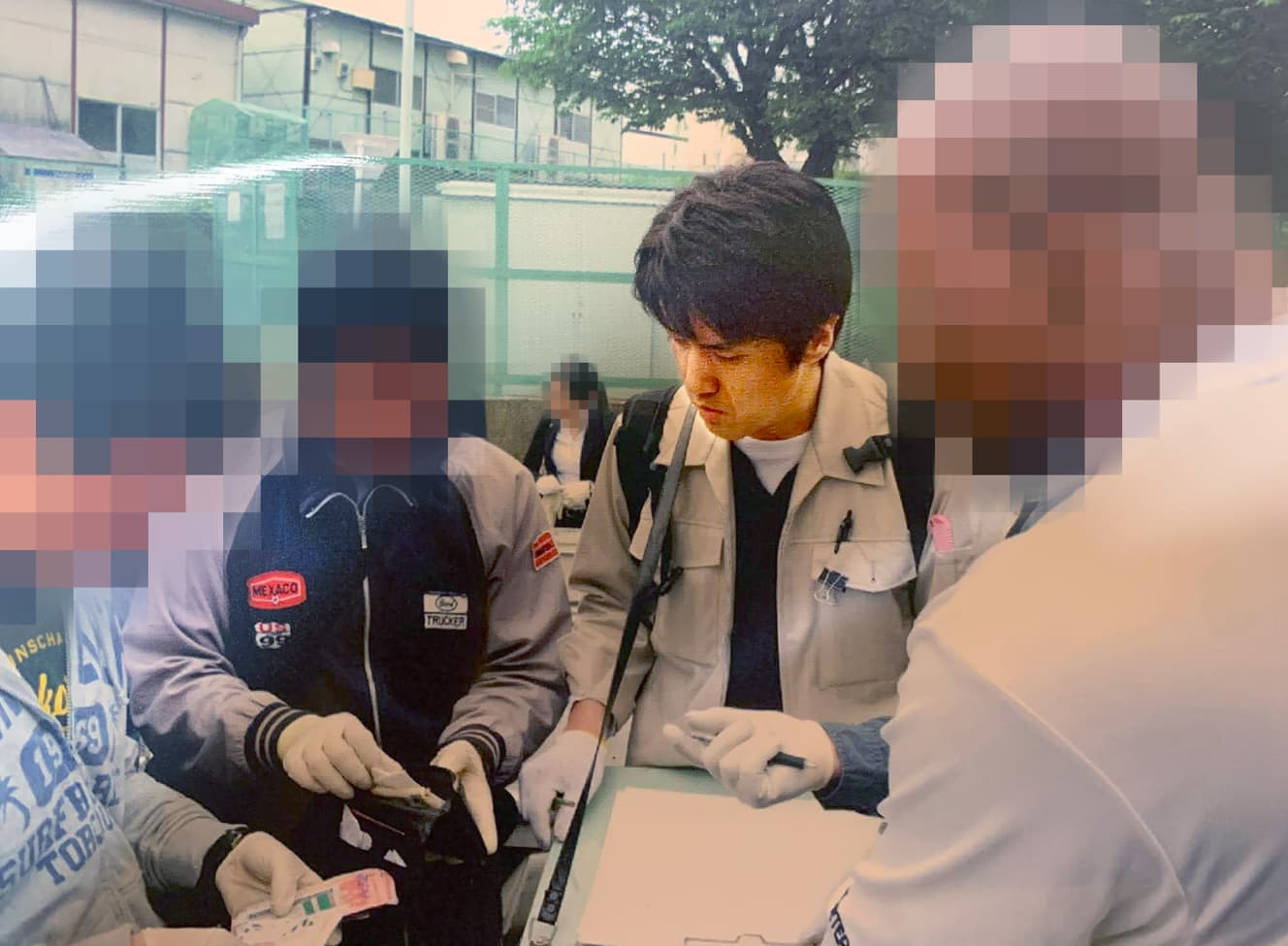
This photo shows Mr. Fumitaka Kohirumaki about 30 years ago, when he was still a rookie detective.
The Metropolitan Police Commissioner’s break-top revolver
Sometimes firearms turn up in unexpected ways. One example is inherited firearms—guns discovered among a deceased family member’s belongings and voluntarily reported to the authorities. According to Kohirumaki, even extremely rare firearms, of which only a handful may remain in the world, are invariably destroyed in a blast furnace once confiscated.
“There was once an elderly woman who came to the police and said, ‘While cleaning out our family storehouse, we found a firearm, so I’d like to return it to the police.’ She was a descendant of a man who had served as the Superintendent General of the Metropolitan Police during the Meiji era.
Because some time had elapsed between discovering the gun and reporting it to the authorities, we had no choice but to refer the case to prosecutors for violating the Firearms and Swords Control Law. However, the woman was ultimately not indicted.”
When people think of Japanese police firearms, they usually think of the New Nambu revolver. The inherited firearm in this case, however, was an American-made Schofield break-top revolver.
“It looked similar to the handgun used by Colonel Muska in the animated film ‘Castle in the Sky.’ Since its owner had been the Superintendent General of Police, it’s possible that the weapon had been presented as a gift by a foreign dignitary, perhaps even an ambassador stationed in Japan.”
There was another case in which a firearm was discovered among the possessions of a veteran detective.
“Apparently, while still in active service, he had taken custody of a handgun from a yakuza member he had been dealing with and never turned it in. He later retired and eventually passed away with the gun still in his possession.
Perhaps procedures were more relaxed back then. In any event, the case was referred to prosecutors as a violation of the Firearms and Swords Control Law, with the suspect listed as deceased. Once a firearm is discovered, it has to be processed as a criminal case.”
Kohirumaki was particularly astonished when an old Soviet-made handgun surfaced.
“It had been manufactured in a factory of the former Soviet military. It was in excellent condition, free of rust, and bore Russian inscriptions engraved by hand by craftsmen.
In countries where firearm ownership is legal, it probably would have commanded a premium price among collectors. But in Japan, it was simply an illegal firearm—and so it, too, was sent to the blast furnace.
I remember wondering whether it might somehow be preserved in the Police Museum. But that firearm, too, had been discovered as part of an inheritance.”
Kohirumaki first witnessed the seizure of a handgun 30 years ago.
“I heard that senior detectives were going to conduct a search, and I begged them to let me come along. They agreed—but only on the condition that I stay outside until they told me otherwise.
One of them instructed me, ‘Stand here and keep an eye on the surroundings.’ But the truth was that they didn’t let me inside because it was dangerous.
We wore gloves and bulletproof vests, but firearm investigations are unpredictable. A rookie might mishandle a weapon, and there is always the possibility that a suspect could suddenly open fire.”
In fact, one of his senior colleagues had once been involved in a gunfight with a suspect.
“The suspect fled while carrying a Colt Government Model. During the pursuit, he began shooting at the officers.
The ammunition he used was tracer ammunition, which leaves a visible trail as it travels. My senior colleague later said he could actually see the bullets streaking past the side of his face.
Eventually, he fired a single shot in return. Until then, the suspect had been firing continuously, but suddenly everything went quiet.
The detective emerged from cover and shouted, ‘I’m coming over there now!’ before cautiously approaching.
He found the suspect crouched down, clutching his abdomen. The man’s shirt was rapidly turning bright red with blood.”
Kohirumaki also recalled a superior officer who had confronted a violent assailant armed only with a police baton.
“The officer suffered severe injuries—his thumb was nearly torn off—and was forced to use his firearm.
Tragically, the bullet struck a fatal area, killing the suspect. The officer carried the trauma of that incident with him until the day he retired.”
“A gun can destroy countless lives in an instant. Unlike drugs, which are consumed and disappear, a well-made firearm can remain functional for a hundred years.
If we fail to keep confiscating them, their numbers will continue to grow—and so will the number of tragedies they cause.
That’s precisely why detectives continue to head into dangerous situations, despite the risks.”
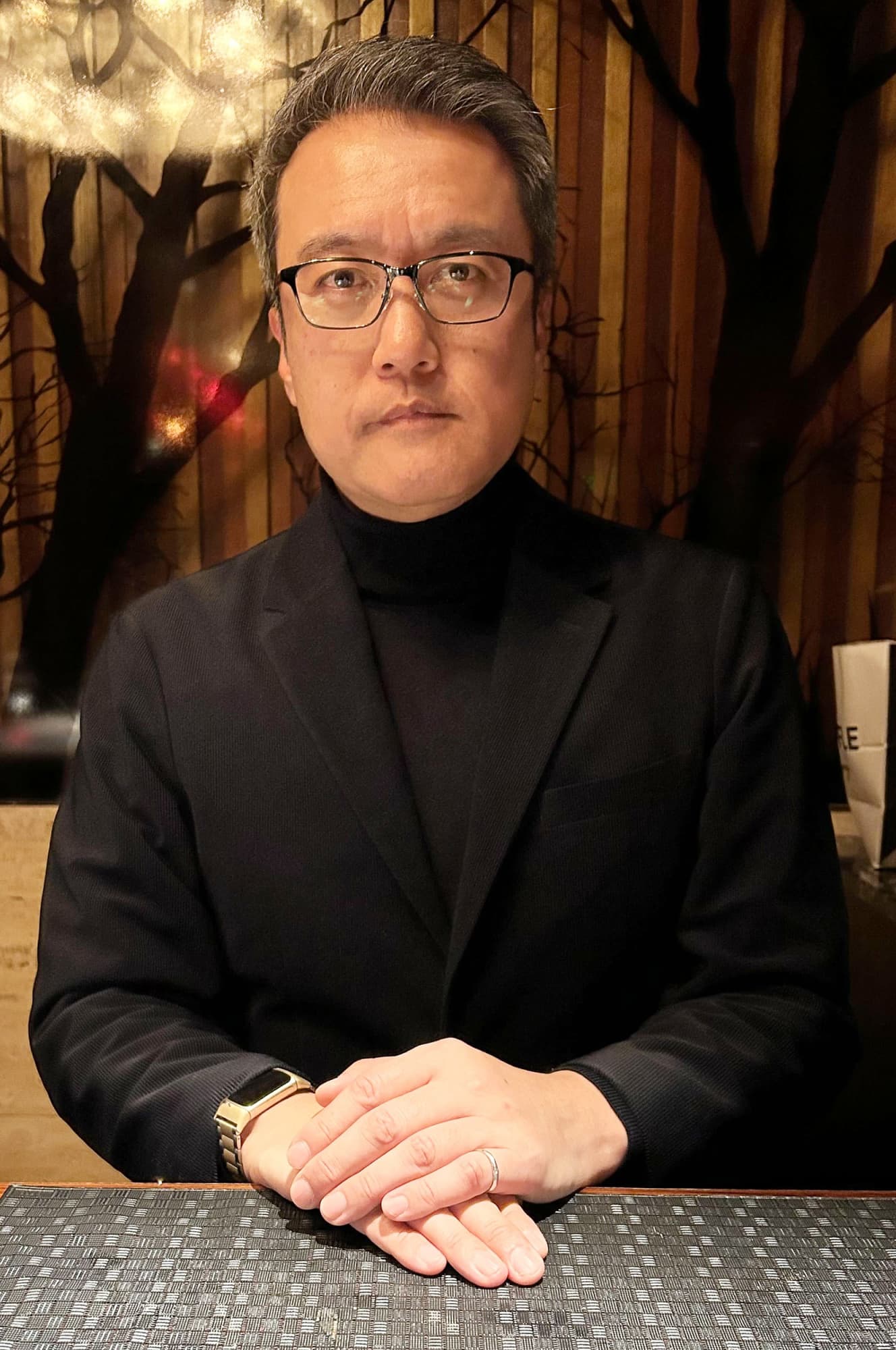
Fumitaka Kohirumaki (born 1973 in Aomori Prefecture) joined the Tokyo Metropolitan Police Department in 1993. Until his retirement in 2023, he specialized in investigations involving organized crime, international crime, narcotics, and firearms offenses, working on numerous major cases. Fluent in Mandarin Chinese, he also served as an international investigator within the Organized Crime Control Division. He currently works as a public security strategy analyst.
PHOTO: Kyodo News (1st and 3rd pictures)