From Collectibles to Gold Mines? Nabe Yakan Exposes the Risks Behind the Kaiju Sofubi Craze


Showa-era kaiju sofubi prices soar to extraordinary heights
Takong … ¥4.1 million
Sabotender … ¥9 million
Peguila … ¥13.6 million
And then:
Garamon … ¥29.9 million
These were the winning bids placed on antique kaiju soft vinyl figures at the Mandarake Auction held in March of this year.
Most of these figures are sofubi representations of monsters from the “Ultra Series,” originally released during the late 1960s by toy manufacturers Marusan Shokai and Bullmark. Though they retailed for only a few hundred yen at the time, they shattered previous market records. Garamon, in particular, fetched a price comparable to that of a modest used condominium, sending shockwaves through the community of enthusiasts and collectors.
Because these vintage sofubi were primarily children’s toys, many were played with roughly or had names written on them, leaving few examples in pristine condition. As a result, well-preserved pieces have always been highly sought after in the antique toy market and are widely recognized as rare treasures coveted by collectors hoping to own one someday. Many people likely first became aware of them during Japan’s earlier treasure boom.
Among them, Garamon, which achieved the highest price this time, was an early production run known as Marusan’s “First Period” edition. It had already been considered a highly desirable item, previously selling for several million yen. Yet its value has now multiplied several times over, ultimately approaching the ¥30 million mark.
To discuss the current state of the antique kaiju sofubi world, we spoke with Yakan Nabe, an entertainer who is also known as one of the world’s foremost collectors.

The pandemic and social media behind the price surge
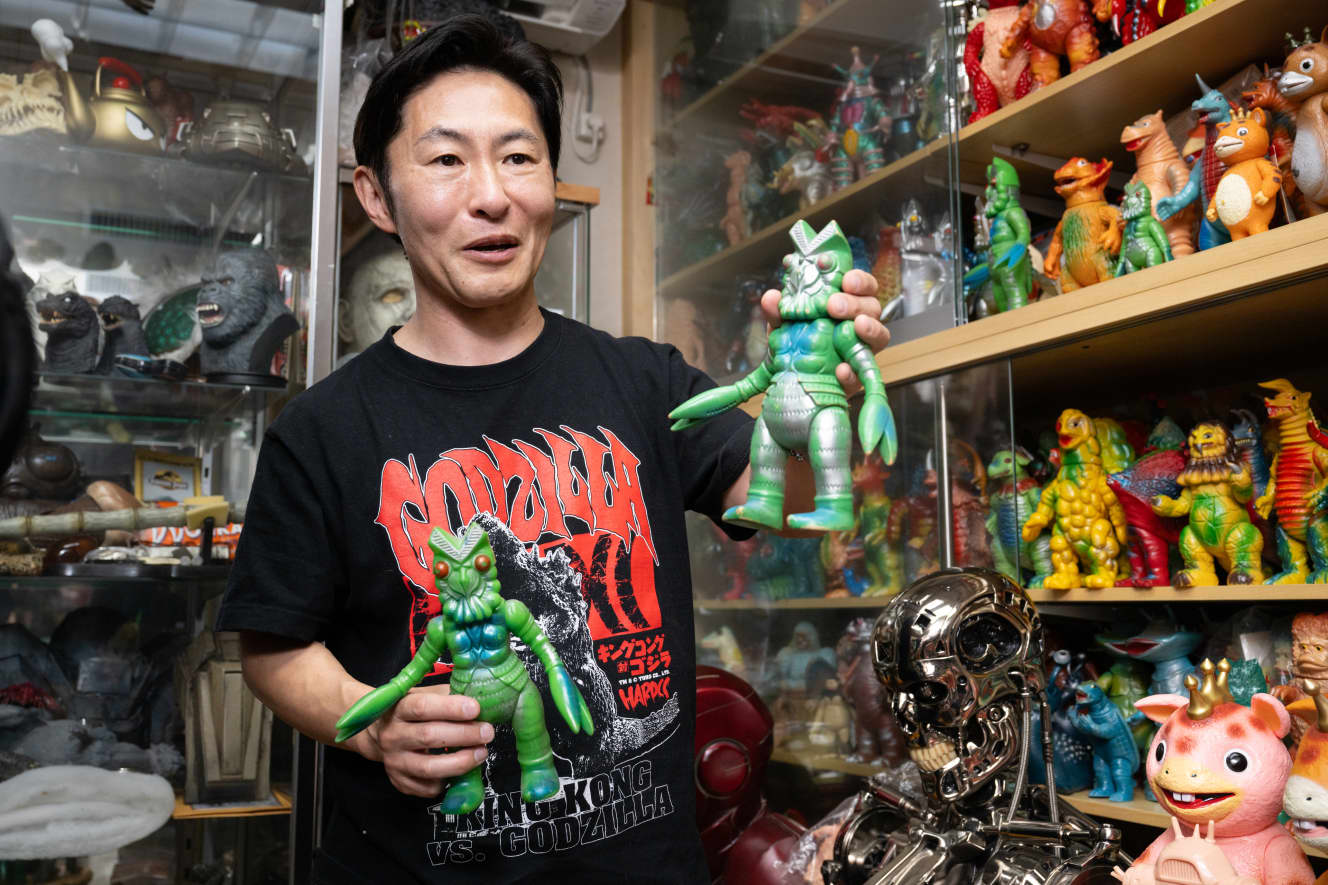
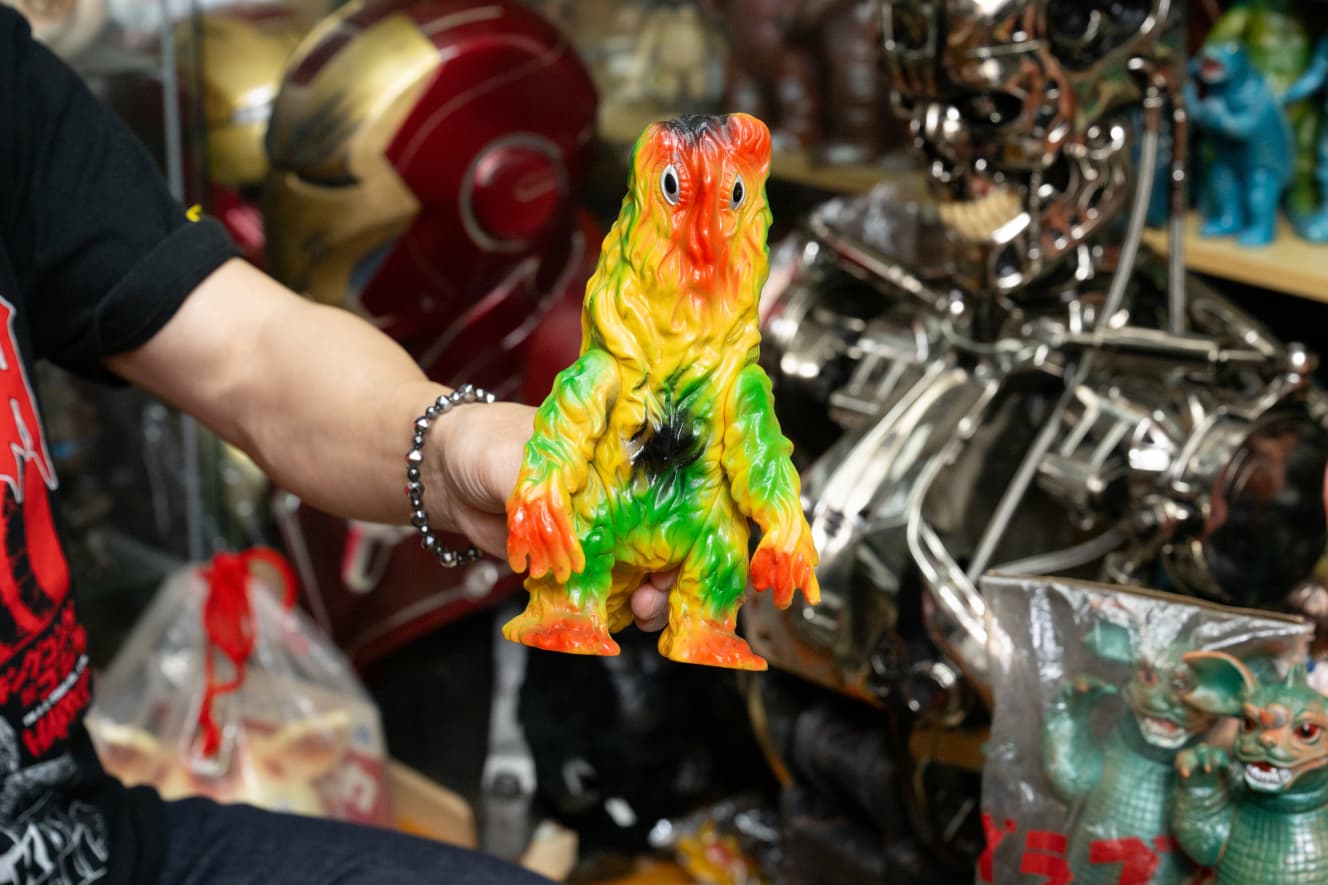
Inside the collection room of Yakan’s home, shelves are packed with precious sofubi figures—primarily vintage Ultra Kaiju and monsters from Toho’s “Godzilla” series produced by Marusan and Bullmark during the Showa era. Also on display are valuable pieces from manufacturers such as Bandai, Popy, and M1-Go. It is truly a dreamlike space.
“This Godzilla is probably worth around ¥1 million. Mechagodzilla is also about ¥1 million, and Kanegon is around ¥500,000.”
As he plays with his pet dog, Yakan casually pulls one rare sofubi after another from the shelves. The ease with which he presents these precious items right before your eyes is enough to numb the senses.
According to Yakan, the market prices of antique Marusan and Bullmark kaiju sofubi had actually experienced a period of stabilization several years ago. This year, 2026, marks the 60th anniversary of “Ultra Q” and “Ultraman.” As the generation that experienced these shows in real time has gradually passed away or begun downsizing their collections as part of end-of-life planning, many expected more valuable items to enter the market and prices to decline.
However,
“The COVID pandemic changed everything.”
That’s how Yakan puts it.
“During the pandemic, people around the world spent more time at home and, naturally, more time online. Through social media—especially Instagram—many people discovered the photogenic appeal of sofubi.
In addition to the indescribable charm of vintage pieces, independent makers began releasing highly artistic original sofubi inspired by the sculpting and paint styles of classic Marusan and Bullmark figures. This played a major role in establishing sofubi as a new genre and fueling their popularity as art.”
The rise of highly sophisticated counterfeits flooding the market
As Yakan describes it, vintage kaiju sofubi have reached a level where it would not be an exaggeration to call them works of antique art. Consequently, there has been a growing trend of overseas buyers purchasing them as speculative investments. On top of that, highly sophisticated counterfeits—so convincing that even experts struggle to identify them—have begun to appear.
Some fakes are repainted by hand and marketed as rare color variants or unreleased sample colors. Others are artificially distressed to mimic age-related wear, assembled from the best-preserved parts of multiple figures to create the appearance of a mint-condition piece, or even have names written on them with marker to imitate how children treated the originals.
These items sometimes circulate through online auctions at exorbitant prices, creating an illegal undercurrent within the hobby. In that sense, one could call them the sofubi equivalent of a “Fake Ultraman.” Kaiju soft vinyl figures have increasingly come to resemble the world of antique art collecting.
“Suddenly, rare Bullmark sofubi that had long been considered almost mythical started appearing on the market all at once,” Yakan recalls. “Most of them turned out to be fakes. Some were produced domestically, while others were expertly copied in China. The same thing has happened with other popular vintage toys, such as Chogokin and Jumbo Machinder figures released by Popy.”
Furthermore, enough time has passed since these counterfeits first emerged that even the fakes themselves have begun to show the effects of aging.
“Items that have naturally aged over time are blending into the market. As online auctions became the norm and non-specialist recycle shops started handling these products, more people without the expertise to authenticate them became involved.
There are many things you simply can’t determine from photos online. As a result, people get deceived, and you sometimes find multiple counterfeits lined up on the shelves of stores. You’ll even see descriptions like, ‘We’re not entirely sure about the details, but this was found in the storage shed of an old family estate,'” he says with a laugh.
“More and more overseas collectors have entered the market, and prices have effectively gained an extra zero compared to before. It’s become a world where even we can’t afford them anymore. At this point, nobody really knows where the peak of the market is.”
At the same time, the number of people capable of distinguishing authentic vintage pieces from imitations is gradually declining.
“Ten years from now, there may hardly be anyone left who can truly identify the genuine articles,” Yakan worries.

Appreciating the artistry, not the investment potential
Collectors often point to one decisive difference between original vintage pieces and later productions: the materials used back then are no longer in use today, giving authentic examples a distinctive smell unique to the era.
Indeed, the moment the glass doors of Yakan’s display cabinets were opened, that unmistakable scent filled the room.
However, he laughs:
“If you’re like me and store old pieces together with newer ones, that smell can transfer as well.”
So what is it about these vintage kaiju sofubi that captivates collectors so deeply?
Rather than aiming for screen-accurate realism, the Marusan and Bullmark monsters were often stylized and slightly exaggerated, sometimes even appearing charming or cute. According to Yakan, this is one of their greatest appeals.
“I think a big part of it was that the craftsmen who made them were originally creating toys like animals and Disney characters for babies to play with. And there’s something about this roughly 20-centimeter size that just feels right.”
In a world where sofubi prices continue to skyrocket, Yakan’s heartfelt wish is that the shops dealing in these items will cultivate a genuine eye for authenticity.
And for those newly intrigued by the hobby, perhaps because of the staggering prices, he offers this advice:
“It’s perfectly fine if the high prices spark your interest. But don’t choose something because you think it’ll increase in value. Whether it’s a reissue or a current release, buy something because you think it’s cute, cool, or beautiful. I hope people start there, develop a love for it, and eventually come to appreciate the charm of the original vintage pieces.”
Perhaps there really is an aura that only authentic objects possess. If, while looking at a vintage kaiju sofubi, you ever feel that unmistakable presence, maybe that’s what people call fate.

Interview and text: Satoru Ota PHOTO: Hinano Toshima