Osaka’s EV Bus Graveyard Enters Its Final Phase with Dismantling Now Underway


<EV buses manufactured by EV Motors Japan and used at the Osaka–Kansai Expo are about to meet an unexpected fate. Automotive lifestyle journalist Kumiko Kato, who has continued to pursue the issue, investigates the latest developments.>
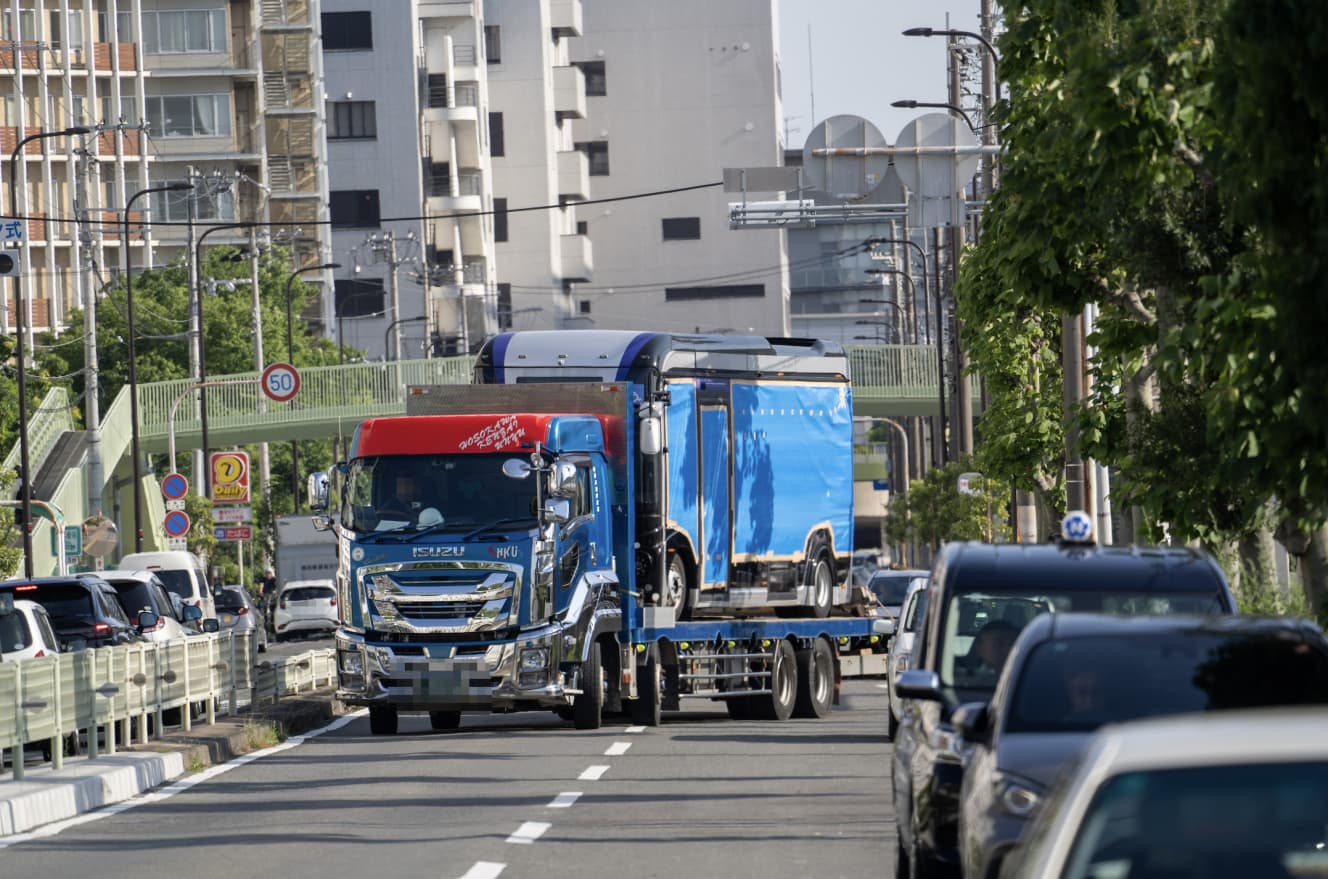
The long-awaited relocation from Osaka’s Morinomiya bus graveyard has finally begun
It appears that the “EV bus graveyard” is finally about to disappear.
Since mid-December last year, a large number of EV buses used at the Osaka–Kansai Expo had been parked on land owned by Osaka Metro in Morinomiya, Osaka. These included the “Wisdom Small 6.99m” buses used as “e Movers” within the Expo venue and the “Wisdom Large 10.5m” buses used as shuttle buses connecting the venue with stations and other locations, totaling 135 buses. (Confirmed by the author in January of this year.)
All of these were EV buses commissioned by EV Motors Japan (hereafter EVMJ), an EV startup headquartered in Kitakyushu, Fukuoka Prefecture, and manufactured by a Chinese company. Since their delivery to Osaka Metro in 2023, they had been plagued by repeated malfunctions. Serious defects have also been found in approximately 130 buses delivered to bus companies across Japan outside Osaka Metro, including brake-related defects and components falling off due to poor welding.
In late February this year, while final testing of autonomous-driving buses was underway, a critical defect was discovered: the lateral rod connecting the axle and the vehicle body had fractured due to faulty welding. At the end of March, Osaka Metro announced that it would no longer use the 135 buses parked in Morinomiya, along with approximately 190 vehicles in total, including 40 ultra-compact buses that had been used for on-demand bus services within the city.
The “EV bus graveyard” has been widely covered by many media outlets, but its relocation only became clear during Osaka Metro President Hideaki Kawai’s (71) financial results press conference held on May 14, 2026. After announcing an extraordinary loss of ¥6.7 billion in the consolidated financial results for the fiscal year ending March 2026, he stated:
“We hope to complete the relocation of the buses within June.”
Then, on May 18, two Wisdom Small buses were finally removed from the graveyard as the first phase of the operation. According to a photographer covering the scene, from around 2:00 p.m., several staff members wearing EVMJ polo shirts began checking whether the buses would start by connecting them to power cables. The destination display on the buses read “Maintenance Transfer.” While they checked the operation of nearly 30 buses, preparations for removal focused on the Wisdom Small buses, with work proceeding after most of the buses were covered with blue tarpaulins.
The first bus departed the Morinomiya graveyard at around 4:30 p.m. According to information obtained by this writer, the destination is the Hokuriku region. But why Hokuriku? The two trucks were followed.


The truth behind rumors of exports to Russia
According to information received by this writer, “There is no doubt that the destination is a recycling plant in Takaoka City, Toyama Prefecture.” It appears that the buses were headed to a recycling company located in Takaoka. The facility is situated near Fushiki-Toyama Port in Toyama Prefecture and features a fully enclosed factory covering 15,000 square meters on a site spanning 147,000 square meters.
In addition to dismantling retired trains and buses, the company also deals in the sale of used buses. Fushiki-Toyama Port, incidentally, is well known as a hub for the export of used vehicles to Russia. Some people within the industry reportedly questioned whether the buses might be exported to Russia, but such a scenario is impossible.
Exports of used vehicles to Russia have been subject to stricter regulations since August 2023 as part of economic sanctions related to the invasion of Ukraine. The only used vehicles permitted for export are non-electric, non-hybrid gasoline-powered passenger cars with engine displacements of 1,900cc or less and a value under ¥6 million. Commercial vehicles such as buses and trucks face even stricter restrictions. Not only are electric buses themselves prohibited from export, but batteries and inverters cannot be exported separately either.
So what will ultimately happen to the EV buses? A person connected to the bus industry explained:
“The Expo buses brought here will not be sold or dismantled immediately. That will probably happen eventually, but EVMJ is currently undergoing civil rehabilitation proceedings. Until those procedures are completed, the buses will likely remain here.
Among bus companies in the Tokyo metropolitan area currently operating EVMJ buses, there are reportedly some that would like to buy them if they could obtain them cheaply and put them into service themselves. However, given the number of problems that have occurred, there are still doubts about whether they should be allowed back onto public roads.”
The Expo buses, once regarded as one of the symbols of a national project, have arrived at an almost unimaginable conclusion: being transported to a dismantling facility less than seven months after the Expo’s closing.

PHOTO: Hiroto Kato