“There’s Always Someone at Home” — Why More People in Their 40s Are Choosing Shared Housing


“Isn’t a share house the kind of place young people move into?”
That fixed idea is now quietly beginning to crumble.
Share houses, once dominated by people in their 20s, are gradually seeing an increase in residents in their 40s and 50s. Some properties even have residents in their 80s.
Divorce, the end of child-rearing, job transfers away from family. Or perhaps simply the desire to live with someone again. Although their reasons differ, what they chose was a life that isn’t spent alone.
We spoke with the public relations representative of a company that operates share houses mainly in the Tokyo metropolitan area about the current reality of share houses chosen by people in their 40s and beyond.
Why are people in their 40s turning to share houses?
As the COVID-19 pandemic subsided and the desire for human connection grew stronger, share houses began attracting renewed attention. Rising prices, the spread of money-saving mindsets, and the establishment of diverse lifestyles have also worked in their favor, leading to an increase in residents aged 40 and older in recent years.
“While many share house companies impose age restrictions, recently more operators have begun accepting residents in their 30s and beyond.”
This is according to Mami Takemoto, a public relations representative for Oakhouse (Toshima Ward, Tokyo), which operates around 220 share houses comprising approximately 5,000 rooms, primarily in the Tokyo metropolitan area.
Oakhouse itself does not impose age restrictions. While people in their 20s and 30s make up over 70% of residents as the core demographic, those aged 40 and above account for roughly 15–20%, and there are even residents in their 80s. Takemoto laughs and says, “In a way, people in their 40s are still considered quite young here.”
The reasons for moving in are remarkably diverse. Some begin a new chapter in life following divorce; others are in their 50s or 60s after their children have left home; still others have moved to Tokyo alone due to work assignments. There are also many who join because they fondly remember dormitory life from their student days. In addition, the fact that guarantors are unnecessary, rooms come furnished with appliances, and residents are not tied to long-term contracts like those of conventional rentals is another major attraction.
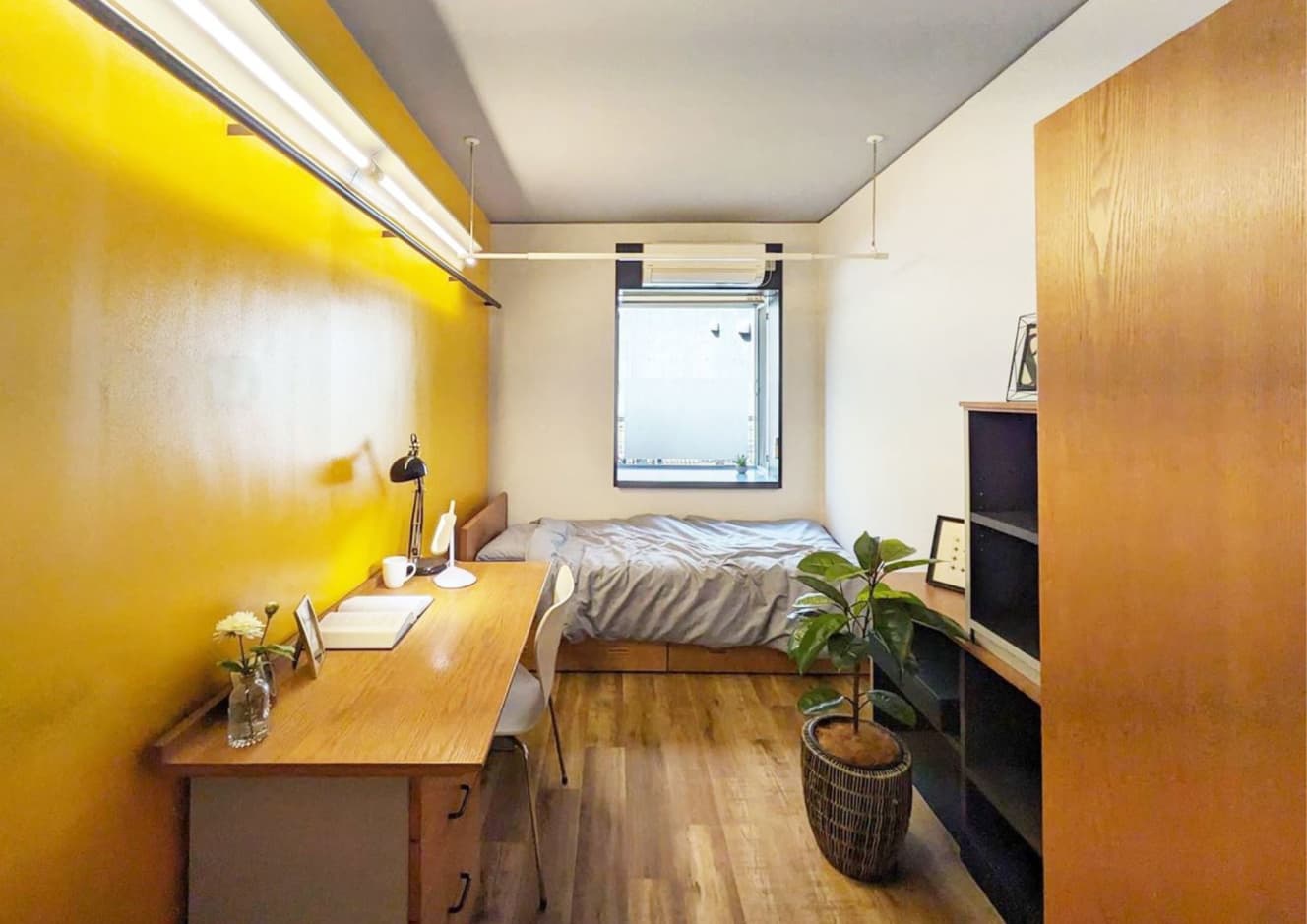
According to Takemoto, the type of person best suited to share-house living is, surprisingly, someone who gets lonely easily.
“When you live alone, you can come home and go through the entire day without speaking to anyone. In a share house, there are people who say, ‘Welcome home.’ You might eat meals together or engage in casual conversation. These may seem like small things, but the presence or absence of such human connections is more significant than people expect. I don’t think the motivation of wanting to connect with others has much to do with age.” (Takemoto, hereafter)
The unexpected role played by residents in their 40s
When people in their 40s and older consider moving into a share house, one concern often arises first: “Will I be able to fit in?” In fact, many prospective residents ask about the age range of current occupants during consultations. However, in most cases, these worries turn out to be unfounded.
“Many residents aged 40 and above actively participate in events and genuinely enjoy interacting with those around them. Younger residents, on the other hand, often seem more inclined to spend their free time as they please.”

In houses where resident interaction is especially lively, events are held almost every weekend. Some are organized by the operating company, while many are planned by the residents themselves. Share houses foster an atmosphere where people can honestly turn their desire to give something a try into reality.
One example is a resident in his 50s who had moved to Tokyo from a regional area. After closing down his private business, he moved into a share house hoping to start something new. At first, he was shy and spoke very little. However, a few months later, he began planning and hosting yoga classes on his own initiative.
“I think the share-house environment may have helped bring out a new side of him.”
It is also not uncommon for residents aged 40 and above to support international students—who may be navigating differences in language and culture—as if they were family members or close friends. In many cases, they also serve as a stabilizing presence that helps maintain a positive atmosphere throughout the house.
The evolution of share houses today
Share houses offer other attractions as well. You end up living under the same roof with people you never would have met if you had lived alone. Daily life with residents of different nationalities, professions, and ages is stimulating in itself. In properties with many foreign residents, international exchange naturally occurs, creating more opportunities to use English and other languages.
The occupations of residents are equally diverse, ranging from engineers and designers to chefs and yoga instructors. According to Takemoto, “For freelancers, professional connections can sometimes develop as well.” Unexpected collaborations may emerge from the everyday conversations shared among people from different industries.
Furthermore, some residents even develop romantic relationships. While there are couples who begin dating after meeting through house events, there are also cases in which couples continue living in the same share house after getting married, while maintaining separate rooms.

Another aspect that often goes unnoticed is the improvement in facility standards.
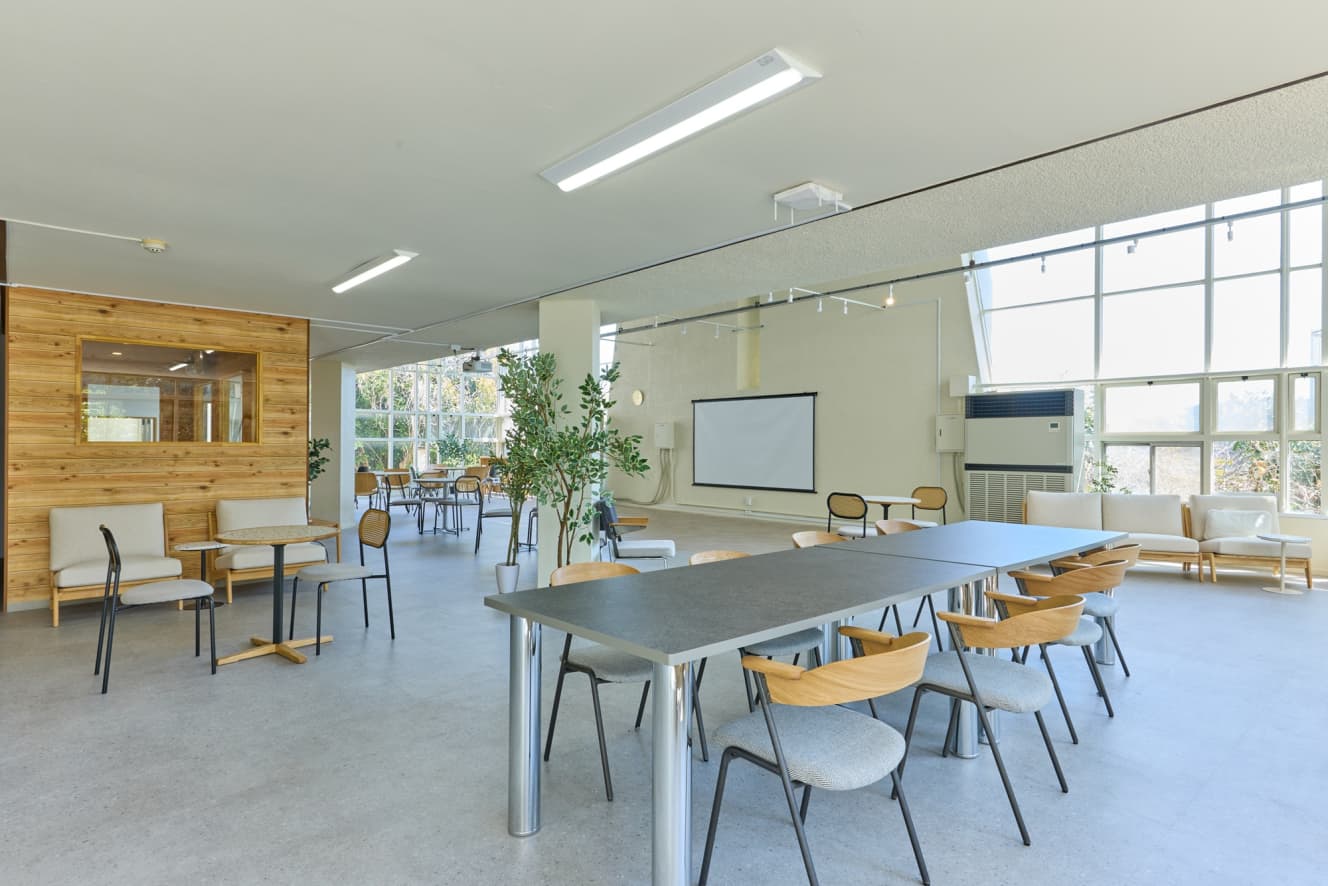
“I think that around 30 years ago, share houses had a reputation for being extremely cheap and dirty, but things have changed significantly. It’s no longer unusual to find properties equipped with gyms, theater rooms, large public baths, study rooms, and music studios. Some properties even have cleaning staff maintaining the common areas six days a week. We often hear comments like, ‘This is much cleaner than the share houses I had imagined.'”
That said, it cannot simply be said that share houses are cheap. Costs vary by area, and in central Tokyo, some properties can be priced similarly to conventional rental apartments.
So what criteria should people use when choosing a share house? According to Takemoto, the key factors are concept and scale.
At Oakhouse, there are concept-driven properties such as the “Gran Series,” which aims to provide a higher standard of living through superior locations and facilities, as well as gym-equipped properties centered around the themes of exercise and food. These themes tend to attract residents with similar values, making it easier to connect naturally through shared hobbies and interests.
The size of the property also matters. Larger properties provide opportunities to meet a wider variety of people, while smaller properties tend to foster a cozy, family-like atmosphere. Which environment is better depends entirely on the individual and the kind of lifestyle they hope to lead.
The wall faced by short-term residents
On the other hand, there are also people who discover that share-house living simply is not for them and move out after a short period. Common reasons include realizing that communal living is difficult for them, or finding that although they enjoy the lifestyle itself, the location is inconveniently far from work or school. In some cases, residents who moved into internationally oriented share houses found themselves struggling with language barriers, which negatively affected their comfort level.
There are also dilemmas unique to communal living. Examples include conflicts arising from differing daily schedules, having to wait for access to shared kitchens and bathrooms, or problems caused by residents who fail to follow house rules. In addition, because common areas such as kitchens and bathrooms are used by multiple people, it can be difficult to maintain them at one’s preferred standard of cleanliness.
“While I recommend searching based on concept and scale, the honest truth about share houses is that there are many things you simply won’t understand until you’ve actually lived there. That’s why I think it’s important to attend viewings and speak with house staff to get a genuine feel for the atmosphere firsthand.”

It has been roughly 30 years since the culture of share houses took root in Japan. Initially, they were strongly associated with being cheap and dirty. However, as the generation that first lived in them has grown older, share houses themselves have continued to evolve. The era of asking, “Are you still living in a share house even though you’re in your 30s?” is gradually coming to an end.
“Actually, I’ve been living in share houses myself for more than ten years. There have been so many occasions when I’ve been grateful for a lifestyle that allows me to connect with so many different people. That’s why I hope people won’t think, ‘I’m too old for that now.’ If you’re even a little interested and have the flexibility to change where you live, I would encourage you to give it a try. There are truly many things about share houses that you can only understand by experiencing them for yourself.”
Interview and text by: Motoko Abekawa
Motoko Abekawa is a freelance writer working mainly on the web. She is also involved in the production of books and corporate PR magazines. She does not specialize in any particular field, but covers a wide range of topics that intrigue her, including history, comedy, health, beauty, travel, gourmet food, and nursing care.
PHOTO: Courtesy of Oak House