“Our Showbiz Lives Go On” — Osaki Hiroshi and Ikushima Hiroshi Reflect on Their Entertainment Careers
Part I of the conversation: From the friendship with big-name entertainers to the inside story of the golden age of television... A hilarious talk between two friends who have been allies for 20 years!


“By the window〜〜 rolling over〜〜♪”
“Nice! That brings back memories〜〜”
While facing the camera by the window, freelance announcer Hiroshi Ikushima (75) hummed a parody of Kenji Sawada’s “Katte ni Shiyagare,” and Hiroshi Ōsaki (72), former chairman of Yoshimoto Kogyo HD, immediately added interjections.
In fact, these two are “20-year comrades,” with their sons being of the same generation. Both have over 45 years in the industry. The double Hiroshi, who have tasted both the bitter and sweet sides of the entertainment world, engage in a lively conversation.
First time speaking about the backstage of the controversy
Ikushima: “First of all, I would like to express my gratitude for being able to have a new radio program. About that incident—respected Mr. Mamutchi (Tamashiro Danshaku / Tamashiro Danjuro? [note: original:Tamashiro Danjūrō (Mushi Matsu Sanda-yū / “Poison Viper Sanda-yū”)]), who is 90 years old, told me, ‘Hiroshi, you idiot! What are you doing at your age?’ I received those scolding words. I deeply reflected on it, and I regret it. I truly thought I was foolish.”
— In January ’25, TBS Radio announced Ikushima’s regular program suspension, stating that a serious compliance violation had been discovered. After a period of self-restraint, Ikushima returned this April with a new program on Bunka Broadcasting.
Ikushima: “During the self-restraint period, I couldn’t sleep at night and took sleeping pills every day. I shaved my head as a way to remind myself of my determination to start over from scratch.
I had been thinking for about a week about what to say for the first line of the new program, but when I actually stood in front of the microphone, I couldn’t speak. And yet, for some reason, tears kept coming. It became a complicated feeling mixed with happiness and nervousness about returning. So instead of reading a script, I was allowed to speak what I was feeling at that moment. When many people said ‘Welcome back,’ I was very happy.”
Ōsaki: “What is wrong is wrong, and if you don’t properly breathe the air of the times, you can’t survive in the entertainment industry.”
Ikushima: “Mr. Ōsaki also contacted me right after the incident. His words, ‘Reflect on yourself and now it’s important to endure,’ really struck a chord with me. Now I am working hard every day, thinking of myself as a ‘75-year-old beginner driver.’”
Ōsaki: “I may be younger, but I’ve also been through enough hardship (laughs).”
Ikushima: “No, really (laughs). My relationship with Mr. Ōsaki goes back about 20 years. It started because our sons happened to study in the same place in America. I happened to see him at Narita Airport when sending them off and greeted him.”
Ōsaki: “That brings back memories.”
Ikushima: “Mr. Ōsaki’s children are quite wild too. Once, when he came to my house, he got completely drunk and threw up, and my wife cleaned it up (laughs). He also attended various events like birthday parties at our home.”
Ōsaki: “I apologize for that (laughs). I didn’t attend much myself, but our families have been close. I think Ikushima-san is the only person in the industry I can talk so casually with.”
Ikushima: “That’s an honor. Oh, why don’t you come on my radio show sometime?”
Ōsaki: “Is that okay? Absolutely, I’d love to.”

Buying an elephant just for an interview!?
Ikushima, a nationwide popular announcer and famous MC, and Ōsaki, who served as manager of “Downtown” and later led Yoshimoto Kogyo’s expansion into Tokyo, both ran through the very center of television’s golden era.
Ikushima: “The year I left TBS was 1989, right in the middle of the bubble economy. The television industry back then was incredible.”
Ōsaki: “Whether it was London or Paris, you could expense everything no matter where you went. I heard there was even a media outlet that needed an elephant for an interview, so they actually went and bought one. I wonder what kind of reason they used to issue a receipt for an elephant (laughs).”
Ikushima: “When the no-panty shabu-shabu restaurant became a topic during the Ministry of Finance entertainment scandal, TV people all went there saying, ‘It’s for social education!’ pretending it was research.”
Ōsaki: “I went too〜 it brings back memories.”
Ikushima: “When the girls brought meat, air would blow up from the floor, and the miniskirts would flutter up. I was impressed they even thought of such a thing.”
Ōsaki: “Mr. Ikushima you’re not really reflecting at all (laughs).”
Ikushima: “No, I mean back then! Back then. It cost like 50,000 yen per visit, but it was the golden age of television. They happily expensed it. And the meat there was actually delicious.”
Ōsaki: “So there were no cuts corners at all, huh.”
Ikushima: “Nice one (laughs). Back then, if a show’s ratings went up, you’d get rewarded with lavish nights in Ginza clubs or overseas trips. I was especially amazed by Ms. Akko (Akiko Wada)’s extravagance.
When I was hosting ‘Akko ni Omakase!’ (TBS), Akko negotiated with the station and won a rule: if ratings exceeded 15%, Hawaii; if 20%, Australia. The reward trips were huge celebrations. Over 30 staff members would rent a hotel hall and party all night. Akko herself would finish about two 750ml bottles of whisky alone—truly a heavy drinker.”
Ōsaki: “That sounds fun〜”
Ikushima: “Akko also helped me privately. Once in Guam, she got drunk and argued with her husband, causing a couple’s fight. I had to mediate, but she ran out of the hotel halfway through, and we ended up searching for her around midnight Guam (laughs).
‘Akko ni Omakase!’ ended this March, and I told her thank you for your hard work. It really felt like an era had ended.”
Ōsaki: “As a manager, I don’t interact directly with many talents. Recently I appeared on Ken Matsudaira’s radio show… and Noriko Sakai and Tomomi Nishimura were there, and I still get nervous like ‘wow, it’s Noripi, Tororin’.”
Ikushima: “That can’t be true. Once I visited the dressing room of ‘Weekly Fuji TV Hihyo.’ When Mr. Ōsaki arrived, executives from all over the station gathered around. I thought, he’s one of the bosses of the entertainment world.”
Ōsaki: “My life story is probably better known by FRIDAY than by me, right? From the Shimada Shinsuke gangster association scandal to dark job involvement scandals, I’ve been featured 17 times (laughs). I didn’t expect the 18th time would be such a fun interview.
I still golf with Shinsuke a few times a year. He’s now healthy, training every day, and seems to be living happily with close friends.”
Ikushima: “He works hard at play. Always keeping antennas up for interesting things is why he could come up with good programs. My ability to answer radio questions quickly came from constantly playing seriously and being exposed to trends and new things.”
Ōsaki: “Compliance is important and must be followed 1000%, but over a 100-year scale, compliance can also kill entertainment.
Of course there are things to reflect on, but there was culture that could only be born in the bubble era. Even now with compliance and a bad economy, I think people need to play more. If you only do proper things, life isn’t fun.”
To be continued in Part 2: What does it mean to stay active for life? Ōsaki Hiroshi & Ikushima Hiroshi reveal the meaning of you’re already making a profit just by being alive.

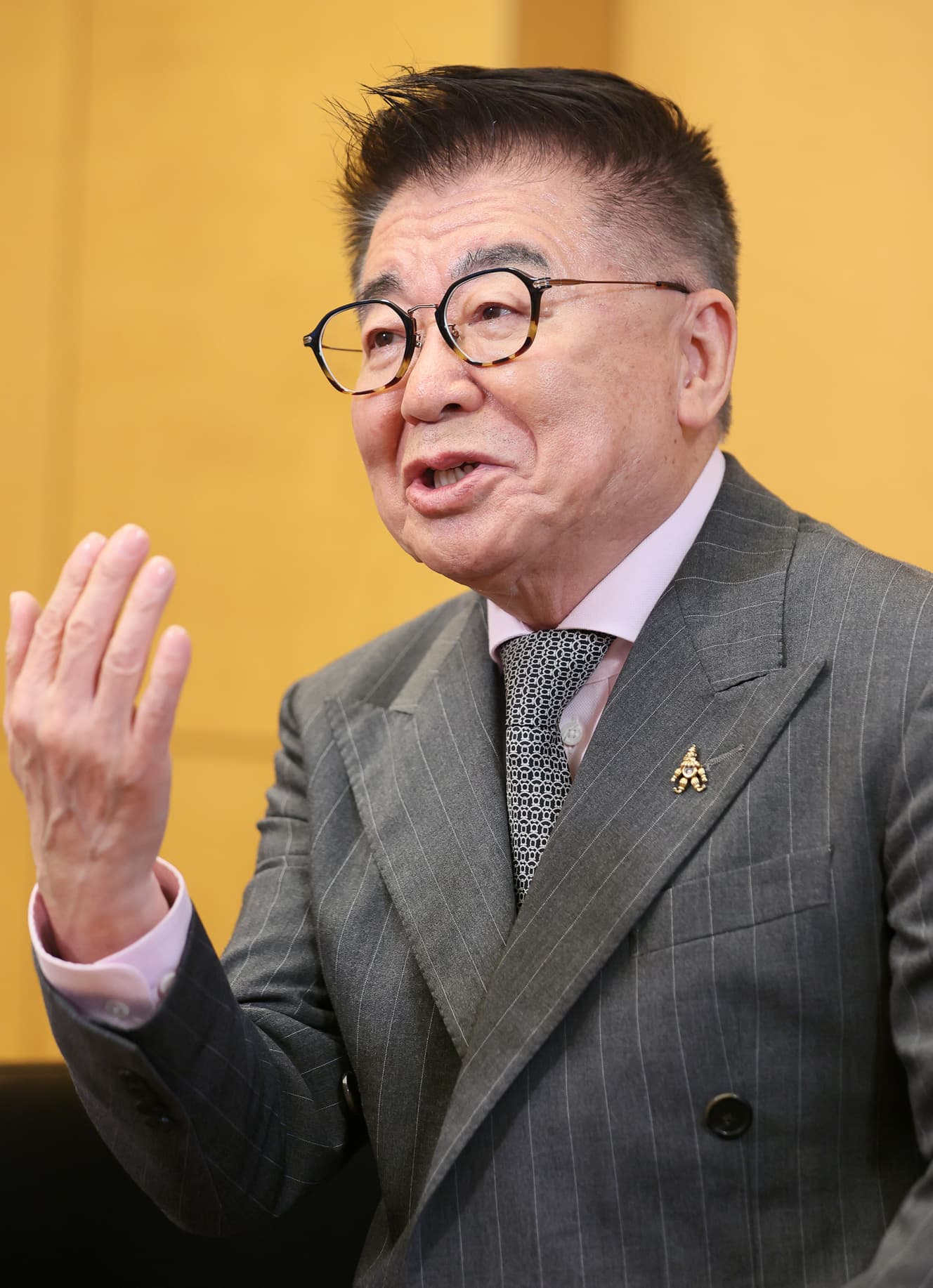
PHOTO: Takehiko Kohiyama