No Human Bear Injuries for 16 Years—Inside Karuizawa’s Unusual Wildlife Management Approach


Capture efforts have reached their limit dogs drive away bears!
Bears are waking from hibernation, and sighting reports are coming in from various regions. This year, the government formulated a bear damage countermeasure roadmap, and the requirements for culling bears have been specifically relaxed. The policy has shifted from protection to management, aiming to reduce the population. However,
“I think it is difficult to reduce bear damage through capture alone.”
Says Masaru Koyama, wildlife countermeasures specialist for Karuizawa Town. Karuizawa Town also recorded 170 bear sightings last year, but there have been zero human injuries in residential areas for 16 consecutive years.
What exactly are they doing?
“In Karuizawa Town, bear damage began around 1998. So from 2000, we commissioned the eco-tourism specialist group, NPO Picchio, and launched full-scale bear countermeasures.
However, neither trapping nor scaring bears with firecrackers or fireworks produced sufficient results. Around that time, the head of Picchio learned about bear dogs, which were reportedly achieving good results in North America.” (Koyama, same below)
Bear dogs are trained working dogs for bear countermeasures that, when they detect a bear’s scent, bark loudly and drive the bear back into the depths of the forest. Picchio introduced them in 2004.
In Karuizawa Town, when a bear appears near human settlements, it is tranquilized, fitted with a transmitter, and released back into the mountains. From June to October, the movements of transmitter-equipped bears are monitored daily, and when they approach human areas, bear dogs and specialists called bear dog handlers are dispatched to drive them back into the mountains.
Toward zero bear damage with special garbage bins!
However, introducing bear dogs alone is not a complete solution.
“The most important thing is to identify why bears are appearing. When there is a sighting report, we work with Picchio to investigate the site and determine what the bear is fixated on. In Karuizawa, garbage was the most common attractant.
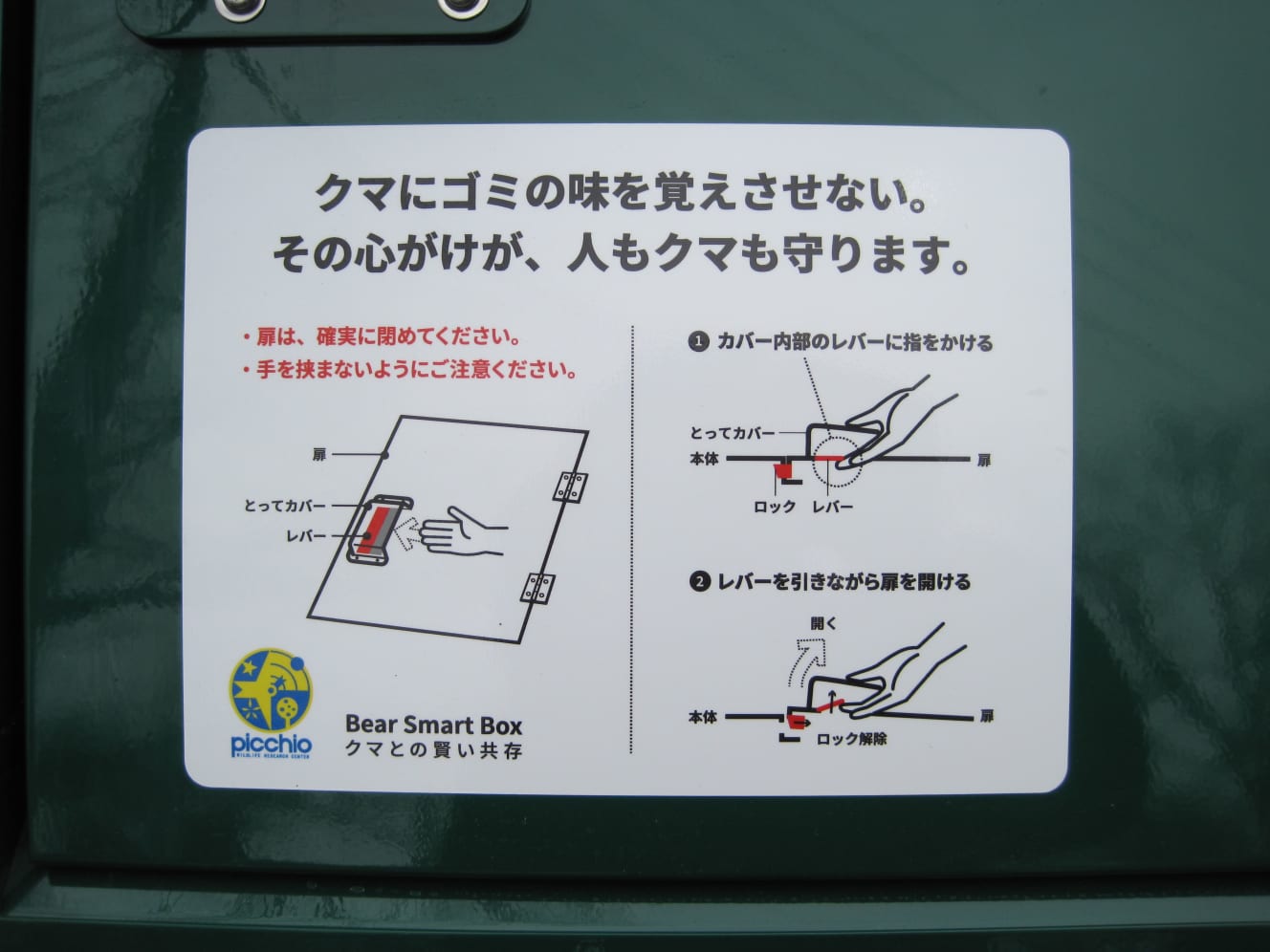
So Picchio developed bear-resistant garbage bins. They were tested at the Noboribetsu Bear Park and confirmed to be effective, so in cooperation with the town, they were installed in areas where bears were likely to appear.”
Garbage bins that had been damaged by bears were replaced in 2008 with bear-resistant models, and from 2009 onward there have been zero incidents at public garbage collection sites.
And it is not just about changing garbage bins.
“Bears are attracted by food smells, so food should not be left outdoors. Even dog food left outside can be dangerous. There was even a case where bears broke into a storage shed and ate miso that had been stored inside.”
You can avoid leaving food or dog food outside, but what about bears breaking into storage sheds?
“We asked residents to store items in sturdy, lockable places that bears cannot easily open.”
If cut trees are left in the yard, they rot and attract ants. Ant nests are also a food source for bears.
“We ask people to clean up fallen trees.”
At nearly 1,000 meters above sea level in Karuizawa, there are no persimmon trees, but there are fruit-bearing trees such as mulberry and cherry.
“We advise people living near such trees that bears may come and to remain cautious.”
Such extremely detailed measures are being taken. Even so, bears still appear. Bear dogs are effective in driving away bears that enter human settlements back into the mountains.

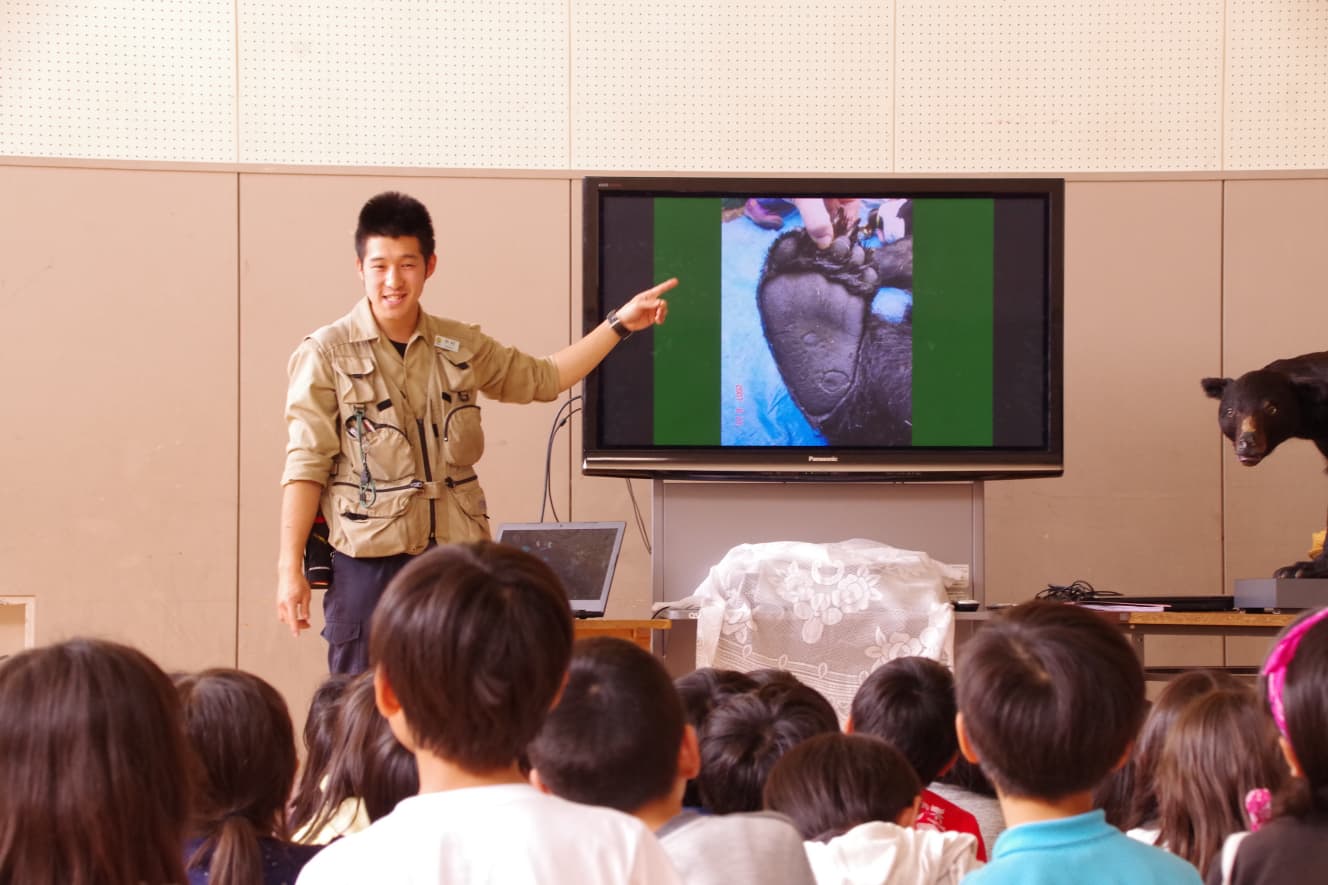
Bear classes at elementary schools
“No matter how many bears are captured, if there is food available for them, they will keep appearing one after another. If you remove food sources, then even if bears enter town, they will just pass through. Bear dogs are only one part of a comprehensive bear management strategy.”
In addition to bear dog deterrence and managing attractants that draw bears in, the town is also focusing on educational awareness activities.
“We conduct lessons about bears in schools, and we distribute zoning maps showing areas where bears are likely to appear to residents. Since 2000, we have also conducted acorn fruiting surveys, and we hold reporting sessions once or twice a year, explaining things like because fruiting is poor this year, bear appearances are more likely.”
Even now, outside residential areas, there are cases of people going into the mountains for wild vegetables being attacked by bears. However, since 2011, there have been no human injuries in residential areas. It has been 26 years since Karuizawa Town began bear countermeasures in 2000. It seems it took considerable time before residents’ safety and security could be ensured.
Karuizawa Town is serious. While I think it is admirable, I also feel a sense of gloom at the fact that such extensive measures are necessary just to eliminate bear damage. But if it was possible in Karuizawa Town, then surely other municipalities can do it too!


Interview and text: Izumi Nakagawa