Central Tectonic Line Raises Fears of Potential Simultaneous Mega Earthquake Crisis
The Chishima Trench and the Japan Trench, which this magazine had been concerned about, experienced a M7.7 earthquake on April 20, and there is one of the world's largest fault lines in western Japan that experts are sounding the alarm about...


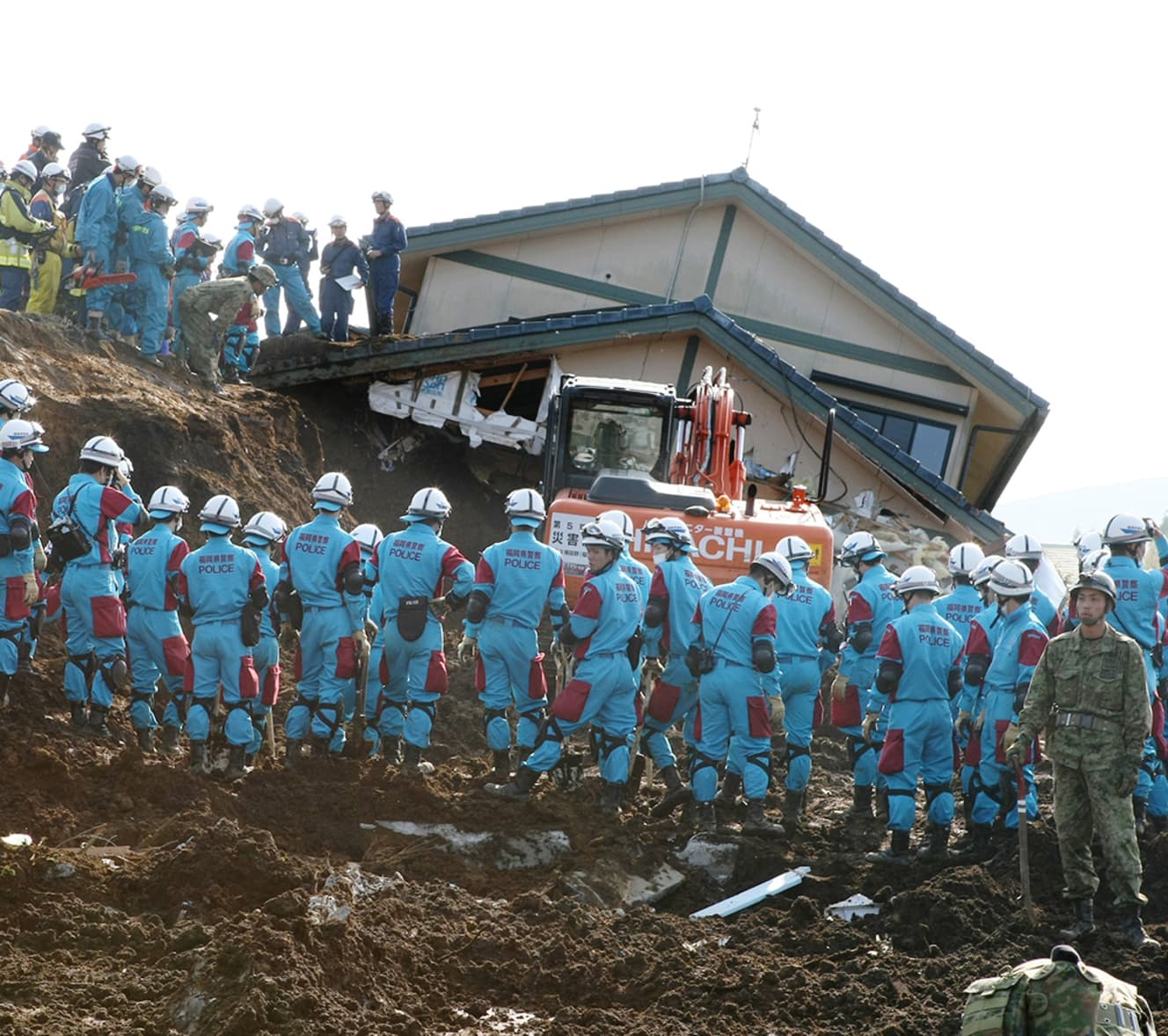
More massive earthquakes loom
We had already been concerned about this area, and now a major earthquake has become reality.
On April 20, a magnitude (M) 7.7 earthquake occurred along the Kuril Trench and Japan Trench off Hokkaido and Sanriku. A strong seismic intensity of upper 5 was recorded in Hashikami Town, Aomori Prefecture, and a tsunami of up to 80 cm struck Kuji City in Iwate Prefecture.
Professor Emeritus Hiroki Kamata of Kyoto University, who had warned in this magazine (FRIDAY, April 17–24 issue) that a major earthquake along the Kuril and Japan Trenches was imminent, offers the following explanation (comments are by Prof. Kamata):
“The Kuril Trench and Japan Trench lie on the boundary between the Pacific Plate and the North American Plate, and stress has been accumulating there since a mega-earthquake occurred about 400 years ago. In the future, these trenches may produce an M9-class super earthquake exceeding the Great East Japan Earthquake, with strong shaking of seismic intensity 7 and a massive tsunami approaching 30 meters, striking the Pacific coasts of Hokkaido and Tohoku. It is also known that before a megaquake at a plate boundary trench, inland seismic activity becomes more active. Areas beyond the coastline also require caution.”
Indeed, inland earthquakes have been frequent in Hokkaido and Tohoku. Examples include the 2003 Northern Miyagi Prefecture earthquake series (M6.4), the 2008 Iwate–Miyagi Inland Earthquake (M7.2), and the 2018 Hokkaido Eastern Iburi Earthquake (M6.7). It is believed that the subducting oceanic plate is affecting and triggering inland faults.
The danger is also approaching western Japan.
“Since the 1995 Great Hanshin–Awaji Earthquake (M7.3), seismic activity has increased in western Japan as well, including the 2016 Kumamoto Earthquake (M7.3) and the 2018 Northern Osaka Earthquake (M6.1) (see Figure). In particular, there is a super-large fault system that requires special attention. It is the Central Tectonic Line, a world-class fault complex extending over 1,000 km from Kyushu to Kanto.”
Earthquakes that affect each other
Because the Central Tectonic Line is long, earthquakes can occur frequently in many locations along it. It is said that there is no way to rule out the possibility of a major earthquake occurring at any time or place.
“A key feature is that it does not end as a single earthquake. For example, after the Keicho Iyo Earthquake (estimated M7.0) on September 1, 1596, the Keicho Bungo Earthquake (M7.0) and the Keicho Fushimi Earthquake (M7.5) occurred in rapid succession within just a few days. When one segment of the Central Tectonic Line or its extension ruptures, it can affect other segments, leading to simultaneous, cascading major earthquakes.
The Earthquake Research Committee of the government has designated areas along the Central Tectonic Line that are considered especially dangerous. These faults extend approximately 440 km from the Kinki region to Kyushu, including areas such as Mount Kongō in Nara Prefecture, the Gojō Valley in Wakayama Prefecture, Mount Ishizuchi in Ehime Prefecture, and the Yufuin area in Oita Prefecture. The 2016 Kumamoto Earthquake also occurred on the Oita–Kumamoto Tectonic Line, which is connected to the Central Tectonic Line. There is a risk that large earthquakes could occur in succession across these fault systems. This is why the Central Tectonic Line is called a nest of earthquakes.”
Local governments estimate the potential death toll if a major earthquake occurs along the Central Tectonic Line: over 4,300 in Nara Prefecture, up to 12,750 in Ehime Prefecture, and up to 30,000 in Oita Prefecture. The nest of earthquakes could cause catastrophic damage across western Japan.
“What the increasing inland seismic activity, including the risk along the Central Tectonic Line, may be indicating is the possibility of a magnitude 9-class Nankai Trough mega-earthquake. This earthquake, which could send massive tsunamis across regions from Kyushu to Kanto and cause up to 290,000 deaths, is estimated to occur around the mid-2030s based on past crustal uplift patterns. Historically, inland earthquakes have increased about 40 years before Nankai Trough earthquakes. In fact, before the 1944 Showa Tonankai Earthquake (M7.9) and the 1946 Showa Nankai Earthquake (M8.0), inland earthquakes also increased sharply.”
The Nankai Trough earthquake, which could affect about half of Japan’s population—around 68 million people—is said to be preceded by such activity. Earthquakes along the Central Tectonic Line, considered its foreshocks, may occur in a simultaneous and cascading manner.

From the May 15 and 22, 2026 issue of “FRIDAY”
PHOTO: Shinji Hamasaki