Freelance Announcer Aika Kanda Recalls Seeing North Korea During Visit
No.115] Me, Pink, and Sometimes New York


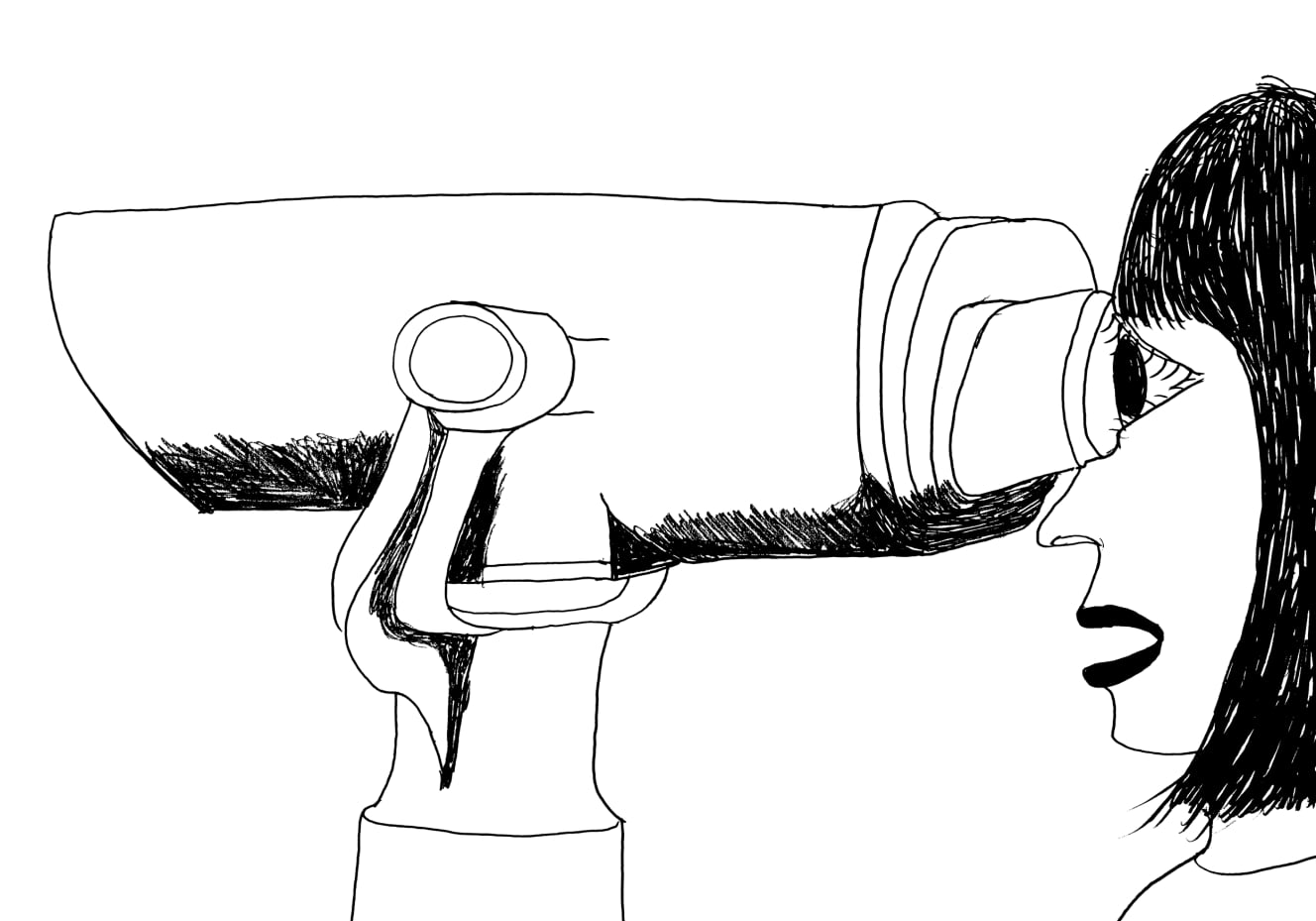
An inexplicable country
In mid-April, I went on a two-day trip to South Korea. The purpose of this trip was to see North Korea with my own eyes. Two years ago, a Starbucks opened at an observation deck in South Korea overlooking North Korea. It is only 1.5 km away from North Korea—if there were a road, it would be a 20-minute walk. After seeing it in the news, I had always wanted to visit someday.
For me, North Korea had been an incomprehensible presence since childhood. Why don’t they return the Japanese abductees? Why do they keep launching missiles? Why can’t we even engage in dialogue? I wanted to reach the source of those “whys” by seeing the land of North Korea itself. I have long aspired to be someone like Yuko Ando, a news anchor who is also a journalist. However, after waiting 23 years for an opportunity to work in news programming, I still haven’t felt any sign of it. So I decided to see North Korea on my own and visit that Starbucks.
Since the observation deck can only be reached by car, I joined a tour with a Japanese-speaking guide. There were 13 people in the group, all Japanese.
It took about an hour and a half from Myeongdong. During the ride, the guide explained the history of South and North Korea. Having never properly studied world history, I was surprised by many things, and the painful history weighed heavily on my heart.
Just as the guide said, “We will arrive soon,” the car stopped. The guide took everyone’s passports and went to a small hut where a line had formed. When he returned, the car started moving again and soon stopped in front of a large gate. Several fully equipped soldiers approached us. It was a checkpoint.
(I wondered, “Just going to Starbucks requires such strict security?”) But then I finally understood. We weren’t simply going to Starbucks—we were approaching the military border. Anywhere near the border between South and North Korea is extremely sensitive for South Korea. I had known that intellectually, but this was the first time I truly felt it.
Eventually, we reached the mountaintop. The Starbucks was indeed there. Although the sign was smaller than usual, the interior was a familiar Starbucks. The side facing North Korea was made of large glass panels, with sofas arranged toward that direction. It was already full of tourists from various countries.
I bought a coffee and went outside. Below the observation deck, a large, muddy beige-colored river flowed. The center of that river was the military demarcation line. Beyond it was North Korea.
Most of the landscape was forest, but directly ahead was a small town. About one-third was farmland, the roads were unpaved, and there were only about fifteen white, apartment-like buildings scattered around—each about five stories tall.
A feeling not found in Japan

Her first book, ” Where are you going on the road called Royal Road?” is now on sale by popular demand!
From “FRIDAY” May 15 and 22, 2026
Illustration and text by: Aika Kanda