Food Consumption Tax Cut Plan Stalls as PM Sanae Takaichi Faces Criticism Over Inflation Response and Policy Gridlock
Losses continue in gubernatorial and mayoral elections nationwide


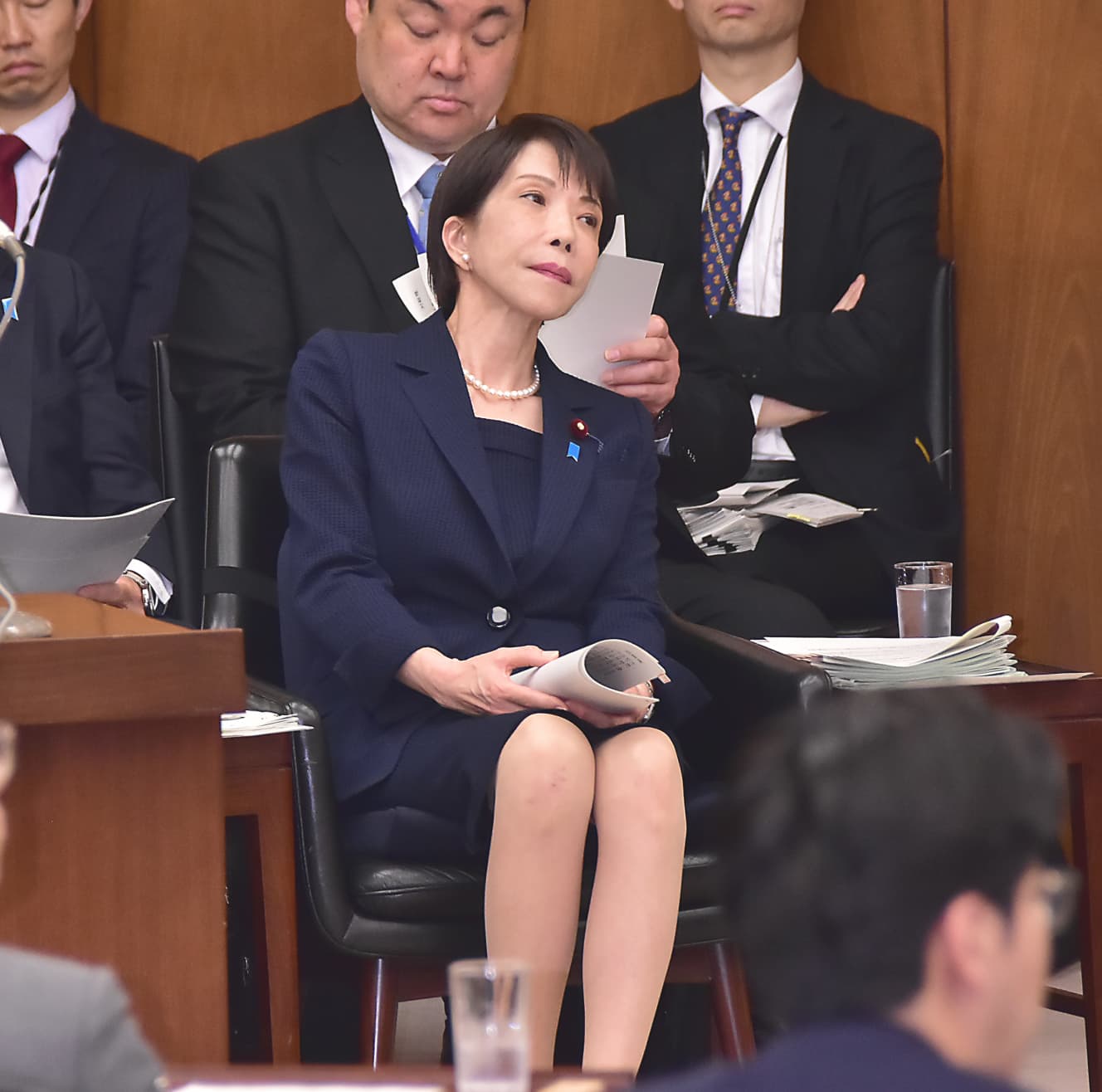 In the committee, she emphasized that the shortage of naphtha—an issue directly linked to rising prices—is being “resolved swiftly.” However, as she gazes ahead with a pensive expression, the question remains: is there truly a clear path toward solving inflation?
No breakthrough in sight
With a vacant expression, gazing vaguely into empty space—on April 24, Prime Minister Sanae Takaichi (65) appeared visibly fatigued during a session of the House of Representatives Committee on Health, Labour and Welfare. It has been six months since the Takaichi Cabinet was formed on April 21, yet challenges continue to pile up.
According to a political reporter from a national newspaper, “The biggest concern—rising prices—shows no sign of abating. Thanks to measures carried over from the Ishiba administration, such as the abolition of the provisional gasoline tax rate and subsidies for electricity and gas, inflation had temporarily slowed. However, the consumer price index in March rose again. The roughly 7,000-yen subsidies for electricity and gas that had been provided in March have ended, and there is still no clear resolution to tensions in the Middle East. Utility costs are expected to rise further. Urgent countermeasures are required.”
However, it is difficult to say that Prime Minister Takaichi has presented concrete solutions. Her stated long-cherished goal of eliminating consumption tax on food items within the fiscal year is being discussed through a newly established national council, but no path toward consensus is in sight. Journalist Tetsuo Suzuki states, “Her seriousness is not being conveyed.”
He explains, “Looking at the council’s minutes, about 80% of the discussion centers on refundable tax credits, not tax cuts themselves. In the first place, there is no need to go through such a council designed merely for consensus-building; this could be debated directly in the Diet. With her current strong majority, she could push it through if she were truly serious, yet she does not take that step. There is no sense of determination that she will definitely accomplish it.”
Takaichi has long cited the time required to modify cash register systems as the biggest obstacle to implementing a consumption tax reduction. A proposal to reduce the tax rate by 1%, which could be implemented within a few months due to relatively simple system changes, has also begun to be considered, but its realization remains uncertain. Professor Jun Kitajima of the Social Design Graduate School of Management comments:
“The Takaichi administration is maintaining high approval ratings, and since there are no national elections until the summer of 2028 Upper House election, there is no immediate need to rush into tax cuts. It could also be used as a trump card if approval ratings decline. Even if the issue of cash register systems is overcome, another ‘reason why it cannot be done’—such as protecting the restaurant industry—will likely emerge.
The real issue is inflation. It will become especially pronounced in the summer. Naphtha inventories in Japan, which affect many everyday products as a key plastic raw material, are reaching a critical shortage level, and prices across the board will rise. Whether the government can present hope to the public before then will be the true test.”
No Mercy for Veteran Councilors
From the May 15-22, 2026 issue of “FRIDAY”
PHOTO: Takeshi Kinugawa