Playback ’06: The Devoted Father Who Turned Tragic — The Dark Reason Behind the 15th-Floor Incident


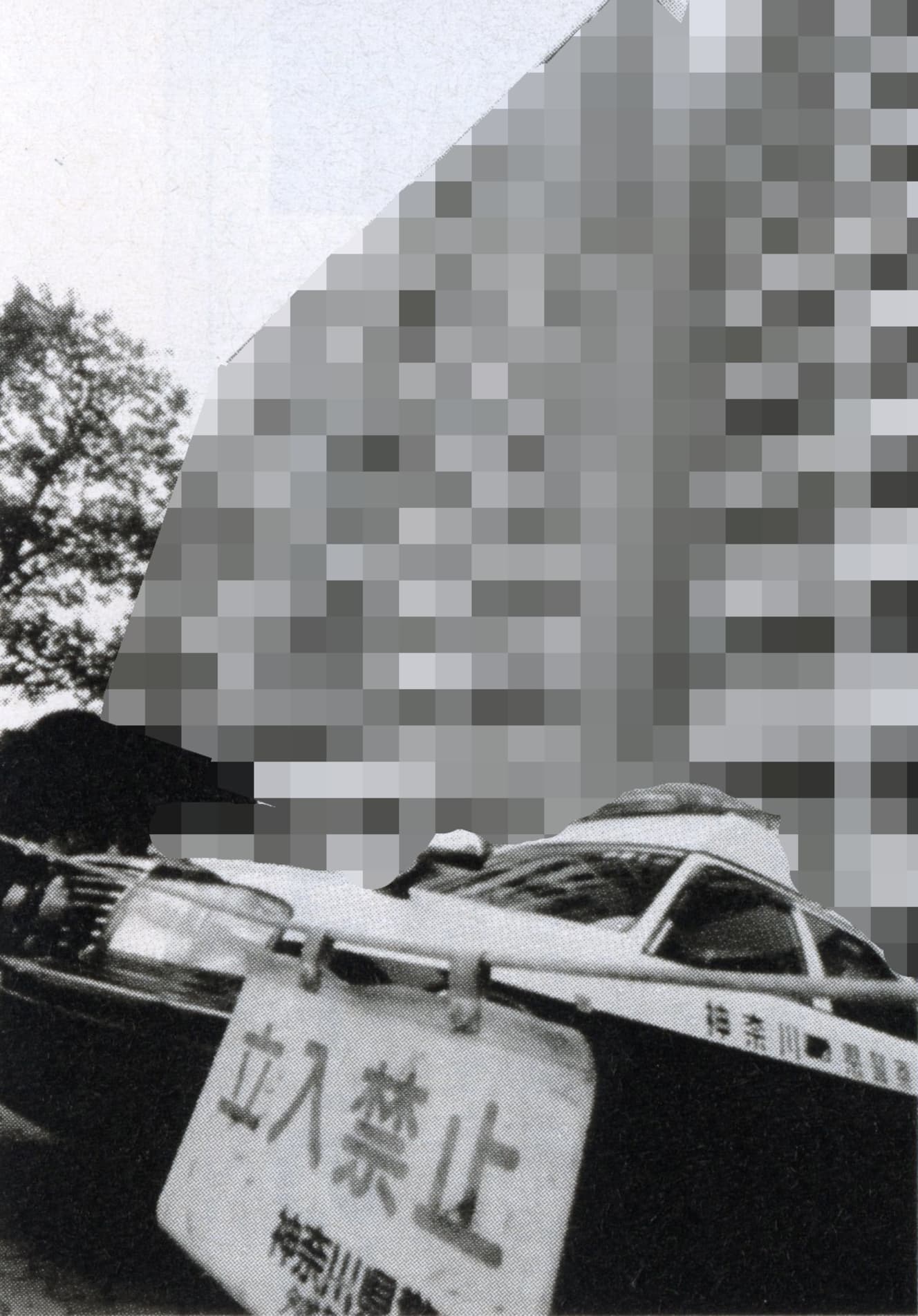
Targeting only vulnerable people such as women and children
Looking back at what “FRIDAY” reported 10, 20, and 30 years ago. Revisiting topics that were once widely discussed under the series “Playback FRIDAY.” This time, it covers the April 21, 2016 issue from 20 years ago, titled:
“Why Did a Devoted Father Turn Into a Monster? Kawasaki Third-Grade Fall Death Incident: Suspect’s Attempted Serial Murder.”
On April 1, 2006, the Kanagawa Prefectural Police arrested an unemployed man, Koichi Sugiura (alias, 41 at the time), on suspicion of attempted murder and unlawful entry. He was suspected of attempting to throw a female cleaning worker (68) off the 15th floor of a 15-story apartment building in Tama Ward, Kawasaki City on March 29.
Nine days earlier, on the 20th at around 12:50 p.m., a third-grade elementary school boy (9), referred to as A, who lived in the same building, had fallen to his death from the same 15th floor. Because there were no fingerprints of the boy on the handrail, police had been investigating the possibility that he had been thrown. During the investigation into the incident on the 29th, Sugiura saw released surveillance camera footage and turned himself in to the Tama Police Station. He also confessed to killing the boy.
(Information in 《 》 is quoted from the original article; titles and affiliations are as of the time.)
On the morning of the 29th at around 9 a.m., Sugiura illegally entered the apartment building. About 30 minutes later, he deceived a female cleaning worker on the first floor by telling her there was trash on the upper floor, and took her to the 15th floor. Once there, he tripped her and tried to lift and throw her off the building, but she resisted and he fled. The publicly released footage showed him escaping the scene.
During police interrogation, Sugiura reportedly stated: “I thought if I dropped someone from the highest floor, they would die. I was targeting women and children,” and “Since the 20th worked out, I went there intending to kill from the start.” He had no prior acquaintance with either the boy or the cleaning worker.
The attack, which targeted only vulnerable women and children, could have developed into an indiscriminate serial murder case. What kind of person was responsible for such an atrocity? A closer investigation into his surroundings revealed an unexpected true face.
《“He was very friendly and energetic. He would skip rope in a T-shirt and go walking with his wife,” said a neighborhood housewife.
He also wrote columns in the email newsletter of a curtain shop where he worked as a manager until the previous year. In it, he wrote: “Nothing makes me happier than seeing the moment when customers are pleased with the curtains I sell.” He also expressed concern about whether injuries from his daughter’s accident would leave scars, and wrote that he loved playing with children after seeing families visiting the store—clearly showing his affection for children.》
“I suddenly said I was quitting.”
However, starting around 2003, Sugiura’s life was hit by a series of misfortunes. His wife’s family home caught fire, his father became bedridden after a cerebral infarction, and his eldest daughter was hospitalized after a traffic accident. Around the same time, he also took out a 35 million yen mortgage on his home, which may have added to his burden. As his mental strain accumulated, his behavior reportedly began to change noticeably around 2004. In an article from that time, the former president of his workplace testified:
《“He told me he couldn’t sleep and was going to see a doctor. Around 2004, his work also started to suffer. He would come to the office every morning, but as soon as the female staff arrived, he would leave somewhere. He would pretend to be out doing sales visits, but he was just wandering around aimlessly. His daily reports sometimes contained false sales records and even fabricated expected payment dates from clients. While the company was already concerned about this, in August of the following year he suddenly said he was quitting.
Despite several attempts by the president to persuade him to stay, Sugiura’s decision was firm, and on August 20, 2005, he sent a curt resignation email reading: ‘To the President: Thank you for your hard work. Although it was a short period, I appreciate everything you did for me.’ He did so without consulting his wife at all.”》
He left the company in September, and two months later was hospitalized for depression. Although he was discharged on March 8, he committed the crime in less than two weeks afterward. At the time, the magazine also investigated the hospital, but received no comment.
During questioning, Sugiura’s speech and behavior were coherent, and the prefectural police concluded he was criminally responsible. At that stage, there were no plans for a psychiatric evaluation. However, there were still puzzling aspects to his actions. The article from that time pointed out:
《“Even though he himself sent a voluntary resignation email, he gave contradictory statements claiming he had been laid off. He also repeatedly visited the apartment building to search for potential victims, and while he avoided the building manager’s office when fleeing—suggesting planning—he nevertheless committed repeated acts in the same building despite the high risk of being noticed by residents. Even the core motive remains unclear.” (social affairs reporter)》
Why did a devoted father, who once cared deeply for his daughter, transform into a demon who threw a defenseless elementary school child to his death?
Can criminal responsibility be questioned?
Subsequent investigations revealed that Sugiura had also attempted to commit suicide by jumping from the same apartment building where the incident occurred. In October 2005, the month after he resigned from his company, he went to the 15th floor of the same building and tried to jump, but reportedly stated, “When I looked down from the corridor, I got scared and stopped.”
It also emerged that immediately after the attempted murder on March 29, he had gone to another 13-story apartment building in Asao Ward, Kawasaki City and attempted to throw a fourth-grade elementary school boy off, and he was re-arrested on suspicion of attempted murder and other charges.
The trial of Sugiura, who was charged with murder and other crimes, began at the Yokohama District Court on July 21, 2006. In its opening statement, the prosecution described the motive as follows:
“He harbored growing envy toward families living happy lives, and was driven by the desire to destroy families by killing children and women indiscriminately. He believed that by throwing victims from high-rise apartments, he could kill without staining his own hands with blood.”
According to the indictment, Sugiura encountered the boy, Yuuki, in the corridor on the 15th floor of the building. He lied, saying, “There is a cockroach on your school backpack,” made the boy remove it, then lifted him by placing his hands under the boy’s arms and carried him on his shoulders before throwing him approximately 40 meters down into a planted area, killing him.
Sugiura admitted to the charges, saying “That is correct,” but the trial became focused on whether he was criminally responsible.
On March 6, 2009, the Yokohama District Court handed down its verdict: life imprisonment.
The presiding judge stated that the crime was committed “out of resentment toward seemingly happy families compared to his own circumstances, with the aim of destroying those families, and with a desire to relive the sense of satisfaction he felt at the time,” and described the acts as truly cruel and extremely malicious, adding that “the offenses were essentially random in nature, causing great anxiety in society, and his criminal responsibility is extremely serious.”
Regarding the psychiatric evaluation conducted during the trial, the court concluded that “the defendant’s personality and his financially and domestically strained circumstances had a significant influence on the crimes, and it cannot be said that mental illness had a major impact,” rejecting the defense’s argument.
After sentencing, the judge reportedly told him, “Live your future life while praying for the souls of the victims,” to which Sugiura responded in a faint voice, “Yes.”
The defense appealed the decision, but Sugiura withdrew the appeal on April 21, and the sentence was finalized. He later sought restoration of his right to appeal and filed again, but the higher court rejected this request.
 Sugiura (pseudonym), sent to prosecutors on April 2, ’06. When he was brought back to the Tama Police Station in heavy rain, his eyes looked vacant (from the April 21, ’06 issue).

PHOTO: Takahiro Kagawa (1st), Mihiro Kikuchi (2nd)