Shohei Ohtani Off to Career-Best Power Start, Driven by Improved Lower-Body Mechanics


The reason behind his strong performance as a batter
The Dodgers’ leadoff hitter easily sent a 157 km/h fastball thrown by Jacob deGrom (37, Rangers)—a two-time Cy Young Award winner whose overpowering pitching and blazing fastball have earned him the nickname “The Terminator”—into the right-field stands.
On April 13 (JST), Shohei Ohtani (31) hit his 5th home run of the season, a leadoff home run in consecutive games.
“He hit 4 home runs after 15 games last season, when he set a personal best of 55 homers, but this year he’s already at 5 at a faster pace. While his pitching as a two-way player tends to get the spotlight, he is also off to his best start as a batter, including breaking Ichiro’s (52) record for the longest consecutive-game on-base streak by a Japanese player,” says a local reporter.
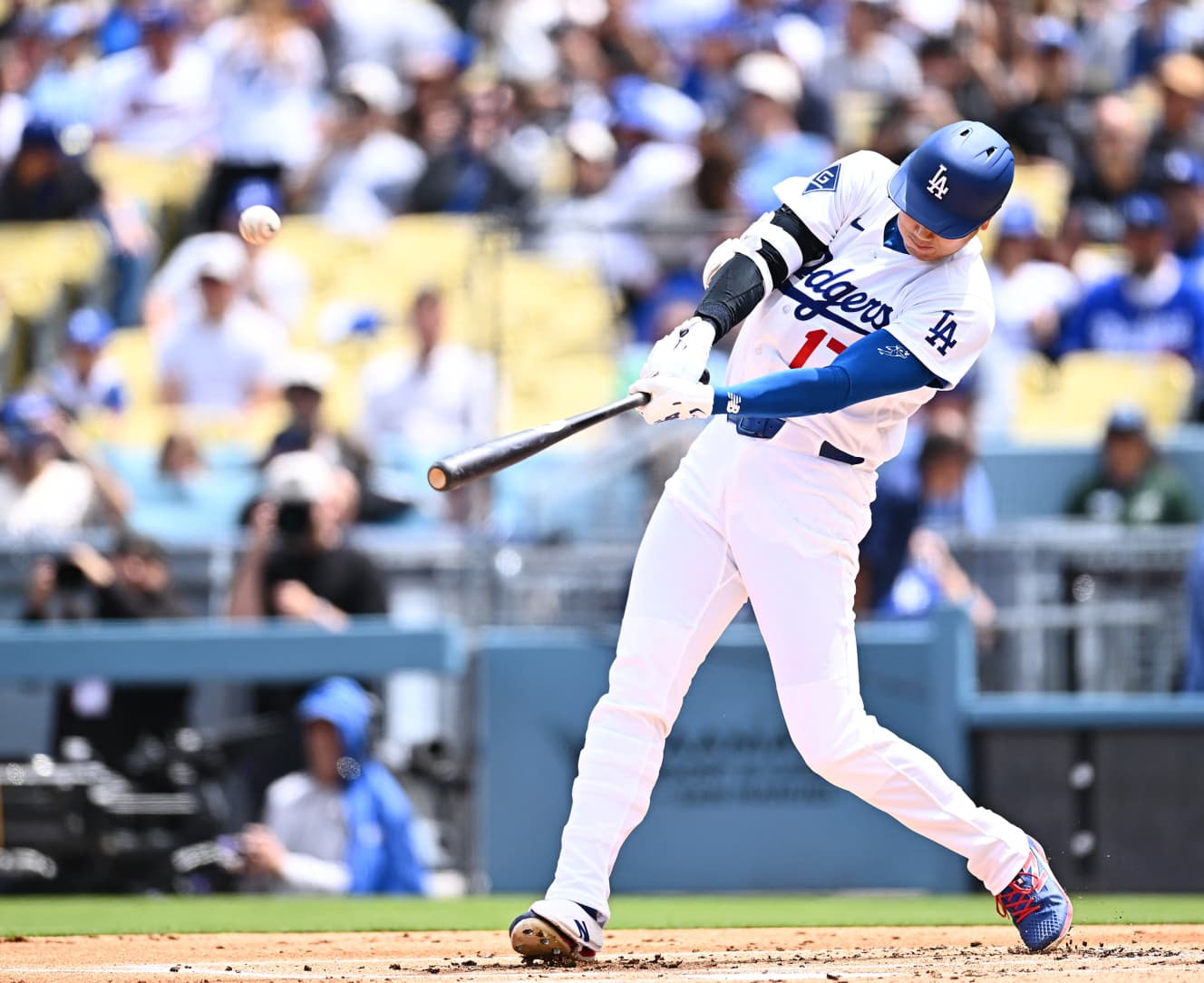
Some media attribute his strong performance to the increased game experience from the WBC in March, but baseball commentator Takehiko Kobayakawa says, “His batting itself has improved compared to last year.” As seen in the image above, Ohtani this year bends his hips deeper during his swing and keeps his center of gravity slightly lower than usual.
“The fact that he is already producing results means this batting form is a good fit for him. He is able to compactly handle the powerful fastballs of top MLB pitchers. That said, Ohtani is an extraordinary power hitter, so his swing remains extremely strong.”
This compact power is also reflected in data. His barrel rate—the percentage of well-hit balls likely to become hits or extra-base hits—has risen from 23.5% last season to 27.5%, an increase of four points (as of April 14). His average swing speed and maximum exit velocity also remain at last year’s high level, showing that he has improved both power output and consistency.
Since Ohtani typically improves dramatically in the middle and later parts of the season, his current performance suggests he may set new career highs in key MLB stats such as home runs and OPS this year.
Kobayakawa also points out that the source of this batting performance is his physical development, especially his lower body:
“In batting, what matters most is not minor technical details, but how stable the trunk of the body is. This year, Ohtani has strongly focused on lower-body stability, which has given him a more consistent body axis. That is why he can produce extra-base hits even in what look like constrained swings. This lower-body stability also improves his on-base percentage. He is now much less likely to chase bad pitches, and when he takes pitches, his body does not lunge forward or fall backward—his posture remains stable.”
“He already has a near-perfect form, but this is not his final version. He will refine it further as the season progresses.”
With a stable core that never wavers regardless of the pitch, will he continue to produce spectacular results this season?
From the May 1-8, 2026 issue of “FRIDAY”
PHOTO: AFLO