Oil Supply Risks Go Beyond Hormuz Strait Fears Tanker Grounding in Chiba Raises Alarm


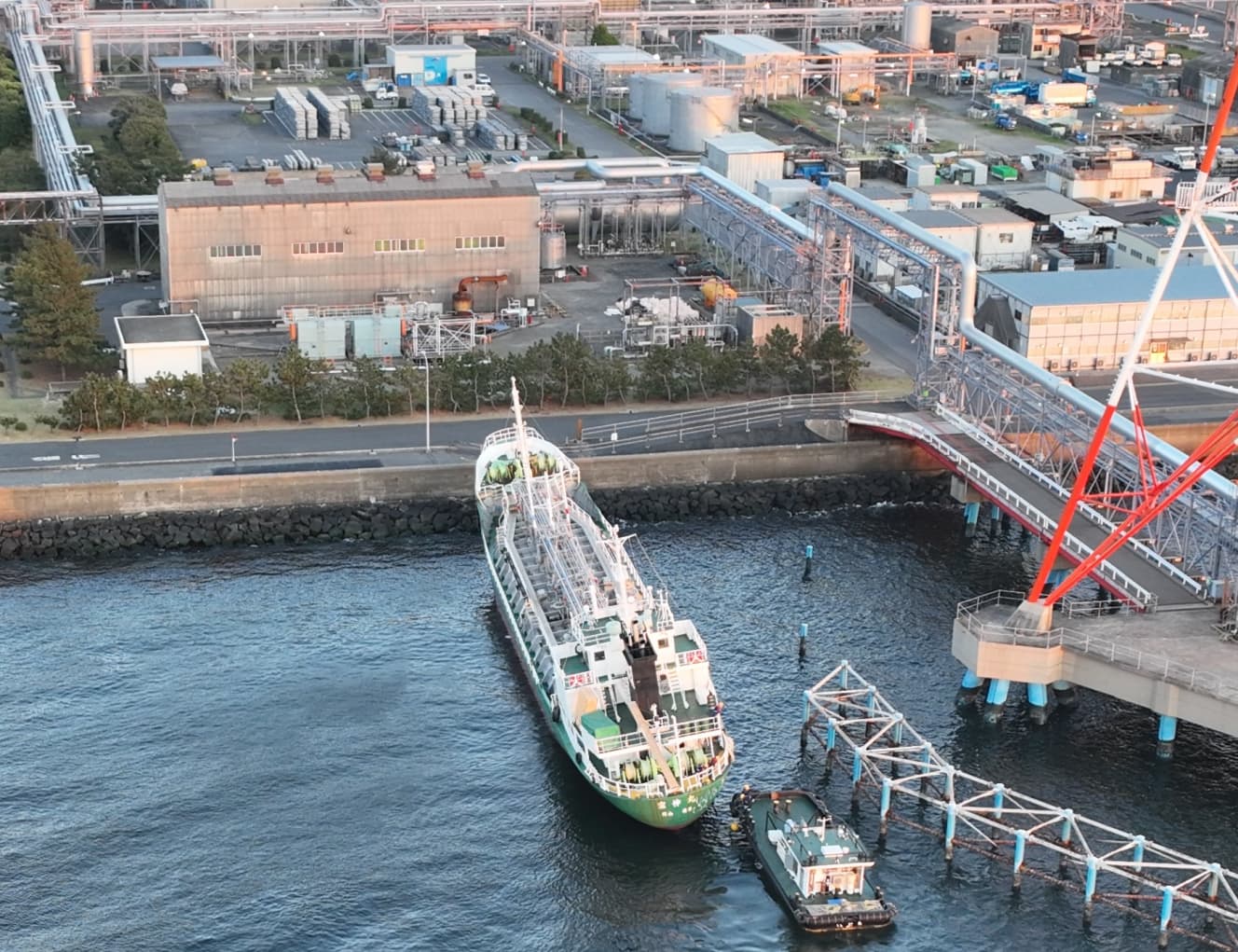
The tanker involved in the accident had also been in an incident last year
Along the coastal area of Ichihara City in Chiba Prefecture, where petrochemical complexes line the shoreline, a tanker had run up onto wave-dissipating blocks marking the boundary with land. Its tilted hull showed the force of the impact. Tugboats moved around in an attempt to pull it back offshore, but the vessel remained stranded in place for more than a full day.
“The tanker ran aground near Chigusa Beach in Ichihara City around 10:30 p.m. on April 7. While anchored in Tokyo Bay, it was reportedly pushed about 600 meters by strong winds and collided with the wave-dissipating blocks, prompting a rescue request to the Japan Coast Guard,” said a reporter from a national newspaper’s social affairs desk. “All six crew members were unharmed.”
On that day, winds were strong, with maximum gusts reaching 18 m/s in the area. A local resident said:
“Spring is usually windy, and that night the windows were rattling so much it was hard to sleep. But I had never heard of a large tanker running aground here, so I was shocked.”
The stranded vessel was the “Houshin Maru”, a chemical tanker with a gross tonnage of 498 tons and a length of about 64 meters. A spokesperson for the ship’s operating company explained:
“That day, it had finished unloading chemical products at Chiba Port and was waiting at a designated location for further unloading. It dropped anchor at 5:35 p.m., but was swept away by strong winds and ran aground despite the crew’s efforts. When anchored, drifting is not assumed, so no lookout was posted. The ship has since been refloated.”
Although it was an unfortunate accident, the “Houshin Maru” had also been involved in a collision last year—caused by the navigator falling asleep.
According to a report by the Transport Safety Board, at around 2:10 p.m. on January 4, 2025, the “Houshin Maru” collided with a breakwater in the Oppama area of Yokosuka City, Kanagawa Prefecture, damaging part of the hull. At the time, the weather was clear with light winds and good visibility. The vessel was on autopilot, but the navigator had only slept about two hours that day and fell asleep while leaning against the helm stand.
Although the ship was equipped with an alarm system to detect drowsiness, it failed to activate. When the navigator woke up and quickly switched to manual steering, it was already too late to avoid the collision.
“Severe labor shortage

Regarding the fact that the “Houshin Maru” has caused marine accidents two years in a row, a representative of the owning company told this reporter, “We sincerely regret causing great inconvenience to many people.”
Cargo ship accidents have been occurring one after another. In February this year, a cargo ship collided with a recreational fishing boat off Mie Prefecture, leaving two people dead and 10 injured. In March, a cargo ship collided with a fishing vessel off Aomori Prefecture, causing it to capsize and killing four crew members. Some point out that such accidents are linked to labor shortages and the resulting deterioration in working conditions.
A shipping company staff member explained:
“In this industry, there is a severe labor shortage, with job availability ratios at an extreme seller’s market of four to five times. More than half of crew members are now over 50. The worsening working environment due to chronic labor shortages is increasing the risk of accidents.”
The BIMCO (Baltic and International Maritime Council), one of the largest international shipping associations, reports that there is a global shortage of about 90,000 certified officers responsible for ship operation and supervision, making the shortage of seafarers a worldwide issue.
For Japan, which relies on imports for nearly 100% of its crude oil, this is not someone else’s problem. A major accident involving oil tankers caused by manpower shortages could lead to serious oil supply shortages and price spikes. While geopolitical uncertainties such as US–Iran relations already raise concerns about supply risks, such vulnerabilities are not limited to potential closures of the Strait of Hormuz alone.


Reporting, writing, and photography: Masayoshi Katayama (Journalist)