“Oil Won’t Break Yet”—But Iran’s Turmoil Hides a Far Greater Energy Threat, Says Leading Researcher


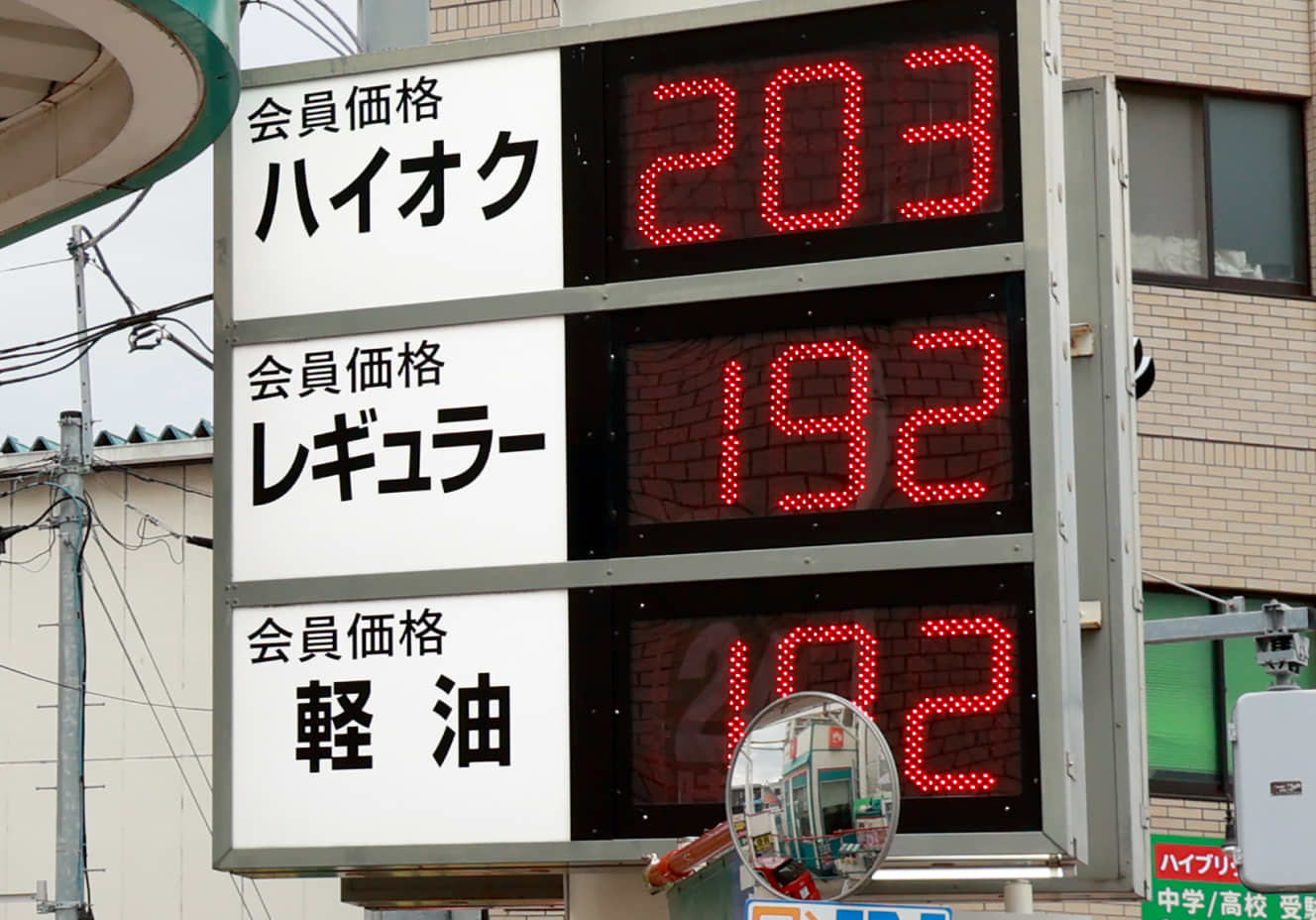
Japan’s crude oil supply is safe for the time being
While the world held its breath over the situation in Iran after U.S. President Donald Trump took a hardline stance suggesting even attacks on infrastructure would not be off the table, the two countries agreed to a ceasefire. President Trump announced on social media that airstrikes and attacks will be suspended for two weeks starting April 8. In response to this temporary truce, Iran’s Foreign Minister Araghchi stated that the strategically vital Strait of Hormuz—previously under de facto blockade—would now allow safe passage for a two-week period.
For Japan, which relies on the Middle East for 95% of its crude oil imports, a closure of the Strait of Hormuz appeared to be a crisis capable of shaking the foundations of the nation. Media reports spread pessimistic views such as a return of the oil shock and gasoline prices soaring without limit, with concerns of a prolonged and deepening crisis growing by the day.
Although this temporary ceasefire has eased those fears for now, the agreement is only a two-week reprieve. If no lasting peace is reached and the Strait of Hormuz is closed again, there are concerns that Japan could face a severe oil shortage.
In response, Mr. Kazuaki Oba, head of the think tank “Post-Oil Strategy Research Institute,” which makes policy proposals on Japan’s energy security and industrial strategy, states:
“Japan’s crude oil supply is safe for the time being.”
He argues that the real crisis is not depletion of oil itself. Oba explains calmly:
“About 20% of global oil supply passes through the Strait of Hormuz. Conversely, that means 80% still flows from elsewhere. In addition, rising prices typically reduce global oil demand by around 10–15%.
When Russia’s gas supply to Europe was cut off following the outbreak of the Ukraine war, energy prices such as gas and electricity in the EU skyrocketed several times over, causing panic. However, people reduced consumption by about 15%, and the system eventually stabilized. Temporary disruption always occurs, but the world inevitably adapts by finding alternative solutions and supply sources.”
In fact, the Japanese government has stated that it is on track to secure about 60% of last year’s crude oil supply levels by May, using alternative routes that bypass the Strait of Hormuz.
These include utilizing Red Sea routes via Fujairah Port in eastern UAE and Yanbu Port in western Saudi Arabia. In addition, procurement from the United States—now the world’s largest oil producer, particularly from Texas—has increased fourfold compared to last year, while purchases from non–Middle Eastern sources such as Azerbaijan are also being rapidly expanded.
Background to Iran showing signs of compromise
By combining the development of new procurement sources with the planned release of national and private oil reserves, the government estimates that Japan as a whole will be able to secure the necessary volume until the beginning of next year. Mr. Oba also endorses this outlook.
In addition to securing about 60% of supply via Middle Eastern routes that bypass the Strait of Hormuz, he explains:
“Roughly 20% of the remaining 40% can be additionally procured from the United States, South America, and other regions. The rest will be covered by drawing down reserves. If only the shortage is released from reserves, current stockpiles would last for two to three years. With that kind of time buffer, Middle Eastern countries would be able to fully establish alternative routes such as new bypass pipelines and restore supply to 100%.”
With this in mind, attention now turns to whether the United States and Iran can reach a lasting peace agreement. However, Mr. Oba himself believes that a prolonged deadlock is unlikely, noting that “President Trump wants to avoid a surge in domestic gasoline prices,” suggesting that a full-blown crisis will ultimately be averted.
He also analyzes Iran’s incentives as follows:
“For Iran as well, prolonging the blockade of the Strait of Hormuz is not advantageous. If countries begin shifting to alternative pipelines and routes, the strategic importance of the Strait would decline, and Iran would lose a major source of leverage over the international community. Moreover, Iran itself cannot rebuild its economy without selling oil. My view is that they will compromise before their influence disappears completely.”
Even if negotiations collapse, what about price spikes? Some have warned that oil could exceed $200 per barrel (down from the low $90 range after the April 8 ceasefire), but Mr. Oba clearly rejects this scenario.
“Prices might temporarily reach $200 per barrel, but such unrealistic levels cannot be sustained. Prices are ultimately determined by the purchasing power of buyers.
If prices rise too much, countries without sufficient foreign currency or purchasing power will be unable to buy, and demand will fall. As a result, the market must settle at a level where transactions are still possible. In terms of sustainable pricing, even in a high range it would likely be around $100–120 per barrel. In general, it would stabilize in the $80–100 range.”
If crude oil supply is secured, major energy issues are largely resolved. However, what concerns Mr. Oba is the potential shortage of petroleum products even if crude oil itself remains available.

The real crisis is not crude oil, but naphtha
“In reality, about one-third of Japan’s petroleum-related imports are not crude oil, but finished products such as naphtha and LPG (liquefied petroleum gas). Among these, more than 80% of LPG is imported from the United States, and since there are stockpiles, it is not a major concern. However, naphtha carries a serious risk of supply tightening.”
Naphtha is a key raw material for almost all plastic products. Japan is one of the few countries in the world that consumes more naphtha directly than it produces domestically from crude oil refining.
However, unlike crude oil, there is no dedicated stockpile of naphtha, and inventories are generally said to last only about 20 days. Historically, Japan has relied most heavily on Middle Eastern imports via the Strait of Hormuz, followed by South Korea and Singapore.
“Naphtha itself is derived from crude oil, so it will never completely run out. However, if the Strait of Hormuz were blocked again and Middle Eastern supply suddenly disappeared, it would be extremely difficult to rapidly increase imports from alternative sources such as South Korea. The supply chain would be significantly disrupted.”
Naphtha is used in plastics found in packaging materials, PET bottles, home appliance components, construction materials—virtually everything in daily life. It would be difficult to find products that do not rely on it. If sufficient supply cannot be secured, the impact would inevitably spread across all industries.
“Even if overall crude oil prices stabilize, individual petroleum products like naphtha tend to become a matter of who can secure the limited supply. Even a slight shortage can cause sudden price spikes in the market.”
If peace between the United States and Iran is not ultimately reached, industrial damage would be unavoidable. However, national crude oil supply is expected to hold steady. More than anything, Oba warns that the true vulnerability lies in Japan’s underlying mindset toward its energy strategy.
The real crisis is Japan’s normalcy bias
“The biggest problem Japan faces is that, even when confronted with a crisis of this magnitude, there is a tendency to try to maintain the existing Middle East–dependent structure as if nothing has changed—that is, a form of normalcy bias.
Government ministries and industry groups tend to justify maintaining the status quo, and in the end Japan will likely continue to rely on crude oil from the Middle East. Even when alternatives are discussed, they tend to settle on politically easier options such as expanding nuclear power or coal-fired generation.”
However, both coal and uranium used in nuclear power are still almost entirely dependent on imports.
Looking at other countries, many are strongly pushing forward with a shift toward electric vehicles (EVs) and renewable energy—domestic energy sources from an energy security perspective—moving toward reducing reliance on imports. Japan’s strategy, which depends entirely on foreign supply, must fundamentally change.
Mr. Oba points to two key directions for Japan’s future energy security: expanding renewable energy, which is domestically produced, and promoting EV adoption, especially in regional areas. For example, having one EV in households that own multiple vehicles would help secure at least a minimum level of energy and transportation in emergencies, directly contributing to both energy conservation and national security.
“In principle, the promotion of renewables and EVs should be the core solution. If even a crisis of this scale does not become an opportunity to fundamentally change the energy system, Japan will never truly transform. Unless this normalcy bias is broken, genuine energy security will not be achieved.”
Japan is attempting to manage current supply risks caused by escalating tensions in Iran through reserves and alternative procurement. However, the question remains: what happens if there is no long-term strategy beyond that?
If Japan continues to refuse change and remains structurally dependent on imports, it may eventually face a future energy crisis that cannot be managed in the same way as before.
Interview and text by: Shinsuke Sakai PHOTO: Kazuhiko Nakamura (1st photo), Shinsuke Sakai (2nd photo)