With Just a Smartphone and AI, Ideal Romantic Targets Are Created—Young Operators Behind International Romance Scams Face No Moral Restraint
Alarming Document [Part 2] "Thanks to Generative AI, I'm making a fortune" "I don't feel guilty..."...


Romance scams refer to a type of fraud in which perpetrators impersonate someone else and, through social media or dating apps, build romantic relationships with targets in order to deceive them into sending money. Such cases have been reported worldwide. According to Japan’s National Police Agency, in 2025 there were 5,604 reported cases in Japan, with total losses increasing by 38% year-on-year to 55.2 billion yen.
【Part 1 available here】Young people behind international romance scams evolving from “Yahoo Boys” to “AI Boys”
AI enables fluent use of youth slang
According to Adam (pseudonym, 46), a Nigerian man who arranged this interview with Jason, even more advanced generative technology now allows for video calls.
“For example, when a woman speaks in front of a computer camera, we can show the target a completely different video—an idealized woman speaking instead. It’s a proprietary technology developed by a Nigerian acquaintance. It costs money, but it builds trust and makes it easier to extract large sums.”
In the past, so-called “template messages” were used when communicating—copy-pasting affectionate phrases or slightly modifying them. But recently, another AI Boy named Hassan (pseudonym, 23) says they now let ChatGPT have conversations.
“When we just adapted templates, messages tended to become repetitive and people would notice. With generative AI, it can freely use slang and youth language, producing natural messages tailored to each situation, which is very effective. I’ve scammed over 100 people. The highest amount per person was $7,000 (about 1.1 million yen). Thanks to AI, it’s extremely profitable.”
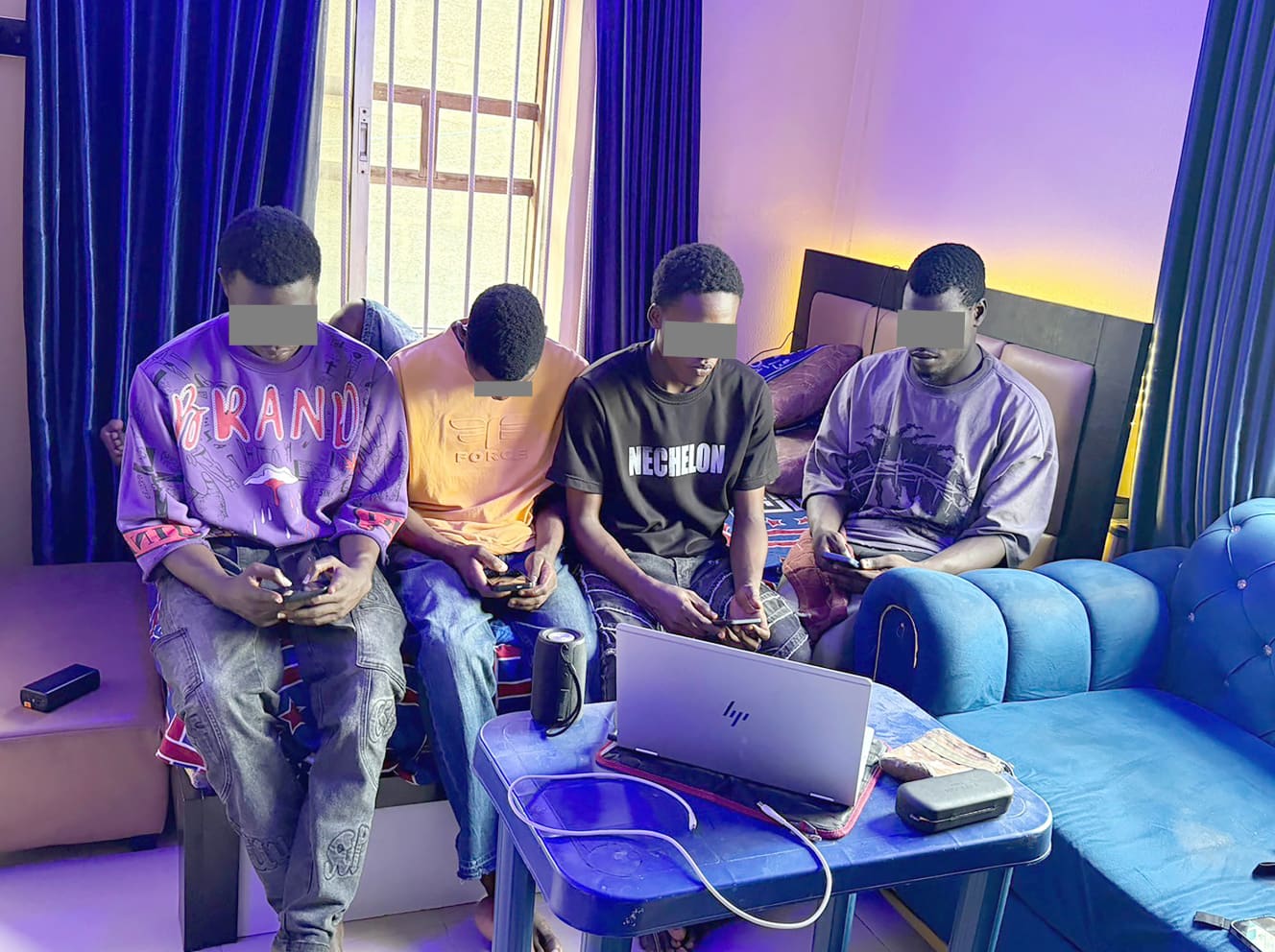
In the room Jason guided the reporter to, there were sofas and a TV setup (first image), giving an impression far removed from poverty. Jason and Hassan are current university students and own smartphones; they are not engaged in cybercrime due to economic hardship.
Rather, it seemed more like a well-paying side job influenced by peers around them. Consistent with this, their tone showed little sign of remorse. While they acknowledged it was a crime, they displayed almost no sense of guilt.
“It’s a necessary cost of living.”
“It’s payment for sending explicit photos and entertaining the women.”
Such unapologetic statements were repeated multiple times.
In Nigeria, there are large-scale organized scam groups and even so-called scam kings who defraud many victims of large sums. However, many cases like Jason’s involve ordinary young people using smartphones to scam foreigners casually, without structured organizations or clear role divisions.
Because the crime is completed entirely via a single smartphone without ever meeting the victim, there are few moments that trigger guilt. This appears to encourage their reckless attitude.
A time when anyone can be deceived
Even so, there have been cases in which the National Police Agency managed to get hold of the trail of the so-called “AI boys.” In February last year, in cooperation with local authorities, 11 Nigerian nationals were arrested for involvement in romance fraud. The victims were 14 Japanese people, with total damages amounting to approximately 150 million yen.
However, because the barrier to entry is so low—anyone can do it with just a smartphone—there are countless perpetrators, and full-scale crackdowns are still far from reality.
Terue Niikawa, the head representative of the NPO organization “CHARMS,” which supports victims of romance scams and similar fraud, receives an average of about 15 consultations per month. Since last year, however, she has begun to see a small number of victims saying, “I had a video call with the other person.”
“In one of those cases, the scammer was impersonating a real Asian actor. In the video call, the facial image appeared distorted, so it is believed to have been a deepfake (fake video). There were also cases of men posing as white males, but their English speech sounded unnatural. It is possible that the audio was artificially generated.”
As AI becomes more sophisticated, these small ‘flaws’ will likely be eliminated as well. Niikawa warns:
“Many people think, ‘I would never be deceived,’ but that is an overconfidence bias that everyone has. I hope people understand that this is not someone else’s problem and pay close attention to victim reports.”
Even at this very moment in Nigeria, AI boys are holding smartphones in hand, whispering seductive words to their targets.


From the April 10, 2026 issue of “FRIDAY”
Photography and text: Takehide Mizutani (Nonfiction writer)