Maeda Kenta Returns to Japan After 11 Years with 20+ Routines and a 20% Margin Mindset
There are more than 20 routines that I have to do every day" -- Kenta Maeda is not just looking for a good luck!


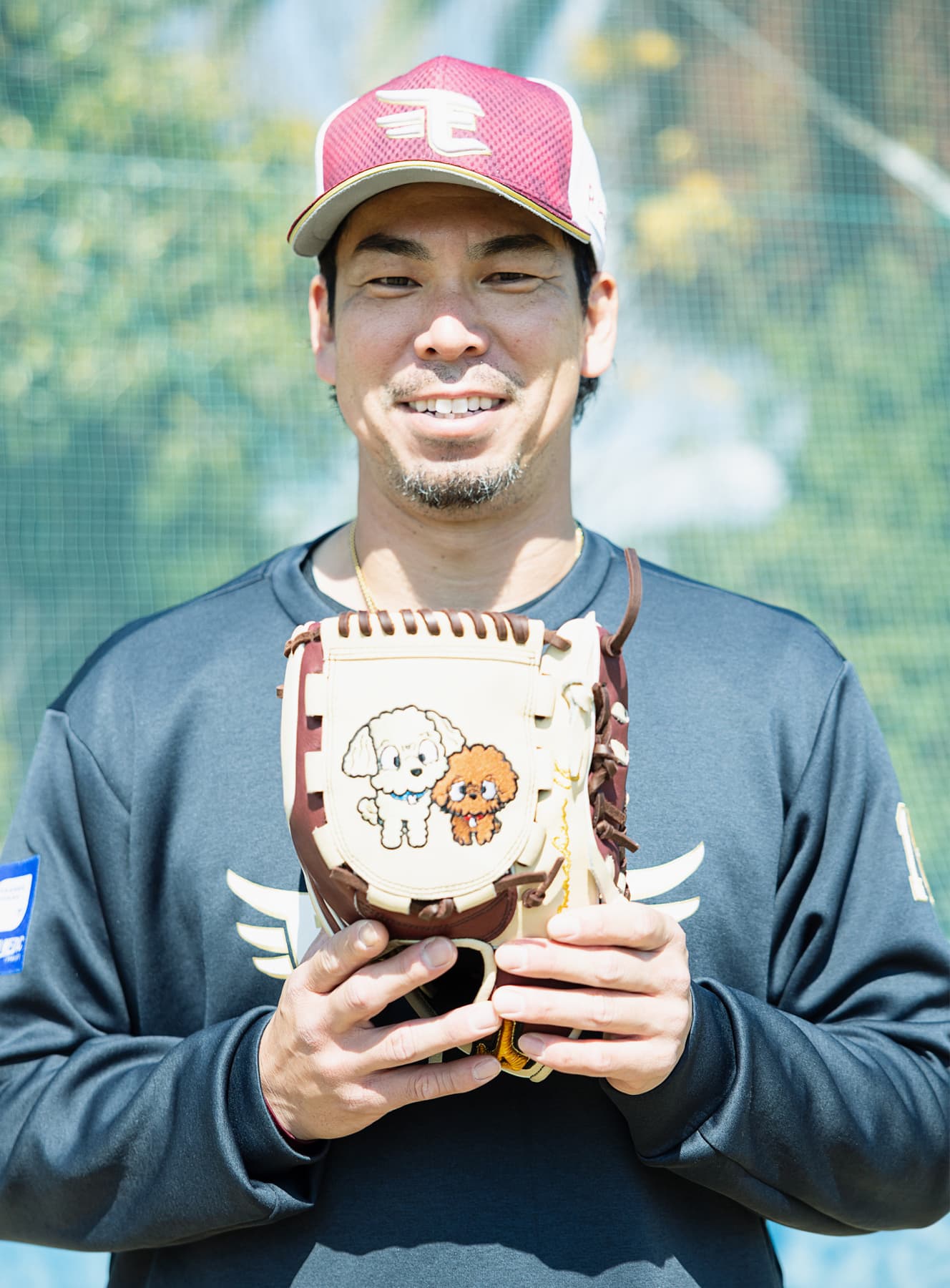
“Right, I ate gummy candy.”
“Just call me ‘Maeken-san’!”
When the reporter was unsure whether to call him “Maeda-san” or “Maeken-san,” Rakuten’s Kenta Maeda (37) responded in a friendly manner.
Having recorded 68 career MLB wins and returning to Japanese baseball after 11 years, Maeda is an existence that can fairly be called a legend. However, he shows no sign of acting like a big star. During practice, he jokes with younger players and actively communicates with them (remarks below are from Maeda).
“I’m not that kind of character (someone who acts arrogant), you know. There are players more than a decade younger than me, but when I talk with them, I often find things that make me think, ‘Oh, I see,’ and learn from them. I don’t really tell younger players, ‘This is what I think.’ I don’t like it when people speak to me from a superior position either. If they ask me questions, I give advice.”
Maeda is also famous for his “Maeken exercises,” where he rotates both shoulders in large circles, and for his routines on the mound, such as repeatedly swinging both arms backward while spreading them to the sides. His lifestyle habits, including sleeping 7.5 hours, are also part of this routine. The origin of this dates back to June 2008, his second year as a professional during his Hiroshima days.
“I pitched a no-hitter through seven innings and got my first professional win. I thought, ‘I want to keep this momentum going,’ and the day before my next start (against the Giants), I reviewed what I had done before my first win and I remembered, ‘Right, I ate yogurt and gummy candy.’ Since I had a good rhythm, I bought the same things and went into the game against the Giants. I pitched seven innings allowing one run and got my second consecutive win! I figured I had to keep it going, so I gradually adopted good habits, and now I have over 20 routines that I always follow.”
“I can’t survive in body or mind at 100%.”
The routines are not simply done as superstition.
“I’m actually the type who gets quite nervous. If results don’t come, I can feel depressed. But if I calmly go through my routines, I don’t end up overthinking things like ‘Will I be able to get them out today?’ I can focus on what’s in front of me, and that creates mental space. I can convince myself, ‘I’m doing what I always do when I’m in good form, so I should be able to pitch well.’”
Another thing Maeda values is room to spare (flexibility/mental leeway).
“As I said, what I value is having mental space. If I gave 100% every single day, neither my body nor mind would hold up. Even if you train to your absolute limit, if results don’t come, you’ll get discouraged, right?
That’s why I think I was pretty efficient even back in high school (PL Gakuen in Osaka). I would act like I was training at full effort, but sometimes I’d ease off. Some people might see that as slacking off, but I wanted that sense of leeway in my mind for my own performance.”
Even after turning pro, there was a game that made him realize the importance of this leeway. It was an April 2010 game against the Swallows, facing Hironobu Takahashi.
“Takahashi is a really tough batter. I got him to two strikes, but I didn’t like how he kept fouling off pitches. So I thought, ‘Fine, I’ll just give up a hit and face the next batter,’ and threw a pitch outside low at about 80% effort.
The moment I released it, I thought, ‘Huh?’ Everything—arm swing, release point, location—was perfect, and I struck him out. That 20% leeway pitch became the trigger for my breakthrough. That year, I won double-digit games for the first time (15 wins, most wins title) and received the Sawamura Award.”
After achieving brilliant results, Maeda went on to play in the majors for 10 years. While passing on his experience from both Japan and the U.S. to younger players, he now aims for his first “Japan Series championship” with pitching built on this sense of leeway.
In the April 17–23 issue of “FRIDAY” released on April 3, and the paid edition “FRIDAY GOLD”, the article also introduces behind-the-scenes stories such as his bond with Yu Darvish, whom he says has influenced him in every way. It also features many of his handwritten illustrations and photos with younger players.
For more details and multiple photos, click here ↓
From the April 17/24, 2026 issue of “FRIDAY”
PHOTO: Hiroyuki Komatsu