Veteran Baseball Voice Miyata Tsunoki, 80s, Still Finds Excitement in Every Broadcast
A veteran announcer tells his secret story (Part 2)... The '85 Hanshin League championship game between Ichiro and Daisuke Matsuzaka, the "best game ever" for a play-by-play announcer


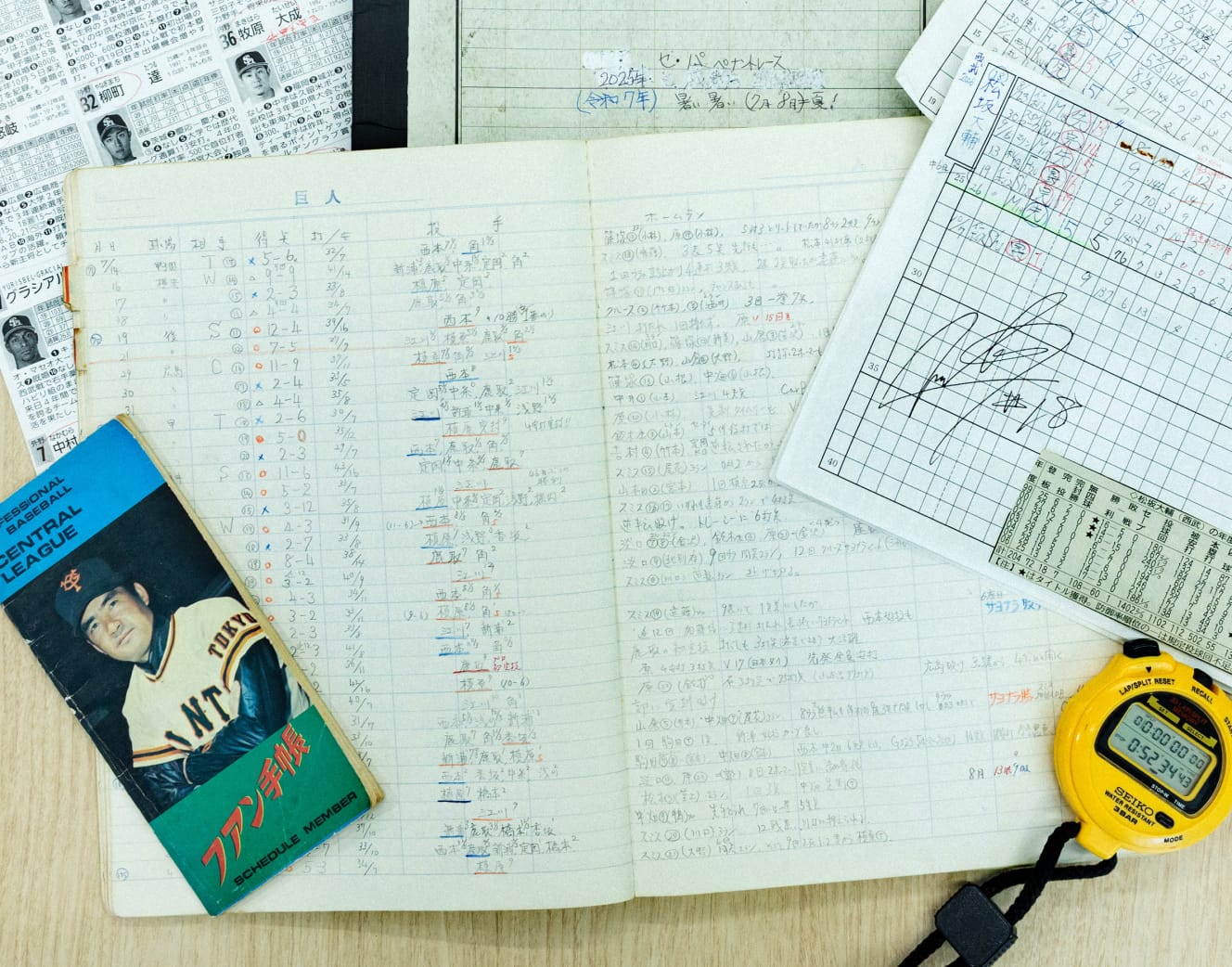
Nippon Broadcasting System’s flagship baseball broadcast program, “Nippon Broadcasting Show Up Night,” is celebrating its 60th anniversary this year. Miyata has supported the program since its earliest days and continues to provide live commentary as Japan’s first “80-something play-by-play announcer,” a true legend.
Using Yoshio Yoshida as a decoy
The games Miyata has broadcast were not limited to the Yomiuri Giants. He was also present at the moment of Hanshin’s 1985 league championship (and later Japan Series victory).
“It was October 16, a game against the Yakult Swallows at Jingu Stadium. At that time, I was in charge of interviewing manager Yoshio Yoshida after the championship. It was a more relaxed era back then, so there was a possibility that Hanshin fans might rush onto the field or surround the players returning to their lodging.
So, we discussed it with the people at Jingu Stadium and Nippon Broadcasting, and came up with a plan: I would interview the manager to keep the fans inside the stadium, while the players would be evacuated during that time.
The interview was three minutes long. When I pointed the microphone at Yoshida and said, ‘Congratulations on winning the championship,’ he spoke in his own words, calmly expressing his overwhelming emotions. Right when the time was up, I concluded by saying, ‘This concludes the championship manager interview,’ and by then the players had already safely left the stadium. It might not sound very nice to say it this way, but we used Yoshida as a decoy to protect the players’ safety (laughs).”
Miyata, smiling as he recalls those days, has also crossed the ocean for broadcasting.
“In 2008, I went to the East Coast of the United States to cover Ichiro. At that time, Kenzō Johjima was also on the Mariners, and I tried to interview them both in the locker room.
Johjima answered clearly and loudly, but Ichiro, who was in the same room, stood facing the wall and quietly changed clothes. Even the reporters didn’t speak to him. He had an aura that made it feel like you shouldn’t approach him, and I couldn’t bring myself to talk to him either.
But when I was allowed to broadcast the game where Daisuke Matsuzaka of the Red Sox and Ichiro of the Mariners faced each other directly at Fenway Park in Boston, it was truly moving. Nowadays, matchups between Japanese players abroad are common, but it was because of players like them that Japanese athletes were able to cross the ocean in the first place.”
The joy of being a commentator
So, what is the best game that Miyata has ever called?
“I’ve called the moments when historic records were achieved, and also the retirement games of great players, but the one that left the strongest impression on me was the Giants vs. Swallows game on September 4, 2009. The Giants’ starting catcher was Kazunari Tsuruoka. Manager Shinnosuke Abe, now the current manager, started the game at first base, but had already been substituted, and from the 9th inning, Ken Kato took over as catcher. However, in the top of the 11th inning, Kato was hit in the head by a pitch and had to leave the game.
With no catchers left on the Giants roster—everyone was holding their heads in disbelief—the one who appeared in the top of the 12th inning wearing oversized protective gear was Takuya Kimura. He was a utility player, and it was the first time in 10 years he had taken the catcher’s position. After he successfully retired three batters and returned to the dugout, the stadium erupted in thunderous applause, and then-manager Tatsunori Hara (67 at the time) also praised him by repeatedly patting Kimura on the back.
That game lasted nearly five and a half hours, a true battle of endurance, and being able to call every moment of it is the ultimate joy for a commentator. We might say things like please end quickly, but honestly, the longer it goes on, the happier we are.”
Miyata also handled standby commentary at Belluna Dome last August in case a scheduled game was rained out. Will he continue working until the end of his life?
“When I first started commentating, in the Giants’ Aoshima camp, players like Oh and Nagashima were pulling tires as training. Now, players trained with the latest methods are constantly challenging themselves in Major League Baseball.
It’s truly enjoyable to do commentary while feeling those changes in the game. So as long as I don’t cause trouble for those around me and my voice still holds up, I’d like to keep going.”
A living witness to Japanese baseball history continues to carry the excitement of the stadium through his voice.


From the April 10, 2026 issue of “FRIDAY”