Illegal Street Stalls Run Rampant in Osaka’s Dotonbori as Authorities Struggle to Crack Down


Controversial illegal operations troubling local residents
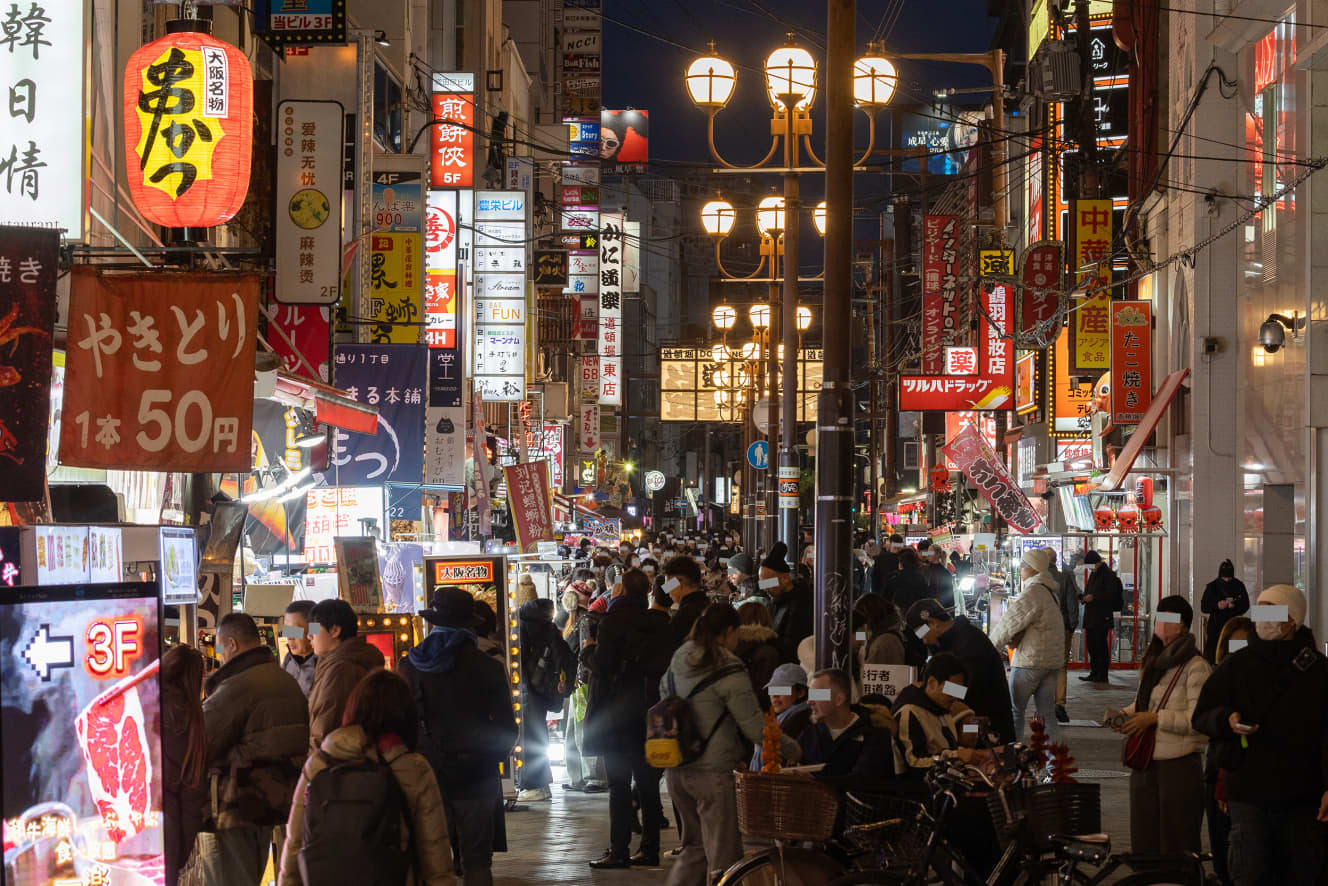
Osaka’s Minami district, located in Chuo Ward. With the Glico sign as a landmark behind Ebisu Bridge, as you walk east and pass Aiaibashi Bridge over the Dotonbori River, the atmosphere begins to change dramatically.
Shop signs and windows are filled with Chinese and Korean, and restaurants displaying Vietnamese flags also stand out. The lively voices of staff are often in broken Japanese. In fact, the eastern area of Dotonbori is now said to be dominated by foreign business operators.
Going back about 10 years, this area—from Aiaibashi Bridge to Sakaisuji (a major north–south arterial road in Osaka City)—was a calm district lined with locally owned restaurants and long-established establishments. According to a restaurant industry source, “Chinese-based foreign capital took notice of the area.”
“In recent years, the number of shops run by Chinese, Korean, and Vietnamese operators has increased dramatically. Including both those from overseas and naturalized residents, foreign capital now accounts for about 80% of the stores. Many operate under rental agreements, but there are also cases where entire buildings have been purchased. After local businesses struggled and collapsed during the COVID-19 pandemic, foreign capital rapidly moved into the vacant spaces.”
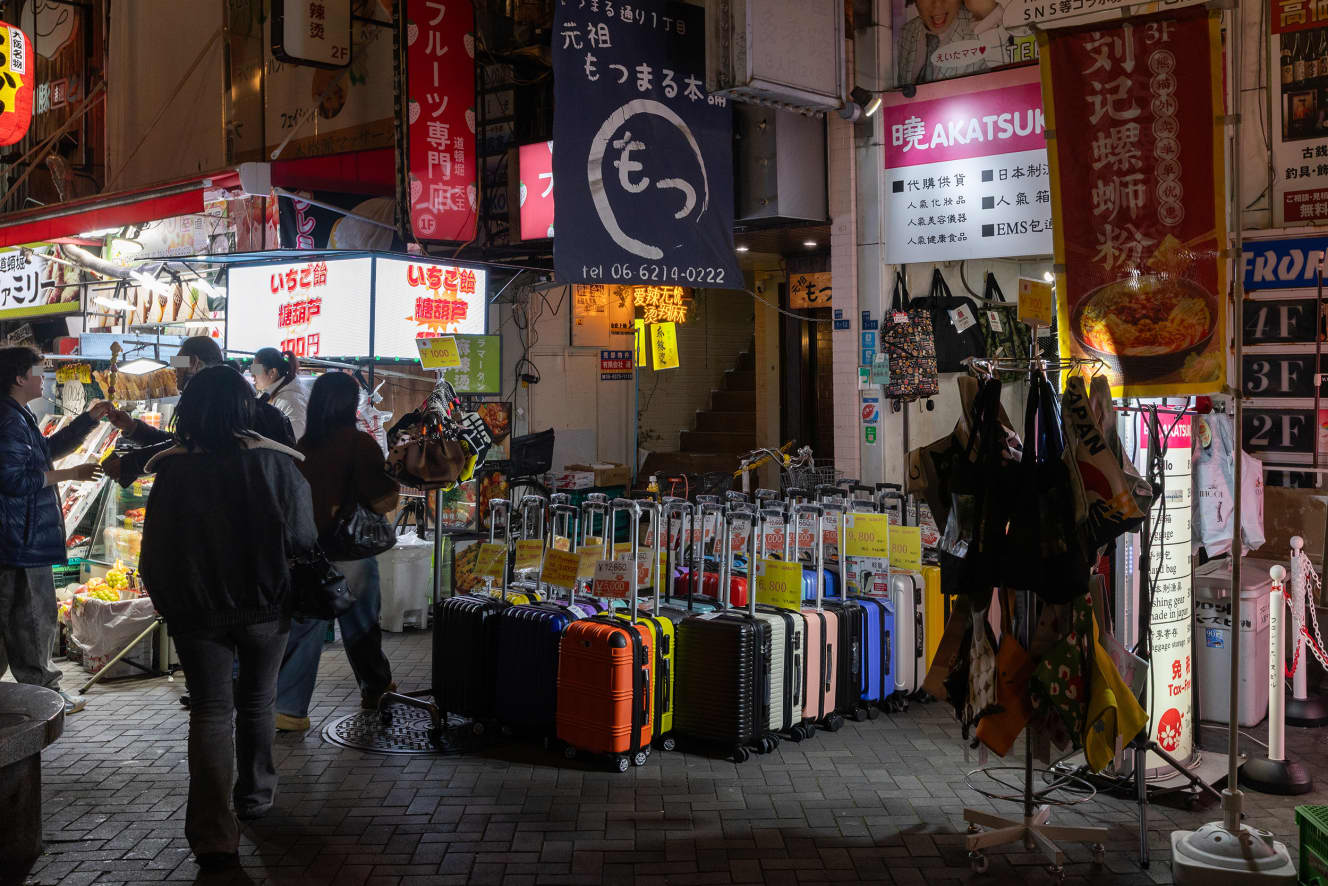
Some shops can be seen boldly operating street stall-style businesses, spilling tables and chairs onto the road, resembling an Asian night market. When speaking to stall workers, many turn out to be foreign staff. While the area is thriving thanks to inbound tourism, local residents are reportedly struggling with illegal operations. A restaurant industry source expresses frustration:
“Under the informal rules of the shopping street, it is generally allowed to display goods within about one meter from projecting signboards or shop eaves. However, some foreign operators go far beyond this and openly conduct business on public roads. Even if police, public health centers, or construction authorities force them to remove it, within 30 minutes after they leave, they resume operating on the street as if nothing had happened.”
Although the illegal operations are clear, another restaurant industry source says there are circumstances that make it difficult to strongly condemn them.

“There is a background where, originally, some Japanese operators were already setting up street stalls on public roads, and foreign owners simply copied that practice. Some began preparing their own gas cylinders and started cooking with open flames on the street. Concerns have been raised about the risk of fires and explosions.”
Even so, why are they so committed to street-side business?
“From what I hear, the profit from the stalls alone is enough to cover rent and labor costs. Depending on the location, rent in this area is around 2 million yen per month. The stalls can generate enough customer traffic to cover that. That’s why they probably won’t stop no matter how many warnings they receive. It’s truly a lawless zone,” the source says.
Of course, there are also shops operating in compliance with the law. However, this source also says that even those proper businesses are being targeted by unbelievable backdoor negotiations.
“Late at night, around 10 p.m., Chinese operators reportedly approach shops that are closing and say, ‘Let us use the road in front of your store after you close.’ They offer to pay a monthly fee. They likely intend to set up stalls at night, but no normal shop owner would agree to that. It’s a matter of cultural differences to be honest, I find the mindset of some Chinese operators difficult to understand and quite troubling,” the source says.
A new investment destination
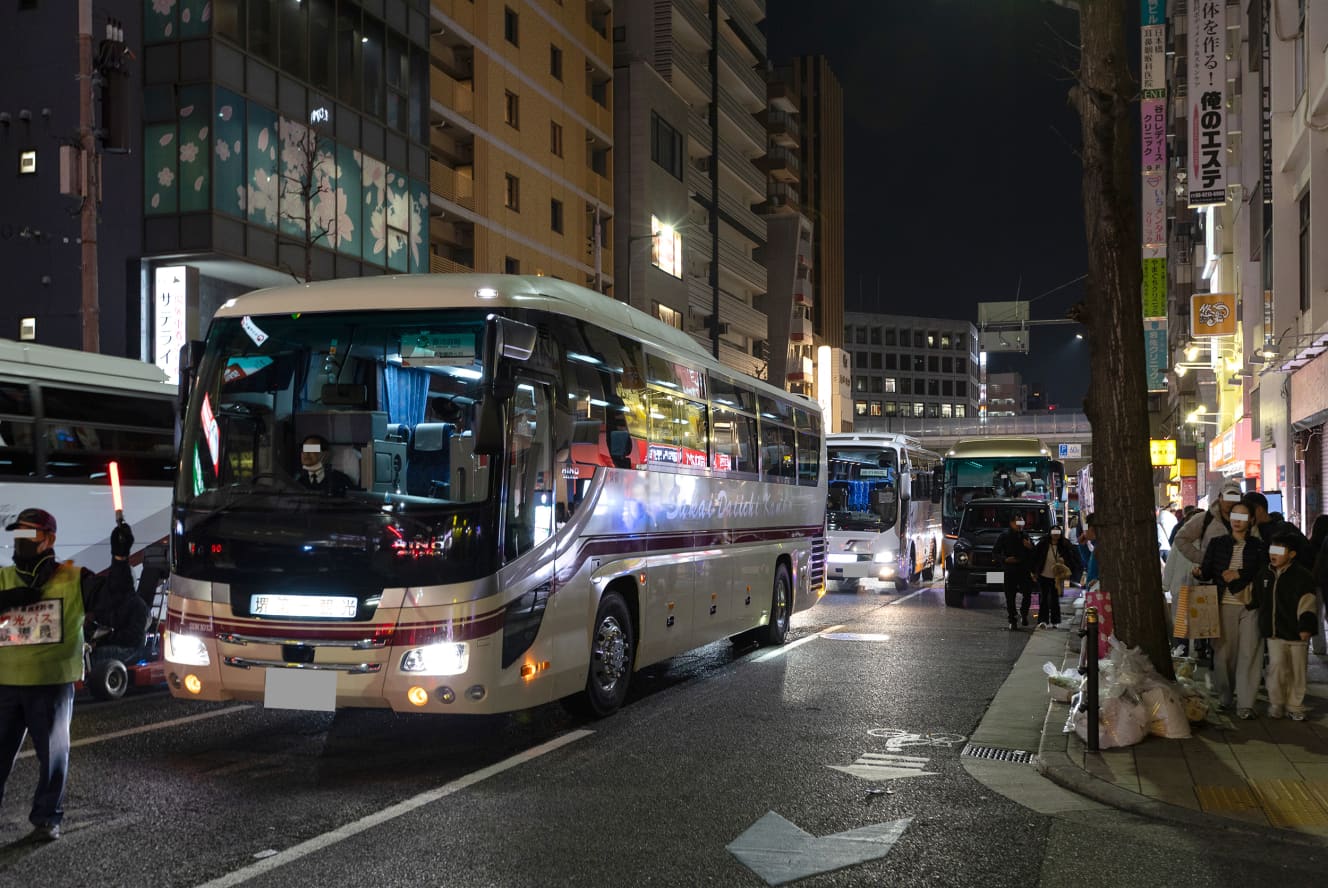
Since relations with China worsened following remarks by Prime Minister Sanae Takaichi (65) regarding a potential Taiwan contingency, Chinese tourists have sharply decreased. However, tourists from Taiwan and South Korea have instead increased. According to sources, at peak times as many as 40,000 to 50,000 people visit the Dotonbori shopping district in a single day.
“Since the daily number of visitors to Universal Studios Japan is said to be around 30,000 to 40,000, more people than that are packed into this narrow street. From the intersection at Nipponbashi 1-chome on Sakaisuji to Soemoncho, about 10 tourist buses are constantly lined up. The highlight of sightseeing in Osaka is this Dotonbori area,” (same source)
In some cases, the very ground of the city is being bought up by foreign capital. A local real estate agent explains the situation.
“Buildings facing the Dotonbori River have excellent locations and are highly valued by Chinese investors. Along ‘Futatsuido-cho Street’ on the east side across Sakaisuji from the Dotonbori shopping district, buildings have recently been successively purchased by foreigners.”
Futatsuido-cho Street is an area just a stone’s throw from Dotonbori, lined with love hotels and known as a nightlife district. In other words, it is a place where people are active until early morning hours. It has been unpopular with Japanese investors, who view it as unsuitable for either self-owned buildings or tenant buildings.
“Japanese investors show no interest, but from a Chinese perspective, it is actually cheap and good value. If inbound tourists increase further, this area will certainly benefit as well. They are making forward-looking investments with that in mind,” (same source)
Even as night deepens, the energy of Dotonbori does not cool. However, its appearance is completely different from the once human-centered, down-to-earth town it used to be. Laws and rules are becoming hollow, and the landscape is being reshaped by capital power. The scenery spreading beyond Aiaibashi may be the beginning of Japan’s inbound dependency—or perhaps its end.
Interview, text, and photographs: Kei Kato