Akazawa Ignites Tokyo Event as Trump’s Energy Forum Hints at Deeper Agenda


Promoting energy
From March 14 to 15, 2026, over a two-day schedule, the Indo-Pacific Energy Security Ministerial Business Forum (IPEM) was held in Tokyo. On February 14, 2025, President Trump issued an executive order to establish the “National Energy Dominance Council (NEDC)” in order to secure U.S. superiority in the energy sector. This forum was held based on the NEDC. Furthermore, this was the first forum since its establishment and was co-hosted by Japan and the United States, with Tokyo selected as the venue. Participating countries included 18 nations from the Indo-Pacific region such as the United States, Japan, Thailand, Australia, and South Korea. In addition to numerous energy ministers from each country, 140 energy-related companies from various nations also took part. As it was held amid heightened tensions in the Middle East, including Iran, additional sessions and topics not originally planned were actively discussed.
On January 20, 2025, the day of his inauguration, President Trump issued an executive order to unleash American energy. This order abolished emissions exemptions for states mandating the spread of electric vehicles (EVs), reviewed what were seen as unfair subsidy systems, and aimed to secure diverse options including gasoline-powered vehicles—running counter to the Biden administration’s policies promoting mandatory EV adoption and subsidies for EV purchases.
Additionally, the executive order issued the same day, the “Declaration of a National Energy Emergency,” stated that the surge in energy prices poses an imminent threat to the American people, further exacerbated by a weakened ability to defend against hostile foreign powers (omitted) the policies of the previous administration have plunged our nation into a state of emergency, strongly rejecting the Biden administration’s energy policies and emphasizing a shift toward the opposite direction in energy promotion.
Known as a tariff negotiator
At this forum, from the United States, Secretary of the Interior Doug Burgum, who also serves as chair of the NEDC, attended, along with several other key figures including EPA Administrator Lee Zeldin. Energy Secretary Chris Wright had also been scheduled to attend, but his trip to Japan was canceled at the last minute due to the situation in the Middle East. On the other hand, from Japan, the only minister in attendance was Minister of Economy, Trade and Industry Ryosei Akazawa. Despite dealing with Diet affairs until late the previous night, Minister Akazawa showed no signs of fatigue and delivered the opening remarks in English.
“I am Ryosei Akazawa, Minister of Economy, Trade and Industry. I believe I am known as a tariff (meaning customs duties or freight charges in English) negotiator, a minister for tariff negotiations.”
His remark drew laughter from the audience.
He continued:
“More than 90% of Japan’s crude oil import routes depend on the Strait of Hormuz. To protect the daily lives of our citizens and economic activities from potential risks, the Japanese government is taking proactive measures. The long-term and strategic choices we make today will shape energy security in the Indo-Pacific region for decades to come. The Indo-Pacific region is the engine of global economic growth, and Japan is a department store of energy technologies, possessing all kinds of energy technologies and innovations. By sharing these technologies and experiences across Asia, we can strengthen regional energy security together.”
Following Minister Akazawa, Secretary Burgum said in his opening remarks:
“The purpose of the team here is to ensure that we can achieve energy dominance. We may need secure alternative sources of supply that cannot be cut off by terrorist regimes. That is precisely the important point. This meeting was established just a few months ago; the concept was last year. The United States has the opportunity to build a more prosperous and secure world by working with all of its allies. Fortunately, President Trump is a leader who understands that energy policy cannot be separated from economic security, nor from national security. It is absolutely unacceptable for a small number of terrorist groups to control the world’s economy. Nations around the world can unite in places like this. I thank you all for gathering here. We, the United States, are here to be a reliable, affordable, and secure partner for you.”
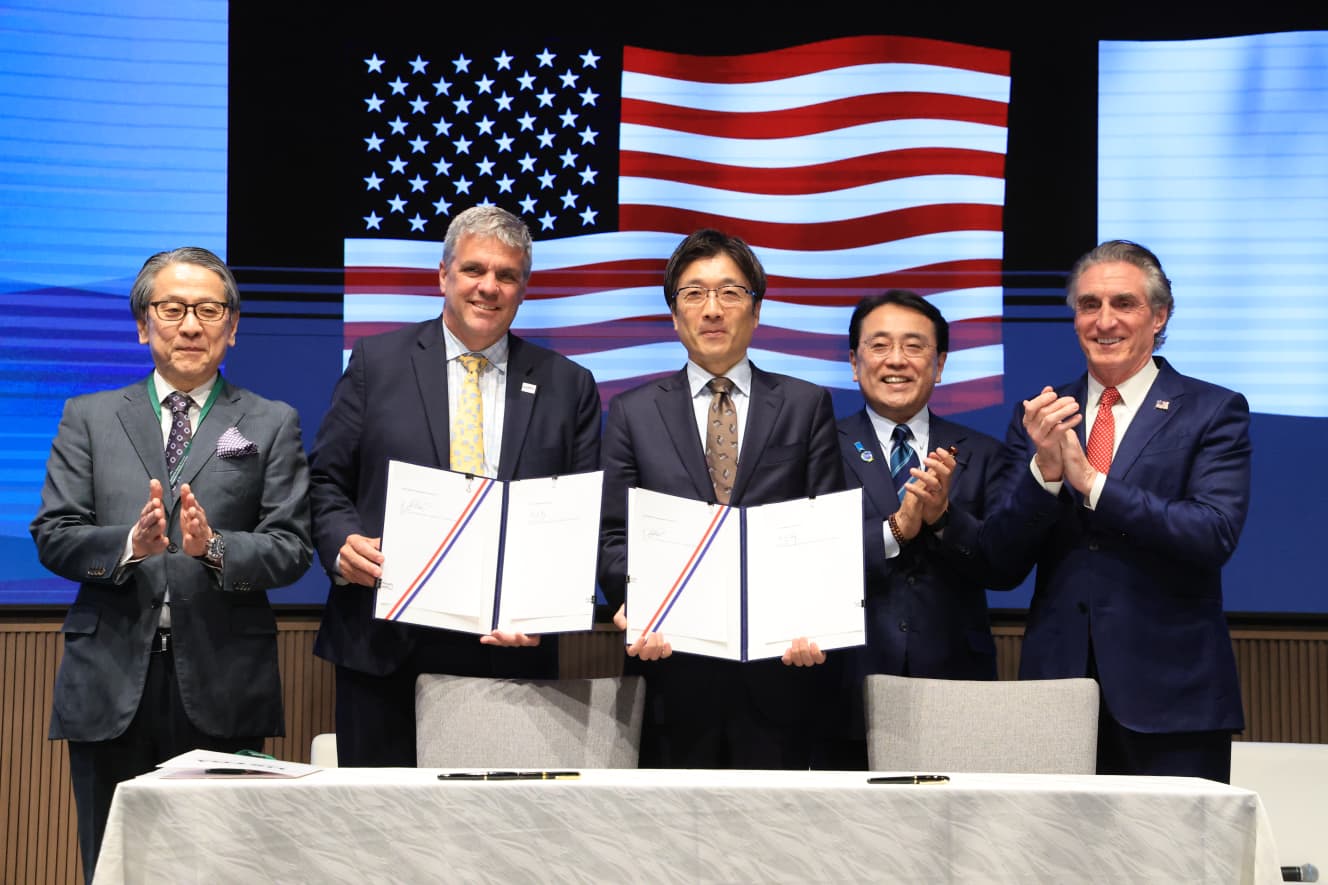
Afterward, Minister Akazawa and Secretary Burgum attended a series of events, beginning with witnessing the signing of a memorandum of understanding on operational cooperation between the U.S. International Development Agency and the Development Bank of Japan, followed by participation in panel discussions and successive meetings with ministers from participating countries.
At this forum, contracts totaling more than $56 billion were signed, bringing the two-day event to a close. One month has passed since the military operation against Iran, and amid worsening and uncertain conditions in the Middle East, rising crude oil prices, and controversial responses to immigration policy, a decline in President Trump’s approval ratings has begun to stand out. With midterm elections scheduled for November this year, distrust is also emerging from within his own Republican Party. The tide appears to be shifting, as seen in a March 24 special state legislative election in southern Florida where a Democratic candidate won. This district is home to President Trump’s residence, “Mar-a-Lago.”
Additionally, although he initially addressed the Iranian people during the military operation by saying, “The time for freedom has come. Help is on the way,” he has recently been reported to have told aides, “I’m starting to get a little tired of it. I want to move on (to Cuba),” indicating a shift in stance in just about two months. While this forum was strongly backed by President Trump, it is difficult to say it was an unqualified success due to the military operation against Iran.

Interview, text and PHOTO: Takuma Arimura