Ex Tokyo Police Officer Reveals Identity Explains North Korean Spy’s Bizarre Act in Ginza


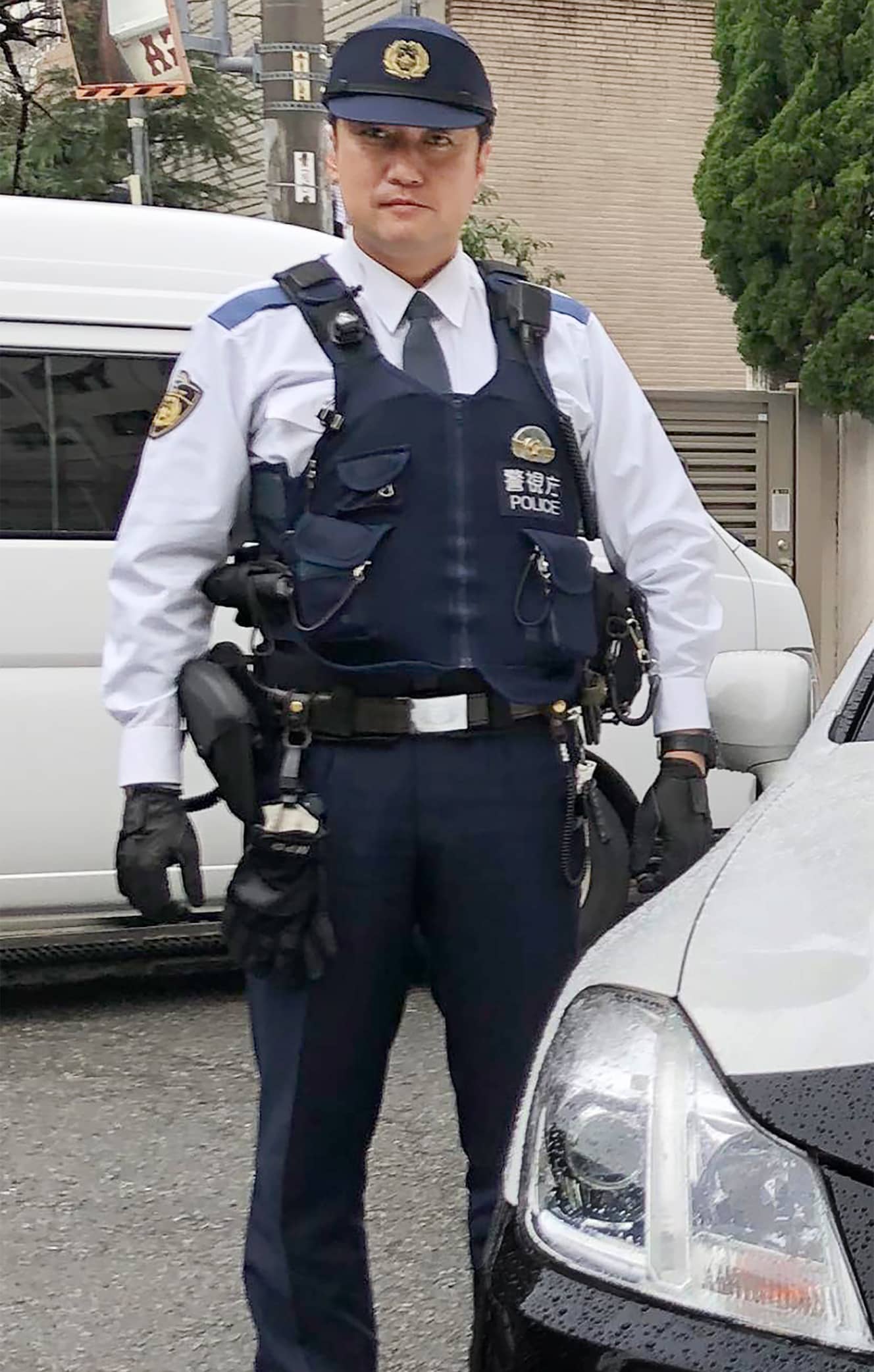
Fumitaka Kohirumaki (52), a former Metropolitan Police Department assistant inspector, joined the force in 1993. Until his retirement in 2023, he spent most of his 30-year career as an international investigator dealing with drug enforcement and organized crime. Following last week’s entertainment edition, he spoke about the battles with underground organizations, including illegal drug smuggling.
Investigations into the spread of illegal drug smuggling in Japan are said to involve cooperation with investigative authorities in places such as Hong Kong. The discussion then shifts to investigations into foreign spies operating in Japan.
“When I told a boss who said, ‘I’ve never seen a gun like that,’ that ‘It’s an automatic rifle born in Russia and used all over the world,’ he added, ‘The magazine is curved like a banana,’ so I replied, ‘That’s why it’s called a banana magazine.’”
Going up and down repeatedly
At the time, it was said that “North Korea smuggled drugs into Japan using suspicious ships and then used the empty space to take abducted Japanese people back.”
Japan is often called a spy heaven, and indeed North Korean spies had infiltrated the country and made contact with Japanese yakuza. They were likely arranging drug smuggling operations and used unusual movements to shake off surveillance.
For example, they would enter a department store in Ginza and take an elevator. Then, without getting off, they would repeatedly go up and down. This was a way to check if they were being followed.
Since we understood their methods, when the target got on the elevator, we would not follow but instead go outside and secure the exits. We also asked for cooperation from department store security.
Since we couldn’t say they were spies, we told them, “This man is a habitual shoplifter,” and asked them to contact us if they spotted him. In this way, we tracked the spy until he returned to North Korea via China. It wasn’t that we couldn’t track or identify them—we simply couldn’t arrest them due to the lack of applicable laws.
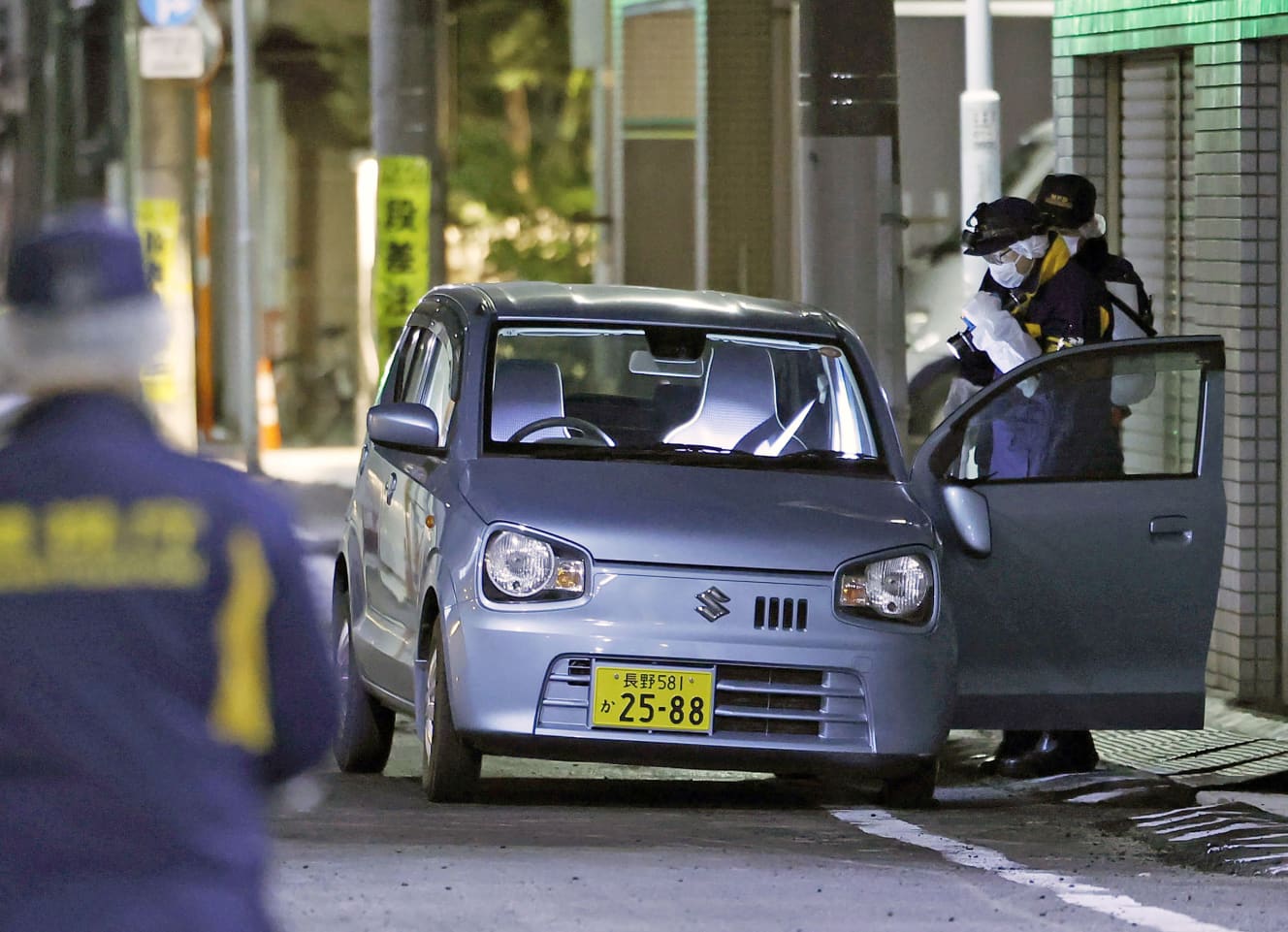
Upon hearing the initial report of the 400-million-yen robbery that occurred in Ueno, Tokyo, in January this year, Kohirumaki immediately sensed that Japanese and Hong Kong criminal organizations are involved.
The basis for this was that the car used in the escape was registered under the name of a yakuza member’s family. Three hours later, a man was attacked at Haneda Airport, and after traveling to Hong Kong, he was attacked again the same day and had a large sum of money stolen. He was then arrested the following day along with the perpetrator group.
There are investigative authorities overseas that have the power of preventive detention, which allows them to detain individuals before suspicion is fully established, but Hong Kong authorities do not have such powers. Nevertheless, a swift arrest was made. What this implies is the existence of an informant.
The men who were robbed of 400 million yen in Ueno said they had planned to go to Hong Kong to purchase gold. This suggests that someone leaked the timing of when a large amount of money would be taken out of Japan to both Japanese organized crime and the Hong Kong police.
In Hong Kong, there are some of the world’s largest criminal organizations, such as “14K” and “Sun Yee On.” When people think of the Hong Kong mafia, triads come to mind, but this is more like a coalition created so that groups like “14K” and “Sun Yee On” can keep their names out of the spotlight. When we hear “Hong Kong,” we become alert to international crime.
This case has mainly been reported as a scheme to make profits from consumption tax by repeatedly buying and selling gold, but the question is: what was the original source of the funds used to buy the gold? That is the key issue. I believe it was criminal proceeds from activities such as special fraud.
By purchasing gold with criminal proceeds and repeatedly trading it, the origin of the money becomes obscured. This is a typical method of money laundering. You often see scenes in movies where the mafia runs a restaurant—the idea is the same. By turning criminal proceeds into store revenue and paying taxes properly, the original source of the money becomes difficult to trace.
In mid-March, seven individuals including yakuza members were arrested in connection with the Ueno 400-million-yen case. In fact, I believe there is a possibility that someone connected to Japan’s semi-gang groups may have orchestrated the scheme. That man has ties to organized crime and has already left the country.
When I asked someone well-connected in China and Hong Kong, I received no response. As they say, “silence means yes” it’s quite interesting.
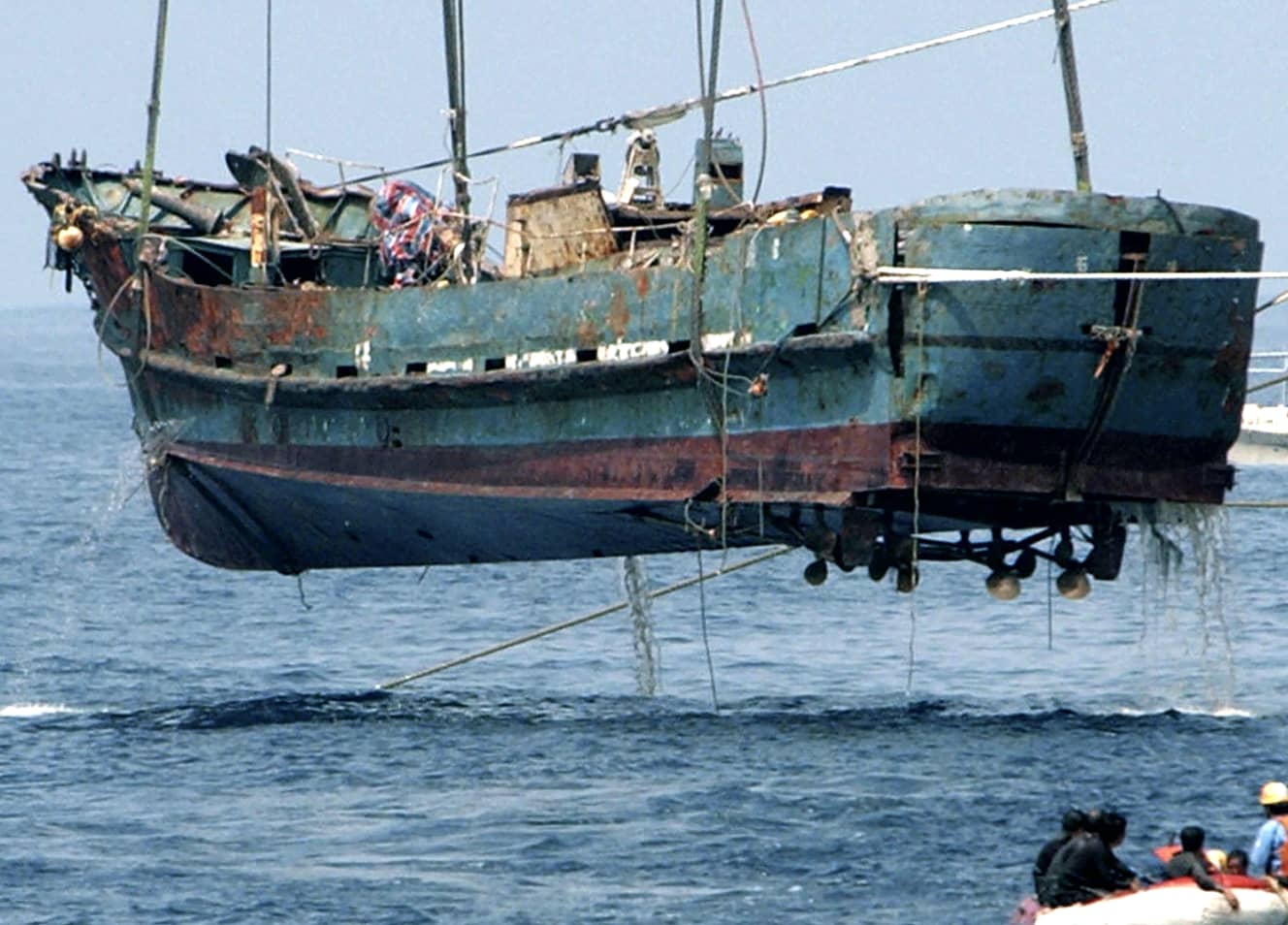
September 2002: A North Korean spy ship that was salvaged off the coast of Amami Oshima after sinking following a gunfight with Japan Coast Guard patrol vessels

From the April 10, 2026 issue of “FRIDAY”
PHOTO: Kyodo News Images (1st and 2nd images)