Centrist Reform Coalition Crashes to 2% as Ogawa Faces Fierce Backlash Over Takaichi Allegiances


Unable to even cover the venue costs for the party convention
On March 29, a perfect day for cherry blossoms, the Constitutional Democratic Party held its party convention. Junya Ogawa, representative of the Centrist Reform Alliance (54), said in his guest speech:
“I am holding back the feeling of wanting to say ‘I’m home’ as I stand here today.”
Just before the February lower house election, lawmakers from the Constitutional Democratic Party and the Komeito Party formed a new centrist party, but suffered a crushing defeat. Party conventions are usually held in central Tokyo hotels, but after 140 House of Representatives members defected and the Constitutional Democratic Party fell into financial difficulty, the convention was held on the 5th floor of the party headquarters. It was a familiar place from the old Democratic Party era, and the attendees were all familiar faces—so it was understandable that Ogawa would say “I’m home.”
In the February lower house election, the Liberal Democratic Party won a landslide 316 seats, while the centrist party was reduced to just 49 seats. Among them, lawmakers originally from the Constitutional Democratic Party fell to just 21. Ogawa, who was elected party leader after the election and is not directly responsible for the defeat, nevertheless spoke candidly as the leader in a difficult situation:
“For me as well, this was a bolt from the blue and an earth-shattering development. Despite the complex feelings and difficult circumstances, we received support and backing. I was unable to respond with sufficient results. I feel responsible.”
Although the party convention finalized activity policies for the next fiscal year, the decline in the centrist party’s strength cooled momentum for merging with remaining upper house and local assembly members of the Constitutional Democratic Party, and the policy did not explicitly mention such a merger.
“Some people are calling for integration into the centrist party, while others want to remain as three independent parties. It will depend on the direction of the debate,” said Shunichi Mizuoka, representative of the Constitutional Democratic Party (69), at a press conference.
As he stated, the pre-election slogan of uniting centrist forces has faded, and the party is in a situation where it cannot clearly define its direction.
According to a public opinion survey conducted by Yomiuri Shimbun from March 20–22, shock spread within the party: approval ratings for the centrist party dropped 3 percentage points from the previous survey in February to just 2%.
“A new leader, Ogawa, actively appeared in the media to rebuild the party. During those appearances, his abstract expressions, unclear conclusions, and long-winded phrasing became a topic on the internet as the ‘Ogajun style.’
He was also featured in director Arata Ōshima’s documentary film Why I Couldn’t Become Prime Minister, and had a certain level of popularity, but still,” said a political reporter from a national newspaper.
On the ruling party side, issues also emerged, such as Prime Minister Sanae Takaichi (65) distributing catalog gifts worth over 30,000 yen to Diet members of her party, and revelations of extramarital affairs involving Education Minister Yohei Matsumoto (52) reported by Weekly Bunshun. With the opposition attracting attention, why is support still not increasing?

“The opposition’s showcase moment was crushed by Prime Minister Takaichi”
“The House of Representatives cut down budget deliberation through the power of numbers, and the opposition was unable to create its showcase moments.”
This analysis is made by Hiroyuki Konishi, member of the House of Councillors from the Constitutional Democratic Party (54). After a landslide election victory, the Liberal Democratic Party used its numerical strength to push through forceful parliamentary management during the extraordinary Diet session, leveraging committee chair authority and Diet affairs leadership. The originally expected 80 hours of deliberation were reduced to 59 hours, and the FY2026 budget was forced through.
“Prime Minister Sanae Takaichi dissolved the lower house at the beginning of the ordinary Diet session and called a general election, delaying the budget deliberation schedule by more than a month. Despite this, she insisted on passing the FY2026 budget within the fiscal year and forced it through the House of Representatives on March 13, pushing for passage even in the minority coalition-controlled upper house. The opposition submitted a no-confidence motion against Budget Committee Chair Tetsushi Sakamoto, but it was rejected due to the ruling party’s numerical strength—effectively doing as they pleased,” said Masayo Tanabe, Diet Affairs Committee head of the Constitutional Democratic Party.
However, even within the limited deliberation time, the opposition could have confronted Prime Minister Takaichi. During budget committee questioning on the issue of catalog gift distribution, Ogawa reportedly prefaced his remarks with, “I received a small bottle of soy sauce from Nara. It was delicious,” in a tone perceived as deferential toward the prime minister.
Upper House member Hiyu Sugio (68) criticized this approach:
“Compared to the Abe administration, there is still pressure saying, ‘Why do you only pursue scandals? Focus on policy discussions.’ There is persistent pressure from supporters of Prime Minister Takaichi. However, what should be asked in parliament must be asked and recorded in the official record. The opposition should not soften its language with unnecessary cushioning. We are too intimidated by narratives created on the internet.”
Tanabe shares a similar view:
“When we questioned the catalog gift issue for about 30 seconds in the Diet, our office received multiple complaint calls. But is it really necessary to spend as much as 10 million yen to distribute gifts to lawmakers within the same party? Is the Liberal Democratic Party’s sense of politics and money appropriate?
Prime Minister Takaichi stated that there is no illegality in the expenditures from party branches, but then why was the gift tag labeled not with the party branch, but with ‘Sanae Takaichi’? Is it really legal? It is natural for the opposition to check the exercise of ruling power. Confronting the government is essential to maintaining a healthy democracy with tension.”
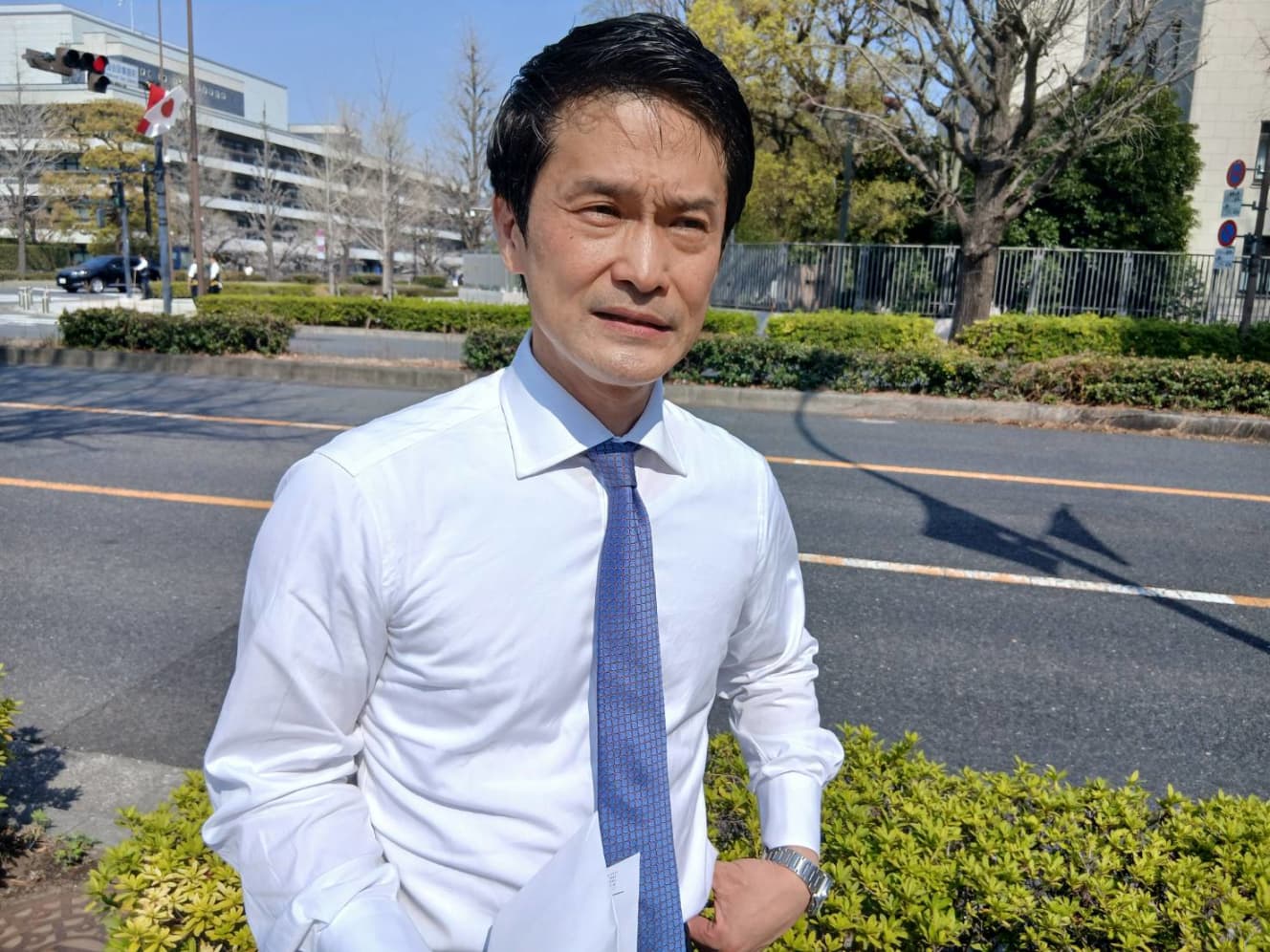
In a Diet dominated by the ruling party’s overwhelming majority—one strong party, many weak parties—what path should small opposition parties take? Ogawa, who smiled while saying he had no taxi fare and walked to the Diet members’ building, was interviewed.
— Approval ratings are low at 2%.
“It’s tough. We are trying hard, though.”
— You are trying?
“We are doing our best. We need to rebuild our identity, clarify our fundamental policy positions, and make a comeback. What worries me recently is that support for both the Constitutional Democratic Party and Komeito, which formed the centrist bloc, is also declining. Ideally, the three parties combined should have around 10–15% support.
But the Constitutional Democratic Party and Komeito are both down to 1–2%. Our traditional support base may be disappearing. It’s not only our party’s issue—none of the parties are recovering support.
With one side consisting only of House members and the other only Upper House and local lawmakers, none of the three parties are properly functioning as political organizations. The basic conditions for gaining voter expectations are not in place. We must work very hard on a fragile foundation.”
— What about becoming prime minister?
“That is still far in the future.”
With approval ratings in the low single digits, the vision of a three-party alliance remains unclear. However, regardless of form, should the opposition not face the ruling party with courage rather than hesitation?
Interview, text, and photos: Daisuke Iwasaki