Hosei University Moves to Absorb Tokyo Kasei Gakuin as Major Universities Fight to Survive in a Shifting Education Landscape


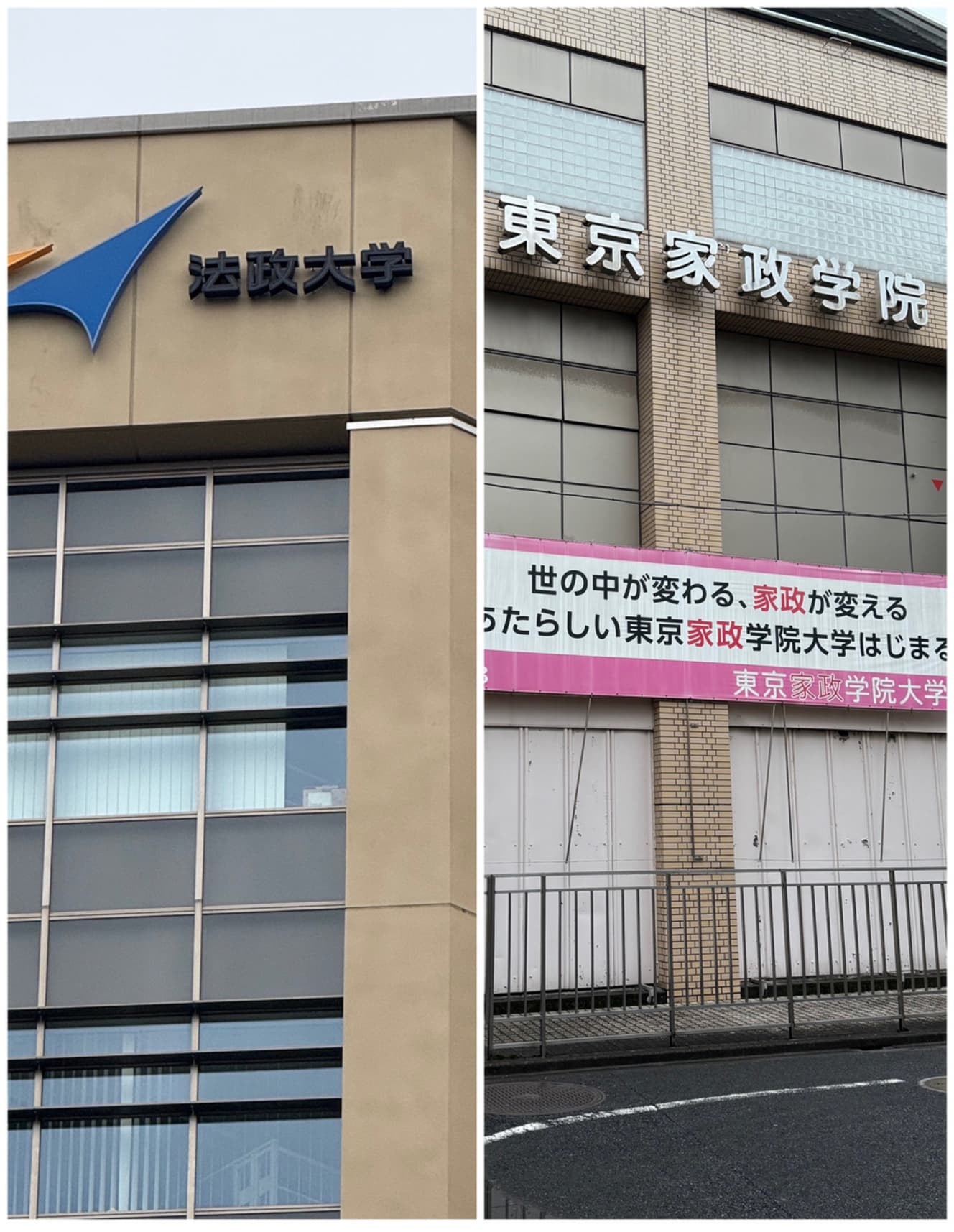
On March 25, Hosei University and Tokyo Kasei Gakuin made a significant announcement. Starting in April 2027, Hosei University will affiliate Tokyo Kasei Gakuin’s junior and senior high schools, renaming them “Hosei University Chiyoda Sanbancho Junior and Senior High School.” They also stated that integrating the school corporations and universities is one possible future option.
University journalist Reiji Ishiwatari explains:
“Affiliation brings benefits to both institutions. For Hosei, increasing affiliated schools helps secure a steady stream of students. Also, its Ichigaya campus in Chiyoda, Tokyo, is overcrowded. If Tokyo Kasei Gakuin’s nearby campus becomes available, it could ease congestion.
On the other hand, Tokyo Kasei Gakuin has struggled with its high school advancement results. Becoming affiliated with Hosei would create recommendation slots to Hosei, likely increasing applicants. The university itself has also faced financial difficulties. In the 2024 admissions cycle, it enrolled 224 students out of a capacity of 510 (43.9% fulfillment), and in 2025—after transitioning from a women’s university to coeducation—it enrolled 190 out of 517 (36.8%). A merger with Hosei would likely stabilize its management.”
Japan’s population of 18-year-olds is declining every year and is expected to fall below one million by 2035. As a result, universities are promoting affiliations with integrated junior and senior high schools to secure students. In recent years, Aoyama Gakuin University has affiliated with Yokohama Eiwa schools, and Meiji University has done the same with Nihon Gakuen.
Even prestigious universities in the so-called “MARCH” group (Meiji, Aoyama Gakuin, Rikkyo, Chuo, Hosei) are not immune.
Ishiwatari continues:
“Even well-known universities in the MARCH class will struggle to survive in the future without restructuring. This is even more true for lesser-known small institutions or women’s universities that are losing popularity. It is nearly impossible to overcome the declining birthrate alone.
Until now, it was common for universities to affiliate with junior and senior high schools. Going forward, as seen in the case of Hosei and Tokyo Kasei Gakuin, we are likely to see more large universities absorbing and merging with smaller ones. The number of private universities may be significantly reduced.”
National and public universities are not unaffected either.
“Due to declining government subsidies and rising costs, many public universities cannot sustain operations without raising tuition. In recent years, we’ve seen reorganizations such as the merger of Tokyo University of Mercantile Marine and Tokyo University of Fisheries (now Tokyo University of Marine Science and Technology), and Osaka Prefecture University with Osaka City University (now Osaka Metropolitan University). In about 10 years, the landscape of the education sector will look very different.”
The era when universities could simply focus on academic research is over. Institutions are now being forced to take drastic measures to survive the turbulent effects of a declining birthrate.
PHOTO: Takashi Yamazaki