Tooth Extractions and Root Canals at Risk Dental Clinics Struggle Amid Medication Shortages


The foundation supporting medical care is at risk
“We can’t perform tooth extractions!”
Such an abnormal situation is occurring at dental clinics across the country. As of March 2026, local anesthetics—essential for procedures like tooth extractions and cavity treatment—are facing a serious supply shortage. Asuka Murakami, director of “Orange Dental,” expresses concern (all quotes below are from Dr. Murakami).
“Most of the anesthesia used in dentistry is local anesthesia injected into the gums to relieve pain. It is used in many routine procedures, such as cavity treatment, tooth extraction, nerve treatment, and gum incision. For patients, it eases pain; for dental care, it is the very foundation that supports treatment.”
Tension is steadily rising in the dental field.
“To my knowledge, about 70% of the domestic market share for dental local anesthetics is held by ‘Ora Injection’ (Ora Injection dental cartridges). If GC Showa Yakuhin, the manufacturer of ‘Ora Injection,’ cannot supply it, the situation quickly becomes severe.”
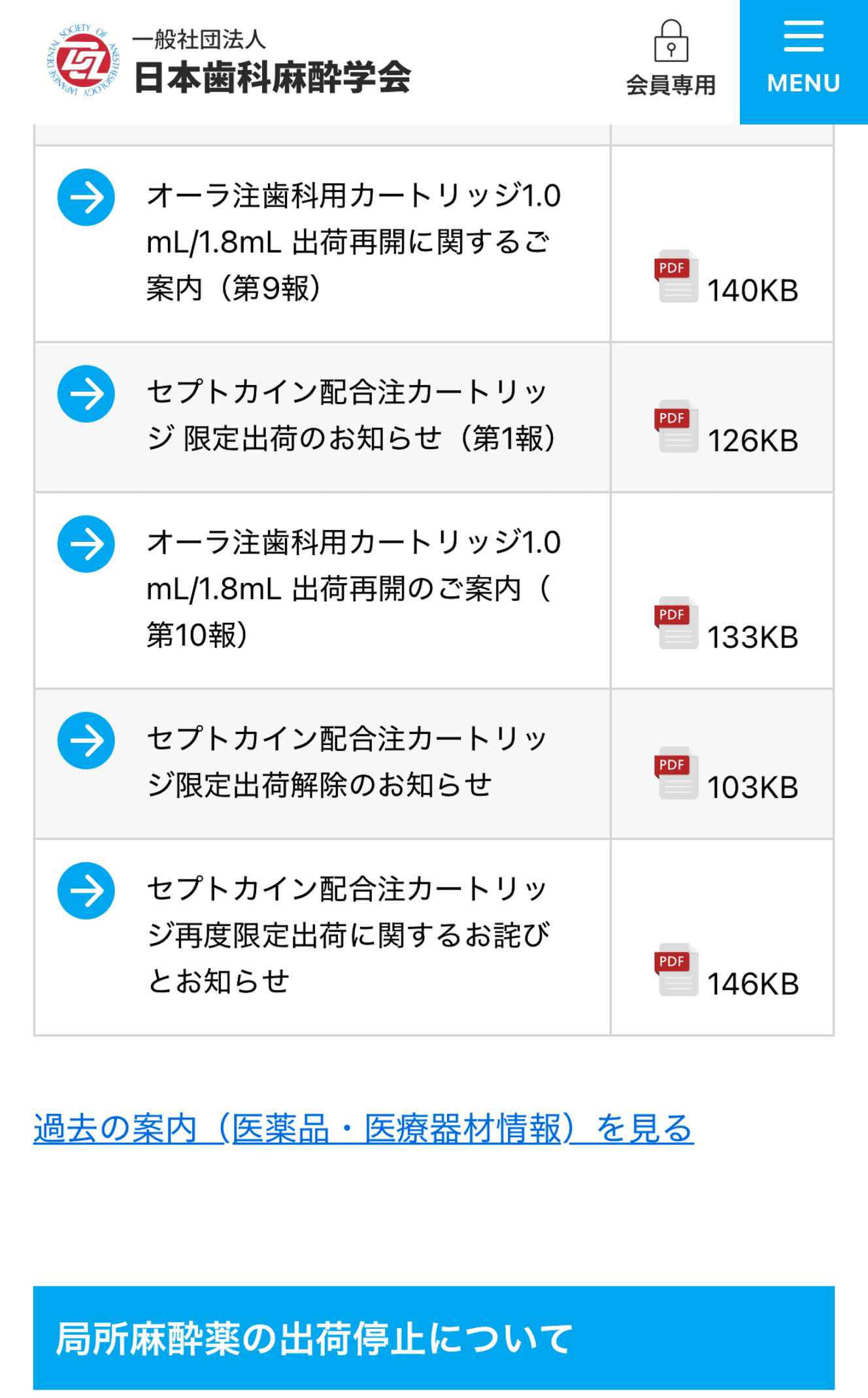
“Ora Injection” has long been the company’s flagship product, widely used as a dental local anesthetic. This time, instability in its supply—triggered by a manufacturing program defect—has caused demand to concentrate on alternatives, worsening the shortage of local anesthetics. The situation has exposed a structural issue in which a shortage of a single product can shake the entire industry.
“Until now, we’ve managed somehow by using substitute drugs, but we’re reaching our limit. At our clinic, we are telling doctors and staff, ‘Please do not use anesthetics unnecessarily.’ We feel it’s becoming a warning sign.”
According to Dr. Murakami, the background of this shortage cannot be explained by just one manufacturer’s production trouble; there are multiple structural problems.
“First, as mentioned, one manufacturer’s product accounts for most of the market share. Second, we rely on overseas sources for drug ingredients and materials. When international logistics are disrupted or geopolitical risks increase, supply inevitably becomes unstable.
There’s also the issue of drug pricing. Medicines like local anesthetics may not stand out, but they are absolutely essential in practice—and yet their prices are lowered. That makes it difficult to turn a profit. Even though they are indispensable, their low profitability makes it hard to move toward mass production. I believe this situation is contributing to the supply instability.”
Rising tensions in the Middle East also pose a future risk. Not only pharmaceuticals themselves, but also petroleum-derived chemical materials, packaging resources, and logistics costs are affected in many ways, meaning dental local anesthetics are by no means unrelated.
It feels like the situation has reached a stage where government intervention is necessary, but for now, no effective measures have been taken.
Alternative options are expensive out-of-pocket treatment
What can be done if local anesthetics run out?
“One option is to use general anesthesia, but that requires proper equipment and a management system. Above all, it requires supervision by an anesthesiologist, so it is difficult for ordinary dental clinics. Even if it were possible, it would increase the financial burden on patients.”
Laser treatment for cavities is another option, but it is not all-purpose.
“There are laser treatments that can remove cavities without anesthesia, but they are not covered by insurance and are considered out-of-pocket care, making them expensive.”
So what can patients do? Director Murakami emphasizes seeking treatment as early as possible.
If you rush to the dentist only after pain starts, swelling occurs, or it becomes unbearable, treatment inevitably becomes more extensive, increasing the likelihood that anesthesia will be required. On the other hand, if cavities are detected while still small, less invasive treatment may be sufficient.
“If possible, we want patients to come in for regular checkups before cavities even develop. That greatly increases the chances of avoiding major treatment.”
There are many hurdles to overcome in securing a stable supply. Unexpected events, such as an airstrike on Iran, cannot be avoided as risks. The situation has reached a point where individuals must take reliable self-protection measures.
PHOTO: Kyodo News Images (1st photo)