Pro Baseball 2026 Opening Sabermetrics Reveal the Top Contenders Central League Edition
Special Report Part 1


Analyzing statistical data objectively: Can Hanshin achieve consecutive championships? What will happen to the Giants and Yakult, who lost their main sluggers?

After the excitement of the WBC has passed, the 2026 professional baseball regular season has finally begun.
Every year around this time, various baseball pundits on TV and in newspapers make predictions for the standings, but FRIDAY has taken a different approach. Using the sabermetrics method, which statistically analyzes baseball play results and objectively evaluates players’ abilities and contributions, they predict the pennant race based on a scientific forecast that eliminates subjectivity.
Specifically, they collaborated with DELTA Inc., a company that handles data management, to thoroughly analyze information on each team over the past three seasons. From this, the “WAR (Wins Above Replacement)” metric was derived to calculate the projected wins and losses for each team. DELTA analyst Hiroshi Miyashita explained:
“WAR is a number that represents how much a player has increased the team’s wins compared to a reserve player. For example, Shohei Ohtani (31) of the Dodgers, who won back-to-back World Series titles last season, recorded a WAR of 9.4. That means he alone added 9–10 wins to the Dodgers.
The total of each individual’s WAR, plus a base of 47 wins, becomes the team’s projected win total. If the total WAR is 28, that team is projected to win 75 games in the season.”
A pitcher’s individual WAR is calculated from the number of outs recorded, strikeouts, home runs allowed, and walks and hit-by-pitches given, while a fielder’s WAR is calculated from a combination of defense, baserunning, and hitting. A WAR of 2.0 is considered regular-class, 5.0 All-Star-class, and 6.0 or higher MVP-level performance. In Japanese baseball, 1.0 WAR is valued at 100 million yen per year.
Because the calculations are based on data from the past three years (2023–2025), the WAR for players who had a major breakout last year is somewhat lower. For example, Yuta Izuguchi (26), who recorded a .300 batting average as the Giants’ regular shortstop last season and won the Golden Glove, recorded a WAR of 6.1. However, he did not join the team in 2023 and was a reserve player in 2024, so the forecast predicts that he is not likely to exceed last year’s performance.
Let’s start with the Central League. Yakult, missing its main slugger Munetaka Murakami (26) due to his challenge in the Major Leagues, is a top candidate for last place for the second consecutive year.
“Many injuries, including Soma Uchiyama (23) and Yasutaka Shiomi (32), and the core lineup, including Tetsuto Yamada (33), Domingo Santana (33), and Jose Osuna (33), is older. There is no good factor to fill the hole left by Murakami’s absence,” said Miyashita.
DeNA, which achieved a miracle Japan Series championship in 2024 after finishing third in the league and finished second last season, is surprisingly projected to be fifth.
“The departure of four foreign players—Trevor Bauer (35), Andre Jackson (29), Anthony Kay (31), and Rowan Wick (33)—who supported the pitching staff is significant. It will be difficult for just John Duplantier (31), who moved from Hanshin, to fill that gap. Attention should also be paid to how much the long-distance hitters, including Shugo Maki (27) and Yoshitomo Tsutsugo (34), can make up for the loss of Tyler Austin (34) in the lineup,” said former BayStars player and baseball commentator Yutaka Takagi.
The data presents a harsh reality for DeNA.
“Veteran players such as Tsutsugo and Toshio Miyazaki (37) are expected to see reduced playing time. Promising young players, including Keito Mori (24) and Ryuki Watarai (23), have not developed as expected, which is also a reason for the fifth-place projection. The challenge for the team is whether the lineup can break free from dependence on Maki and Tsutsugo, and whether pitchers other than Katsuki Higashi (30), who has a projected WAR of 2.2, can become new pillars. Shintaro Fujinami (31), according to the data, is more suitable for one-inning appearances than as a starting pitcher. He is difficult to rely on as a rotation pitcher due to his high number of walks and hit-by-pitches,” said Miyashita.
Is Chunichi set to make a leap this season?
Hiroshima, which suffered the tragedy of key players being arrested in a drug-related incident during the offseason, is predicted to finish fourth again, the same as last year.
“That said, their pitching staff’s total WAR is the league’s top at 10.5. At shortstop, they have last season’s batting champion Kaito Kozono (25), and young fielders like Masaya Yano (27), Shogo Sakakura (27), and Shosei Nakamura (26) are entering their prime, so the team has the potential to jump up in the standings,” he said (same source).
Surprisingly, Chunichi, which endured three consecutive last-place finishes from ’22 to ’24 and sank to fourth last season, is predicted to finish third and enter the A-class.
“The starting rotation, including Hiroto Takahashi (23) and Yumehiro Kanemaru (23), who played in the WBC, is strong, and the relief staff, including last season’s save leader Shinya Matsuyama (25), is also powerful. Additionally, Chunichi’s home stadium, ‘Vantelin Dome Nagoya,’ added a ‘Home Run Wing’ this season, making it easier to hit homers. Long-ball hitters like Seiya Hosokawa (27) are expected to improve their batting performance. The fact that they were the only team to finish above last year’s champion Hanshin also hints at a breakthrough this season,” said baseball commentator Keiichi Yabu.
Chunichi’s improvements are also reflected in the data, according to Miyashita.
“One player to watch is Yuki Okabayashi (24). He recorded a .291 batting average last season, but his wide defensive range and strong arm also contribute to the team. He is expected to record a WAR of 3.3 this season. Catcher Yuta Ishii (25) and second baseman Mikaya Tanaka (25), while not flashy offensively, contribute greatly on defense. Chunichi also won the second-team championship last season, so with strong performances from young players, the team has high potential to rise in the standings.”
Like Yakult, the Giants, who lost their main slugger Kazuma Okamoto (29) to MLB, are predicted to move up from third to second place. Why is that?
“Shortstop Tomoya Izumiguchi is expected to post a WAR of 3.9 this season, and the center line is strong with Naoki Yoshikawa (31) at second and Yukinori Kishida (29) at catcher. The starting rotation, led by ace Iori Yamasaki (27), and the relief corps, including Taisei Oose (26) and Raidel Martinez (29), provide depth. The projected total WAR for pitchers is 10.2, comparable to Hanshin’s 10.4. The key point is whether right-hander Shosei Togoh (25), who has struggled since last year, can return to form,” said Miyashita.
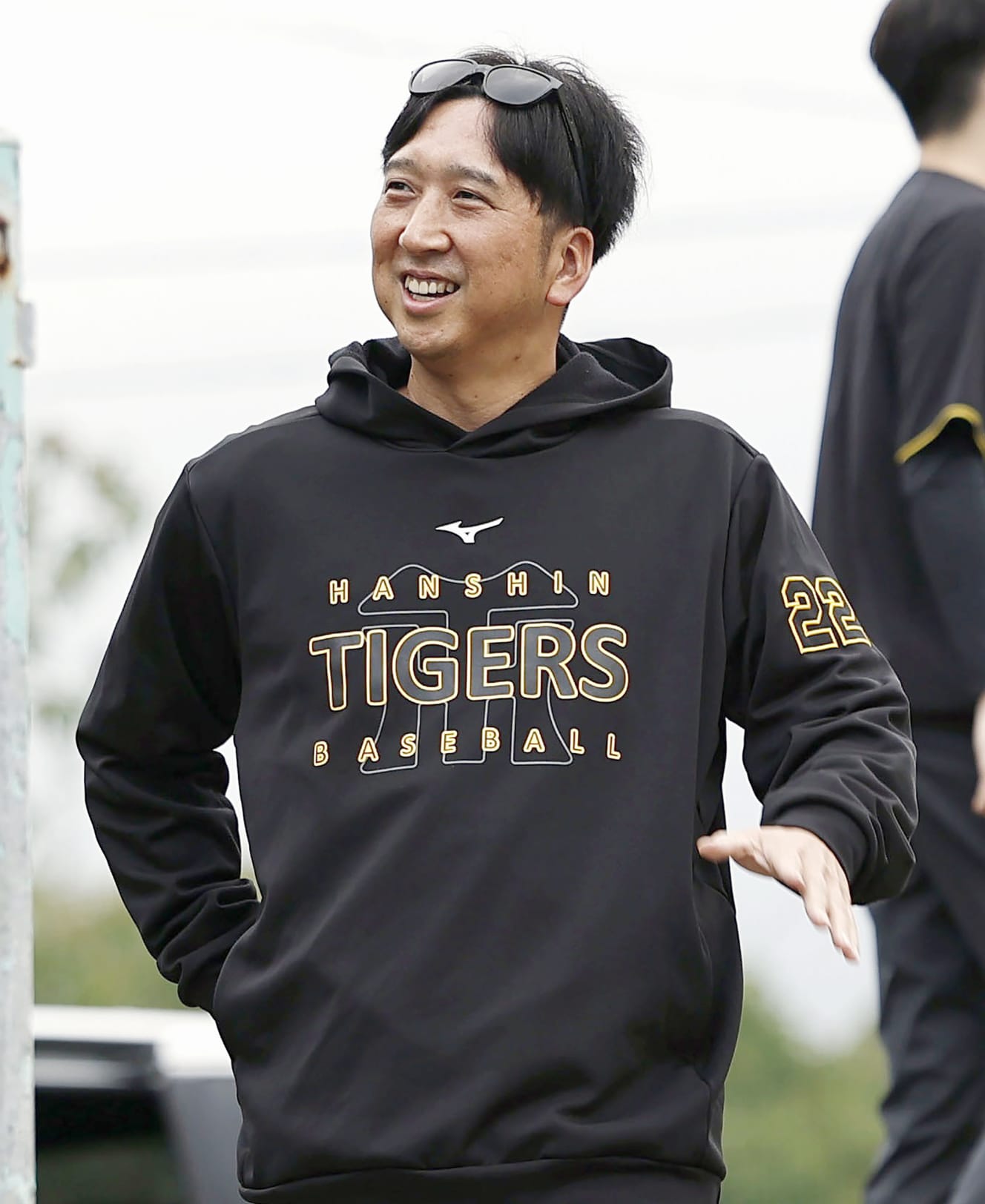
The Central League has intense turnover among five teams. Hanshin, predicted to finish first, is seriously aiming for a repeat pennant under manager Kyuji Fujikawa (45), something former manager Akihiro Okada (68) never achieved. Special attention should be paid to the league’s top fielders, boasting a total WAR of 19.1.
“Shohei Sato (27) and Shota Morishita (25), who performed well in the WBC, are expected to post high WAR again this year. Morishita, in particular, contributes greatly defensively, with a projected WAR of 4.8, higher than Sato’s. The loss of Daichi Ishii (28), who had a 0.17 ERA last season, is painful, but the strong relief corps, including Masaki Oikawa (24), reduces the impact. The only concern is the age of the fielders. Many are in their 30s, like Koji Chikamoto (31), Yusuke Oyama (31), and Seishiro Sakamoto (32), while Takumu Nakano (29) turns 30 this season. It’s unlikely that players in their 30s will post career-high performances,” he added.


From the April 10, 2026 issue of “FRIDAY”