EV Bus Expo Seller Suspected of Offering Hospitality to Hide Defects as Internal Documents Reveal City Hall and Company Involvement


At “EV Motors Japan,” the company selling EV buses introduced for the Osaka-Kansai Expo, troubles such as brake failures and loss of steering control have been occurring repeatedly. Amid this, automotive lifestyle journalist Kumiko Kato, who has been investigating the company’s series of problems, delves into a new suspicion.

“‘We are strictly told by the operations manager, ‘Under no circumstances should you disclose the EV bus defects to outsiders! Interviews are absolutely forbidden.’ All the drivers hate the buses, which are full of malfunctions, and wish they could stop using them, but the operations manager completely ignores this. Whenever the media calls, they respond, ‘Our EV buses have no defects. They are running smoothly.’”
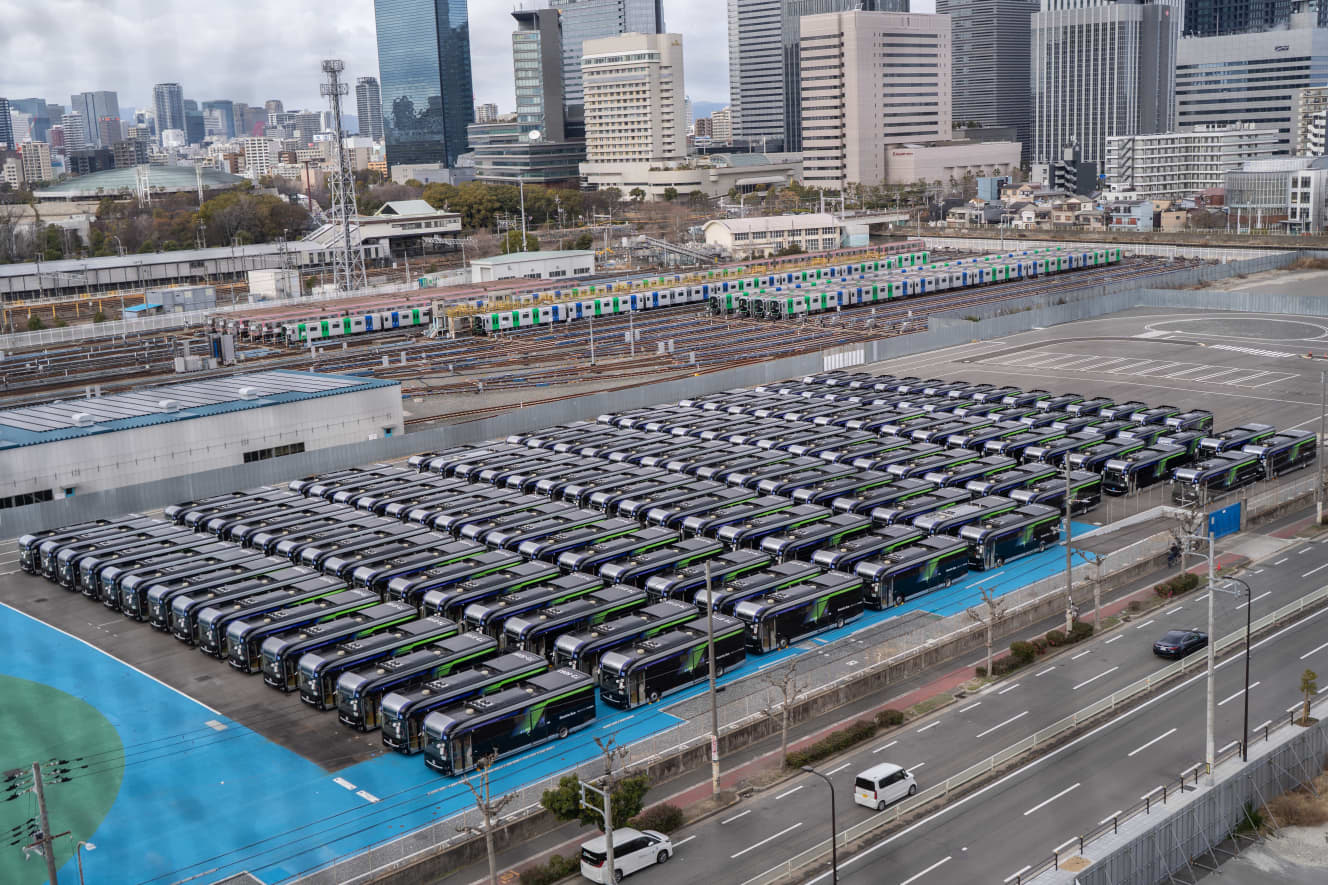
This account comes from a veteran driver with over 20 years of experience, who operates buses for a Tokyo-area company using buses from EV Motors Japan (hereafter: EVMJ). The company is headquartered in Kitakyushu, Fukuoka Prefecture, and sells EV buses imported from three Chinese manufacturers (Wisdom, Hengtian, and Aizhonghe) in Japan. EVMJ began sales in Japan in 2022, and to date, over 320 buses have been delivered nationwide to bus companies and municipal transportation bureaus, including 190 buses for the Osaka-Kansai Expo.
The author has interviewed over 100 relevant parties, including current and former EVMJ employees, bus companies that adopted the buses, drivers, and Osaka Expo officials. On October 13 last year, FRIDAY Digital published an article titled “The Reality of ‘Uncontrollable Steering Troubles’ in the Chinese Buses Mass-Purchased for the Osaka Expo.” The report included shocking incidents captured on dashboard cameras where drivers struggled desperately to control the steering, yet the vehicle became uncontrollable and crashed into central dividers.
Amid this situation, a new suspicion has emerged regarding EVMJ—namely, the gag order allegation revealed by the driver at the outset.
An answer that felt strange
In fact, when the author tried to interview operators who had introduced EVMJ buses, they were almost always refused or only gave answers along the lines of “They are running smoothly.” The same was true for accidents that occurred repeatedly in April 2023 with the EVMJ “Wisdom Large 10.5m” buses, where brake chambers—a critical component of the air brake system used in large trucks and buses—detached while the buses were in motion. When the author asked Naha Bus, an Okinawa-based company that had adopted these buses, they responded only:
“Currently, they are operating without issues. We cannot answer regarding the brake chamber detachments. Please ask EVMJ.”
Naha Bus is a major operator of local and sightseeing charter buses within Okinawa Prefecture. According to obtained documents, they purchased three EVMJ buses between March 2022 and March 2023. However, the author has now obtained internal EVMJ documents that appear to indicate a thank-you for enforcing a gag order on such issues.

Contents of the dinner party held by EVMJ
What the author obtained is an internal EVMJ expense report. It shows that on January 22 of this year, an EVMJ employee applied for reimbursement for a dinner with Naha Bus staff, costing ¥5,500 per person for five people, totaling ¥27,500. The noteworthy part is the “Purpose” section of the report, which states the following (original typos preserved):
“Regarding Naha Bus, they have repeatedly responded in surveys and interviews about comprehensive inspections and recalls that no defects have occurred (or very few) and that safe operations are being maintained. We understand that this is because, by top-down direction from President Tanaka of the Daiichi Kotsu Sangyo Group, EVM has been told not to make any comments to outsiders that could be disadvantageous! I personally also feel a strong sense of gratitude to Vice President Kage, President Ogawa, the branch managers, and the relevant staff.”
Here, comprehensive inspections refers to the inspection order issued by the Ministry of Land, Infrastructure, Transport and Tourism in September last year, and recall refers to the recall of brake hoses reported by EVMJ to the Ministry in November. Naha Bus is a subsidiary of Daiichi Kotsu Sangyo.
Attorney Shuji Suzuki of SINTO Law Office, who specializes in traffic accident issues, cautions, “This document alone does not allow a definitive conclusion.” and points out that if the contents of these internal documents are assumed to be true, several legal issues could arise.
“While they should have ensured safety and proper information disclosure, if they instead suppressed defect information to avoid disadvantages to their own company, such actions could be seen as prioritizing relationships with business partners over safety and corporate credibility. This could expose the company to risk while benefiting the partner. Therefore, executives of Daiichi Kotsu Sangyo and Naha Bus could potentially face charges of breach of fiduciary duty. Moreover, providing false information in a recall notification could violate the Road Transport Vehicle Act. If true, these are unforgivable actions that could affect human life.
If EVMJ continued deliveries and transactions knowing the defects and their severity, there may also be grounds for fraud charges, though proving deceit and causation, as well as the other party’s awareness, would be required, so establishing liability is not straightforward. It must be investigated whether any pressure or influence was actually applied within Naha Bus, and if so, what kind of influence occurred.”

“It has been kept within the relevant staff and their respective departments.”
The author also obtained an expense report for a dinner listing four names from the Public Transportation Division of Nago City Hall in Okinawa Prefecture, including the division chief and section chief. Nago City had previously purchased six small “Wisdom” buses for the community bus service “Nagomaru,” and five are still in operation. According to the expense report, the dinner was membership-fee based, with EVMJ covering any shortfall, totaling ¥5,500 × 6 people, or ¥33,000. The “Purpose” section reads as follows (original text preserved):
“From last year to this year, we have received many complaints, such as vehicle operation stoppages due to a third motor malfunction and a few days of service suspension caused by blown air-conditioning fuses. We have also heard from the city council and citizens that, due to frequent stoppages, they want us to return the buses as in Chikugo City, get their money back, and seriously consider introducing diesel buses. At present, this has been kept within the relevant staff and their respective departments. Although this does not constitute an apology, we are holding a dinner to improve future relations and foster goodwill.”
The reference to as in Chikugo City pertains to a case in Chikugo City, Fukuoka Prefecture, where four school buses (made by Hengtian) purchased from EVMJ last April faced repeated problems. Within just two weeks, all buses were taken out of service and replaced with conventional diesel buses.
Regarding the expense report, it can be interpreted as follows:
“Although the dinner is formally described as ‘membership-fee based,’ in practice the company covers the shortfall. Even if formally fee-based, the fact that the company’s payment was planned and pre-approved as an expense effectively makes it a form of hospitality.
Furthermore, the statement that matters such as defects and citizen complaints—which should have been disclosed externally—are kept within the relevant departments suggests a transactional relationship between the provision of benefits and official duties. If the report reflects actual practice, it could be viewed as receiving hospitality in exchange for performing official duties, raising serious concerns under criminal law regarding potential bribery.
The timing also matters: the recall occurred at the end of November, and this dinner was held in January. Holding such a dinner after a recall makes suspicions of bribery even stronger. Even if criminal liability does not apply, this could still constitute an act undermining the credibility of local public officials in their relationship with interested parties.”
“We do have dinner parties.”
Whether such dinners actually took place—when the author sent a formal inquiry to EVMJ, the company responded by the deadline as follows.
Regarding the dinner with Nago City Hall and the claim in the documents that defect information was kept within the relevant departments, EVMJ acknowledged the dinner, stating:
“We did hold a dinner in conjunction with the handover due to a change of staff at Nago City.”
On the cost, they explained:
“The dinner was membership-fee based, and Nago City also bore part of the cost. Regarding accidents or malfunctions, we have provided explanations to the customers, including Nago City, and as can be seen on our website, we have made necessary public disclosures. There is no fact of concealing accidents or malfunctions.”
Nago City also confirmed the dinner but stated: “It was a membership-fee based dinner, and we have no awareness of the company covering any shortfall.”
Regarding the problematic buses, they added:
“There have been occurrences of motor malfunctions and air-conditioning issues, but they were addressed each time. There have been no complaints from the council or citizens similar to cases in other cities. This is not a matter to report to the council, and no citizen explanation is necessary. At present, no defects are occurring, and the buses are operating normally.”
At the end of the response, in bold, it stated: “Regarding the contents of the EVMJ internal documents, the city also finds it deeply regrettable that these matters were handled as described.”
EVMJ also acknowledged holding a dinner with Naha Bus, responding:
“The dinner was held in conjunction with a handover due to staff changes… There are no records of a dinner being held for the purpose of requesting concealment, and there is no fact of continuing operations while hiding serious defects.”
Naha Bus confirmed the dinner but described it as a staff introduction due to personnel changes and declined to comment on the cost breakdown. Regarding whether false reports had been submitted for recalls, inspections, or prior media inquiries, they stated:
“We have not received any inspection orders or recall investigations directly from the Ministry of Land, Infrastructure, Transport and Tourism as indicated. We have not received any media inquiries. We have not made any false reports, and there was no dinner held as a thank-you for such actions.”
They further stated that currently operating vehicles are free of defects and that decisions on vehicle introduction were made based on information available at the time, with a comprehensive judgment.
When asked whether President Tanaka of Daiichi Kotsu Sangyo actually gave instructions to Naha Bus, the company responded: “There was no instruction or directive of the kind you mentioned issued within our company.”
While the dinners did occur, the gag order suspicion was denied by all parties. However, an EVMJ insider revealed:
“Dinners like this have been held not only for staff introductions. As the expense reports indicate, they are indeed hospitality events. Going to a partner, paying for a meal, and building relationships is the way we operate. In fact, the dinners in January were not limited to these two cases. We hear that multiple dinners have been held with several bus companies and local governments over several occasions.”
A thorough investigation of the facts is urgently needed.
PHOTO: Hiroto Kato (1st and 4th photos)